March 7. 1766: Gentlemen Rhymesters Out on a Spree

A certain Miss Molly Mogg of the Rose Tavern in Wokingham, England, turned up her dainty toes on March 7, 1766, at the age of 66. Some 40 years earlier she had been the subject of an amusing ballad written by “two or three men of wit.” The ballad, perhaps to the surprise of its authors, became quite popular. Literary historians have determined that the “men of wit” were Alexander Pope, Jonathan Swift, and John Gay and that the three were probably quite drunk when they penned the tribute to the pretty Molly.

It begins:

The schoolboy delights in a play-day,

The schoolmaster’s delight is to flog;

The milkmaid’s delight is in May-day,

But mine is in sweet Molly Mogg.

and continues on for eleven verses each ending with “sweet Molly Mogg. This, of course required the three rhymesters to come up with 11 words to rhyme with Mogg. Which they did.  In addition to the aforementioned flog, there’s bog, cog, frog, clog, jog, fog, dog, log, eclogue and agog — bypassing hog and Prague.

Cogito Airgonaut

Jean-Pierre Blanchard, the noted 18th century “Airgonaut,” made his first successful balloon flight in Paris back  in 1784, in a hydrogen gas balloonballoon4 launched from the Champ de Mars. Blanchard’s flight nearly ended in disaster, when one spectator slashed at the balloon’s mooring ropes and oars with his sword after being refused a place on board. Observer Horace Walpole wrote of the flight that the Airgonauts were just like birds; they flew through the air, perched in the top of a tree, and some passengers climbed out of their nest to look around.

Nevertheless, these early balloon flights set off a public “balloonomania”, with clothing, hairstyles and various objects decorated with images of balloons or styled to resemble a balloon. In 1793, Blanchard scored another first — the first balloon flight in North America, ascending in Philadelphia and landing in New Jersey. Witnesses to the flight included President George Washington, and future presidents John Adams, Thomas Jefferson, James Madison, and James Monroe. Some say Washington threw a silver dollar at the balloon.

Now famous, our  Airgonaut  married Marie Madeleine-Sophie Armant in 1804. But his run of fame, fortune and good luck came to a sudden end four years later, when Blanchard had a heart attack while ballooning above the Hague. He fell from his balloon and died of his injuries on March 7, 1809. His widow Sophie inherited everything including the ballooning bug which would be her undoing as well: she continued to support herself with ballooning demonstrations until it also killed her.  In 1819, she became the first woman to be killed in an aviation accident when, during an exhibition in the Tivoli Gardens in Paris, she launched fireworks that ignited the gas in her balloon. Her balloon crashed on the roof of a house, and she fell to her death.  Don’t try ballooning at home.

February 24, 1942: The Bombs Bursting in Air

It had been less than three months since the Japanese attack on Pearl Harbor brought the United States into World War II, and tensions were running high.  And then on the evening of February 24, 1942, in Los Angeles, it appeared that we were being attacked once again.  The United States Navy responded with an anti-aircraft artillery barrage.  The resulting brouhaha lasted through the night with 1,400 shells fired until the Secretary of the Navy announced the end of the air raid.  He also admitted that the entire incident had been a false alarm, a case of “war nerves.”

The attacking force, it seems, was an errant weather balloon, and “once the firing started, imagination created all kinds of targets in the sky and everyone joined in.”  The incident was later derisively dubbed the “Battle of Los Angeles” or the “Great Los Angeles Air Raid.”

A Midsummer Night’s Prayer Meeting

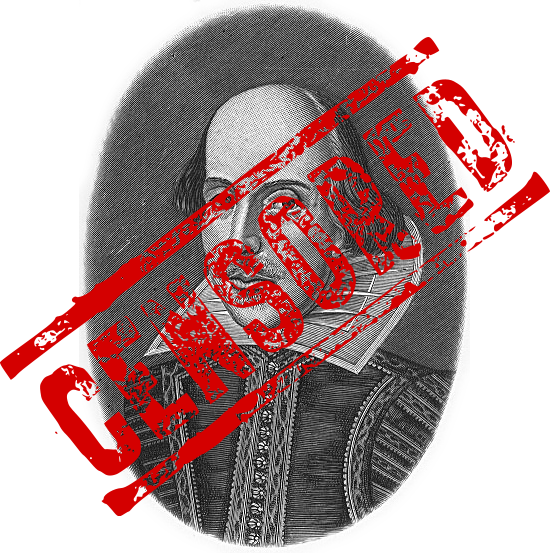
“The Family Shakespeare — in which nothing is added to the original text,censored-shakespeare but those words and expressions are omitted which cannot with propriety be read aloud in a family. My great objects in this undertaking are to remove from the writings of Shakespeare some defects which diminish their value.”

Thus read an introduction for the 1807 edition of Shakespeare’s works, finally made suitable for general audiences by Thomas Bowdler some 200 years after the Bard was safely buried. Certainly Shakespeare, were he alive, could not have objected to having the defects which diminished their value removed from his works. Shakespeare and family values — together at last.

Bowdler undertook this project, along with his sister Henrietta, thanks to childhood memories in which his father had entertained his family with readings from Shakespeare. Only later as an adult did Bowdler realize that his father had been leaving out some of the naughty parts of the plays, anything he felt unsuitable for the ears of his wife and children. Realizing that not all fathers were clever enough to censor on the spot, Bowdler decided it would be worthwhile to publish an edition which came already sanitized.

Shakespeare no doubt would have thanked Thomas Bowdler who joined him in the hereafter on February 24, 1827.


February 23, 1930: Bye Bye Miss American Pie

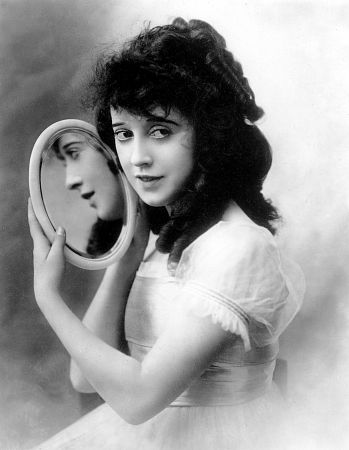
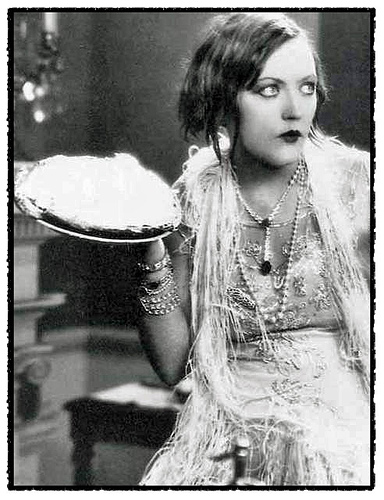
Silent film star Mabel Normand died on February 23, 1930, after a short but stellar career as an actress, screenwriter, director and producer. She collaborated with Mack Sennett and appeared with Charlie Chaplin in a dozen films and Fatty Arbuckle in another 17. It was in one of those films,  that she made cinematic history, in a scene that she became associated with for the rest of her career, when she received a pie in the face from Fatty Arbuckle.  This bit of slapstick became a staple in comic films from then on, and it is the rare comedian who has not received at least one pie in the face.

Pie throwing reached something of a peak in 1965 in the film The Great Race.  In a technicolor pie fight scene  that took five days and cost over $200,000 to film, a total 4,000 pies were hurled in just over four minutes.


Hanging Around in England

In November 1884, Ellen Keyse was found dead in the pantry of her hangingExeter, England, home. She had been beaten and her throat had been cut. John Lee, who worked for the wealthy victim was charged with the crime. The 19-year-old was found guilty and was sentenced to be hanged on February 23, 1885.  On the day of his comeuppance, Lee was led to the gallows, where his executioners placed a noose around his neck. They pulled the lever that would release the floor under him and drop him to his death. The big oops: John Lee was not dispatched — red faces all around. The apparatus had been thoroughly tested the previous day and had been in fine working order. They tried once again. Nothing. And again. Still a no-go. Flabbergasted, they returned Lee to his prison cell, while they pondered the situation.

The authorities remained mystified, so they did what authorities often do when mystified. They attributed the malfunction to an act of God, and rather than risk God’s anger, they commuted his sentence and removed him from death row. He spent 22 years in prison, and upon being released, promptly set sail for America.

February 13, 1862: Thaw Out the Holly

With the giving and getting of gifts growing to a crescendo in late December, it is to many a glass of cold water in the face when the merriment suddenly gives way to a bleak long winter with scarcely a box or a bow in sight. The people of Norwich, a city on England’s east coast, a couple of centuries ago found a way to keep on giving by elevating February 13, St. Valentine’s Eve to a Christmas-like celebration.

According to an 1862 account, this Victorian tradition was evidently peculiar to Norwich: visitors to the city were often puzzled to find the shop windows crammed with gifts in early February and newspapers full of advertisements for ‘Useful and Ornamental Articles Suitable for the Season’ available from local retailers.

As soon as it got dark on St. Valentine’s Eve, the streets were swarming with folks carrying baskets of treasures to be anonymously dropped on doorsteps throughout the city. They’d deposit a gift, bang on the door, and rush away before anyone inside could reach the door. Indoors there were excited shrieks and shouts, flushed faces, sparkling eyes and laughter, a rush to the door, examination of the parcels.

Practical jokers  were everywhere as well, ringing doorbells and running off, leaving mock parcels that were pulled away by string when someone attempted to pick them up. Large parcels that dwindled to nothing as the recipient fought through layer after layer of wrapping, and even larger parcels containing live boys who would jump out, steal a kiss, and run away.

As with most holidays that involve children out after dark and mischief, the celebration of St. Valentine’s Eve fell out of favor, to be replaced by the Hallmark-inspired and saintless Valentine’s Day.

No Valentine, This One

Hal Foster had been drawing the Tarzan comic strip based on the books by Edgar Rice Burroughs for several years, but itched to create his own original strip. He began work on a feature called Derek, Son of Thane, set in Arthurian England. Before the strip had its coming out party on February 13, 1937, it had gone through a couple of name changes, first to Prince Arn and eventually to Prince Valiant.

Prince Valiant was five years old when his story began, a continuous story that has been told through 4,000 Sunday episodes. Without a whole lot of deference to historical accuracy, Val’s adventure’s take him throughout Europe, Africa, the Far East and even the Americas in a time frame covering hundreds of years. He does battle with Huns, Vikings, Sorcerers, witches and a slew of monsters from prehistoric to modern, but always big.

Foster drew the strip until 1971 and wrote the continuity until 1980. Since then, other artists have kept it alive. Foster died in 1982, at age 89.

Fore, I mean duck

Golf is thought of as relatively safe sport.  But for the safety of others, there are just some people who should not be allowed on a golf course.  Vice President Spiro Agnew had the dubious distinction of beaning not just one but three spectators on this day in 1971 during the Bob Hope Desert Classic.  On his very first drive, he sliced into the crowd for a two-bagger, bouncing off a man to nail his wife as well.  On his next shot, he hit a woman, sending her to the hospital.  The previous year, Agnew had managed to hit his partner in the back of the head.


February 5, 1861: Every Peeping Tom, Dick and Harry

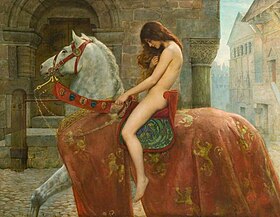
A lady rode through the streets of London on horseback, naked (the lady not the horse), and didn’t get pinched (in the law and order sense, that is).  But more of that later.

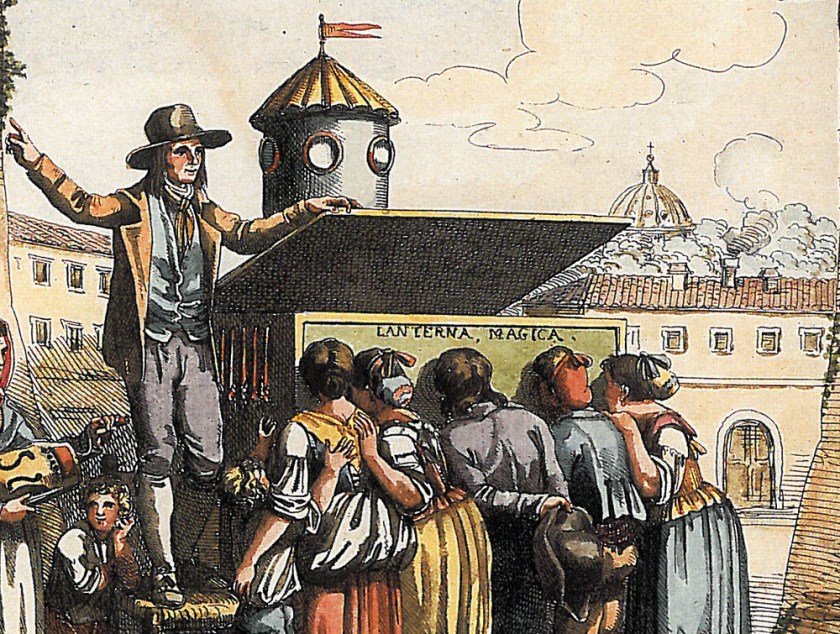
In 1861, Samuel B. Goodale who hailed from Cincinnati received a patent for a clever hand-operated stereoscope device on which still pictures were attached like spokes to an axis which revolved, causing the pictures to come to life in motion — a mechanical peep show that folks viewed through a small hole for a penny a pop.  The usual subjects for peep shows were animals, landscapes,  and theatrical scenes, high-minded, proper subjects.  Nothing naughty or titillating.  How long could that last, you ask.  Not long of course. The peep show quickly came to stand for pictures and performances involving sex.

The term peep show itself comes from Peeping Tom, a sneaky British tailor who made a hole in the shutters of his shop so he might surreptitiously spy on Lady Godiva who felt the need to ride naked naked through the streets of the city.  He was struck blind for his effort.

Collier, John; Godiva; Herbert Art Gallery & Museum

What about this Lady Godiva?  Was she for real?  Yes kids, she was.  And the performance she is famous for took place back in the 11th century.  According to her press agent, Lady Godiva was not just your ordinary exhibitionist giving the folks of Coventry, particularly the Toms, Dicks and Harrys of Coventry, their daily eyeful.  She was a noblewoman, married to the “Grim” Earl of Mercia, a nasty fellow who burdened the folks under his sway with high taxes and poor service.  Lady Godiva pleaded frequently with her husband to give the poor some relief, to no avail.  He eventually agreed to lower the taxes if she would ride through town completely naked. The Lady called his bluff.  To keep her ride from becoming something of the magnitude of a Taylor Swift concert,  the townspeople were told to shutter themselves indoors with no peeping.  Which they did, except for you know who.  In a later interview, Blind Tom said it was worth it.

That Ain’t No Cat in the Hat

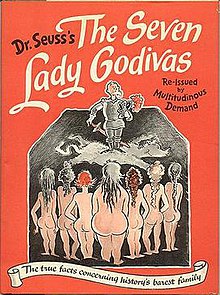
“It was all full of naked women, and I can’t draw convincing naked women.  I put their knees in the wrong places.”  What’s better than a Lady Godiva?  Two Lady Godivas.  Or how about seven?  The story of the seven Godiva sisters was penned by none other than Dr. Seuss, his fourth book and one written for adults or “obsolete children” as he called them.  The seven sisters never wear clothing, not even when they leave the seven Peeping brothers, and head off in the world to warn of the dangers of horses.

The 1939 book had a 10,000 print run with most of them remaining unsold, what Seuss called his greatest failure.  It is one of only two Dr. Seuss books allowed to go out of print.

But Please Lose That Sports Jacket

It has been endlessly debated when and with whom rock and roll actually began, but most enthusiasts have pretty much settled on a guy who cut an unlikely figure for a rock artist but who brought rock and roll into the public eye with a bang in 1955. The man was Bill Haley, along with his Comets, and the song was “Rock Around the Clock” introduced in the film Blackboard Jungle. During the next few years a string of hits including “Shake, Rattle and Roll” and “See Ya Later, Alligator” followed.

Time passes quickly and when you’re at the pinnacle of musical stardom, you’re on a slippery slope. Along comes a guy named Elvis and you’re yesterday’s sha-na-na. Who’s going to scream and carry on for a thin-haired, paunchy 30-year-old musician with a silly curl in the middle of his forehead and a garish plaid sports jacket?

The Brits, that’s who.

By 1957, Bill Haley and the Comets had already enjoyed their golden days of American super-stardom. But the battle of Britain lay ahead. When they stepped off the Queen Elizabeth in Southampton on February 5, they began the first ever tour by an American rock and roll act and launched what rock historians called the American Invasion.

When Haley and the band reached London later that same day, they were greeted by thousands in a melee the press called “the Second Battle of Waterloo.” These were the British war babies just becoming teenagers, and they were ready for American rock and roll.

January 14, 1500: For the Ass Was a Donkey, You See

The Feast of the Ass held on January 14 from around 1100 until 1500 was meant as much as a teach-in as a party-in, a way to present religious doctrine to the illiterati who had no books or Internet access. This festival, held primarily in France as a cousin to the Feast of Fools, celebrated the flight of Joseph, Mary and Jesus into Egypt.

Traditionally, the most beautiful young woman in the village splendidly attired in gold-embroidered cloth, carrying a small child and riding a donkey would be led in a solemn procession through the town to the church. The donkey would stand beside the altar while a mock Mass was performed. Instead of the usual responses to the priest, the congregation would “hee-haw.” At the end of the service, instead of the usual benediction, the priest would bray three times and the congregation would respond with another round of hee-hawing. The choir would then offer up a hymn and everyone would bray along — except for the ass who thought the whole thing rather ridiculous and that these people were all making you know whats of themselves.

Talk to the Donkey

Yes, Doctor Doolittle could talk to the animals, including donkeys. And much more. He ran a post office, a circus and a zoo, took voyages to exotic places around the world, went to the moon. According to the neighborhood mussel-man, he was a nacheralist – “a man who knows all about animals and butterflies and plants and rocks an’ all.” Not only could he talk to and understand animals, he had written history books in monkey-talk, poetry in canary language and songs for magpies to sing. He didn’t just talk to your normal animals like pigs, rats, owls, seals and badgers but to  pushmi-pullyus and wiff-waffs as well.

January 1lofting4 is a red letter day for children who love to read and love animals. Two major authors who spent their lifetimes entertaining the younger set were born on this day 12 years and an ocean apart.

Hugh Lofting, creator of the amazing Doctor Doolittle from Puddleby-on-the-Marsh, was born in 1886 in Maidenhead, England. He wrote a dozen books featuring the doctor , a character he first created in letters to his children during his World War I service in the Irish Guards. The Story of Doctor Doolittle: Being the History of His Peculiar Life at Home and Astonishing Adventures in Foreign Parts Never Before Printed began the series in 1920 and was followed two years later by The Voyages of Doctor Dolittle.

Born on Cape Cod in 1874, Thornton Burgess was a conservationist and prolific writer of burgess1children’s books, producing 170 books between 1910 and 1965.  His books celebrated nature, featuring the many animals that lived in the Green Meadow and Green Forest.

Mother West Wind “How” Stories, an early collection of 16 stories, told how Lightfoot the Deer learned to jump, how the eyes of Old Mr. Owl became fixed, how Drummer the Woodpecker came by his red cap and so on. Other collections told when, where and why various animal things happened – Wild Kingdom without Marlin Perkins or TV commercials The anthropomorphic forest and meadow creatures that had their own adventure books included Peter Rabbit, Jimmy Skunk, Grandfather Frog, Little Joe Otter, Granny Fox, Jerry Muskrat and Digger the Badger to name just a few.


January 8, 1310: How Cold Was It?

In England, this stretch of January  is considered the coldest of the year, probably because of the great frost that began on January 8 in 1310 with such cold that the Thames froze over so thickly bonfires could be lit on it.  Snow and piles of ice lasted through March.  In many subsequent years, folks would hold festivals with thousands of them stomping around on the frozen Thames.

How cold was it?   It was so cold that

. . . pickpockets were sticking their hands in strangers’ pockets just to keep them warm.

. . .  politicians had their hands in their own pockets.

. . . the squirrels in the park were throwing themselves at an electric fence.

. . . when I turned on the shower I got hail.

. . . mice were playing hockey in the toilet bowl.

Ode to Snow

Warning – the following is quite lyrical.

O glorious snow surrounding me with immense drifty mounds!

What do thy mounds conceal?  How many cocker spaniels, small children, miniCoopers have you swallowed, not to be seen again until May.  I am quite conscious of those mounds surrounding me, looming, as I go to fetch the mail, keeping close to the shoveled path lest I too be lost in the mounds ‘til May.

But the path is icy (for that’s what winter is about – snow and ice, ice and snow) and my feet, which have been more accustomed to soft earth, grassy carpeting, fly out from neath me.

I fall to the cruel ice.

And here I am in a place from which I never thought I’d be needing to shout:  “Help me.  I’ve fallen and I can’t get up.”  But I’m not going to shout, for it seems my mouth is frozen to the icy path.  O glorious ice!  Ice that holds me close to its vast but damn cold bosom.

I wait, hoping that someone will come along – a girl scout  peddling cookies, a hot dog vendor, or the UPS man delivering a package of lip warmers.  Or have they too been swallowed by the shifting, whispering mounds of snow?

I tell myself it could be worse; I could be in Chicago.  It doesn’t help.

Now my life flashes before me, especially the part where I’m on a beach in the Caribbean.   But what’s this?  My face is stuck in the sand.  Children frolic nearby, pointing and laughing.  “Hey, mon, why’s your face in the sand?”  Tanned beauties stroll by at a safe distance whispering about senility and too many pina coladas.    A sand crab sidles up and pinches my nose, and I’m suddenly back in frozen Vermont.

But help seems to be at hand.

Two Jehovah’s Witnesses approach.   They look down at me and ask,  “Are you ready to be saved?”  “Doesn’t it look like I’m ready to be saved?” I shout, but no words come out.   They chip me free from the ice with their Watchtowers.  I thank them, accept an armload of their publications, and they ask me if I’m ready for the end of the world.

You betcha.


MAY 9, 1671: STALKING THE CROWN JEWELS

In the movie The Adventures of Sherlock Holmes, Holmes’ nemesis Professor Moriarty is out to steal the crown jewels. His  battle of wits with Holmes over England’s great treasure lasts about an hour.  Earlier, an Irishman, Colonel Thomas Blood, attempted the same feat with a much more elaborate plan.

Colonel Blood set the plan in motion in April with a visit to the Tower of London. Dressed as a parson and accompanied by a woman pretending to be his wife, Blood made the acquaintance of Talbot Edwards, an aged but trustworthy keeper of the jewels. During this time, the jewels could be viewed by the payment of a fee. After viewing the regalia, Blood’s “wife” pretended to be taken ill, upon which they were conducted to Edward’s lodgings where he gave her a cordial and treated her with great kindness. Blood and his accomplice thanked the Edwardses and left.

Blood returned a few days later with a half dozen gloves as a present to Mrs. Edwards as a gesture of thanks. As Blood became ingratiated with the family, he made an offer for a fictitious nephew of his to marry the Edwardses’ daughter, whom he alleged would be eligible upon their marriage to an income of several hundred pounds. It was agreed that Blood would bring his nephew to meet the young lady on May 9, 1671.  At the appointed time, Blood arrived with his supposed nephew, and two of his friends, and while they waited for the young lady’s appearance, they requested to view the jewels. Edwards accommodated the men but as he was doing so, they threw a cloak over him and struck him with a mallet, knocking him to the floor and rendering him senseless.

Blood and his men went to work. Using the mallet, Blood flattened out the crown so that he could hide it beneath his clerical coat. Another filed the sceptre in two to fit in a bag, while the third stuffed the sovereign’s orb down his trousers.

The three ruffians would probably have succeeded in their theft but for the opportune arrival of Edwards’ son and a companion, Captain Beckman. The elder Edwards regained his senses and raised the alarm shouting, “Treason! Murder! The crown is stolen!” His son and Beckman gave pursuit.

As Blood and his gang fled to their horses waiting at St. Catherine’s Gate, they dropped the sceptre and fired on the guards who attempted to stop them. As they ran along the Tower wharf, they were chased down by Captain Beckman. Although Blood shot at him, he missed and was captured before reaching the Iron Gate.  The crown, having fallen from his cloak, was found while Blood struggled with his captors, declaring, “It was a gallant attempt, however unsuccessful, for it was for a crown!” — a rather eloquent comeuppance speech which today would be something more along the lines of “Oh fuck!”

MAY 8, 1854: A MILE IN WHOSE SHOES?

Celebrated pedestrian Robert Barclay Allardice, 6th Laird of Ury, generally known simply as Captain Barclay, died on May 8, 1854. During his life he accomplished many feats in the world of walking, and is, in fact, considered the father of pedestrianism, a popular sport of the 19th century.


His first feat, at the age of fifteen, was to walk six miles in an hour ‘fair heel and toe.’ Heel and toe was a rather vague rule of pedestrianism, that the toe of one foot could not leave the ground before the heel of the other foot touched down. It was randomly enforced. In 1801, at the age of 22, Barclay walked from Ury to Boroughbridge, a distance of 300 miles in five oppressively hot days, and in that same year, he walked 90 miles in 21 and a half hours, winning 5000 guineas for his fancy footwork.


His most famous feat came in 1809 when he undertook the task of walking 1000 miles in 1000 successive hours, a mile within each hour, a challenge in which many had failed and none had succeeded. At stake was 100,000 pounds (roughly 8 million dollars today). This feat captured the imagination of the public, and 10,000 people came to watch over the course of the event, cheering him on or wishing him ill fortune depending on the direction of their own wagers. He began his course at midnight on June 1 and finished it at 3 p.m. on July 12.


Pedestrian races were popular with both the media and the public throughout the 19th century, drawing throngs of spectators, along with bookies, touts and other unsavory characters who frequent such competitions. With the coming of the automobile, however, pedestrianism became an endangered sport as pedestrians themselves became an endangered species, serving mostly as targets for mechanized sporting types.  It does remain in our popular culture, however, with such paeans to pedestrianism as “The Stroll,” “Walk on the Wild Side,” “Walk Like a Man,” and “Walk This Way.”


Walking the Dogs

On May 8, 1877, 1,201 of the classiest American canines convened at the Hippodrome in New York City to compete for the the title of top dog.  This was the first dog show to be held under the guidance of the Westminster Kennel Club, and it has been held annually ever since.  Among the luminaries at that first event were two Staghounds from the pack of the late General George Custer and two Deerhounds bred by Queen Victoria.

Eighteen years later, on May 8, 1895, felines had their turn in the spotlight at the first cat show held in New York at Madison Square Garden.  This was a more down to earth affair with prizes given in several categories including the best stray alley cat.

APRIL 19, 1949: SEND IN THE CLOWNS

russian

With the threat of nuclear annihilation hanging over the world, cold war adversaries were nonetheless able to find glimmers of humor. At the opening night of the Moscow Circus, noted Russian clown, Konsantin Berman, demonstrated who had the upper hand in the clown cold war, launching barb after barb in the direction of the United States.

Tossing a boomerang, he likened it to the U.S. Marshall Plan that was pumping economic recovery aid into Western Europe. “American aid to Europe,” he said, “Here is the dollar.” as the boomerang returned to his hand, delighting the audience. Producing a radio that bellowed out the sound of barking dogs, he announced: “That’s the Voice of America.”

Meanwhile American clowns were dumping buckets of water on each other and slipping on banana peels.

Speaking of Banana Peels

The Vagabond King a 1925 operetta by Rudolf Frimi was already an American success when it opened in London on April 19, 1927.  It’s success in England was probably assured given its theme of foibles of the French.  Its hero is a braggart, thief and rabble-rouser who attempts to steal an aristocratic lady from the king himself.  Not only that, he openly mocks the king, boasting about what he would do if he were king.  The angry king gives him royal powers for 24 hours — king for a day — during which he must solve all France’s problems or go to the gallows (the guillotine had not yet been invented).  He succeeds, wins the lady’s hand and lives happily ever after in exile — probably in England.  The operetta was the inspiration for a couple of movies and, of course, the popular radio and television program “Queen for a Day.”