AUGUST 9, 1639: TIPTOE THROUGH THE BOROUGHS

Jonas Bronck was the Norwegian son of a Lutheran minister born sometime around 1600. Or he was a Swedish sailor in the Danish Merchant Marine. Or a Dutch Mennonite who fled the Netherlands because of religious persecution. Or German.

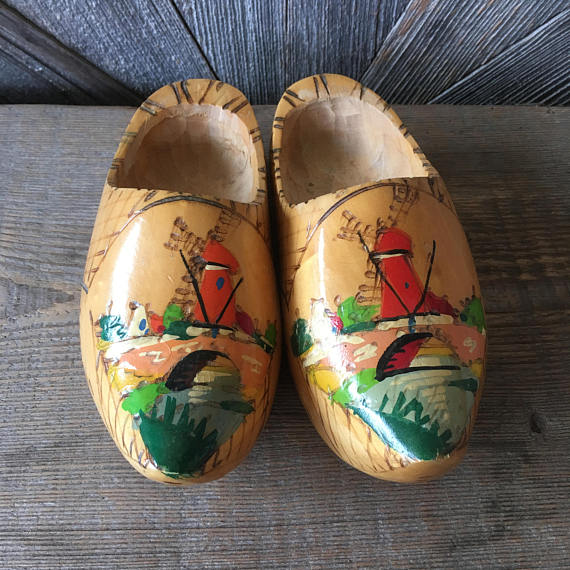
In any event, he was an immigrant to the Dutch colony of New Netherland during a time when the greetings-bronxDutch were trying to increase its colonial population by relocating folks who had gone broke during the bursting of the tulip mania bubble in 1637. The English, who didn’t give a whit about tulips, were copulating and populating the New World like so many limey rabbits, and the Dutch were urged to get out of those wooden shoes and get with it.

Thus, Jonas Bronck arrived in New Netherland in 1639 aboard a ship ostentatiously named The Fire of Troy, whereupon he purchased himself a large tract of land from the local Lenape tribe for 400 beads. (You will remember that Dutch wheeler-dealer, Peter Minuit, who snapped up Manhattan for 26 bucks.)

Bronck’s 500 acres was just across the river from the village of Harlem, an easy commute to the Apollo Theater even then. Although Bronck traded with the locals, relations were not good, thanks to the Dutch practice of frequently murdering large numbers of them. Eventually, the they told Bronck to take his 400 beads and shove them, then killed him to reinforce the point.

Eventually, those populating English took over the Dutch lands. Jonas Bronck might have been completely forgotten, but for the river that retained Bronck’s name, mangled a bit to become the Bronx River. By extension, the land around it became The Bronx (and living there known as Bronxitis). This is fortunate, for the original Lenape name was Rananchqua.

We’ll have Manhattan, Rananchqua and Staten Island, too?

MAY 31, 1578: What’s in a Name I: Martin Frobisher

English sailor/privateer Sir Martin Frobisher visited the New World three times on his quest for — what else? — that elusive Northwest Passage to Asia.  Setting sail from England on May 31, 1578, on his second voyage, he sailed up Labrador way and into — talk about coincidences — Frobisher Bay.  One piece of luck followed another.  Ashore, on what is now Baffin Island, he discovered gold ore.  Lots of it.  He loaded three ships with 200 tons of the stuff and returned merrily to England.  He sailed right back to the New World for more gold ore with an even larger fleet of ships, giving nary a thought to that damn Northwest Passage.  1,350 tons this time around.

Time passed, and as the gold ore was smelted, Frobisher basked in the thoughts of his future wealth.  Alas, it wasn’t to be.  Efforts to extract gold revealed that the supposed gold ore was worthless rock.  The ore was repurposed for road construction, and thus the streets of London were paved with gold — fool’s gold, that is.

What’s in a Name II: Engel K0r . . . What’s Her Name

Engel Korsendochter was the daughter of wealthy burghers (not to be confused with, well you know) Corsgen Elbertsznoon and Geertruyt Hendriksdr van der Schelling.  She married Heiman Jacobsnoon, the mayor of the Frisian city of Amstelerdam. Astute almanackers will realize that we have journeyed back to the world of windmills, tulips, wooden shoes and Dutch masters (painters not cigars).  Engel and Heiman of the moniker mouthfuls were stars of a rebellion that took place on May 31, 1531.  (Those same astute almanackers will probably remember the Dutch undertakers rebellion, January 31, 1696.)  Heiman was a Protestant sympathizer;  Engel was Catholic through and through, with two sister sisters and a Franciscan father to prove it.  Engel herself was the head of the Guild of the Holy Sacrament, a society charged with protecting a chapel (between Kalverstraat and Rokin, if you care).

City authorities had called for the chapel to be torn down to make room for a wool shed (was Heiman involved?) Engel led three hundred women in a protest march that brought a lot of attention to their cause but got them banished from Amsterdam for four years.  They were later pardoned by Catholic King Charles V.

An altarpiece attempts to honor Engel Korsendoc —


MAY 24, 1626: FOR TWO GUILDERS MORE, WE’LL THROW IN QUEENS

In what is often called the greatest real estate deal ever, Peter Minuit bought Manhattan from native Americans on May 24, 1626, for goods valued at 60 guilders. Popular history identifies these goods as baubles, bangles and bright shiny beads (celebrated in song by Alexander Borodin in his String Quartet in D, routinely hummed on special Dutch occasions, since the words were not written until 1953 for the musical Kismet which in Dutch means “we could have bought the Brooklyn Bridge for a wedge of cheese had it been built.”)


The actual figure of 60 guilders was determined in the seventeenth century using a Dutch version of Generally Recognized Accounting Practices (GRAP) – known back then as Chicanery (C). In 1846, a New York historian converted this figure to dollars and came up with an amount of $24. Since then, people have regularly tried to update the $24 amount to today’s dollars. But as Edwin G. Burrows and Mike Wallace pointed out in their history of New York,”[A] variable-rate myth being a contradiction in terms, the purchase price remains forever frozen at twenty-four dollars.” Nevertheless people continue to point out what those baubles were worth in today’s dollars, euros or guilders. All the results are rather boring.


The transaction is often viewed as one-sided and beneficial to the Dutch, although some evidence suggests that Minuit actually purchased the island from a traveling beaver hide salesman who happened to be passing through and who had never heard of, let alone owned, Manhattan. At about the same time, Minuit was involved in another land purchase, that of Staten Island, for much more mundane goods such as kettles and cloth and garden tools (hence the phrase “we’ll buy Manhattan, the Bronx and Staten Island too.”)

Strangely enough, the aforementioned Brooklyn Bridge (remember that?) was opened to traffic on this very day in 1883.  And a Dutch tourist bought it for 100 guilders from a New York cabbie who claimed to be a full-blooded Manhattan Indian.


MAY 13, 1619: WALK A MILE IN HIS WOODEN SHOES

     Johan van Olden Barneveldt was a statesman who played an important role in the Dutch struggle for independence from Spain. His name is also associated – at least, according to British accounts – with a nation’s lack of gratitude for those who devote their lives to its service.  (The English have frequently displayed an antipathy toward the Dutch which has manifested itself in the language. A Dutch uncle is the opposite of a kindly relative; Dutch courage is a synonym for drunkenness; a Dutch treat is a demonstration of stinginess.)

     As Land’s Advocate for the States of Holland, an office he held for 32 years, Olden Barneveldt was the chief civil officer with tremendous influence in a republic without any central executive authority. And it was Olden Barneveldt who obtained for his country a footing among the powers of Europe, gaining peace and prosperity, freeing it from debt. He restored Dutch integrity by gaining back towns which had been surrendered to England as collateral for a loan and gained recognition of Dutch independence from Spain.

     The country owed nearly everything to this capable and upright administrator. Yet he had enemies. One Prince Maurice of Orange, head of the military forces, along with other military and naval leaders and the Calvinist clergy, were opposed to the peace with Spain, contending that the Spanish king was merely seeking time to recuperate his strength for a renewed attack against Dutch independence.

     This coalition against Olden Barneveldt proved to be overwhelming as well as nefarious. In 1619, he was arraigned before a special court of 24 members, only half of whom were Hollanders, and nearly all of whom were his personal enemies. In a mockery of justice, this kangaroo court ( a phrase showing English antipathy toward Australians?) condemned him to death, a sentence which was promptly carried out the following day, May 13, 1619, when the 72-year-old statesman was executed at the Hague.

Dutch Bad, Americans Good?

Fred Turner believed that people are basically  good.  In May of 1992 he set out from Beaufort, South Carolina, on a walk across America to underscore that belief.  A week into his walk, on May 13, Turner was crossing the Tuckaseking Bridge in Georgia when he met several men.  They asked him if he was the one whose walk they had read about in the paper.  When he told them he was they said: “Good, then give me your wallet.”  And when he complied, they beat him up and shoved him off the bridge.  He floated to a nearby island where he spent the night nursing two black eyes and a lot of bruises.  And perhaps reassessing his opinion of mankind.

January 31, 1696: Gobsmacked by a Dutch Undertaker

One would not think of undertakers as having particularly fiery dispositions.  Especially Dutch undertakers. They’d probably look at a current corpse  and realize they had it better than that poor bloke.  The most you might expect would be a mild oath such as “Go stick your finger in a dike.”  Thus it comes as a surprise that Dutch undertakers rose up in revolt on January 31, 1696.  On that day, they rioted in the streets 0f Amsterdam.

The cause of their dudgeon was a death tax, a tax on the burial of people, and since the person being buried would not be paying the tax, the undertakers got stiffed.  Not only that, the Amsterdam City Council reduced the number of official undertakers allowed from 300 to 72.  (They also reduced the number of political commentators to 1, but no one seemed to care.) The petulant undertakers stormed right up to the house of the Mayor of Amsterdam.  Someone in the crowd (most likely an undercover government operative) shouted “We’ll huff and we’ll puff and we’ll blow your house down.”  Which they did.  And they carried off the Mayor and tossed him into the Zuider Zee, wooden shoes and all.  Sailors and Dutch Uncles joined the revolt which moved on to the houses of the City Captain, Burgomasters and other city elite who also received their comeuppance.

Then as quickly as it had started, the riot ended.  Some say the undertaker’s hearts grew three sizes that day; others say it was cocktail time.  Nevertheless the Aansprekersoproer (that’s the official title of the event) ended, and shortly afterward the death tax was repealed.


Glasnost on a Sesame Seed Bun

Muscovites lined up on January 31, 1990, to try a most unRussian guilty pleasure. The Soviet Union might be crumbling around them, but that icon of Western decadence was riding high. McDonald’s had come to town.

Those Big Macs, with fries and shakes might cost a day’s wages, but the people of Moscow were eating them up. The notorious golden arches of capitalism were signs that times they were a’changing in the Soviet Union – in fact, within two years the Soviet Union would dissolve. A Soviet journalist saw no great political earthquake but rather an “expression of pragmatism toward food.” Could the Quarter Pounder be the ultimate example of the People’s Food?

Photographer: Andrey Rudakov/Bloomberg via Getty Images

Located in Pushkin Square, this McDonald’s was the world’s largest, boasting 28 cash registers and a seating capacity of 700. Its opening day broke a McDonald’s record with more than 30,000 customers served.

Moscow resident Natalya Kolesknikova told Russian State Television that when out-of-town guests came to visit, she showed them two things, McDonald’s and the McKremlin.

In 2022, there were 850 McDonald’s in Russia. Then Russia invaded Ukraine.  And McDonald’s is pulling out of a market it’s been a part of for 32 years, “de-arching” and selling every one of its restaurants.


MAY 24, 1626: FOR TWO GUILDERS MORE, WE’LL THROW IN QUEENS

In what is often called the greatest real estate deal ever, Peter Minuit bought Manhattan from native Americans on May 24, 1626, for goods valued at 60 guilders. Popular history identifies these goods as baubles, bangles and bright shiny beads (celebrated in song by Alexander Borodin in his String Quartet in D, routinely hummed on special Dutch occasions, since the words were not written until 1953 for the musical Kismet which in Dutch means “we could have bought the Brooklyn Bridge for a wedge of cheese had it been built.”)


The actual figure of 60 guilders was determined in the seventeenth century using a Dutch version of Generally Recognized Accounting Practices (GRAP) – known back then as Chicanery (C). In 1846, a New York historian converted this figure to dollars and came up with an amount of $24. Since then, people have regularly tried to update the $24 amount to today’s dollars. But as Edwin G. Burrows and Mike Wallace pointed out in their history of New York,”[A] variable-rate myth being a contradiction in terms, the purchase price remains forever frozen at twenty-four dollars.” Nevertheless people continue to point out what those baubles were worth in today’s dollars, euros or guilders. All the results are rather boring.


The transaction is often viewed as one-sided and beneficial to the Dutch, although some evidence suggests that Minuit actually purchased the island from a traveling beaver hide salesman who happened to be passing through and who had never heard of, let alone owned, Manhattan. At about the same time, Minuit was involved in another land purchase, that of Staten Island, for much more mundane goods such as kettles and cloth and garden tools (hence the phrase “we’ll buy Manhattan, the Bronx and Staten Island too.”)

Strangely enough, the aforementioned Brooklyn Bridge (remember that?) was opened to traffic on this very day in 1883.  And a Dutch tourist bought it for 100 guilders from a New York cabbie who claimed to be a full-blooded Manhattan Indian.


AUGUST 9, 1639: TIPTOE THROUGH THE BOROUGHS

Jonas Bronck was the Norwegian son of a Lutheran minister born sometime around 1600. Or he was a Swedish sailor in the Danish Merchant Marine. Or a Dutch Mennonite who fled the Netherlands because of religious persecution. Or German.

In any event, he was an immigrant to the Dutch colony of New Netherland during a time when the greetings-bronxDutch were trying to increase its colonial population by relocating folks who had gone broke during the bursting of the tulip mania bubble in 1637. The English, who didn’t give a whit about tulips, were copulating and populating the New World like so many limey rabbits, and the Dutch were urged to get out of those wooden shoes and get with it.

Thus, Jonas Bronck arrived in New Netherland in 1639 aboard a ship ostentatiously named The Fire of Troy, whereupon he purchased himself a large tract of land from the Lenape Indians for 400 beads. (You will remember that Dutch wheeler-dealer, Peter Minuit, who snapped up Manhattan for 26 bucks.)

Bronck’s 500 acres was just across the river from the village of Harlem, an easy commute to the Apollo Theater even then. Although Bronck traded with the local Indians, relations were not good, thanks to the Dutch practice of frequently murdering large numbers of Indians. Eventually, the Indians told Bronck to take his 400 beads and shove them, then killed him to reinforce the point.

Eventually, those populating English took over the Dutch lands. Jonas Bronck might have been completely forgotten, but for the river that retained Bronck’s name, mangled a bit to become the Bronx River. By extension, the land around it became The Bronx (and living there known as Bronxitis). This is fortunate, for the original Lenape name was Rananchqua.

We’ll have Manhattan, Rananchqua and Staten Island, too?

MAY 24, 1626: FOR TWO GUILDERS MORE, WE’LL THROW IN QUEENS

In what is often called the greatest real estate deal ever, Peter Minuit bought Manhattan from native Americans on May 24, 1626, for goods valued at 60 guilders. Popular history identifies these goods as baubles, bangles and bright shiny beads (celebrated in song by Alexander Borodin in his String Quartet in D, routinely hummed on special Dutch occasions, since the words were not written until 1953 for the musical Kismet which in Dutch means “we could have bought the Brooklyn Bridge for a wedge of cheese had it been built.”)


The actual figure of 60 guilders was determined in the seventeenth century using a Dutch version of Generally Recognized Accounting Practices (GRAP) – known back then as Chicanery (C). In 1846, a New York historian converted this figure to dollars and came up with an amount of $24. Since then, people have regularly tried to update the $24 amount to today’s dollars. But as Edwin G. Burrows and Mike Wallace pointed out in their history of New York,”[A] variable-rate myth being a contradiction in terms, the purchase price remains forever frozen at twenty-four dollars.” Nevertheless people continue to point out what those baubles were worth in today’s dollars, euros or guilders. All the results are rather boring.


The transaction is often viewed as one-sided and beneficial to the Dutch, although some evidence suggests that Minuit actually purchased the island from a traveling beaver hide salesman who happened to be passing through and who had never heard of, let alone owned, Manhattan. At about the same time, Minuit was involved in another land purchase, that of Staten Island, for much more mundane goods such as kettles and cloth and garden tools (hence the phrase “we’ll buy Manhattan, the Bronx and Staten Island too.”)

Strangely enough, the aforementioned Brooklyn Bridge (remember that?) was opened to traffic on this very day in 1883.  And a Dutch tourist bought it for 100 guilders from a New York cabbie who claimed to be a full-blooded Manhattan Indian.