November 8, 1957: Flying Too High

Pan Am’s Flight 7 was known as the Clipper Romance of the Skies, an around-the-world flight that originated in San Francisco and flew west, eventually arriving in Philadelphia. The plane itself was a Boeing B-377 Stratocruiser. Introduced in 1947, the aircraft was the biggest, the fastest, and the fanciest, called “the ocean liner of the air.”

Pullman-style sleeping berths, separate men’s and women’s dressing rooms, a cocktail lounge in the belly of the airplane, reclining seats that offered 60 inches of something they used to have called legroom. Seven-course dinners, with champagne and caviar, catered by Maxim’s of Paris. This you could happily go through searched luggage and patdowns for, but there weren’t any.

Of course it was expensive – a $1,600 round-the-world fare (equivalent to $10,500 today).

When the November 8, 1957, flight left the gate shortly before noon for its first leg, the nine-and-a-half-hour flight to Honolulu, 38 passengers were aboard. They included the vice president of Renault Auto, a French flying ace, the general manager of Dow Chemical in Tokyo, a well-known Phoenix dress designer, a Louisville surgeon, a spice company honcho, and a U.S. Air Force major on a mysterious mission to southeast Asia with a briefcase full of classified documents.

At 4:04 p.m., the flight captain radioed a routine position report from an altitude of 10,000 feet to the Pontchartrain, a Coast Guard weather ship stationed in the Pacific. Romance of the Skies had just passed the point of no return, on course and on schedule, 1,160 miles from Honolulu and about 10 miles east of the Pontchartrain. The skies were clear and the seas calm, the sun low in the western sky. The plane was never heard from again.

The biggest air-sea search since the disappearance of Amelia Earhart ended just days later with the discovery of 19 bodies and floating wreckage about 1,000 miles northeast of Honolulu. And the little that was recovered from the flight only deepened the mystery. There had been no distress call; the location of the debris showed that the Clipper was well off course; and, finally, elevated levels of carbon monoxide were found in several of the recovered bodies.

The definitive cause of the accident has never been determined. Speculation includes a malfunctioning engine, a disgruntled flight crew member, and insurance related fraud that involving an explosive device. And then there’s that mysterious major.

Way Bigger Than a Breadbox

To most people, Dorothy Kilgallen was known as a long-time panelist on the television game show What’s My Line? (Does ‘Is it bigger than a breadbox?’ ring a bell?) or as a high society New York newspaper columnist. She was also throughout her career a rather enterprising reporter. Her journalism coming out party was a 1936 race around the world against two male colleagues. Her cabled columns and a book Girl Around the World made her a celebrity.

In 1963, she once again took up the role of daring reporter. According to a biographer, Kilgallen was devastated when President Kennedy was shot by Lee Harvey Oswald. She was among those who refused to believe that Oswald acted alone. She spent the next two years in her own investigation of the assassination, gathering evidence and conducting interviews. She was the only reporter to interview Jack Ruby, and she somehow got hold of an advance copy of the Warren Commission report even before President Lyndon Johnson had seen it. He was miffed.

So was J. Edgar Hoover. The FBI and CIA both began to follow her and her friends. She was interrogated, and her phone was tapped. In 1965, she told her lawyer that she was going to break the real story and that it would be the scoop of the century. She planned to meet a secret informant in New Orleans.

On November 7, she appeared on What’s My Line? as usual, and afterward wound down with a few drinks along with other members of the show before returning to her apartment. The next day — November 8, 1965 — she was found dead, sitting up in bed in a blue bathrobe and still wearing in her hair a floral accessory from the previous evening. On her nightstand, an empty sleeping pill bottle and a drinking glass. The police playing the bumblers they traditionally play in detective fiction found nothing suspicious. Her death was attributed to an accidental overdose.
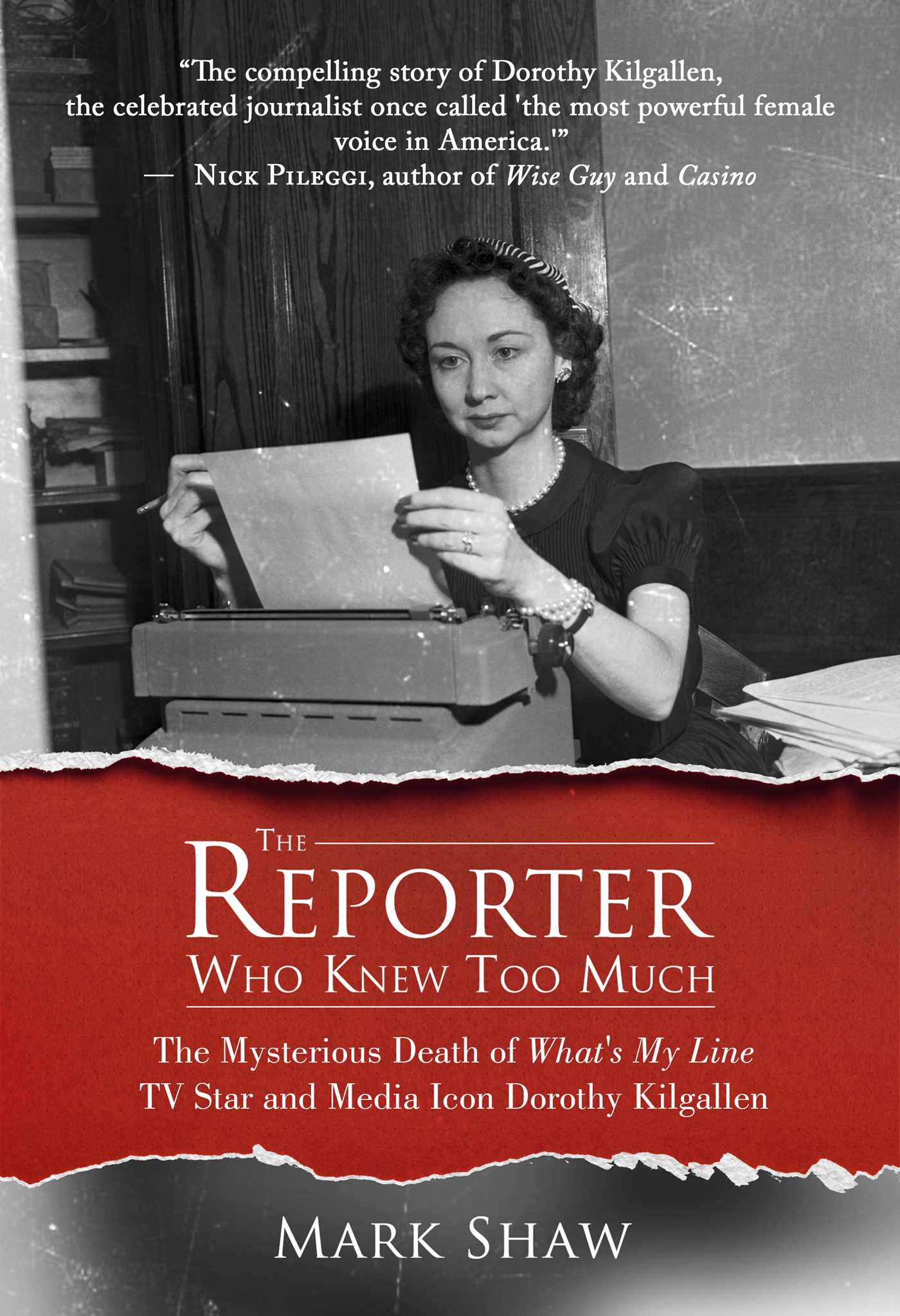
Loose ends included the fact that her accumulated evidence had gone missing, that she was found in a bed she never slept in wearing clothes she never wore to bed, that she had recently bought a gun telling her hairdresser she was ‘scared for her life.’ Lawyer and author Mark Shaw suggested in a 2016 book The Reporter Who Knew Too Much that Kilgallen’s death was orchestrated by a mobster who feared her book would name him as the mastermind behind Kennedy’s assassination.

 

November 8, 1957: Return with Us Now to Those Days of Legroom

Pan Am’s Flight 7 was known as the Clipper Romance of the Skies, an around-the-world flight that originated in San Francisco and flew west, eventually arriving in Philadelphia. The plane itself was a Boeing B-377 Stratocruiser. Introduced in 1947, the aircraft was the biggest, the fastest, and the fanciest, called “the ocean liner of the air.”

Pullman-style sleeping berths, separate men’s and women’s dressing rooms, a cocktail lounge in the belly of the airplane, reclining seats that offered 60 inches of something they used to call legroom. Seven-course dinners, with champagne and caviar, catered by Maxim’s of Paris. You could happily go through searched luggage and patdowns for this, but there weren’t any.

Of course it was expensive – a $1,600 round-the-world fare (equivalent to $10,500 today).

When the November 8, 1957, flight left the gate shortly before noon for its first leg, the nine-and-a-half-hour flight to Honolulu, 38 passengers were aboard. They included the vice president of Renault Auto, a French flying ace, the general manager of Dow Chemical in Tokyo, a well-known Phoenix dress designer, a Louisville surgeon, a spice company honcho, and a U.S. Air Force major on a mysterious mission to southeast Asia with a briefcase full of classified documents.

At 4:04 p.m., the flight captain radioed a routine position report from an altitude of 10,000 feet to the Pontchartrain, a Coast Guard weather ship stationed in the Pacific. Romance of the Skies had just passed the point of no return, on course and on schedule, 1,160 miles from Honolulu and about 10 miles east of the Pontchartrain. The skies were clear and the seas calm, the sun low in the western sky. The plane was never heard from again.

The biggest air-sea search since the disappearance of Amelia Earhart ended just days later with the discovery of 19 bodies and floating wreckage about 1,000 miles northeast of Honolulu. And the little that was recovered from the flight only deepened the mystery. There had been no distress call; the location of the debris showed that the Clipper was well off course; and, finally, elevated levels of carbon monoxide were found in several of the recovered bodies.

The definitive cause of the accident has never been determined. Speculation includes a malfunctioning engine, a disgruntled flight crew member, and insurance related fraud  involving an explosive device. And then there’s that mysterious major.

Way Bigger Than a Breadbox

To most people, Dorothy Kilgallen was known as a long-time panelist on the television game show What’s My Line? (Does ‘Is it bigger than a breadbox?’ ring a bell?) or as a high society New York newspaper columnist. She was also throughout her career a rather enterprising reporter. Her journalism coming out party was a 1936 race around the world against two male colleagues. Her cabled columns and a book Girl Around the World made her a celebrity.

In 1963, she once again took up the role of daring reporter. According to a biographer, Kilgallen was devastated when President Kennedy was shot by Lee Harvey Oswald. She was among those who refused to believe that Oswald acted alone. She spent the next two years in her own investigation of the assassination, gathering evidence and conducting interviews. She was the only reporter to interview Jack Ruby, and she somehow got hold of an advance copy of the Warren Commission report even before President Lyndon Johnson had seen it. (He was miffed.)

So was J. Edgar Hoover. The FBI and CIA both began to follow her and her friends. She was interrogated, and her phone was tapped. In 1965, she told her lawyer that she was going to break the real story and that it would be the scoop of the century. She planned to meet a secret informant in New Orleans.

On November 7, she appeared on What’s My Line? as usual, and afterward wound down with a few drinks along with other members of the show before returning to her apartment. The next day — November 8, 1965 — she was found dead, sitting up in bed in a blue bathrobe and still wearing in her hair a floral accessory from the previous evening. On her nightstand, an empty sleeping pill bottle and a drinking glass. The police, playing the bumblers they traditionally play in detective fiction, found nothing suspicious. Her death was attributed to an accidental overdose.

Loose ends included the fact that her accumulated evidence had gone missing, that she was found in a bed she never slept in wearing clothes she never wore to bed, that she had recently bought a gun telling her hairdresser she was ‘scared for her life.’ Lawyer and author Mark Shaw suggested in a 2016 book The Reporter Who Knew Too Much that Kilgallen’s death was orchestrated by a mobster who feared her book would name him as the mastermind behind Kennedy’s assassination.

October 19, 1936: Girl Around the World

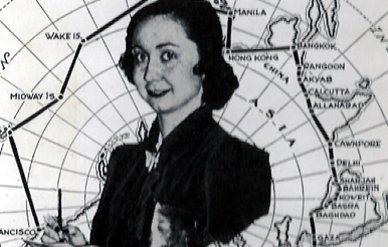
Reporters Leo Kieran of the New York Times and Herbert Ekins of the World-Telegram were out to demonstrate that air travel was shrinking the world and that it was pretty much in the reach of most people. They would do this by means of a race around the globe using kilgallen2commercial transportation available to anyone with the price of a ticket. When the race started on the evening of September 30, 1936, they had been joined by a last-minute participant from the Evening Journal — a 23-year-old rookie crime reporter named Dorothy Kilgallen.

A fierce rainstorm kept the three contestants out of the air for the first leg of the race — a short hop to Lakehurst, New Jersey, to catch the airship Hindenburg. Kilgallen almost missed the flight, but the crew delayed departure until she boarded.

Ekins quickly proved to be the savviest traveler as well as the most competitive. Arriving late in Frankfurt, Germany, he quickly boarded a KLM DC-2, a plane that had finished second in an air race from London to Melbourne. Kilgallen and Kieran, on the other hand, headed to Brindisi, Italy, by train to catch a flight from there to Hong Kong on a British carrier, Imperial Airways. The train was excruciatingly slow, and the flight was delayed for seven hours because of wind.

When the two reporters arrived at a stopover in Bangkok, Siam, Kilgallen opted to hire a single-engine plane whose pilot lost his way in Indochina and made a frightening landing in the middle of a field before finding his way to Hong Kong.

Waiting to board a steamship headed from Hong Kong to Manila and the Pan Am China Clipper for the flight back to the States, Kieran and Kilgallen learned that Ekins had come and gone. He had talked his way onto a Pan Am trial flight as a crew member. Although taking the no-passenger flight was cheating, Ekins was pronounced the winner, having completed his journey on October 19.

With just the tiniest bit of grousing, the two defeated reporters acknowledged his victory in a cable from Manila while waiting for a typhoon to pass. They completed the journey in 24 days. In some ways, Kilgallen was the real winner, despite her second-place finish. Her accounts of the journey, cabled back to the Evening Journal each day, filled with descriptions of exotic lands, jungles full of dangerous beasts and shark-infested waters, made her a celebrity. It also launched her successful career which ended abruptly in 1965 with her mysterious death (a story for another day).

Bad Bad John

England’s King John, who has no number because he was the only royal John, reigned from 1199 until his death on October 19, 1216. Most historian’s agree he was a so-so monarch who had his share of disagreeable traits — belligerence, pettiness, narcissism, cruelty and strange orange hair.

Perhaps John suffered by comparison to his brother Richard I (although he was not I until Richard II came along a century or two later). Mom (Eleanor of Aquitane) always liked Richard best. Richard was tall and lionhearted; John was short and weasely.

Historians began picking on John almost immediately. And then the writers chimed in. Shakespeare gave him a bad rep, Sir Walter Scott goosed it along in Ivanhoe, and Howard Pyle really skewered him in The Merry Adventures of Robin Hood, portraying him as the unmerriest of villains who, along with his loathsome pal the Sheriff of Nottingham, doubled down on atrocity. Even A. A. Milne mostly known for warmth and fuzziness got his licks in with the poem King John’s Christmas:

King John was not a good man—
He had his little ways.
And sometimes no one spoke to him
For days and days and days.
And men who came across him,
When walking in the town,
Gave him a supercilious stare,
Or passed with noses in the air—
And bad King John stood dumbly there,
Blushing beneath his crown.