JUNE 20, 1890: PAINTING OUTSIDE THE LINES

Oscar Wilde’s only published novel, The Picture of Dorian Gray, appeared as the lead story in Lippincott’s Monthly Magazine in the July 1890 issue, released on June 20.

In the novel, the title character is the subject of a painting by artist Basil Hallward. Basil is impressed by Dorian’s beauty and becomes infatuated with him. Dorian is also infatuated by Dorian’s beauty, especially the beauty in the painting, and more than annoyed that the man in the painting will remain the same, while Dorian himself will get old and wrinkled and forget people’s names and so forth. Obviously the only answer is to put his soul on the market, which he does, with the purchaser (you know who) promising that the painting will age while Dorian himself stays the same.

In an apparent effort to make the painting age as quickly as possible, Dorian embarks on a life of debauchery, and each sin takes its toll on the portrait.

The book had about the same effect on British critics as Dorian’s naughtiness had on the painting. “Vulgar”, “unclean”, “poisonous” and “discreditable” were a few of their nicer comments. “A tale spawned from the leprous literature of the French Decadents – a poisonous book, the atmosphere of which is heavy with the mephitic odours of moral and spiritual putrefaction,” said the Daily Chronicle.   And this was after Wilde’s editor had already deleted a lot of “objectionable” text before it made its first appearance in Lippincott’s, eliminating titillating bits of debauchery and elements of homosexuality.

Deciding that the novel contained things that might upset an innocent woman, the editor cut further, removing many more decadent passages before the book was published in 1891.

MAN THE TOMATOES, FULL SPEED AHEAD

It’s a battlefield out there. Each morning I prepare my weaponry and fortify myself to better face the enemy.  Then it’s out into the morning mist, bellying my way through the trenches, my trusty trowel at my right, my insecticidal soap at my left. Half a league, half a league, half a league onward, into the valley of Death – mine not to reason why, mine but to do or die.  “Huzzah, huzzah,” I shout,  “Be valiant, stout and bold.”

With scant warning, they attack!  Tufts of crabgrass pop up behind every rock, aphids to the right of me, weevils to the left of me. A slug squadron advances relentlessly head on.   Japanese beetles at four o’clock.  The battle is joined.  Almost at once, I’m ambushed by an elite corps of exotic man-eating weeds, snapping at my ankles and calves, while trash-talking thistles peek out from between tomatoes, taunting me with Donald Trump slogans.

But I’ll not be intimidated.

“Forward,” I shout and storm into the mouth of Hell. I manage to free a tiny pepper plant being held prisoner by a half dozen stinging nettle goons.  Moments after I make a clearing to let the cucumbers once again see sunlight, the neighbor’s cat claims it for his own and begins his morning toilette.  He glowers at me, unflinching, as I try to encourage him to move on, his eyes saying I may not be big but I can bring down a gazelle and I can bring down you.  Enjoying the moment, knotweeds laugh merrily and loudly insult my gardenerhood.

I jump in with both feet, hacking and pulling and spraying.  When I’m done, a pile of green debris lies all around me shattered and sundered.  The day is mine.  The tomatoes, cucumbers and beans all nod in appreciation as I holster my trowel and spray bottle and ride off into cocktail time.

Later, exhausted, I’ll sleep, perchance to dream – of late potato blight.
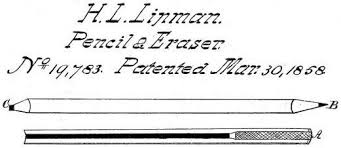
MARCH 30, 1858: PENCIL ME IN

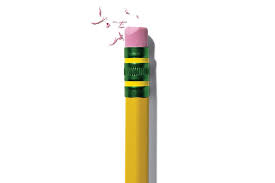
Our story begins in Philadelphia where Hymen J. Lipman in the mid-19th century became one of the city’s leading stationers and founded the first ever envelope company in the United States. Lipman didn’t just content himself with envelopes. His vision took him to pencils as well. And on March 30, 1858, the forward-looking Lipman earned himself a patent for a pencil with an eraser built right into one end of it. This was a giant step for the pencil industry.

Enter Joseph Reckendorfer. Reckendorfer looked at Lipman’s pencil and saw dollar signs. He also saw himself as a titan of the pencil industry. He would be to pencils what Rockefeller was to oil, what Vanderbilt was to railroads. He bought the pencil patent from Lipman for $100,000 (the equivalent of a couple million today).

But alas it wasn’t to be. Pencil manufacturer A. W. Faber began producing eraser-tipped pencils without paying a penny in royalties to Reckendorfer. Reckendorfer sued Faber.  In 1875, the lawsuit made its way to the Supreme Court which declared the patent invalid, reasoning that Lipman’s design combined a known technology, the pencil, with another known technology, the eraser, not creating a new use which was bad news for Reckendorfer.


On the corner of Sodom and Gomorrah

The town of Zion, Illinois, banned all jazz performances on this musicless day, labeling them sinful, right up there with tobacco and alcohol and sexting as things its citizens could well do jazzwithout. The very name was thought (correctly) to have a sexual connotation. The decadent rhythms and wild dancing it elicited were feared (correctly) to be leading young people down the road to sexual abandon, degeneracy, and bad manners. “Oh, you got trouble right here in Zion city.”

Zion is far removed from New Orleans and its bordellos, a place synonymous with jazz and sin. The city was founded in 1901 by John Alexander Dowie as a place where people of faith could come together and live in a moral environment. The population was 24,413 as of the 2010 census. Zion is one of only a few cities in the world to have been completely planned out before building. And Dowie thought of just about everything. The north-south roads in the original plan are all named from the Bible –Ezekiel Place; Gabriel, Galilee, and Gideon Avenues; Matthew, Mark, and Luke, but no John. And no Duke Ellington Circle or Thelonious Monk Boulevard.

JUNE 20, 1890: PAINTING OUTSIDE THE LINES

Oscar Wilde’s only published novel, The Picture of Dorian Gray, appeared as the lead story in Lippincott’s Monthly Magazine in the July 1890 issue, released on June 20.

In the novel, the title character is the subject of a painting by artist Basil Hallward. Basil is impressed by Dorian’s beauty and becomes infatuated with him. Dorian is also infatuated by Dorian’s beauty, especially the beauty in the painting, and more than annoyed that the man in the painting will remain the same, while Dorian himself will get old and wrinkled and forget people’s names and so forth. Obviously the only answer is to put his soul on the market, which he does, with the purchaser (you know who) promising that the painting will age while Dorian himself stays the same.

In an apparent effort to make the painting age as quickly as possible, Dorian embarks on a life of debauchery, and each sin takes its toll on the portrait.

The book had about the same effect on British critics as Dorian’s naughtiness had on the painting. “Vulgar”, “unclean”, “poisonous” and “discreditable” were a few of their nicer comments. “A tale spawned from the leprous literature of the French Decadents – a poisonous book, the atmosphere of which is heavy with the mephitic odours of moral and spiritual putrefaction,” said the Daily Chronicle.   And this was after Wilde’s editor had already deleted a lot of “objectionable” text before it made its first appearance in Lippincott’s, eliminating titillating bits of debauchery and elements of homosexuality.

Deciding that the novel contained things that might upset an innocent woman, the editor cut further, removing many more decadent passages before the book was published in 1891.

MAN THE TOMATOES, FULL SPEED AHEAD

It’s a battlefield out there. Each morning I prepare my weaponry and fortify myself to better face the enemy.  Then it’s out into the morning mist, bellying my way through the trenches, my trusty trowel at my right, my insecticidal soap at my left. Half a league, half a league, half a league onward, into the valley of Death – mine not to reason why, mine but to do or die.  “Huzzah, huzzah,” I shout,  “Be valiant, stout and bold.”

With scant warning, they attack!  Tufts of crabgrass pop up behind every rock, aphids to the right of me, weevils to the left of me. A slug squadron advances relentlessly head on.   Japanese beetles at four o’clock.  The battle is joined.  Almost at once, I’m ambushed by an elite corps of exotic man-eating weeds, snapping at my ankles and calves, while trash-talking thistles peek out from between tomatoes, taunting me with Donald Trump slogans.

But I’ll not be intimidated.

“Forward,” I shout and storm into the mouth of Hell. I manage to free a tiny pepper plant being held prisoner by a half dozen stinging nettle goons.  Moments after I make a clearing to let the cucumbers once again see sunlight, the neighbor’s cat claims it for his own and begins his morning toilette.  He glowers at me, unflinching, as I try to encourage him to move on, his eyes saying I may not be big but I can bring down a gazelle and I can bring down you.  Enjoying the moment, knotweeds laugh merrily and loudly insult my gardenerhood.

I jump in with both feet, hacking and pulling and spraying.  When I’m done, a pile of green debris lies all around me shattered and sundered.  The day is mine.  The tomatoes, cucumbers and beans all nod in appreciation as I holster my trowel and spray bottle and ride off into cocktail time.

Later, exhausted, I’ll sleep, perchance to dream – of late potato blight.