APRIL 28, 2004: IT WAS SHEAR PLEASURE

Some folks will go to great lengths to avoid sitting in a barber’s chair. So it seems will some animals. A New Zealand Merino sheep named Shrek — not to be confused with the bald green guy of the same name — really didn’t want to be shorn. So he went on the lam in the late 90’s, living as a fugitive, hiding in caves, always looking back over his shoulder.  He avoided capture for six years but alas someone finally fingered him and he was apprehended in April 2004. And on April 28, the now incredibly woolly Shrek went under the shears. It took a mere 20 minutes to denude him, and the entire indignity was nationally televised. The suddenly svelte Shrek gave up 60 pounds of wool, enough to suit 20 New Zealanders.

Now famous, he took tea with the Prime Minister on his tenth birthday and was allowed to spurn the shears for another 30 months before being shorn on an iceberg off the New Zealand coast (certainly a jumping the shark event). Shrek bought the sheep farm in 2011.

This Was No Toy

The world’s first car race took place on April 28, 1887.  It was organized by the editor-in-chief of the Parisian magazine Le Vélocipè. The winner of the race was Georges Bouton, an engineer and toymaker driving an 1884 La Marquise, a steam-powered automobile he had constructed with his partner Albert, the Count of Dion.  The race from Paris to Versailles wasn’t particularly exciting; Bouton’s La Marquise was the only car taking part.
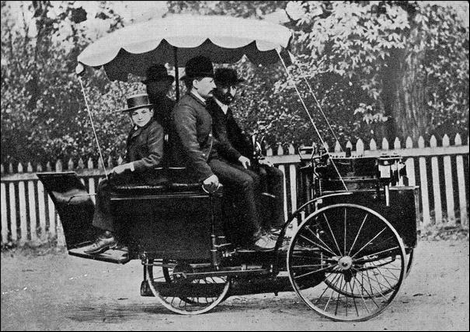
Named for the Count’s mother, La Marquise is a four-seater powered by twin steam engines.  A 40-gallon steel tank underneath the passengers gives the car a range of 20 miles with speeds up to 38 mph.  Once it gets going , that is.  Fueled by coal, wood and bits of paper, it takes 40 minutes  to create enough steam to move.  The car was still running when it was sold in 2011 for a record $4.6 million, making it the world’s longest running automobile.

Sardine in Honorable Tin Can

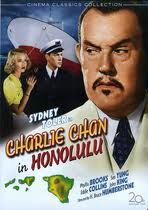
Following the death of Warner Oland, who had successfully brought the character of Charlie Chan to the screen in 16 films, Twentieth Century Fox began the search for a new Chan. Sidney Toler, who was born in Warrensburg, Missouri, on April 28, 1874, was chosen to play the detective, and filming began less then a week later on Charlie Chan in Honolulu. Through four years and eleven films, Toler played Charlie Chan for Twentieth Century Fox. Fox terminated the series in 1942, following the completion of Castle in the Desert. Sidney Toler went on to star in eleven more Charlie Chan films for Monogram Pictures. Very ill during the filming of his last two Chan pictures in 1946, Toler died in 1947.
The character of Charlie Chan was created for the novel The House Without a Key in 1925 by Earl Derr Biggers. Biggers loosely based Chan on a real-life Honolulu detective named Chang Apana. He conceived of the heroic Chan as an alternative to the many stereotypical villains such as Fu Manchu that typified the so-called Yellow Peril, a prevailing vision of the menace of Asia. Sounding like a turn-of-the-century Donald Trump, Horace Greeley, editor of the New York Tribune intoned: “The Chinese are uncivilized, unclean, and filthy beyond all conception without any of the higher domestic or social relations; lustful and sensual in their dispositions; every female is a prostitute of the basest order.”

Over four dozen films featuring Charlie Chan were made, beginning in 1926. Movie-goers took to Chan, but in later years critics found that in spite of his good qualities he too was an Asian stereotype. Many also objected to the fact that he was played by Caucasian actors in  (although Keye Luke who played Chan’s number one son in 7 films was a Chinese-American actor).

In addition to his great detection, Charlie Chan was noted for the aphorisms sprinkled liberally throughout the films. A handful of the very many: Action speak louder than French, Bad alibi like dead fish – cannot stand test of time Detective without curiosity is like glass eye at keyhole, Dead as sardine in honorable tin can.




APRIL 26, 1970: FLAUNT YOUR INTELLECTUAL PROPERTY

Shine up your sneakers, grab your party hats and noisemakers. It’s a day to cast off your inhibitions and get wild and crazy. Yes, today is World Intellectual Property Day, the day set aside to “raise awareness of how patents, copyright, trademarks and designs impact on daily life” and “to celebrate creativity, and the contribution made by creators and innovators to the development of societies across the globe.” And get pleasantly pickled of course.

It’s not quite as over the top as say Fat Tuesday but it’s close. Celebrating the contributions of creators and innovators with two guys in clown suits and a person of unknown gender wearing nothing but a rubber chicken puts a fair amount of zest into a gray day in late April. And coming as it does on the heels of World Book and Copyright Day – well, it’s not for the faint of heart.

Why April 26 you ask? Because it’s the date on which the Convention Establishing the World Intellectual Property Organization was established in 1970.  Perhaps you missed it.  What is intellectual property you ask? That’s the beautiful part. It’s anything you want it to be. What you are reading here at this moment by very elastic definition could be considered intellectual property – especially after three Harvey Wallbangers. So live it up; National Defense Transportation Day is nearly a month away.

These Aren’t Your Ordinary Old Bottle Rockets

An announcement in a London newspaper on April 26, 1792, described an upcoming special event in breathless anticipation: fireworks to celebrate the birthday of her royal highness the Duchess of York.

The fireworks display would depict the eruption and lava flow of Mount Etna on a scale never before seen. Under the mountain would be shown the cavern of Vulcan with the Cyclops at work forging the armor of Mars as portrayed in Virgil’s Aeneid. Music courtesy of Gluck, Haydn, Giardini and Handel.

As the work progresses, Venus and Cupid arrive to request armor for Aeneas. Mars arrives for his armor and is amorously distracted by Venus, annoying Vulcan. But at this moment the smoke thickens above, the crater on top of Etna vomits forth flames, and lava flows dreadfully down the side of the mountain. This continues with increasing violence until there is a prodigious eruption, punctuated by a tremendous explosion.

Coffee and tea are included.

APRIL 22, 1886: BUT WILL YOU RESPECT ME IN THE MORNING?

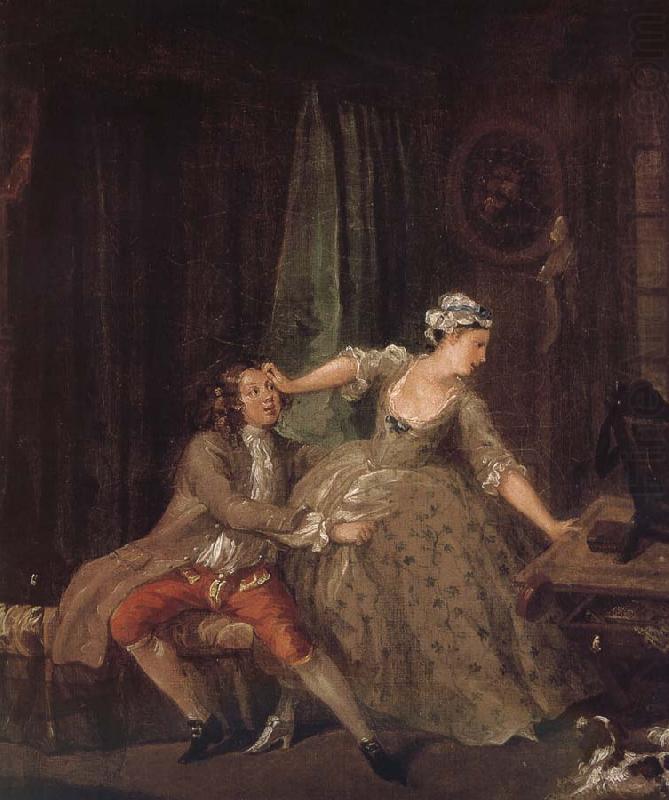
In a blow to lounge lechers everywhere, the state of Ohio passed a law making seduction unlawful. Covering any man seduction1over 18, it prohibited sex, consensual or not, with a woman of any age if the woman were being taught or instructed by the man. It covered all subject matter, leaving a lot of room for interpretation.  Other states jumped on the anti-seduction bandwagon. In Virginia, he’d better not try to engineer an “illicit connexion with any unmarried female of previous chaste character” using the promise of marriage. In Georgia, he couldn’t “seduce a virtuous unmarried female and induce her to yield to his lustful embraces.” In some jurisdictions, however, a woman could not press charges on her own behalf; only the father could do so based on his property interests in his daughters’ chastity.

Naturally, such laws were enforced with varying degrees of fervor. An unfortunate man trapped by the law in New York was headed for certain conviction until he proposed to his victim during the trial. Just to make certain, he didn’t back out, the judge brought in a minister and had the ceremony performed then and there.

A court in Michigan, on the other hand, went out of its way to favor the accused male. On three charges of seduction, two were thrown out because the woman was no longer virtuous after the first seduction. The other was tossed when the court ruled that her claim that they had sex in a buggy was physically impossible.

There’s an Awful Lof of Coffee . . .

Pedro Alvares Cabral sailed out of Lisbon in early 1500 with a fleet of 13 ships, following the route taken earlier by Vasco da Gama.  He strayed from the route, however, sailing far into the western Atlantic Ocean making landfall on April 22, 1500, on an island he named the Island of the True Cross.  Turns out it wasn’t an island at all but a big mother of a continent.  He claimed a big chunk of it for Portugal and dispatched a ship to notify King Manuel I of his discovery.  Manuel renamed the territory Holy Cross.  It later became known as Brazil, the fifth largest country in the world, home to the Amazon River, the world’s second longest, the Amazon Rainforest, an awful lot of coffee, and the samba.

APRIL 9, 1940: YOUR SHOPPING CART IS EMPTY

Sylvan Goldman was an idea man. One of his more persistent ideas led to his choice of careers. Actually, it was more than an idea — a concept, an eternal truth perhaps. “The wonderful thing about food is that everyone uses it — and uses it only once.”

Born in the Oklahoma Territory, he and his brother went into wholesale produce only to be wiped out by plunging oil prices.  After studying all the latest methods for retailing groceries, they bounced back with a chain of self-service stores featuring woven baskets for  carrying groceries. The stores were a big success, and they were bought out by the Safeway chain. Once again hard luck hit; their Safeway stock tanked during the Depression. And once again they bounced back; by the mid-30s they were half owners of the Piggly Wiggly chain.

Goldman continued to dream about customers moving more and more groceries. And one night in 1936 he had a eureka moment — inspired by a wooden folding chair. Put wheels on the legs and a big basket on the seat and you have a shopping cart.

Goldman and a mechanic friend began tinkering. They devised a metal cart with not one but two wire baskets. For efficient storage, the carts could be folded and the baskets nested. Goldman called his invention a folding basket carrier, receiving a patent on April 9, 1940.

When the carriers were introduced to the public, Goldman encountered one tiny problem. Customers didn’t want to use them. Men thought they would look like sissies pushing a cart. Women felt like they were pushing a baby carriage.  And older shoppers thought it made them look helpless. Goldman was always ready with another idea. He hired attractive models, both men and women, to push the carts around, as well as charming greeters urging customers to take one for a spin.

By the 1940s, the carts had become so much a part of the American shopping experience that the Saturday Evening Post devoted its cover to them. And they got bigger and bigger until they got tiny as little icons on websites everywhere.

Goldman’s Folding Carrier Basket Company is still in business today. Goldman isn’t. He died in 1984.

APRIL 5, 1939: FIRST CAME THE WHEEL

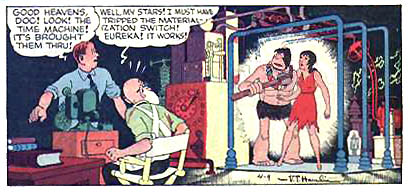
April 4 may have been a banner day for tinkerers, but April 5 was pretty impressive as well. In 1939, another important invention made its debut — Dr. Elbert Wonmug’s time machine. Oh, there had been time machines before this, but this would be the first to transport an honest-to-goodness caveman from way back in the Bone Age right into the 20th century. The caveman was none other than Alley Oop, beamed in from the kingdom of Moo where for the past seven years he had been doing typical caveman things — riding around on his pet dinosaur in a furry loincloth, brandishing his big club at his many enemies, and courting the lovely Ooola.
But once in the 20th century with a time machine to beam him about, Oop was no longer bound by prehistoric limitations. He became a roving ambassador, traveling to such destinations as ancient Egypt, Arthurian England and the American frontier, rubbing elbows with such folks as Robin Hood, Cleopatra, Ulysses, Shakespeare and Napoleon. At one point he even visited the moon. Pretty impressive for a Neanderthal.  Let’s see your Australopithecus do that.

The Big Oops

Time travel, if you will, back to this day in 1722, an Easter Sunday.  Dutch explorer Jacob Roggeveen, sailing  with three ships —  the Arend, the Thienhoven, and Afrikaansche Galey (sort of like Columbus and his Nina, Pinta and Santa Marie, but a lot more of a tongue twister) — lands on an island in the South Pacific and names it Easter Island.  Along with several thousand inhabitants, he discovers a bunch of stone heads that look rather amazingly like Alley Oop.  Could it be that Alley Oop got here earlier in his time machine?

APRIL 2, 1877: Faster Than a Speeding Cannonball

Some dreamers looked to the stars and wondered what it would be like to fly through space.  Some looked to the sky and wondered what it would be like to fly like a bird.  Then there were those that looked at a cannon and wondered what it would be like to be shot through the air from that cannon.  We remember and idolize our flight pioneers and space pioneers.  Can you remember the name of a single human cannonball?

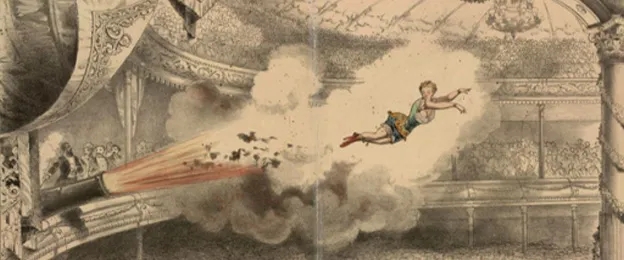
How about Zazel?  Yes, back in 1877, April 2 to be exact ,when those amazing men in their flying machines were still staring at pigeons and wondering how, 14-year-old Rossa Matilda Richter became the first in a storied line of Second Amendment enthusiasts to be shot right out of a cannon and into immortality.  The oohs and aahs of the crowd at the Royal Aquarium in London as Zazel soared overhead to a net some 70 feet away were the nascent sounds of a gun lobby to be.

Zazel was the protégé of The Great Farini, the Canadian rope-walker known for performing above Niagara Falls. He invented the device that would launch Zazel and other human projectiles for years to come.

Zazel’s act was an amazing success. At the peak of her career, she was earning £200 a week, performing before crowds of 20,000 or more every day in England and the USA.  Although many others followed in her footsteps, she was the first and the level of danger she faced was the highest. Eventually it caught up with her: she missed the net, and although she survived, she broke her back.  She retired and faded into obscurity.

The Terrible Terrible Biddle Boys

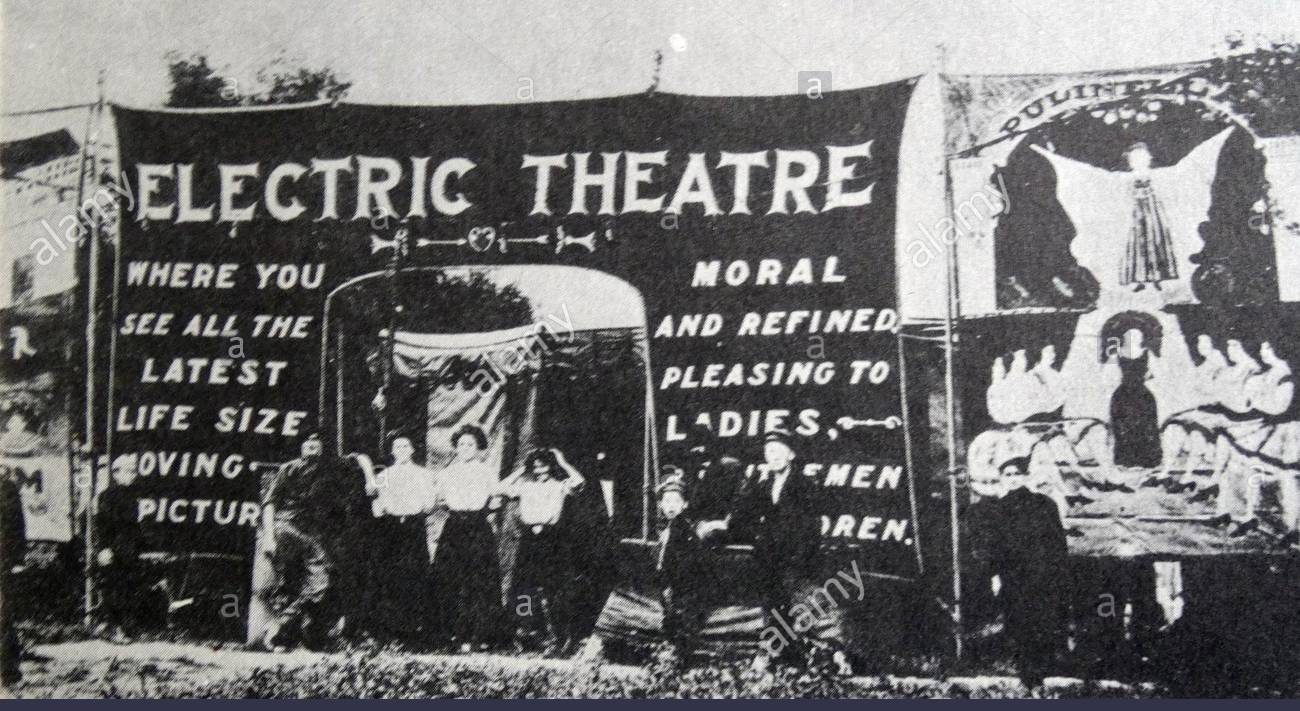
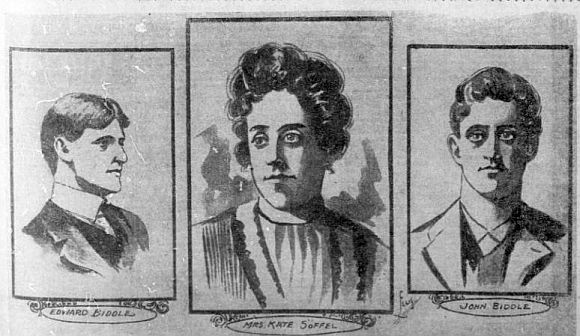
Admission was ten cents. The movie lasted about an hour. There were no cartoons or newsreels. The first theater to show an actual movie was the Electric Theater in Los Angeles on April 2, 1902. The Capture of the Biddle Brothers was an adventure melodrama based on actual events.

A few months earlier, condemned prisoners Jack and Ed Biddle escaped from a Pennsylvania jail using tools and weapons supplied to them by the warden’s wife, Kate Soffel. “Our picture, which is a perfect reproduction of the capture, is realistic and exciting,” the producer exclaimed — breathlessly one might imagine. Two sheriff-filled sleighs pursue the Biddles and Soffel through the white and drifting snow. The dastardly trio turns to make a stand, shotguns and revolvers blazing. Ed Biddle is shot, falls to the ground in a snow bank. On one elbow, he continues to fire shot after shot until he collapses. The second Biddle continues to fire, and he too is shot. Mrs. Soffel seeing the hopelessness of their situation, if not the error of her ways, attempts to shoot herself. All three are captured. The brothers both die of their wounds. Mrs. Soffel survives, but a reconciliation with her warden husband is probably unlikely.

The movie itself did not survive, and the names of the actors are lost to history. Oddly enough a remake — well maybe not exactly a remake — was released in 1984.  Mrs. Soffel starring Diane Keaton and Mel Gibson once again tells the tale of the terrible, terrible Biddle brothers. But not for a dime.


APRIL 1, 1903: THE TENOR NOSE

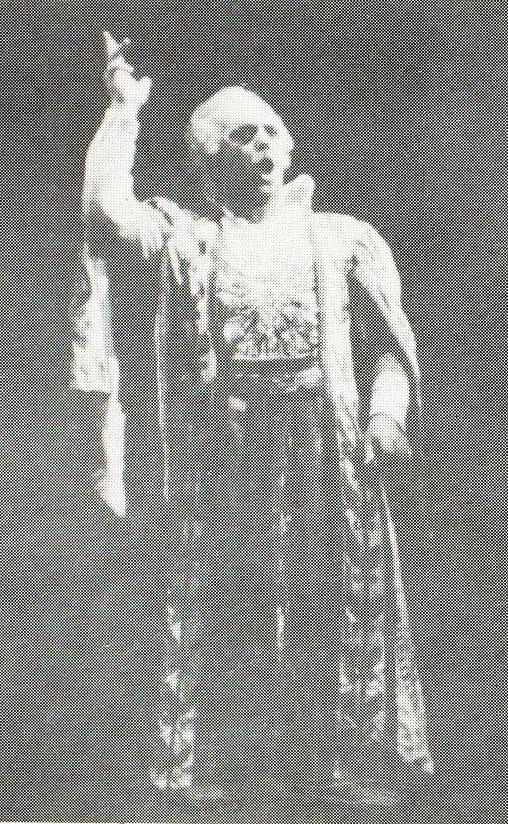
Fabrio Abruzzi was born in a village near Milan in 1883. The Abruzzi family was quite poor with Fabrio’s father cobbling together their existence as a shoemaker. Almost from the time Fabrio could walk, he was put to work pounding leather for his father. He was a nice boy (the villagers lovingly called him bambino brutto) and he was hard-working although his mind would wander and he frequently distracted himself by singing popular Italian folk songs.

As a child, he always had a pleasant singing voice and when, as a teenager, his voice changed, it became a magnificent tenor voice. Fate smiled on Fabrio. A LaScala impresario happened through the village and heard the young man sing as he pounded leather. He took Fabrio under his wings, coached him extensively and on April 1, 1903, scheduled his debut as the principal tenor in Puccini’s Euripedes et Copernica.

On the day of his performance, he prepared himself (as many leading singers of the day did) by forcing lumps of pancetta up each nostril of his nose to lubricate the nasal passages (he had a magnificent Roman nose). Unfortunately, the pancetta became wedged there and he was forced to go on stage with it still in place. Things looked bad. Fabrio did not sound like a magnificent tenor; his voice was stuffy and nasal. The audience was growing restless with the need to toss tomatoes (which Italians always brought with them to the opera). Fortunately, the famous aria ti amo mortadella comes early in the first act. It’s a robust piece and Fabrio gave it his all, thereby dislodging the pancetta and hurtling meaty projectiles through the air. One put a crack in the second violinist’s Stradavarius; another slammed into the conductor’s forehead, causing him to lead the orchestra off into an unrestrained allegro punctuated by several tomatoes to the back of his head.

But Fabrio was a success. He went on to have a short but illustrious career and was known throughout Italy as voce bellissima brutte facce.

Pancetta Projectiles in 3-D Perhaps

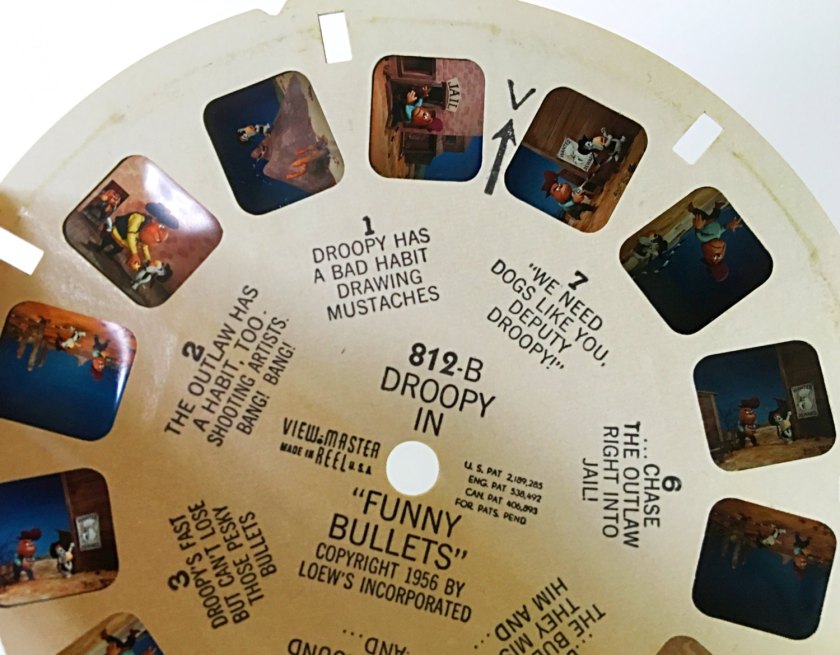
In a letter dated April 1, 1954, Edwin Eugene Mayer explained how he progressed from his early career as a pharmacist in Portland, Oregon, to head of the nation’s largest producer of photographic postcards. Somewhere along the way, Mayer had a eureka moment: updating the old-fashioned 3-D stereoscope. The result, introduced at the 1939 World’s Fair, was the View-Master (although Mayer disliked the name; he thought it sounded like some kind of kitchen appliance).

It must have been cumbersome at first, loading all those tiny people and objects into the viewer, sending the viewer back to the factory to be reloaded with new little people and objects once you got tired of the first bunch. But clever Mayer came up with a fix. Instead of loading actual little people and objects into the viewer, he developed a reel with pictures using the fancy new Kodachrome 16 mm film that had become available. The reel had seven pairs of transparencies, fooling the person looking into the viewer that he or she is seeing 3-D. The original reels were mainly scenic, but through the years, content expanded into adaptations of cartoons, movies and television. Since View-Masters introduction, there have been 25 different viewer models. The reels and the internal mechanisms have remain unchanged so that any of the more than a billion reels that have been produced will work in any viewer.

View-Master has been inducted into the National Toy Hall of Fame.

Still More 3-D

Somewhere between the stereoscope and the View-Master, another inventor was beguiled by the wonders of 3-D.  Mervin Ipod spent several years in an attempt to develop a working 3-D radio.  Unfortunately those years were spent in vain, although Mervin Ipod did go on to a bit more success with the invention that bears his name — the Mervinator.

March 13, 1923: Rock-a-bye, Baby On the Treetop

In 1906, Eleanor Roosevelt, then a young mother living in New York City, bought a cage made of chicken wire and hung it outside the window of her townhouse. The cage was for her daughter Anna to nap in and enjoy the fresh outside air. Her neighbors threatened to call in the authorities. Young Eleanor wasn’t really a wicked mother; she was just a few years ahead of her time. Fast forward to the 1930s; baby cages are a booming business, particularly in London.

In between, Emma Read of Spokane, Washington, had the foresight to apply for a patent for “an article of manufacture for babies and young children, to be suspended upon the exterior of a building adjacent to an open window, wherein the baby or young child may be placed.” She envisioned a cage with removable curtains and an overlapping slanted roof to protect the suspended tyke from rain and snow — And from rattles and other toys maliciously thrown by the rotten little kid in the cage on the floor above.  Her patent was granted on March 13, 1923.

Interest peaked and petered out in the 1950s, and the baby cage disappeared into history despite the fascinating concept of children being caged.


Gonna Find Me a Planet

An advanced civilization inhabited Mars, but the times were desperate. The planet was becoming arid, and the Martians had constructed a series of canals and oases in an attempt to tap the polar ice caps. This was the theory espoused by Percival Lowell based on studies from his observatory in Flagstaff, Arizona, during the early 20th century. Lowell was born on March 13, 1855, and after many years traveling in and studying the Far East, he turned his attention to the far reaches of space. He was all over Mars, writing three books on the red planet that captured the public imagination and helped give rise to the notion of men from Mars.

The existence of canals was later disproved by more powerful telescopes and space flights, but Lowell would make a more important contribution to planetary studies during the last years of his life. Turning from Mars to Neptune and Uranus, Lowell became convinced that their positions were affected by a hypothetical Planet X. Lowell began searching for the mystery planet in 1906. Dying in 1916, Lowell himself did not witness the discovery, but the Lowell Observatory announced on what would have been his 75th birthday — March 13, 1930 — that they had discovered the planet Pluto.

Sadly, after nearly a century as our ninth planet, Pluto was cruelly downgraded to the status of dwarf planet in 2006.  And the name Pluto will become more associated with the Disney hound dog of that name.

Of Which You Ain’t Nothing But a

Mike Stoller (right), born March 13, 1933, working with his partner Jerry Leiber, helped shape rock leiberand roll with an amazing list of hit songs beginning with Hound Dog in 1952. Elvis Presley , the Beatles, the Rolling Stones, the Beach Boys, John Lennon, Otis Redding, Jimi Hendrix, and Frank Sinatra top the list of the many artists who have recorded their songs. More than three dozen of their hits were featured in the Broadway production Smokey Joe’s Cafe including the title tune, Young Blood, Dance With Me, Searchin’, Kansas City, Poison Ivy, On Broadway, Yakety Yak, Charlie Brown, Loving You, Jailhouse Rock, Spanish Harlem and Stand by Me.

In an interview, Stoller was asked to compare Elvis Presley’s 1956 version of Hound Dog with the original recorded by Big Mama Thornton. “It sounded kind of stiff and a bit too fast, a little nervous,” he answered. “It didn’t have that insinuating groove like on Big Mama’s record.”

Eventually, he grew to like the Presley version.   After it sold seven million copies it began to sound better.”


March 3, 1605: And a Decaf Peppermint Almond Latte

Ippolito Aldobrandini was born into a prominent Florentine family in 1536. As a child he was told that any little boy could grow up to be Pope. And didn’t he just do it, becoming a noted canon lawyer, a Cardinal Priest, and in 1592, Pope Clement VIII. He led the church until March 3, 1605. VIII’s enduring papal legacy for most of the world is not his bringing France back into the Catholic fold or leading the opposition to the Ottoman Empire, but rather his blessing of a certain beverage.

“The grain or berry called coffee groweth upon little trees only in the deserts of Arabia,” an early handbill proclaimed. “It is a simple, innocent thing, composed into a drink, by being dried in an oven, and ground to powder, and boiled up with spring water . . . and to be taken as hot as possibly can be endured.”

sheepCoffee had been around for centuries from the time when shepherds noticed that the beans when eaten by their sheep caused those sheep to become rather frisky. Naturally, the shepherds were anxious to try it themselves. Eventually, after a lot of broken teeth, they learned to roast it, grind it and brew it.

It didn’t take long for coffee to become wildly popular throughout the Muslim world. Not so in Europe however; no civilized Christian could share the drink of those infidels they had been battling practically forever.  The beverage came to be known as “Satan’s drink.” and Christians pleaded with Pope Clement to ban the evil liquid and declare that anyone who drank it would be destined to burn in Hell or some other nasty spot.

Clement considered this request, but being reasonable as well as infallible, would not condemn the drink without a fair trial. Thus a steaming cup of coffee was placed before him. He took a sip, and immediately became as frisky as those Muslim sheep.. “This devil’s drink is delicious.” he declared. “We should cheat the devil by baptizing it.”

And then came Starbucks.

Note: The popular folk song that came much later was not named for Clement VIII. It was “Oh My Darling Clement IX.”

February 17, 1972: New Kid on the Block

There’s an old tradition among Italian singers: they won’t go on stage unless they see a bent nail.  Don’t ask.  A certain Italian tenor saw a bent nail on February 17, 1972 (one of many planted surreptitiously by stagehands at New York’s Metropolitan Opera House), and it proved to be quite an omen.  Although he had an international reputation, he was the new kid on the block here, making his first appearance in the United States.  The production was Donizetti’s La Fille du Régiment, and Luciano Pavarotti sang the role of the peasant Tonio opposite Joan Sutherland.  He brought down the house with his mastery of the amazing aria “Ah, mes amis” with its nine successive top Cs.  His performance was one for the history books.  At the opera’s conclusion, he received a record 17 curtain calls.

He would go on to do much, much more.  Pavarotti’s 43-year career included 15 Grammy nominations, five wins and two Guinness world records. He would set another record for curtain calls in a 1988 Berlin production of L’elisir d’amore –165 curtain calls, lasting 67 minutes.  His 1990 Three Tenors concert with José Carreras and Plácido Domingo sold 10.5 million albums, the most for a classical recording.

Another Kid, Another Block

Mickey Dugan, a bald, snaggle-toothed kid with a silly grin who always wore an over-sized yellow hand-me-down nightshirt, was right at home in the 19th century New York slum known as Hogan’s Alley, and beginning on February 17, 1895, became right at home in Joseph Pulitzer’s New York World.

In the neighborhood filled with quirky characters that was home to R. F. Outcalt’s comic strip, Mickey, also know as the Yellow Kid was the quirkiest. The Hogan’s Alley comic strip gradually became a full-page Sunday color cartoon with the Kid as its main character. He spoke in a muddled slang that was practically his own language, and everything he said was printed on his nightshirt as though he were a walking billboard.

It may have been a cartoon, but Outcault’s comic strip aimed its humor and social commentary squarely at an adult audience. It has been described as a turn-of-the-century theater of the city, in which a group of mischievous ragamuffins act out the class and racial tensions of the their urban environment.

As the Kid’s popularity  grew, the strip’s presence actually increased paper sales for the World, and led to all sorts of merchandising from dolls to playing cards to cigarettes.  It also earned Outcault the appellation ‘father of the comic strip.’

When You Wish Upon a Book

The Sears & Roebuck catalog may have become the Magilla Gorilla of mail order, but Aaron Montgomery Ward, born on February 17, 1844, beat Mr. Sears and Mr. Roebuck to the punch by 18 years — and there was only one of him. As a young traveling salesman, Ward saw firsthand how rural folk were being poorly served by small town general merchandisers. Couldn’t they have some of the same opportunities to buy lots of stuff as their big city counterparts?  Of course they could, Ward answered, and in 1872, the mail-order catalog was born.

That first catalog was a one-page price list featuring 163 items. By 1874, it had grown to 32 bound pages; by 1895, over 600 pages with thousands of items. Dubbed the Wish Book, it was a magnificent thing, fully illustrated with woodcuts and drawings, hawking anything you could possibly want — tools, jewelry, millinery, musical instruments, furniture, bathtubs and buggies.  Cradle to grave.