AUGUST 7, 1966: CINCO DE CUGAT

Francesc d’Asís Xavier Cugat Mingall de Bru i Deulofeu was born in Spain and emigrated to Cuba when he was five. He was trained as a classical violinist and played with the Orchestra of the cugatTeatro Nacional in Havana before coming to the United States in 1915, where he rode the tango craze to stardom in movies and night clubs. Eventually Cugat and his orchestra became the resident musicians at New York’s Waldorf Astoria.

     On August 7, 1966, Cugat took his fifth stab at marriage with Charo, a Spanish guitarist and comic actress. One can only wonder why the 60-year-old Cugat would marry a 20-year-old who could barely speak English. It must have been her flamenco ability. Cugat’s previous wife, the sultry Abbe Lane, couldn’t play a lick.

     As a recording artist, Cugat followed dance trends carefully; his tango years were succeeded by  takes on the conga, the mambo, the cha-cha-cha, and the twist when each was in fashion. He had major hits with his recordings of “Pefidia” and “Brazil.”

     Cugat is the only bandleader in the Conductors-Who-Hold-Chihuahuas-While-Performing Hall of Fame.


I would rather play Chiquita Banana and have my swimming pool than play Bach and starve. ―Xavier Cugat

AUGUST 4, 1855: FAMILIARITY BREEDS CONTEMPT (PAGE 76A)

People in Cambridge, Massachusetts, used to pester John Bartlett, who ran the University Book Store, asking for quotations on various subjects. Finally, to make his life easier, he assembled a collection of the more popular quotations. So beginning August 4, 1855, when people asked for a quotepithy quote, he could reply, “Look it up in your Bartlett’s Familiar Quotations and stop bugging me.”  His book contained 258 pages of quotations by 169 authors, primarily from the Bible, Shakespeare, and the important English poets. This was a bit of an undertaking, Bartlett pointed out. How does one decide if a quotation is familiar? A quote may be on a first-name basis with one person while completely unknown to another.

Nevertheless, the book was a big success, and Bartlett authored three more editions before becoming a partner in the publishing firm of Little, Brown, and Company. In all, he supervised nine editions of the work before his death in 1905.

Various other editors stepped in for a series of editions, and in 1955, the 13th Edition was celebrated as the Centennial Edition.  Along about the 15th Edition, the work started annoying critics. One critic said it would be the downfall of the series: “Donning the intellectual bell-bottoms and platform shoes of its era, Bartlett’s began sprouting third-rate Third World, youth-culture, and feminist quotes,” part of “a middle-aged obsession with staying trendy.”  The 16th Edition offended some folks because it included only three minor Ronald Reagan quotations (FDR had 35 quotes, and JFK 28). The editor answered the criticism by saying he didn’t like Reagan.

In the 17th Edition (2003) he took heat for including the likes of J.K. Rowling, Jerry Seinfeld, and Larry David while cutting classic quotes.  He did include six Reagan quotes but admitted “I was carried away by prejudice. Mischievously I did him dirty.”

“Me want cookie!” — Cookie Monster as quoted in Bartlett’s

AUGUST 3, 1946: Beat the Rush, Talk to Santa in August

Louis J. Koch, an Indiana family man and father of nine children, was disappointed when a family trip took him to Santa Claus, Indiana, and he found no Santa Claus, no elves, no reindeer, no workshop –  Indiananothing. Why they named the place Santa Claus was a bit of a mystery.  And he fixated upon the town named Santa Claus that had no Santa Claus, and upon the many children who would suffer the same disappointment. Lying in bed at night perhaps (or working on a third martini), he envisioned a park where children could have fun and visit Santa all year round.

     And he did something about it.  Santa Claus Land opened on August 3, 1946. At no cost, children could visit Santa, a toy shop, toy displays, a restaurant, and themed children’s rides, such as The Freedom Train. Though skeptical, Koch’s son Bill took over as head of Santa Claus Land and continued to add to the park, including the first Jeep-Go-Round ever manufactured, a new restaurant, and a deer farm.

     And it continued to grow, evolving into a huge theme park divided into sections celebrating Christmas, Halloween, Thanksgiving and the Fourth of July with rides, live entertainment, games, and attractions, including three wooden roller coasters: The Raven, The Legend, and The Voyage. Just how many times could a kid throw up in one day? Then came the obligatory water park featuring the world’s two longest water coasters: Wildebeest and Mammoth, slides, pools, a river, and water-play attractions. Whew!

Of course, all of this became too much for a place called Santa Claus Land. Today it goes by the name Holiday World & Splashin’ Safari.  And good luck finding Santa Claus.


AUGUST 2, 1922: YOUR CALL IS IMPORTANT TO US

phone1Alexander Graham Bell was one of those curious inventive sort of kids, the kind that love to experiment and blow up the garage with their chemistry set when they’re eight. Although he was normally quiet (except for the explosions), he loved mimicry and ventriloquism, throwing his voice here and there to baffle guests and leave his family carrying on conversations with the dog and the cat and plants.

     Troubled by his mother’s near deafness, he developed a technique of speaking directly into her forehead instead of her ears which for some reason enabled her to hear him. That evidently awakened a dream within him: If he could speak to his mother’s forehead and she could hear, he must be able to speak to a forehead in China or some other faraway place and be heard.

     This of course led to his study of acoustics, and his greatest invention. By 1876, he had developed a theory of forehead to forehead long distance transmission, and just days after receiving a patent, Bell succeeded in getting his invention to work.  He held the device to his forehead and spoke the now famous sentence: “Mr Watson – Come here – I want to see you.” In an adjoining room, Watson, listening at the receiving end (he held it to his ear but probably never told Bell), heard the words clearly.  He shouted to Bell the equally famous words: “Not now.  I’m on the phone.”

Oddly enough, Bell considered his most famous invention an annoyance and refused to have a telephone in his study.

     Bell died on August 2, 1922 before he could invent many improvements to his telephone, leaving it for others to come up with such refinements as the busy signal, call waiting, “Do you have Prince Albert in a can?”, cell phones and smart phones, obnoxious ringtones during concerts, and robocalls from Wayne LaPierre.   As another famous inventor put it: “What hath God wrought?”


JULY 30, 2003: TAKE A SPIN IN MY KRAFT-DURCH-FREUDE-WAGEN?

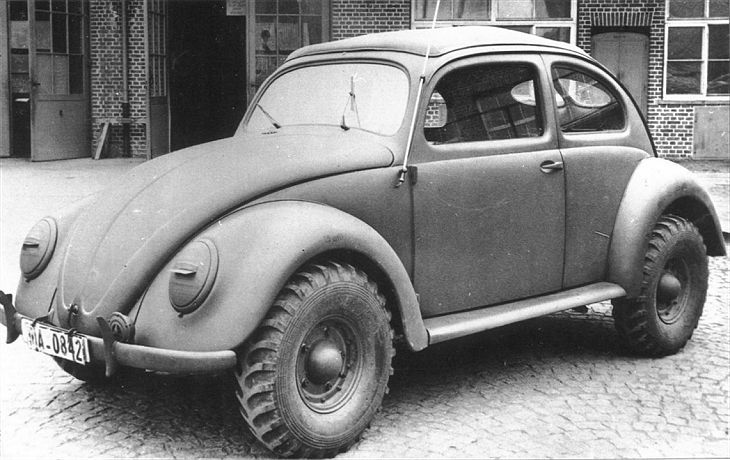
Volkswagen Beetle number 21,529,464 rolled off the production line at the VW plant in Puebla, Mexico, on this day in 2003. It was the last of the Beetles, a car that had been built since World War II. kdf-wagenIt was baby blue and destined for a museum near Volkswagen headquarters in Wolfsburg, Germany, where its oldest ancestors were made.

This was the classic VW Beetle, the real one, not the redesigned retro Beetle that Volkswagen started producing in 1998. It was first visualized back in the 1930s by Austrian automotive engineer Ferdinand Porsche (yes, that Porsche).  Adolf Hitler wanted a small, affordable passenger car to satisfy German transportation needs, something smaller than a Panzer and more family-friendly. Porsche’s auto fit the bill and was introduced in 1939 as the Kraft-durch-Freude-Wagen (or “Strength-Through-Joy” car), not a moniker that would send anyone other than Nazis running to their nearest automobile dealer.  A much-needed name change would later make it the “people’s car” or Volkswagen.

The Kraft-durch-Freude-Wagen was quickly given the nickname “Beetle” for its funny round shape and because — well, would you call it the “Kraft-durch-Freude-Wagen?”  The Wolfsburg factory churned out vehicles until production was halted by Allied bombing in 1944.

Production was resumed after the war, and the Beetle was distributed throughout the world during the following years. After a slow start in the United States, the Beetle became the top import by 1960 as the result of a clever advertising campaign. In 1969, a Beetle named Herbie starred in a hit movie The Love Bug and a couple of sequels.

Hard times hit in 1977, however, as the Beetle was banned in America for failing to meet safety and emission standards. Sales throughout the world declined and, by the late 1980s, the classic Beetle was sold only in Mexico. The Beetle was doomed even in Mexico, thanks to increased competition from other compact cars and burros. And in 2003 it was adios fraulein.


JULY 23, 1851: MR. BLACKWELL DOES NOT APPROVE

In 1840s and 50s New England, both the women’s suffrage and temperance movements were heating up. The convention held at Seneca Falls in 1848 to discuss “the social, civil, and religious condition and rights of woman” was a revolutionary beginning in the struggle by women for complete equality with men. One of the participants, Amelia Bloomer, was the editor of a magazine called the Lily, a publication with a curious mix of recipes, hints by Heloise and women’s rights manifestos. Bloomer became identified with what might be considered a sideshow of the movement.

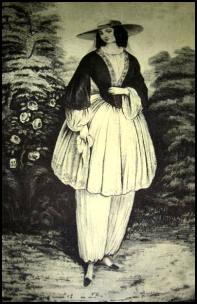
At a ball in Lowell, Massachusetts on July 23, 1851, a certain type of apparel made its debut. It was a more practical substitute for the cumbersome, stifling, long full Victorian dresses worn at the time, and consisted of baggy pants narrowing to a cuff at the ankles (worn below a skirt), intended to preserve decency while being less of a hindrance to women’s activities.

Although Mr. Blackwell would not have approved, many women found it sensible and becoming, including Amelia Bloomer, who adopted it immediately, not only wearing it but promoting it enthusiastically in her magazine. Articles on the clothing trend were picked up in the mainstream press, and more women began to wear what was now dubbed the “Bloomer Costume” or “Bloomers”.

Bloomers remained subject to ridicule in the press and harassment on the street, and Bloomer herself dropped the fashion in 1859, saying that a new invention, the crinoline, was a sufficient reform that she could return to conventional dress. She remained a suffrage pioneer and writer throughout her life, writing for a wide array of periodicals. Although Bloomer was far less famous than some of her peers, she made many significant contributions to the women’s movement — particularly in dress reform and the temperance movement.

And fashion being what it is, bloomers will no doubt make a comeback. Until then, we’ll just refer to them as late bloomers.

JULY 21, 1865: ALL HAT AND NO CATTLE

We all know from movies, pulp fiction and other pop culture that the streets of the Old West were littered with the remnant losers of showdowns that took place practically on the hour. gunslingTwo steel-jawed gunslingers coolly staring at each other, contemplating who would draw first and, more importantly, who would draw fastest. Conspiracy theorists are quick to point out that most gun battles took place between drunks who only managed to hit their adversaries because they were standing a foot away — or if they were at a distance, were most likely hiding behind a handy horse or schoolmarm and aiming at somebody’s back.

True, but there was a sort of Code of the West based on the gentlemanly European tradition of dueling in which opponents behaved with good breeding before attempting to kill one another. The Code of the West required that a person resort to a six-gun on the city streets only in matters of major import such as the defense of one’s honor or life, and only if the opponent was also armed. If the Code were followed, a gunslinger could pretty much kill another gunslinger without fear of punishment.

On July 21, 1865, Springfield, Missouri, saw just such a classic showdown. Wild Bill Hickok had a reputation as a real hotshot with a gun, so it is a bit surprising that a former Union soldier agreed to a showdown after an argument with Wild Bill over a card game or the upcoming Presidential election or something.

Armed with sodas and popcorn, a huge crowd of onlookers watched as the two men approached each other from the far ends of the long street. When the two men were still way beyond field goal territory, the challenger drew and fired wildly in Hickok’s direction. Ever cool, Hickok, drew his own revolver, took careful aim, and put a bullet through his opponent’s chest.

Having been true to the Code, Hickok remained a free man. Unfortunately, several years later, Wild Bill was done in by someone not so fastidious about playing by the rules. A young gunslinger with absolutely no sense of gallantry shot him in the back of the head while he played cards.

When my time comes, just skin me and put me up there on Trigger, just as though nothing had ever changed. — Roy Rogers

JULY 17, 1717: CHAMBERMAIDS GONE WILD

The King was on the poop deck counting out his money; the Queen was in the fo’c’sle eating bread and honey.

     A bevy of aristocrats, including King George I himself, boarded the royal barge at Whitehall Palace for a nautical jaunt up the Thames toward Chelsea.  Anne V was there, as was the Duchess Sailing to Musicof Bolton, the Duchess of Newcastle, the Countess of Darlington, the Countess of Godolphin, Madam Kilmarnock, and the Earl of Orkney, to drop just a few names. The rising tide propelled the barge upstream without any necessity of rowing. The evening’s dinner consisted of four and twenty naughty boys, baked in a pie.*

     Another barge provided by the City of London contained His Majesty’s secret service, the press corps, and fifty musicians who performed music written for the occasion by composer and conductor George Frideric Handel. The music opened with a melodic French overture and skittered through minuets and bourrées, with enthusiastic hornpipers hornpiping throughout.

     Many freeloaders also took to the river to hear the free concert. According to a London newspaper, the whole River was covered with rubbernecking boats and barges.  On arriving at Chelsea, the king left his barge, then returned to it at about 11 p.m. for the return trip. No one knows exactly what he did during his bit of shore leave, but rumor has it a chambermaid was involved. (The Queen was in the fo’c’sle eating bread and honey; the King was in the Chambermaid and she was in the money, goes the unauthorized verse.) The king was so pleased with the evening’s music that he yelled “more, more” every time the orchestra attempted to take a break, forcing them to play until well after midnight.  The moonlight, the lapping of the water against the barge, and the chambermaid are all lost to history, but Handel’s Water Music lives on.

* Sing a Song of Sixpence,
   A bag full of Rye,
   Four and twenty Naughty Boys,
   Baked in a Pye.


JULY 16, 1935: I PUT MY NICKEL IN BUT DIDN’T GET NO MUSIC

It didn’t take long after the first automobiles were sold at the turn of the century for traffic congestion to become a problem. By the 1930s, America was fender-deep in automobiles – Fords, Packards and Nashes; Hudsons, Bentleys and DoSotos. And folks weren’t happy just driving these vehicles around; they wanted to park them!

Parking was becoming a big problem, particularly in cities. Downtown merchants were up in arms because their businesses suffered when parking spots were hogged by the same cars all day long. Carl Magee, an Oklahoma newspaperman, came up with an idea: allow vehicles to park for a specific time period, using some kind of timer – a great solution but he didn’t have the least idea how to make such a thing work. He shared his idea with two professors at Oklahoma State University who came up with an operating model of a coin-operated parking meter.

Magee founded the Dual Parking Meter Company – “Dual” because the meters served two purposes, controlling parking and generating revenue. Oklahoma City purchased 150 of the mechanical marvels at $23 each, installing them downtown under the cover of darkness on July 16, 1935.

The meters charged a nickel an hour. There were not a great many satisfied customers. In fact, citizens were outraged. Paying for parking was unAmerican. The brouhaha attracted national attention, but the meters stayed in Oklahoma City, and quickly spread throughout the land. By the early 50s, one million were in operation.

Today’s motorists would be tickled pink to pay but a nickel for an hour of parking – particularly in Manhattan where meters collect $7.50 an hour.

JULY 12, 1960: MR. POTATOHEAD WAS NOT AMUSED

Two knobs in the lower corners on the front of a plastic cube-like structure, when rotated clockwise or counterclockwise, move a stylus that displaces a metallic powder on the back of a screen, leaving horizontal and vertical lineographic images – in layman’s terms, magic. In the Romneywords of the French inventor, L’ecran Magique. Or in the words of the marketers who made it one of the 100 most memorable and most creative toys of the 20th century, Etch-a-Sketch.

The mechanical drawing toy, which was inducted into the National Toy Hall of Fame in 1998, was first marketed on July 12, 1960, by the Ohio Art Company, timed perfectly to catch the big wave of the Baby Boom. In England, it was known as the DoodleMaster Magic Screen. (There was also the Magna Doodle and the Mystic Writing Pad.)

Although it remained popular throughout the fifty plus years of its existence, the Etch-A-Sketch reached a new notoriety in 2012, when it became a part of the demise of a presidential campaign. The simple plastic rectangular box may have contributed as much to the 2012 election – in influence –  as all the SuperPACs put together. It happened when candidate Mitt Romney’s campaign manager, asked if Romney was boxing himself into ultra-conservative opinions during the primary, answered: “I think you hit a reset button for the fall campaign. Everything changes. It’s almost like an Etch-A-Sketch. You can kind of shake it up, and we start all over again.”

Trying to contain the brouhaha, the Romney campaign only added to its woes by saying that since the mention of Etch-A-Sketch caused its maker’s stock price to triple, they would next mention Mr. Potatohead.