October 13, 1947: Before There Were Muppets

The name Frances Allison probably doesn’t ring a bell with most people. In the days of live programming and test patterns, the radio comedienne and singer became well known to those who huddled around the TV set early evenings to watch the misadventures of the Kuklapolitan Players.  She was better known simply as Fran, and she was one-third of the trio Kukla, Fran and Ollie.

Created by puppeteer Burr Tillstrom, the show got its start as Junior Jamboree locally in Chicago, on October 13, 1947. Renamed Kukla, Fran and Ollie, it began airing nationally on NBC in early 1949.  Although the show, all puppets except for Fran, was originally targeted to children, it was soon watched by more adults than children. It was entirely ad-libbed.

Fran assumed the role of big sister and cheery voice of reason as the puppets engaged each other in life’s little ups and downs. It was a Punch and Judy kind of show but with less slapstick and more character development. Kukla was the nerdy leader of the amateur acting troupe, plucky and earnest, and Ollie (short for Oliver J. Dragon) was his complete opposite, a devilish one-toothed dragon who would roll on his back when sucking up or slam his chin on the stage when annoyed. Joining them were Madame Oglepuss, a retired opera diva; Beulah, a liberated witch; Fletcher Rabbit, a fussy mailman, and several others.

KFOs fan base included Orson Welles, John Steinbeck, Tallulah Bankhead, and Adlai Stevenson among many others.  James Thurber wrote that Tillstrom and the program were “helping to save the sanity of the nation and to improve, if not even to invent, the quality of television.”

Kukla, Fran and Ollie ran for ten years until 1957.  Mister, we could use a Kukla, Fran and Ollie today.

To Swazzle or Not To Swazzle

Kukla and Ollie didn’t come on the scene until the mid-20th century; but puppets has already been around for some 4,000 years. And they come in many different flavors: marionettes, finger puppets, rod puppets. The Tillstrom characters are glove puppets, controlled by a hand inside the puppet.

Punch and Judy are the most famous of this type of puppet. Their first recorded appearance in England was during the Restoration when King Charles II replaced wet blanket Oliver Cromwell and the arts began to thrive. Punch and Judy shows generally feature the fine art of slapstick with characters hitting each other as frequently as possible.

Punch speaks with a distinctive squawk, created by means of a swazzle, an instrument held in the mouth while speaking. Punch’s cackle is deemed so important in Punch and Judy circles (yes, there are Punch and Judy circles) that a non-swazzled Punch is considered no Punch at all.

“I knew Punch. Punch was a friend of mine. Senator, you’re no Punch.”


OCTOBER 11, 1944: All the Presidents’ Dogs

Republicans were on the political attack and the President was angry. At a campaign dinner with the Teamsters union, on this day in 1944, President Franklin D. Roosevelt struck back. It was one thing for the Republicans to spread “malicious falsehoods” about him and Eleanor, but they had stepped over the line, making libelous statements about Fala, his small, black Scottish terrier.

After addressing weighty labor and war issues, Roosevelt blasted Republican critics for circulating a claim that he had accidentally left Fala behind while visiting the Aleutian Islands earlier that year and had, at a taxpayer cost of $20 million, sent a Navy destroyer to pick up the dog. Although Fala slept at the foot of President’s bed and received a bone every morning with Roosevelt’s breakfast tray, Roosevelt accused his critics of attempting to tarnish a defenseless dog’s reputation just to distract Americans from more pressing issues facing the country.

Did Richard Nixon, eight years later to the day, take a page out of the Roosevelt playbook to defend his own honor when critics accused him of accepting improper gifts and making funny with campaign funds? The story broke two months after Nixon’s selection as Dwight D. Eisenhower’s running mate, threatening Nixon’s place on the ticket. Nixon interrupted a whistle-stop tour of the West Coast to fly to Los Angeles for a television and radio broadcast to the nation in which he vowed he would not return one gift: a black-and-white dog who had been named Checkers by his children. But unlike Roosevelt, who took Fala to meetings with heads of state such as Winston Churchill, there is no evidence that Nixon even touched Checkers, let alone fed him.

Just Put Your Lips Together

Harry “Steve” Morgan and his alcoholic sidekick, Eddie, are a couple of ne’er-do-wells crewing a boat for hire on the island of Martinique. to_have_and_have_not_1944_film_posterLife is okay, but World War II is happening all around them, doing a number on the tourist trade and thus their livelihood. Howard Hawks’ film To Have and Have Not which premiered in New York on October 11, 1944, was notable for bringing together what would become one of Hollywood’s hottest couples, Humphrey Bogart and Lauren Bacall.

The film takes the title from the book by Ernest Hemingway but not much else. Hawks was a Hemingway fan but thought this particular book was a “bunch of junk.” Even so, Hemingway worked with Hawks on the screenplay, in which Bogart once again gives up his professed neutrality in the war to thwart the Nazis. The plot is well thickened by the stormy relationship between Bogart and Bacall who plays Slim, a saucy singer in the club where Morgan drinks away his days.

Another notable member of the cast is Hoagy Charmichael who appears as the club piano player, Cricket. He and Bacall perform several Charmichael songs: “How Little We Know,” “Hong Kong Blues,” and “The Rhumba Jumps.” Bacall does her own singing, even though persistent rumors would have a 14-year-old Andy Williams singing for her.

The most memorable take away from the film is one line of dialogue delivered seductively by Bacall: “You know how to whistle, don’t you, Steve? You just put your lips together and . . . blow . . .”

October 9, 1900: Soda Sipping Ingenuity

Joseph Friedman born on this day in 1900 was one of those inventors who might more correctly be called dabblers, thinking up ideas here and there that usually don’t amount to much (a lighted pencil, for example) although his nephew, a British MP, referred to one particular invention as “arguably the most significant technological achievement of the twentieth century.”

It came about one day in 1937 while Friedman was sitting in his younger brother Albert’s fountain parlor, the Varsity Sweet Shop in San Francisco. Friedman watched his young daughter sitting at the counter as she struggled to drink her soda through a straw that seemed to stay just beyond her reach. He took another paper straw and pushed a screw into it. Then, using dental floss, he wrapped the paper into the screw threads, creating corrugations in the straw. After he removed the screw, the straw would bend easily over the edge of the glass, allowing his daughter to conveniently sip her soda – a  eureka! moment by any standard, the creation of the bendy straw. Friedman hastened to the Patent Office and secured patent #2,094,268 for his invention under the title Drinking Tube. He later filed for two additional U.S. patents and three foreign patents.

His attempts to interest straw manufacturers in his invention were unsuccessful so he eventually produced the straw himself. The Flexible Straw Corporation was incorporated in 1939 in California. However, war intervened and he didn’t make his first sale until 1947 – to a hospital rather than kids sipping sodas.

Columbus Was No Viking

October 9 has been designated as the day to celebrate the true discoverer of America Leif Erikson, son of Erik the Red, son of Thorvald the Blue, son of Knut the Orange, son of Sven the Green and so on.  It is a day to reflect on Scandinavian heritage and, of course, Viking humor.

OCTOBER 6, 1962: YOU CAN COME OUT FROM UNDER YOUR SEAT

When one thinks of offbeat film-making, directors Tim Burton and David Lynch come to mind. You’d be hard pressed, however, to find a more offbeat body of cinematic work than that of Tod Browning. Who?, most people would be asking. Tod Browning’s strange macabre films were a pulp-fiction parade of crooks, carnies, lowlifes, deadbeats, wretches, wastrels, scoundrels and, of course, vampires and freaks. And they helped to define the horror film genre.

Browning came to this career honestly. Born in Louisville, Kentrucky, he gave up his comfortable home life at 16 to immerse himself in the world of carnivals, sideshows and circuses. His resume included stints as a Ringling Brothers clown, a barker for the Wild Man of Borneo and the “Living Corpse” for which he was buried alive. He also worked as a magician, dancer and actor before finding his niche as a director of dozens of silent films, including a 10-film collaboration with Lon Chaney. When sound came to the movies, he made his mark with two of his most notable films: Dracula starring Bela Lugosi and Freaks, his master work and the film that destroyed his career. Freaks was so grotesque and unnerving that it was banned in the United Kingdom for three decades. In the U.S., MGM took the film away from Browning and chopped it by almost a third. It performed miserably.

His career on the skids, Browning made a handful of films during the 1930s before “retiring” at the end of the decade. He died on October 6, 1962.

Freak Show

The Halloween season (not to mention the political season) offers the perfect opportunity to indulge in Freaks.  It’s a love triangle set in a bizarre carnival world, featuring Hans, a wealthy dwarf, Cleopatra, a gold-digging trapeze artist, and Hercules, a strongman. Cleopatra and Hercules plan to trick Hans into marrying Cleopatra and then poison him. All the performers are real sideshow “freaks” — Koo Koo, the bird girl, Daisy and Violet, the Siamese twins, Johnny Eck, the Half Boy, Schlitzie, the Pinhead, to name a few, but the beauty of the film is Browning’s portraying them as the real human beings they are. The film remains frightening and grotesque, even after MGM’s “editing.” The deleted scenes were trashed, so it’s likely that no one still living today has seen the original version.


How I Stopped Worrying and Learned to Love the Bomb

Cold war and nuclear fears had been ramping up for years, when President John F. Kennedy took to the tube on October 6, 1961, to suggest that American families build bomb shelters to protect them from atomic fallout when those pesky Communists of the Soviet Union attacked the Homeland with their nuclear missiles. Just a year later, the Cuban Missile Crisis raised the stakes even higher.

While folks like Nelson Rockefeller and Edward Teller were outlining grandiose plans for an enormous network of concrete lined underground fallout shelters to shelter millions of people, civil defense authorities were talking up concrete block basement shelters that could be constructed by home handifolk for a couple hundred bucks. Exactly how much protection they might actually provide was an open question.

Most people calmed down during the mid-1960s,  and fallout shelters pretty much went the way of duck and cover.  They were converted into wine cellars, recreation rooms or mushroom gardens. For others, the fallout shelter notion has been kept alive by internet sites devoted to nuclear hysteria. You can survive a nuclear or dirty bomb attack, shouts one such site.  It will not be the end of the world. But, you must be prepared!

Being prepared naturally involves purchasing a fallout shelter from one of the many firms that still market them — Acme Survival Shelters, Hardened Structures Inc., Safecastle.  Taking it over the top is a company called Zombie Gear whose motto is Be prepared for anything.

OCTOBER 5, 1983: BURPING IN POLITE COMPANY

Noted American businessman and inventor, Earl Silas Tupper died on October 5, 1983. He was buried in a 100-gallon Tupperware container whose lid was “burped”to get an airtight seal before being lowered into the ground. Thousands paid their respect at a memorial Tupperware Party held earlier.

For indeed this was the man who invented and gave his name to Tupperware, a line of plastic containers in an almost infinite array of shapes and sizes that changed the way Americans stored their food. Tupper invented the plasticware back in the late 30s, but it didn’t really start worming its way into every household until the 50s when Tupper introduced his ingenious and infamous marketing strategy, the Tupperware Party. This clever gambit gave the so-called little woman the opportunity to earn an income without leaving home and to simultaneously annoy friends and relatives.

tupper1

The Art of the Robbery

The Dalton Gang terrorized the Old West from 1890 to 1892, robbing banks and trains, and generally making a nuisance of themselves. They were sometimes called the Dalton Brothers but only three of the five were actually brothers. So to be technically correct you’d have to call them the Dalton Brothers and Others. Gang is easier.

Their abrupt demise on October 5, 1892, suggests they were not the brightest brother act on the outlaw circuit. On that day, someone came up with the clever idea that since there were five of them and two banks in the town of Coffeyville, Kansas,, they could rob both of them at the same time. At one of the banks, an employee convinced them that the safe was on a time lock and couldn’t be opened by anybody for another 45 minutes. The boys bought that story and waited patiently.

When the safe was finally opened, the boys scooped up their ill-gotten gains and exited the bank, only to find themselves facing the entire Coffeyville population, armed to the teeth. In the ensuing shootout, four of the gang were killed. One, a Dalton brother, was shot 23 times, but survived. He was sentenced to life in prison. He wrote a book, When the Daltons Rode, which was pretty much an over the top fabrication. It could have been called The Art of the Robbery.

He Should have Written the Book

A hundred years later, Jim Bakker was far more successful than the Dalton Boys.  He stole $158 million from townspeople all over the country without so much as brandishing a gun.  But the televangelist got his comeuppance too.  He was convicted of fraud and conspiracy on October 5, 1989, and spent the next 4 1/2 years in prison.

October 2, 1851: That Hit the Snail on the Head

Jacques Toussaint Benoit was a man with a vision, more specifically a Frenchman with a vision, even more specifically a French wizard who had a vision that involved snails. You might call him a snail whisperer. And on October 2, 1851, he set about proving his theory of the telepathic power of these cunning little gastropods.

Benoit believed that when snails mated, they didn’t just fool around, but rather they created an invisible thread that linked them together in a sort of “sympathetic communication,” allowing them to have conversations even at great distances. Instantly. Wirelessly.

Benoit had constructed an apparatus to which he gave the snappy name pasilalinic-sympathetic compass, known more familiarly as a snail telegraph. Long wooden beams supported zinc bowls lined with cloth soaked in copper sulphate — 24 pairs. Snails were glued to the bottom of each bowl. Snails in the first 24 bowls were each assigned a letter of the alphabet; in the second 24 bowls, their significant others had the same letter of the alphabet. To send a message, one would tap it out on the first set of snails and it would be received by the second set of snails. Simplicity itself.

On the day of the great demonstration before Benoit’s one financial backer and a journalist, Benoit ran back and forth between the sender and receiver just to make sure they were touching and reading the snails correctly. A message was sent and received (although it was full of typos). Benoit’s backer suspected a hoax. He demanded a second test.

On the scheduled day of the second test, Benoit was nowhere to be found. He was spotted occasionally wandering the rues of Paris during the next two years before his death. Nobody continued his work.

Maybe If These Guys Had Had Snails

It took a couple of thousand years for us terrestrials to take aviation from a crazy notion to the reality of that flight in Kitty Hawk in 1903. It took less than seven years for these flying contraptions to start bumping into each other. The first mid-air collision took place on October 2, 1910, in Milan, Italy. There you go smirking about those crazy Italians, but one plane had an English pilot, the other French. They didn’t really walk away from the encounter, but both men survived.

How He Got in My Pajamas I’ll Never Know

Groucho (Julius Henry) Marx was born on October 2, 1890. During his seven-decade career, he was known as a master of quick wit and rapid-fire, impromptu patter, frequently filled with innuendo.  He made 26 movies, 13 of them with his brothers Chico and Harpo, and many with Margaret Dumont as a stuffy dowager and the butt of Groucho’s jokes. The films included such comedy classics as The Cocoanuts, Animal Crackers, Monkey Business, Horse Feathers, Duck Soup, A Day at the Races, and A Night at the Opera. He also had a successful solo career, most notably as the host of the radio and television game show You Bet Your Life.

groucho

OCTOBER 1, 1989: YOU SAY BRONTO AND I SAY . . .

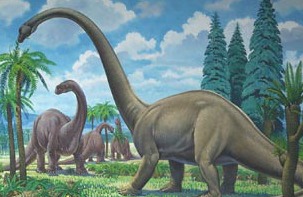
In 1989, the United States Post Office issued a series of four stamps depicting dinosaurs, little realizing that it was re-igniting the infamous Bone Wars of more than a hundred years earlier.

The Bone Wars, also known as the Great Dinosaur Rush, was a period of fossil fever during the late 19th century during which a heated rivalry between two paleontologists (yes, it sounds bizarre) led to dirty tricks, bribery, theft, and even the destruction of bones. Each scientist also attacked the other in scientific print, hoping to ruin his credibility and have his funding cut off. During this period, one of the combatants hastily brought to public that big cuddly dinosaur we’ve come to love, the brontosaurus. Turns out he had gone public with that same dinosaur a couple of years earlier under an entirely different name, apatosaurus.

Another paleontologist brought this mistake to light in 1903, pointing out that protocol required the first name used, apatosaurus, to be the official name. Why did the name continue to be used in popular books, articles and even on museum displays? It seems the 1903 discovery was only presented in a very obscure scientific journal. It took another 70 years for the brontosaurus to officially get the boot to synonym status.

And along comes the U.S. Post Office in 1989 identifying the big guy as a brontosaurus. Well, didn’t some dinosaur groupies with not enough to keep themselves busy get all hot and bothered, accusing the Postal Service of promoting scientific illiteracy.   And even after this brouhaha, most of us still insist on having our brontosaurus.

Maybe it’s because brontosaurus means “thunder lizard” and apatosaurus means (ho-hum) “deceptive lizard.”

You Thought These Guys Were Big?

Compared to Bronto or Apato or practically any other dinosaur you’d like to name, we homo sapiens are a rather puny lot these days, even those few who top out at seven feet or so. Back in the day, as they say — way back in the day — folks were somewhat larger. We have a very convenient adamcatalog of how we don’t measure up provided for us back in 1718 by an astute French academician named Henrion. Both his first name and biography have been lost to the ages (he was probably short). What remains, however, is his scholarly demonstration of the height of several important figures.

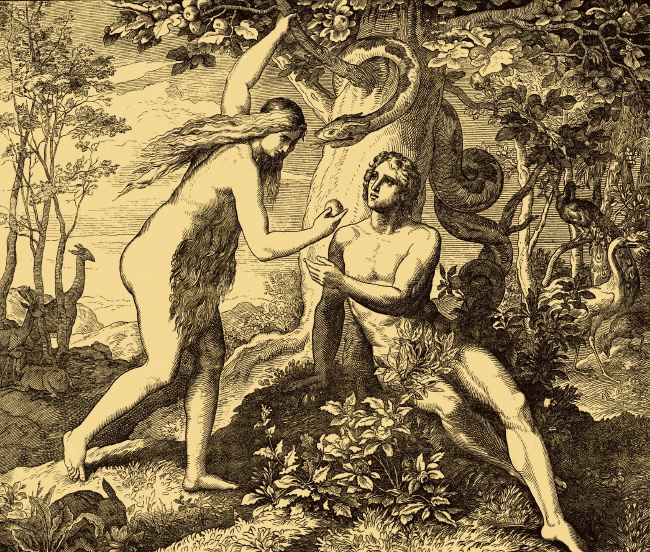
Starting right at the beginning as Henrion did, Adam was a towering drink of water at 123 feet, 9 inches. Interestingly he had been even taller. When first created, he was so tall his head reached into the heavens where it evidently nonplussed the angels enough that God was forced to shrink him to a more comfortable size. God very wisely kept him taller that Eve’s 118 feet, 9 inches. (Adam would have looked pretty silly with a fig leaf and elevator shoes.)

The kids didn’t measure up to their parents, nor did the next generation. In fact, a significant downsizing was underway. Noah was only 27 feet tall, Abraham 20 feet, and Moses a mere 13 feet. (The trend is becoming alarming!) Alexander was hardly the Great at six feet, and Julius Caesar was downright little at five feet. Mankind was on a course that would leave us microscopic little things, not even visible to the naked eye.

But, according to the learned Monsieur Henrion, Christianity saved us. We got religion and began to grow again.


AUGUST 28, 1963: I HAVE A DREAM

In Washington DC, on  August 28, 1963, Martin Luther King, Jr. spoke to a crowd stretching from the Lincoln Memorial to the Washington Monument.

“Go back to Mississippi, go back to Alabama, go back to South Carolina, go back to Georgia, go back King_Jr_Martin_Luther_093.jpgto Louisiana, go back to the slums and ghettos of our northern cities, knowing that somehow this situation can and will be changed. Let us not wallow in the valley of despair.”

I have a dream that one day this nation will rise up and live out the true meaning of its creed: ‘We hold these truths to be self-evident: that all men are created equal.’ I have a dream that one day on the red hills of Georgia the sons of former slaves and the sons of former slave-owners will be able to sit down together at the table of brotherhood. I have a dream that one day even the state of Mississippi, a state sweltering with the heat of injustice, sweltering with the heat of oppression, will be transformed into an oasis of freedom and justice. I have a dream that my four little children will one day live in a nation where they will not be judged by the color of their skin but by the content of their character. I have a dream today.”

“When we allow freedom to ring, when we let it ring from every village and every hamlet, from every state and every city, we will be able to speed up that day when all of God’s children, black men and white men, Jews and Gentiles, Protestants and Catholics, will be able to join hands and sing in the words of the old Negro spiritual, ‘Free at last! Free at last! Thank God Almighty, we are free at last!'”


Part of that is when they try and demean me unfairly, because we had a massive crowd of people. We had a crowd… I looked over that sea of people, and I said to myself, ‘wow’, and I’ve seen crowds before. Big, big crowds. That was some crowd. — Donald Trump

AUGUST 14, 1619: THOU SHALT NOT

Those folks who think they have it pretty rough in Virginia these days should thank their reactionary stars things are not as they were back in 1619. The very first general assembly got together in Jamestown that year to pass laws that pretty much told everyone how they could and could not behave. The burgesses, as members of the assembly were called, were 30 old white men determined to dictate morality to everybody else, a tradition that hasn’t changed much over the years.

     Nor has the politics. The burgesses passed laws requiring all colonists to attend two religious services every Sunday and to bear arms (pieces, swords, powder and shot) while doing so – just in case religious fervor pushed someone over the edge.  Even those bearing arms were forbidden from gambling, drinking, idleness and “excesses in apparel,” (which probably didn’t mean too much clothing).  Not wishing to overlook any sin they hadn’t thought of, the burgesses also approved a stern enactment against immorality in general. In the eyes of the burgesses, one can imagine, that might cover a lot of territory (and the colonies had lots of territory). The planting of mulberry trees, grapes and hemp was also proscribed, for we all know that that seemingly innocuous flora is the first step on the road to degradation (spelled with a ‘d’ and that rhymes with ‘p’).

     The burgesses had only nice things to say about tobacco however. Colonists were urged to dedicate the times they were not in church to the growing of said crop. The colonists responded with enthusiasm, even to the point of growing tobacco in the streets of Jamestown – 20,000 pounds a year – despite His Royal Stick in the Mud King James calling it “dangerous to the lungs.”

“Adam was but human—this explains it all. He did not want the apple for the apple’s sake, he wanted it only because it was forbidden. The mistake was in not forbidding the serpent; then he would have eaten the serpent.” ― Mark Twain

AUGUST 8, 1988: CRAZY EIGHTS

Numerologists had a field day back on 8/8/88. To start, the temperature in New York City reached a high of 88 degrees. Out in Minnesota, the Twins scored their second triple play of the season and eightyeightbeat Cleveland – by a score of 6-2. Meanwhile, the Cubs and the Phillies attempted to play the first ever night game at Wrigley Field but were rained out in the fourth inning with the score 3-1 (you do the math). The number was not lucky for Alan Napier, who played Alfred the butler in the Batman television series. He died. He was in his eighties.

     You might guess that the celebration in Eighty Eight, Kentucky, was a dandy one and it was. Numerologists descended on the little town in hordes, taking advantage of the 88 cents per gallon gasoline and the 88 cents meatloaf special at the Eighty Eight Restaurant. The celebration was over ten times (11) more festive than the one in Eight, West Virginia.

     But the numerology prize goes to a young lady named Kelly in Hackensack, New Jersey.  She was born at 8:08 in the morning, the eighth baby delivered that day, by a doctor who had eight of his own children. She naturally weighed in at 8 pounds 8 ounces.   And all the while her father paced nervously in the waiting room, humming “Beat Me Daddy, Eight to the Bar.”