SEPTEMBER 18, 1981: THE LOT IS FULL

Guinness, when not brewing stout, keeps busy by recording great moments in the history of human endeavors – the largest ball of aluminum foil, the most people in the trunk of a 1973 Volkswagen, the highest this, the longest that. The recording of such precious and penultimate moments has over the years given so many their 15 minutes of fame and, at the very least, an asterisk in the annals of time.

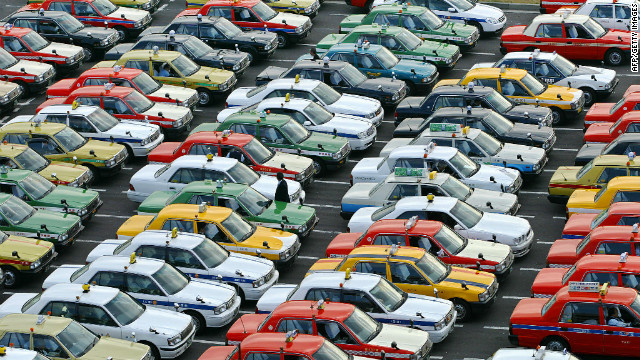
And so it was on September 18, 1981, for the city of Edmonton in the province of Alberta in Canada. On that day, the West Edmonton Mall made the Guinness Book of World Records as the largest parking lot in the world with designated spots for 20,000 automobiles. What a step in the shopping experience! What a giant leap for mankind!

Of course a 20,000-car parking garage is nothing without somewhere for all those parking people to go. And the West Edmonton Mall has plenty of places to go: more than 800 stores, 100 restaurants, and 19 movie theaters. It has a full-size ice-skating rink, where the Edmonton Oilers practice; two hotels, a chapel; and several nightclubs.

The mall is arranged in a series of themed wings. There’s a 19th-century European boulevard, a Bourbon Street, and a Chinatown wing arranged around a koi pond. A replica of Christopher Columbus’ Santa Maria shares a lagoon with real submarines and exotic fish. When the mall opened, its developer gushed: “You don’t have to go to New York or Paris or Disneyland or Hawaii. We have it all here for you in one place, in Edmonton, Alberta, Canada!”

The mall has held other records, too: At one time or another it’s been the World’s Largest Shopping Mall (48 city blocks), the World’s Largest Indoor Amusement Park and the World’s Largest Indoor Water Park (which includes the World’s Largest Indoor Lake and the World’s Largest Indoor Wave Pool). And all of this in the World’s Nicest Country (at 35 million nice people).

Naturally every parking lot has its detractors; some parking lot purists argue that the Edmonton Mall shouldn’t hold the record because the lot is half indoors and half outdoors and therefore actually two parking lots. Picky, picky, picky.

The Edmonton Mall parking lot most likely added an unintended world’s record to its trophy case: the most people looking for their lost cars.

SEPTEMBER 15, 1907: IT WAS BEAUTY KILLED THE BEAST

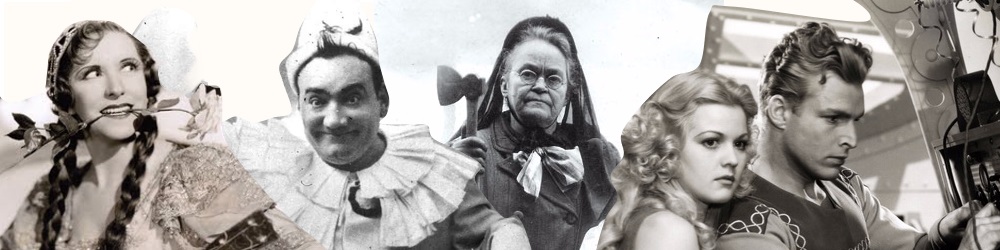
W.C. Fields cautioned against working with children or animals because they’re sure to steal the scene. You might say the same about a 50-foot gorilla. But scream queen Fay Wray had the big guy eating out of the palm of her hand (actually she spent quite a few scenes in the palm of faywrayhis hand). Born Vina Fay Wray on September 15, 1907, she became well-known for her roles in a series of horror movies, spanning the evolution from silent to talkie. But it was her role as the love of King Kong’s life that remained her primary claim to fame throughout a 57-year career in both movies and television.

In 2004, Peter Jackson approached her for a cameo in his remake of King Kong. She turned down the role, saying that the first Kong was the true King (Long live the King). Fay Wray died in her sleep that same year, before filming of the remake had begun.

Two days later, the Empire State Building went dark for 15 minutes in her memory.

King Kong had more than its share of “you’re going to regret saying that” lines, such as:

“Yeah, but what’s on the other side of that wall; that’s what I wanna find out.”

“He’s always been king of his world, but we’ll teach him fear.”

“Suppose it doesn’t like having its picture taken?”

Working the Little Gray Cells

In 1920, a new detective appeared upon the literary scene.– a former Belgian police officer with twirly “magnificent moustaches” and an egg-shaped head. Hercule Poirot debuted in The Mysterious Affair at Styles, the first novel by Dame Agatha Christie, “the Queen of Crime,”agatha born on September 15, 1890. It is one of 66 detective novels and 14 short story collections featuring the Belgian detective and several other characters, most notably Miss Marple.

Christie’s career was full of superlatives. She is the best-selling novelist of all time, over 2 billion copies of her books having been sold. Her books are the third most widely-published in the world, trailing only Shakespeare and the Bible. And Then There Were None is the best-selling mystery ever — 100albert_finney_plays_poirot million copies thus far. The Mousetrap is the longest running stage play with more than 25,000 performances and still running. The Murder of Roger Ackroyd was named the best crime novel ever by the 600-member Crime Writers’ Association.

Hercule Poirot appeared in half of Christie’s novel and in 54 short stories. By midway through her career, she was finding him “insufferable.” And by the 1960s she described him as an “egocentric creep.” Finally in the 1975 novel Curtain, she disposed of him (although the book was written many years earlier and stored in a bank vault for publication at the end of her life). Most of her books and stories have been adapted for television, radio and movies.

Agatha Christie died in 1976.


It is the brain, the little gray cells on which one must rely. One must seek the truth within–not without. ~ Hercule Poirot

SEPTEMBER 13, 1916: A TALE OF TWO CHOCOLATE FACTORIES

When Roald Dahl’s mother offered to pay his tuition to Cambridge University, Dahl said: “No thank you. I want to go straight from school to work for a company that will send me to wonderful faraway places like Africa or China.” And Dahl born on September 13, 1916, did go to wonkafaraway places — Newfoundland, Tanzania, Nairobi, and Alexandria, Egypt, where as a fighter pilot a plane crash left him with serious injuries.

Following a recovery that included a hip replacement and two spinal surgeries, Dahl was transferred to Washington, D.C., where he met author C.S. Forrester, who encouraged him to start writing. His becoming a writer was a “pure fluke,” he said. “Without being asked to, I doubt if I’d ever have thought to do it.”

Dahl wrote his first story for children, The Gremlins, in 1942, for Walt Disney, coining the word. He didn’t return to children’s stories until the 1960s, winning critical and commercial success with James and the Giant Peach and Charlie and the Chocolate Factory. Other popular books include Fantastic Mr. Fox (1970), The Witches (1983) and Matilda (1988).

Despite his books’ popularity, some critics and parents have have taken him to task for their portrayal of children’s harsh revenge on adult wrongdoers. In his defense, Dahl claimed that children have a cruder sense of humor than adults, and that he was simply trying to satisfy his readers.  Charlie and the Chocolate Factory was filmed twice, once under its original title and once as Willy Wonka & the Chocolate Factory.

Dahl died in 1990 and was buried with his snooker cues, an excellent burgundy, chocolates, pencils and a power saw. Today, children continue to leave toys and flowers by his grave

Chocolate for the Masses

hersheyAnother really big name in chocolate was born on September 13, 1857. After a few years dabbling in caramel, Milton Snavely Hershey became excited by the potential of milk chocolate, which at that time was a luxury. Hershey was determined to develop a formula for milk chocolate and that he could sell to the mass market. He produced his first Hershey Bar in 1900, Hershey’s Kisses in 1907, and the Hershey’s Bar with almonds was in 1908. Willie Wonka created a chocolate factory; Milton Hershey created a chocolate empire with its own town, Hershey, Pennsylvania.

Researchers have discovered that chocolate produces some of the same reactions in the brain as marijuana. The researchers also discovered other similarities between the two but can’t remember what they are. ~ Matt Lauer

SEPTEMBER 11, 1680: THE UNFORTUNATE ROGER CRAB

Seventeenth century England was not without its share of eccentrics, folks who were not the sharpest arrows in the quiver. Roger Crab may certainly be categorized as one of them, although his misfortune at having his skull split open while serving in the Parliamentary Army might provide some excuse for his eccentricity. The unfortunate Crab was sentenced to death after the incident (for having his skull in the wrong place at the wrong time?), but his sentence was later commuted and, upon his release, he became a haberdasher of hats.

His wandering mind somehow happened upon the idea that it was sinful to eat any kind of animal food or to drink anything stronger than water. Determined to pursue a biblical way of life, Crab sold all his hats and other belongings, distributing the proceeds among the poor. He then took up residence in a makeshift hut, where he lived on a diet of bran, leaves and grass (the 16th century equivalent of a kale and edamame diet), and began to produce pamphlets on the wonders of diet.

“Instead of strong drinks and wines,” he wrote, “I give the old man (referring to his body) a cup of water; and instead of roast mutton and rabbit, and other dainty dishes, I give him broth thickened with bran, and pudding made with bran and turnip-leaves chopped together.”

mad-hatterJust as Crab persecuted his own body, others began to persecute him. He was cudgeled and put in the stocks. He was stripped and whipped. Four times he was arrested on suspicion of being a wizard. He bounced from prison to prison until his death on September 11, 1680.  Fortunately, our modern society treats its vegetarian eccentrics much more humanely.

Some scholars believe Crab was the inspiration for Lewis Carroll’s Mad Hatter.

Curb Your Carnal Enthusiasm

Sylvester Graham was ordained as a Presbyterian minister in 1826. The Reverend Graham was not your run of the mill minister. He waged a lifelong crusade against alcohol, lust, and white bread.

His disdain of alcohol was inspired by the temperance movement. white breadWhile he accepted the premise that alcohol had useful medicinal qualities, he felt that social drinking was a social danger that could lead to other social activities — namely lust. An unhealthy diet (Graham was also a vegetarian) led to wanton carnal desire, which led to poor health, which led to disease (with a capital D that rhymes with P which stands for you know what).

As one might guess, Graham, like poor Roger Crab, was ridiculed by the media and the public at large (though never cudgeled). He might have been written off as just another crackpot zealot and soon forgotten had it not been for his campaign against white bread. White bread was a bit of a status symbol at the time. Its paleness and the fact that it was purchased rather than homemade separated sophisticates from those bumpkins who made their own dark bread.

Graham thought the use of chemical additives such as alum and chlorine somehow made white bread less than wholesome. Nutritionists tended to agree with him. The whiter the bread, the sooner you’re dead, became their battle cry. Graham went on to create a healthier flour, a healthier bread and — you’ve been waiting for this — the graham cracker.

Sylvester Graham died on September 11, 1851. He probably would not have approved of s’mores.

How To Make S’mores

You’ll need: Wood, matches, graham crackers, chocolate squares (smaller than the graham cracker and fairly thin), marshmallows, a s'morepointy stick.

1. Start a campfire.

2. Break a graham cracker along it’s perforation to create two perfect squares.

3. Place a chocolate square on one of the graham cracker squares.

4. Place a marshmallow on the pointy stick and hold it over the fire until it is a nice golden brown (unless you like your marshmallows almost black).

5. Carefully slip the marshmallow off the pointy stick and onto the chocolate graham cracker stack.

6. Place the other graham cracker on top of the marshmallow and press down until the marshmallow just starts to ooze out. This may require some practice.

7. Cleanse your palette with the alcoholic beverage of your choice.

8. Eat the S’more.

9. Cleanse your palette again.

SEPTEMBER 10, 1913: On the Road Again

Beginning on September 10, 1913, a motorist could hop into his or her automobile at Times Square in New York City and drive for 3,389 miles on a paved road all the way across the country arriving (eventually) at Lincoln Park in San Francisco. Said motorist would be traveling the transportation marvel known as the Lincoln Highway on an odyssey through New York, New Jersey, Pennsylvania, Ohio, Indiana, Illinois, Iowa, Nebraska, Colorado, Wyoming, Utah, Nevada, and California — passing through more than 700 cities, towns and villages.

In the 1920s, when highways began to be numbered, a good chunk of the Lincoln Highway got the more colorful designation U.S. Route 30, and with the introduction of the Interstate Highway System in the 1950s, the even more fanciful I-80.

Part of the fun of the Lincoln Highway was all the wonderful oddities created by local entrepreneurs to squeeze a few dollars out of passing motorists — the mystery spots, the reptile farms, the world’s largest this and the world’s smallest that.

When was the last time you stopped by one of these places?

Do Do That Voodoo

Get a lover, keep a lover, get rid of a lover. She could do it all. “She could keep anybody from harming you and she could do anything you wanted done to anybody. How she used to do it, I don’t know. She used to say prayers and mix different things to give people to drink, to rubMarieLaveau with, to throw over your shoulder, to throw in the river. Oh! She had a million things to do but everything would happen just like she would say.” (Aileen Eugene, 1930)

For most of the 19th century, Marie Laveau was the most famous and powerful Voodoo Queen of New Orleans. Rich and poor, black and white, they all respected and feared her. She was born a Free Woman of Color on September 10, 1794. A devout Catholic, she attended Mass daily. She worked as a hairdresser and a nurse before becoming involved in the practice of voodoo, a religion that draws freely from both West African ancestor worship and Catholicism.

Even after her death in 1881, she continued to influence the people of New Orleans. People still visit her grave in the city’s St. Louis Cemetery, leaving money, cigars and rum with the hope she will fulfill their wishes.

Speaking of Voodoo . . .

I got your voodoo.  It’s all in this fun little novel — charms spells, magic, romance, danger — all sorts of things that go bump in the Caribbean night.  Take a look.  I’ve been known to stick pins into little dolls to get what I want.


SEPTEMBER 8, 1892: PLEDGE, SALUTE, SING OUT THE CHORUS

Daniel Sharp Ford was a bit of a flag-waver. He thought the country needed a little more patriotism, and so launched a crusade to get flags into every school in the country. As the owner of the magazine Youth’s Companion he had a ready-made platform for the promotion of his ideas. As part of his patriotism package, he asked a socialist minister, Francis Bellamy, to create a pledge to the flag of one’s country, a pledge that could be used throughout the world.

Bellamy came up with a pledge that was simplicity itself, and Ford published it in the September 8, 1892, issue of his magazine. The Pledge of Allegiance, as it was called, read:

“I pledge allegiance to my Flag and the Republic for which it stands, one nation, indivisible, with liberty and justice for all.”

The pledge was incredibly popular, repeated in schools, public gatherings, government meetings, in Congress. However, Ford and Bellamy found it awkward that folks just stood there while pledging, so they came up with a nifty salute. Pledgers would face the flag, extend their right arm forward and slightly upward — the Bellamy Salute.

Years passed and folks were happily pledging, but then the tinkering began. In 1923, the words, “the Flag of the United States” were added, thanks to the efforts of the American Legion and the Daughters of the American Revolution who fretted that immigrant children might be confused about just which flag they were pledging allegiance to. A year later, the worriers added “of America.”

Then the Bellamy Salute came under fire; it looked a little too much like the German Nazi salute.

Come 1954, Congress got into the act, adding the words “under God” as a way of thumbing their noses at those godless communists, and giving the pledge its current form.

SING OUT THE CHORUS

BelafontecalypsoHarry Belafonte is an American singer, songwriter, actor, activist, and of course the King of Calypso. His third album, Calypso, hit the top of the charts on September 8, 1956, and had everyone singing out the chorus “Day-o.” It became the first album by a single artist to sell a million copies. In addition to “Day-o (Banana Boat Song),” the album included such calypso standards as “Jamaica Farewell,” “Man Smart,” and “Will His Love Be Like His Rum?” Discerning readers will note that some of those calypso standards serve as titles for short stories included in Calypso: Stories of the Caribbean.

MAY 25, 2006: GEEK NIRVANA

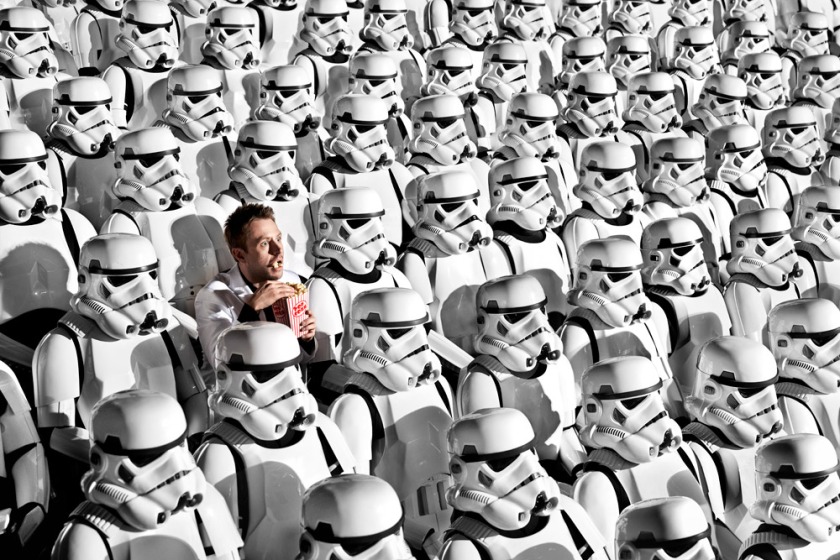
2006 marked the very first celebration of Día del orgullo friki in Spain, local at first but now celebrated in such far-ranging places as Halifax, Nova Scotia; Timisoara, Romania; and San Diego, California; making it a truly international, sort of, event. The date commemorates the release of the first Star Wars film on May 25, 1977. (This was the second such commemoration for the movie; the first, Star Wars Day,  held on May 4 so celebrants could say “May the fourth be with you.”). The latest fest was the brainchild of a Spanish blogger known as Senor Buebo.

In 2008, the “holiday”was officially celebrated for the first time in the U.S., sporting its English translation, Geek Pride Day, its goal having become the promotion of geek culture. Today it has a manifesto and everything. Imagine if you will 300 proud geeks coming together to form a human pacman or, better still, a prime-number float in a Fifth Avenue parade.

As if this celebration wasn’t heady enough all by itself, Geek Pride Day shares the same date as two other similar fan “holidays”: Towel Day, for fans of The Hitchhiker’s Guide to the Galaxy on which true believers carry about a favorite towel, and the Glorious 25th of May for fans of Terry Pratchett’s Discworld.

Dinner Leaps This Way

An English gentleman who identified himself only as a friend to the Poor wrote a letter to the Public Advertiser on May 25, 1772, describing a novel idea. The idea had occurred to him after reading a passage in a guidebook about a town in France: “There are three small rivers that run through the town, one of which is much frequented by frogs, though one would imagine that in time they would be destroyed, as they commonly compose a dish or two at each meal at the tables of both rich and poor; the latter mostly living on them.”

Your entree

The letter went on to suggest that the poor of England could avoid the high cost of most kinds of food by procuring frogs as food for themselves, since the ponds and ditches of England were full of them. Although the letter writer had never personally tasted a frog, he had been assured that when fried in butter and parsley one could not distinguish it from fricassee of chicken. To those that worried that the ignorant might mistakenly eat a toad, he pointed out that the frog is light brown whereas the toad is almost black, that frogs leap, toads creep.

The gentlemen closed by saying let those that can afford it have roast beef every day, but to those poor wretches who cannot he offers this hint for their benefit.

MAY 21, 1819: DON’T TAKE ANY WOODEN BICYCLES

     In 1819, the first bicycle in the U.S. appeared in New York City.  And it started a craze that was to overtake the city for the rest of the summer. Actually it was a sort of a bicycle. It didn’t have any pedals. And you didn’t sit on it. It did have two wheels, but no one called it a bicycle. People variably called it a “velocipede” (Latin for fast foot), “swift walker,” “hobby horse” or its most popular name “dandy horse,” referring to the dandy who usually rode it.

     The dandy horse and the craze that it caused had been imported from London, although the contraption was actually invented in Germany. It was propelled by the rider pushing along the ground with the feet as in regular walking or running. The front wheel and handlebar assembly were hinged to allow steering. One major drawback of the dandy horse was that it had to be made to measure, manufactured to conform with the height and the stride of its rider. And it had wooden wheels which were okay for the smooth pavement of the city but any other surface made for an extremely uncomfortable ride.

     The dandy horse fad was short-lived. Perhaps it was the constant ridicule or the rocks thrown by ruffians. And with riders preferring the smooth sidewalks to the rough roads, many pedestrians began to feel threatened by the machines. As a result, laws were quickly enacted prohibiting their use on sidewalks.

     It was another 40 years before velocipedes came back into fashion – equipped this time around with pedals – when a French company began to mass-produce them. The French design was sometimes called the boneshaker, since it was also made entirely of wood and was still a very uncomfortable ride.

MAY 20, 1899: LEADFOOTED IN THE BIG APPLE

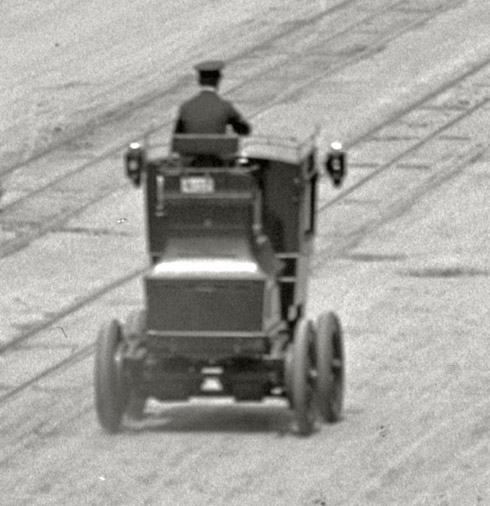
     Jacob German, a New York City taxi driver, earned the dubious distinction of being the first person to be cited for speeding in the United States when he was pulled over for barreling down Lexington Avenue in Manhattan. The scofflaw was “clocked” at a speed of 12 miles per hour by a police officer who, with persistent pedaling of his bicycle, managed to overtake him. German was imprisoned in the East 22nd Street station house. He did not have to surrender his registration and license because there were no such things in 19th century New York.

     The speed limit was claimed to be (although it was not posted) 8 mph on straights and 4 mph through turns. German was driving an electric vehicle. Records don’t indicate whether or not he was on duty or carrying a fare.

     A fair number of drivers have been issued speeding tickets since. The US Census Bureau tells us that 100,000 people per day are cited for speeding in the United States. At an average fine of $150 per ticket, that’s $15 million daily, a nice source of income for various municipalities – particularly in Ohio where the most tickets are issued (followed by Pennsylvania and New York). And certainly an award must go to tiny Summersville, WV. The town, with a population of 3,200, gave out 18,000 to 19,000 speeding tickets annually.

Texas claims the ticket for the fastest speed – 242 mph in a 75 mph zone. That driver was not pulled over by a police officer on a bicycle.

May 17, 1620: Round and Round She Goes

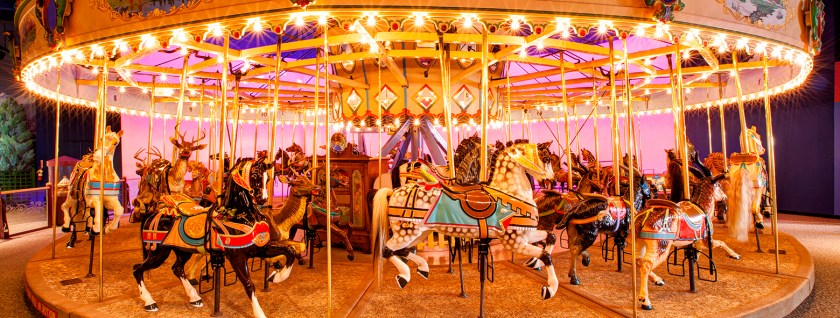
An English traveler happened upon an unusual contraption while passing through what is present-day Bulgaria on May 17, 1620. It was a circular device with seats attached to its perimeter. Children were tethered to the seats and the whole device turned round and round. The Englishman approached the device hoping to save these poor tykes. But as he drew near he heard their squealing and laughter. They were not being punished; they were being entertained. The Englishman’s account of this marvelous contraption is the earliest reference to what ultimately became known as the carousel — or merry go-round to those who disdain the French.

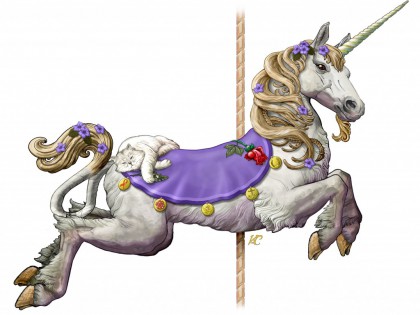
Carousels became popular throughout Europe a century later and in the United States a bit later. These carousels featured carved horses and other fanciful animals — zebras, lions, tigers, unicrons, dragons. At first they were powered by animals or people then eventually by steam engines and finally electricity. Gears and cranks gave the animals their familiar up and down motion.

Today the carousel is mostly favored by those too young or too timid to brave the more heart-pounding rides such as roller coaster, tilt-a-whirl, and loop-the-loop.

Carousels Not Heart-Pounding?