APRIL 2, 1902: THE TERRIBLE, TERRIBLE BIDDLE BOYS

Admission was ten cents. The movie lasted about an hour. There were no cartoons or newsreels. The first theater to show an actual movie was the Electric Theater in Los Angeles on April 2, 1902. The Capture of the Biddle Brothers was an adventure melodrama based on actual events.

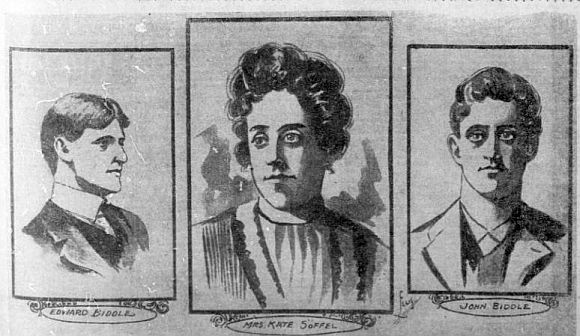
A few months earlier, condemned prisoners Jack and Ed Biddle escaped from a Pennsylvania jail using tools and weapons supplied to them by the warden’s wife, Kate Soffel. “Our picture, which is a perfect reproduction of the capture, is realistic and exciting,” the producer exclaimed — breathlessly one might imagine. Two sheriff-filled sleighs pursue the Biddles and Soffel through the white and drifting snow. The dastardly trio turns to make a stand, shotguns and revolvers blazing. Ed Biddle is shot, falls to the ground in a snow bank. On one elbow, he continues to fire shot after shot until he collapses. The second Biddle continues to fire, and he too is shot. Mrs. Soffel seeing the hopelessness of their situation, if not the error of her ways, attempts to shoot herself. All three are captured. The brothers both die of their wounds. Mrs. Soffel survives, but a reconciliation with her warden husband is probably unlikely.
The movie itself did not survive, and the names of the actors are lost to history. Oddly enough a remake — well maybe not exactly a remake — was released in 1984.  Mrs. Soffel starring Diane Keaton and Mel Gibson once again tells the tale of the terrible, terrible Biddle brothers. But not for a dime.

Hear Me Roar

The baseball season was just getting underway as 17-year-old Jackie Mitchell took the mound for the minor-league Chattanooga Lookouts in an exhibition game against the New York Yankees in Chattanooga, Tennessee, and on April 2, 1931, became  one of the first and female pitchers in professional baseball history.

The game had gotten off to a rocky beginning for the Lookouts with their starting pitcher (male) giving up hits to the Yankees’ first two batters. The teenage Mitchell was brought in to face a couple of guys named Babe Ruth and Lou Gehrig. Mitchell’s first pitch to Ruth was a sinker that darted low for ball one. She followed with a sinker on the outside corner, which the Babe swung through and missed. Grinning, the “Sultan of Swat” swung at her next pitch and missed again for strike two. Another sinker on the corner of the plate, and Ruth watched it sail by for a strike three call. “The Babe kicked the dirt and gave his bat a wild heave as he stormed unhappily to the dugout.”

Gehrig came to bat and promptly missed three straight dipping sinkers, swinging early each time. On seven pitches, the Chattanooga teenager had struck out Ruth and Gehrig, two of the game’s greatest hitters. The hometown crowd rewarded her with a standing ovation. The next day, one newspaper cleverly suggested that “maybe her curves were too much for them.”

Unfortunately, Mitchell’s game against the Yankees was also her last.  Just days after her legendary performance, (male) baseball commissioner Kenesaw Mountain Landis voided her contract because the sport of baseball was “too strenuous for women.” Although Jackie went on to tour with other prominent female athletes and play on women’s teams for a short time, Landis had pretty much wrecked her professional career, and she bowed out of sports at age 23.
APRIL 1, 1903: THE TENOR NOSE

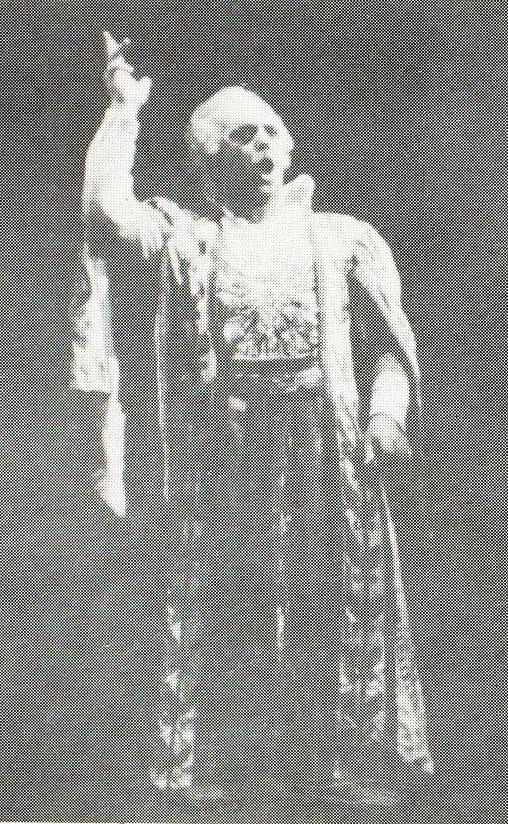
Fabrio Abruzzi was born in a village near Milan in 1883. The Abruzzi family was quite poor with Fabrio’s father cobbling together their existence as a shoemaker. Almost from the time Fabrio could walk, he was put to work pounding leather for his father. He was a nice boy (the villagers lovingly called him bambino brutto) and he was hard-working although his mind would wander and he frequently distracted himself by singing popular Italian folk songs.

As a child, he always had a pleasant singing voice and when, as a teenager, his voice changed, it became a magnificent tenor voice. Fate smiled on Fabrio. A LaScala impresario happened through the village and heard the young man sing as he pounded leather. He took Fabrio under his wings, coached him extensively and on April 1, 1903, scheduled his debut as the principal tenor in Puccini’s Euripedes et Copernica.

On the day of his performance, he prepared himself (as many leading singers of the day did) by forcing lumps of pancetta up each nostril of his nose to lubricate the nasal passages (he had a magnificent Roman nose). Unfortunately, the pancetta became wedged there and he was forced to go on stage with it still in place. Things looked bad. Fabrio did not sound like a magnificent tenor; his voice was stuffy and nasal. The audience was growing restless with the need to toss tomatoes (which Italians always brought with them to the opera). Fortunately, the famous aria ti amo mortadella comes early in the first act. It’s a robust piece and Fabrio gave it his all, thereby dislodging the pancetta and hurtling meaty projectiles through the air. One put a crack in the second violinist’s Stradavarius; the other slammed into the conductor’s forehead, causing him to lead the orchestra off into an unrestrained allegro punctuated by several tomatoes to the back of his head.

But Fabrio was a success. He went on to have a short but illustrious career and was known throughout Italy as voce bellissima brutte facce.

Pancetta Projectiles in 3-D Perhaps

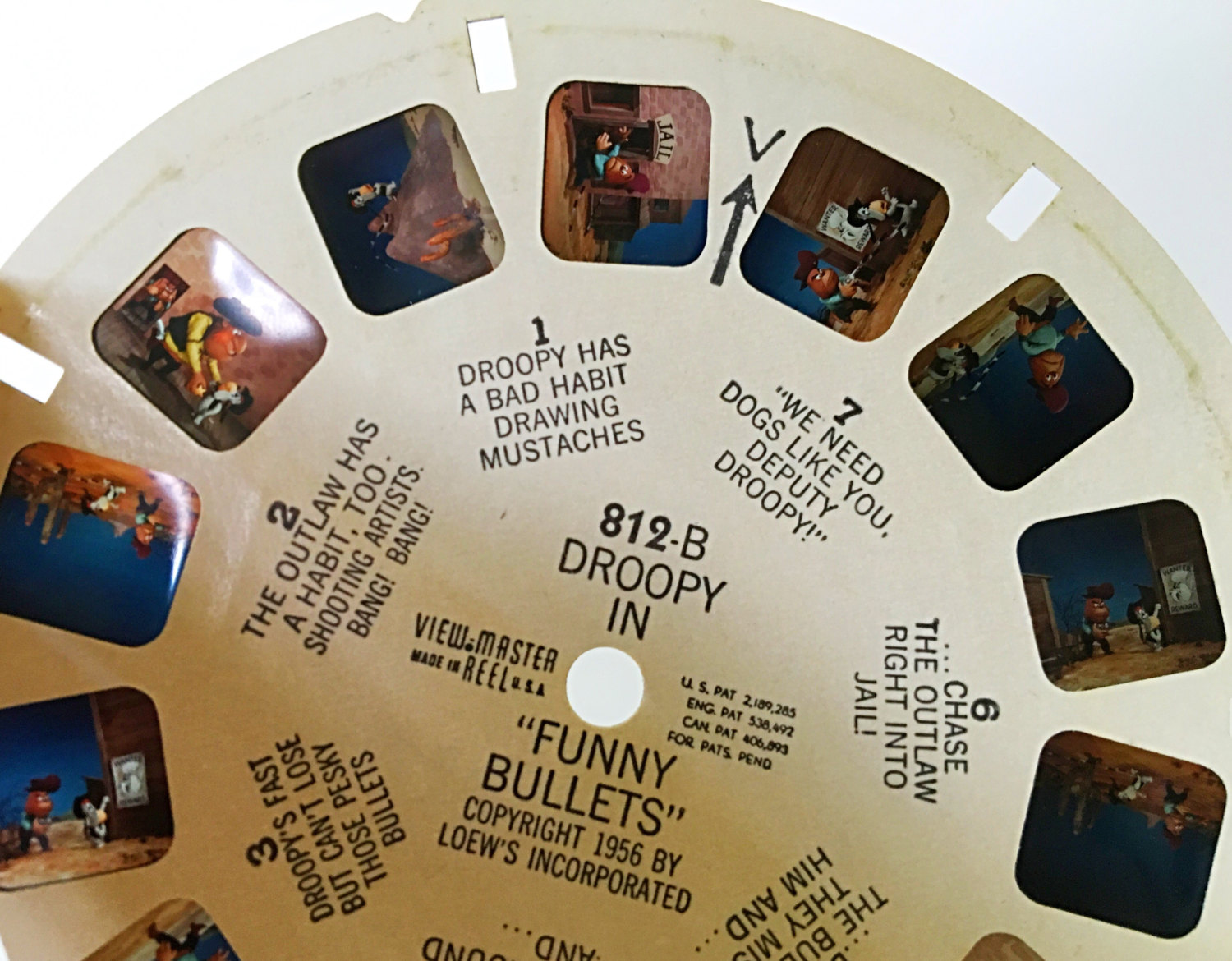
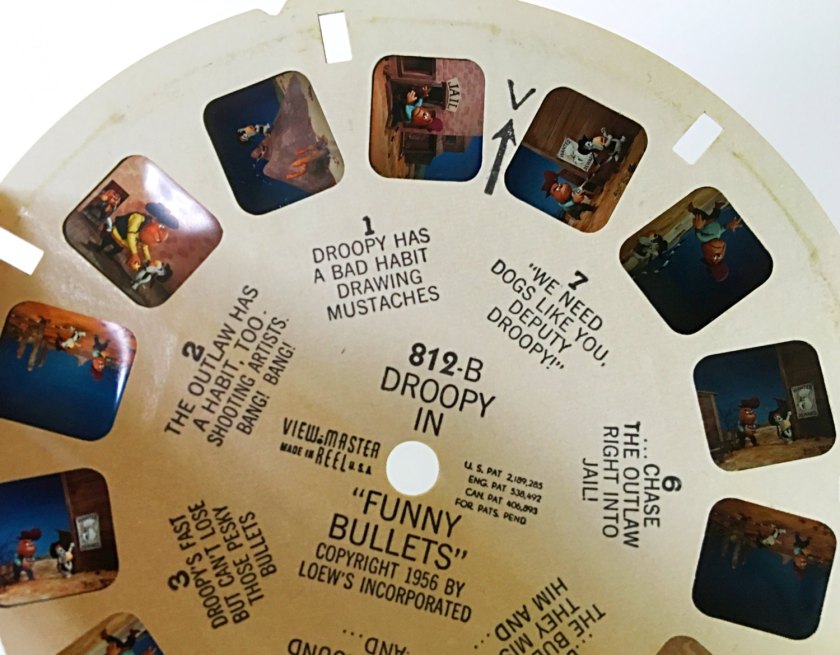
In a letter dated April 1, 1954, Edwin Eugene Mayer explained how he progressed from his early career as a pharmacist in Portland, Oregon, to head of the nation’s largest producer of photographic postcards. Somewhere along the way, Mayer had a eureka moment: updating the old-fashioned 3-D stereoscope. The result, introduced at the 1939 World’s Fair, was the View-Master (although Mayer disliked the name; he thought it sounded like some kind of kitchen appliance).

It must have been cumbersome at first, loading all those tiny people and objects into the viewer, sending the viewer back to the factory to be reloaded with new little people and objects once you got tired of the first bunch. But clever Mayer came up with a fix. Instead of loading actual little people and objects into the viewer, he developed a reel with pictures using the fancy new Kodachrome 16 mm film that had become available. The reel had seven pairs of transparencies, fooling the person looking into the viewer that he or she is seeing 3-D. The original reels were mainly scenic, but through the years, content expanded into adaptations of cartoons, movies and television. Since View-Masters introduction, there have been 25 different viewer models. The reels and the internal mechanisms have remain unchanged so that any of the more than a billion reels that have been produced will work in any viewer.

View-Master has been inducted into the National Toy Hall of Fame.

Still More 3-D

Somewhere between the stereoscope and the View-Master, another inventor was beguiled by the wonders of 3-D.  Mervin Ipod spent several years in an attempt to develop a working 3-D radio.  Unfortunately those years were spent in vain, although Mervin Ipod did go on to a bit more success with the invention that bears his name — the Mervinator.

MARCH 30, 1858: PENCIL ME IN

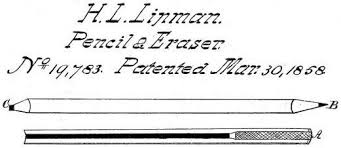
Our story begins in Philadelphia where Hymen J. Lipman in the mid-19th century became one of the city’s leading stationers and founded the first ever envelope company in the United States. Lipman didn’t just content himself with envelopes. His vision took him to pencils as well. And on March 30, 1858, the forward-looking Lipman earned himself a patent for a pencil with an eraser built right into one end of it. This was a giant step for the pencil industry.

Enter Joseph Reckendorfer. Reckendorfer looked at Lipman’s pencil and saw dollar signs. He also saw himself as a titan of the pencil industry. He would be to pencils what Rockefeller was to oil, what Vanderbilt was to railroads. He bought the pencil patent from Lipman for $100,000 (the equivalent of a couple million today).

But alas it wasn’t to be. Pencil manufacturer A. W. Faber began producing eraser-tipped pencils without paying a penny in royalties to Reckendorfer. Reckendorfer sued Faber.  In 1875, the lawsuit made its way to the Supreme Court which declared the patent invalid, reasoning that Lipman’s design combined a known technology, the pencil, with another known technology, the eraser, not creating a new use which was bad news for Reckendorfer.


On the corner of Sodom and Gomorrah

The town of Zion, Illinois, banned all jazz performances on this musicless day, labeling them sinful, right up there with tobacco and alcohol and sexting as things its citizens could well do jazzwithout. The very name was thought (correctly) to have a sexual connotation. The decadent rhythms and wild dancing it elicited were feared (correctly) to be leading young people down the road to sexual abandon, degeneracy, and bad manners. “Oh, you got trouble right here in Zion city.”

Zion is far removed from New Orleans and its bordellos, a place synonymous with jazz and sin. The city was founded in 1901 by John Alexander Dowie as a place where people of faith could come together and live in a moral environment. The population was 24,413 as of the 2010 census. Zion is one of only a few cities in the world to have been completely planned out before building. And Dowie thought of just about everything. The north-south roads in the original plan are all named from the Bible –Ezekiel Place; Gabriel, Galilee, and Gideon Avenues; Matthew, Mark, and Luke, but no John. And no Duke Ellington Circle or Thelonious Monk Boulevard.

March 13, 1923: Rock-a-bye, Baby On the Treetop

In 1906, Eleanor Roosevelt, then a young mother living in New York City, bought a cage made of chicken wire and hung it outside the window of her townhouse. The cage was for her daughter Anna to nap in and enjoy the fresh outside air. Her neighbors threatened to call in the authorities. Young Eleanor wasn’t really a wicked mother; she was just a few years ahead of her time. Fast forward to the 1930s; baby cages are a booming business, particularly in London.

In between, Emma Read of Spokane, Washington, had the foresight to apply for a patent for “an article of manufacture for babies and young children, to be suspended upon the exterior of a building adjacent to an open window, wherein the baby or young child may be placed.” She envisioned a cage with removable curtains and an overlapping slanted roof to protect the suspended tyke from rain and snow — And from rattles and other toys maliciously thrown by the rotten little kid in the cage on the floor above.  Her patent was granted on March 13, 1923.

Interest peaked and petered out in the 1950s, and the baby cage disappeared into history despite the fascinating concept of children being caged.


Gonna Find Me a Planet

An advanced civilization inhabited Mars, but the times were desperate. The planet was becoming arid, and the Martians had constructed a series of canals and oases in an attempt to tap the polar ice caps. This was the theory espoused by Percival Lowell based on studies from his observatory in Flagstaff, Arizona, during the early 20th century. Lowell was born on March 13, 1855, and after many years traveling in and studying the Far East, he turned his attention to the far reaches of space. He was all over Mars, writing three books on the red planet that captured the public imagination and helped give rise to the notion of men from Mars.

The existence of canals was later disproved by more powerful telescopes and space flights, but Lowell would make a more important contribution to planetary studies during the last years of his life. Turning from Mars to Neptune and Uranus, Lowell became convinced that their positions were affected by a hypothetical Planet X. Lowell began searching for the mystery planet in 1906. Dying in 1916, Lowell himself did not witness the discovery, but the Lowell Observatory announced on what would have been his 75th birthday — March 13, 1930 — that they had discovered the planet Pluto.

Sadly, after nearly a century as our ninth planet, Pluto was cruelly downgraded to the status of dwarf planet in 2006.  And the name Pluto will become more associated with the Disney hound dog of that name.

Of Which You Ain’t Nothing But a

Mike Stoller (right), born March 13, 1933, working with his partner Jerry Leiber, helped shape rock leiberand roll with an amazing list of hit songs beginning with Hound Dog in 1952. Elvis Presley , the Beatles, the Rolling Stones, the Beach Boys, John Lennon, Otis Redding, Jimi Hendrix, and Frank Sinatra top the list of the many artists who have recorded their songs. More than three dozen of their hits were featured in the Broadway production Smokey Joe’s Cafe including the title tune, Young Blood, Dance With Me, Searchin’, Kansas City, Poison Ivy, On Broadway, Yakety Yak, Charlie Brown, Loving You, Jailhouse Rock, Spanish Harlem and Stand by Me.

In an interview, Stoller was asked to compare Elvis Presley’s 1956 version of Hound Dog with the original recorded by Big Mama Thornton. “It sounded kind of stiff and a bit too fast, a little nervous,” he answered. “It didn’t have that insinuating groove like on Big Mama’s record.”

Eventually, he grew to like the Presley version.   After it sold seven million copies it began to sound better.”


March 8, 1969: Right After The Vows, Go To Your Room

Guiseppe Greco and Marcella Risciglione married in Paterno,holding-hands-dating Sicily, in 1969. The 21-year-old groom was an auto mechanic, the bride a sixth-grade student. She was 12. Somehow convinced that their parents would never agree to their marriage, the couple slipped away from home and spent two nights together, knowing that an unwritten Sicilian Code of Honor would leave their parents with no choice but to let them marry. Which they did.

Marcella’s father had the last word however. He grounded the newlyweds, not allowing them to go on a honeymoon. “She will go back to school and he to work on Monday,” said the father. And they will lose all Facebook privileges when it is invented.

Thumbs Up, George

A couple of centuries earlier, a poor young lad about Guiseppe’s age was walking down a London street, gazing into shops and lamenting his own poverty.  His fancy was taken by a portrait in one of the shop windows and he wondered to himself if he too might paint such portraits and perhaps earn a farthing or two.  (This was long before the days of ‘draw me three inches tall’ on matchbook covers.)  He hurried home, scraped together brushes, paints and a bit of a broken looking glass and set about painting a small portrait of himself..  He was quite pleased with the result, and others evidently were as well, since he began to get gigs painting miniatures.  Success followed and he eventually was called on to paint various VIPs including King George III.

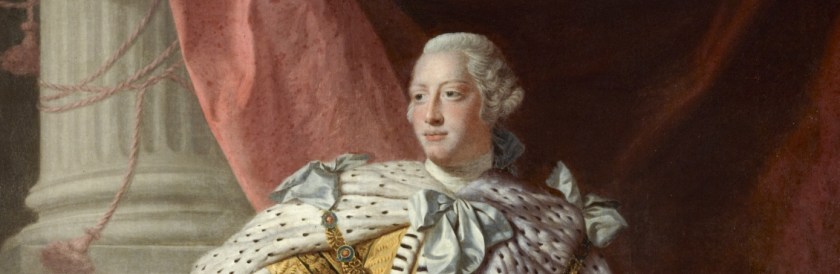
One day when the poor King was too far gone in his mental malady to sit for portrait painters, our now thriving artist drew a quick portrait of the King on his own thumb nail.  He later meticulously transferred the portrait to ivory.  The portrait delighted the King who paid the artist a hundred guineas for it.

The artist was Robert Bowyer, a name that rings precious few bells in the art world today.  When he is thought of at all, it is in relation to the profession of his later years as a printer and in particular as the printer of an edition of the Bible that came to bear his name — an elaborate and costly work of 45 volumes with over 600 engravings.

March 3, 1605: And a Decaf Peppermint Almond Latte

Ippolito Aldobrandini was born into a prominent Florentine family in 1536. As a child he was told that any little boy could grow up to be Pope. And didn’t he just do it, becoming a noted canon lawyer, a Cardinal Priest, and in 1592, Pope Clement VIII. He led the church until March 3, 1605. VIII’s enduring papal legacy for most of the world is not his bringing France back into the Catholic fold or leading the opposition to the Ottoman Empire, but rather his blessing of a certain beverage.

“The grain or berry called coffee groweth upon little trees only in the deserts of Arabia,” an early handbill proclaimed. “It is a simple, innocent thing, composed into a drink, by being dried in an oven, and ground to powder, and boiled up with spring water . . . and to be taken as hot as possibly can be endured.”

sheepCoffee had been around for centuries from the time when shepherds noticed that the beans when eaten by their sheep caused those sheep to become rather frisky. Naturally, the shepherds were anxious to try it themselves. Eventually, after a lot of broken teeth, they learned to roast it, grind it and brew it.

It didn’t take long for coffee to become wildly popular throughout the Muslim world. Not so in Europe however; no civilized Christian could share the drink of those infidels they had been battling practically forever.  The beverage came to be known as “Satan’s drink.” and Christians pleaded with Pope Clement to ban the evil liquid and declare that anyone who drank it would be destined to burn in Hell or some other nasty spot.

Clement considered this request, but being reasonable as well as infallible, would not condemn the drink without a fair trial. Thus a steaming cup of coffee was placed before him. He took a sip, and immediately became as frisky as those Muslim sheep.. “This devil’s drink is delicious.” he declared. “We should cheat the devil by baptizing it.”

And then came Starbucks.

Note: The popular folk song that came much later was not named for Clement VIII. It was “Oh My Darling Clement IX.”

December 31, 1920: Don’t Go Near the Indians

New Year’s Eve, aka the seventh day of Christmas, is the day we shuck off this year with a lot of over the top partying, letting mirth run rampant before we face the sobering of the coming year. Two of the more noble New Year’s Eve traditions are Drinking and the making of Resolutions. The former is often accomplished with Wassail, a bowl of spiced ale around which folks gather and drink to each other’s health until someone gets sick.  The latter is the solemn promise we make to the empty Wassail bowl never to drink again. Mark Twain on resolutions: “Next week you can begin paving hell with them as usual. Yesterday, everybody smoked his last cigar, took his last drink, and swore his last oath. Today, we are a pious and exemplary community. Thirty days from now, we shall have cast our reformation to the winds and gone to cutting our ancient short comings considerably shorter than ever. We shall also reflect pleasantly upon how we did the same old thing last year about this time.” ~Mark Twain

A proper resolution might go something like this: I hereby resolve to read Wretched Richard’s Almanac every day so that I might be well informed, sophisticated and attractive. And I will recommend it to all my friends so they too might be well informed, sophisticated and attractive.

The seventh ghost of Christmas enjoyed his wassail while regaling Scrooge with the painful memory of his Junior Prom when the girl of his dreams broke their date because her grandmother died, she had a hangnail or she was grounded for misbehaving with the captain of the football team — take your pick.  True Love celebrated in his or her predictable fashion with a gifts of the avian persuasion, to be specific seven swans a-swimming.  That’s a bird count of 28 thus far.  No, make the 27; one of the calling birds made the mistake of calling the cat.

About Those Indians

It was 1949 and executives at Republic Pictures had a brainstorm – let’s take that nice clean-cut guy hanging around the studio and make him a cowboy – maybe even a singing cowboy – he’ll be a God-fearing American hero of the Wild West, wearing a white Stetson hat; he’ll love his faithful horse (platonic, of course); and maybe he could have a loyal sidekick who shares his adventures. We’ll call him the Arizona Cowboy (Arizona isn’t already taken, is it?) And so Rex Allen, born December 31, 1920, came to a silver screen near you,  joining such singing cowboys as Roy Rogers and Gene Autry. His horse was Koko, and his comic relief sidekick was Buddy Ebsen (later Slim Pickens). He rode out of the West just as the West was losing interest for moviegoers. He did get a quick 19 movies in the can (and a comic book) before the genre played out. And in 1954, he starred in Hollywood’s last singing western. Then, like other cowboy stars, he rode into the sunset and onto TV in a series called Frontier Doctor. Allen had written and recorded a number of the songs featured in his movies. He continued recording, and in 1961, had a hot country single with a song called “Don’t Go Near The Indians,” featuring the Merry Melody Singers. The song told the story of a young man who disobeys his father’s titular advice and develops a relationship (platonic, of course) with a beautiful Indian maiden named Nova Lee. The father reveals a deep dark secret out of the past: his biological son was killed by an Indian during one of those skirmishes between the white man and a nearby tribe. In retaliation, he kidnapped an Indian baby and raised him as his son who grew up to be you-know-who. And there’s another jaw-dropping secret: Nova Lee is the boy’s biological sister! (But poppa, it’s purely platonic; our kids won’t be imbeciles.) They don’t write them like that anymore. Rex Allen turned in his spurs in 1999 at the age of 79.  

December 29, 1852: Of Virile Toggery

Today, if you were wondering, is the fifth day of Christmas.  The fifth ghost of Christmas has taken Ebeneezer back to his childhood and a festive party.  The children are all very merry, playing a game of pin the tale on the donkey.  Unfortunately, Scrooge is the donkey.

True Love has sworn off birds and has sent a  lovely gift — five gold rings.  But wait, some scholars, having precious little to do, have studied this gift and have determined that those rings actually refer to — you guessed it — ring-necked pheasants.  Birds.

Folks who were not wrapped up in fifth day of Christmas activities in late 1852 were most likely following the activities of Frederick Douglass or newly elected President Franklin Pierce.  In Boston, however they were following the escapades of Emma Snodgrass. On December 29, Boston police arrested her again, another of many run-ins with the law beginning that Fall. This desperado was a tiny 17-year-old daughter of a New York policeman who had set Bostonian tongues awagging by appearing in public “donning the breeches.” Wearing pants, that is. She was arrested the first time in November and Emma-Snodgrass1promptly sent back to New York.

But didn’t she just come back again and set right in “visiting places of amusement around Boston.” She circulated among “all the drinking houses, made several violent attempts to talk ‘horse,’ and do other things for which “‘fast’ boys are noted” breathlessly reported one of the local papers.

Her notoriety spread.  She was ‘the wanderer in man’s apparel,’ the ‘foolish girl who goes around in virile toggery’ and ‘an eccentric female who roams about town.’ Back in New York, the Daily Times wondered: “what her motive may be for thus obstinately rejecting the habiliments of her own sex.”

She didn’t return to Boston. But during the next several months, there were Emma Snodgrass sightings practically everywhere else. She was reportedly sent home from Richmond, Virginia, sent before a judge in Albany, New York, spotted in Buffalo and Cleveland.

Emma Snodgrass, “the girl in pantaloons” was last seen in Louisville, on her way to California or Australia, reported the Fort Wayne Times and Peoples. But then a strange news report came out of Lancaster, Wisconsin: “Emma Snodgrass has repented, gone home, taken off her breeches, and sworn eternal attachment to petticoats and propriety.”

Could it be? We’ll never know, since it was the last news report. Emma Snodgrass had disappeared.

December 26, 1921: Hi Ho, Stevarino

But first, hi ho second day of Christmas, because that is today to those who prolong the season through Christmastide.  For True Love, it is the opportunity to give two birds, turtle doves to be precise.  And just as practical as that partridge.

Meanwhile Scrooge is visited by the second ghost of Christmas who conducts a review of the many less than loving names his mother called soon-to-be-born Ebeneezer while in labor.

Hi Ho, Stevarino

Although Steve Allen, born December 26, 1921, was a musician, composer, actor, comedian, and writer, he is best known for his career in television. He first gained national attention as a guest host on Arthur Godfrey’s Talent Scouts and then became the first host of The Tonight Show, initiating the format that television talk shows would follow from then on.

Moving from late night to prime time television, he hosted numerous game and variety shows, most notably The Steve Allen Show, going head to head with Ed Sullivan and Maverick on Sunday evenings. It was there he developed the man on the street interviews which featured Don Knotts, Tom Poston and Louis Nye among others.

Allen was a comedy writer and author of more than 50 books, both fiction and nonfiction, including Dumbth, a commentary on the American educational system, and Steve Allen on the Bible, Religion, and Morality.

Allen was also a pianist and a prolific composer, writing over 14,000 songs, some of which were recorded by Perry Como, Margaret Whiting, Steve Lawrence, Eydie Gorme, Les Brown, and Oscar Peterson. He won a Grammy in 1963 for best jazz composition, with his song The Gravy Waltz. He also wrote lyrics for the standards “Picnic” and “South Rampart Street Parade.” He once won a bet with Frankie Laine that he could write 50 songs a day for a week. His output of songs has never been equaled.

He died in 2000.

December 25: Tis the Season

Today is of course Christmas Day in much of the world.  To some folks who pack a lot into their ’tis the season, it is the beginning of Christmastide or Twelvetide, the first of a dozen days of Christmas.  This is infamously celebrated by the carol in which on this day, the first day of Christmas, someone’s True Love bestows upon him or her a gift of a partridge in a pear tree.  While we might point out that a crock pot or a circular saw would be a bit more practical, we won’t quibble with the sentiment.

It would also seem that Charles Dickens missed the boat.  Imagine the twelve ghosts of Christmas:  The first ghost of Christmas shows Ebenezer Scrooge how happy his parents were before he was born.  Stay tuned, Ebenezer; there’s more to come.

Over There

Just after midnight on December 25, 1914, British, French and Russian troops at European battle fronts were stunned as German joyeauxtroops ceased firing and began to sing Christmas carols — in some cases, even backed up by oompah bands.

World War I had begun five months earlier and would continue for another devastating four years. This spontaneous Christmas truce continued through the night and into daylight when many of the German soldiers emerged from their trenches and called out “Merry Christmas” in their enemies’ native tongues. Finally, Allied soldiers, seeing that the Germans were unarmed, climbed out of their trenches as well. Men from both sides ventured through the so-called No Man’s Land to shake hands with the enemy. The men exchanged small presents and sang carols and songs. In one case, soldiers played an international soccer game.

It was, of course, short-lived as both sides went back to their business of killing each other.  (This true story is told in the 2005 French film Joyeux Noel.)

On Christmas Day in 1941 Bing Crosby introduced a new Christmas song on his weekly NBC radio program. The song, written by composer and lyricist Irving Berlin, went on to become the gold standard of Christmas music — the top-selling Christmas single ever and the top-selling single of any kind for another 55 years.

The success of “White Christmas” came as no surprise to Berlin, who was already a musical legend. He modestly called it “the best song I ever wrote . . . the best song anybody ever wrote.” And written by a man who did not celebrate Christmas.