APRIL 27, 1899: I COULDA BEEN A TENOR

Walter Lantz, who was born in 1899 to Italian immigrant parents,  actually had the surname Lanza until an immigration official anglicized it. Had he not, Walter could have grown up to be an opera singer rather than the creator of Woody Woodpecker and many other cartoon characters.

The first of these characters was Oswald the Lucky Rabbit, star of a 1928 cartoon series for Lantz_OswaldUniversal Studios. The character, who bears more than a passing resemblance to Mickey Mouse, had once belonged to Disney. Lantz won it in a game of poker.

Other less memorable characters followed: a trio of chimps, Meany, Miny and Moe; Baby-Face Mouse; Snuffy Skunk; Doxie (a dachshund); and monkeys Jock and Jill. One character stood out from the crowd – Andy Panda became the comic star for 1939.

A year later, Lantz married actress Grace Stafford. While on their honeymoon, Walter and Grace were pestered by an insistent woodywoodpecker02woodpecker pecking on their roof, and Grace suggested that Walter use the bird as a cartoon character. Woody Woodpecker appeared for the first time in an Andy Panda cartoon and soon became a leading character.

Mel Blanc was originally the voice of Woody Woodpecker, but after only three cartoons, he left to join Warner Brothers. Lantz held anonymous auditions for a new Woody. Lantz’s wife Grace made a secret audition tape and was chosen to be the new voice. She continued in the part until production ceased in 1972.

Woody Woodpecker is the only comic character to have his own hit song. Kay Kyser recorded “The Woody Woodpecker Song,” a top hit and Academy Award nominee in 1948.

Ho-ho-ho ho ho! Ho-ho-ho ho ho! Oh, that’s the Woody Woodpecker song.  They don’t write lyrics like that anymore.

APRIL 23, 1983: SATURDAY MORNING SUPERSTAR

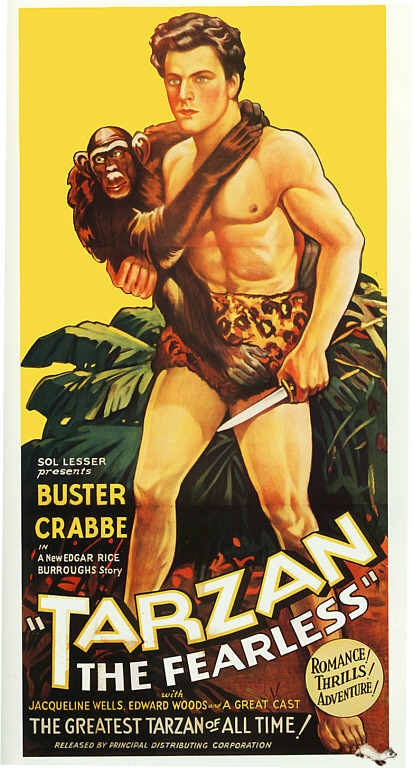
Athlete turned actor, Buster Crabbe (Clarence Linden Crabbe II), looking back over his career, could easily have said “been there, done that.” After winning Olympic gold in 1932 for freestyle swimming, Crabbe dived into the movies, eventually starring in over a hundred movies, first taking a turn as the jungle hero in Tarzan the Fearless in the 1933 serial and a variety of jungle men in movies such as King of the Jungle that same year,  Jungle Man in 1941, and the 1952 serial King of the Congo.
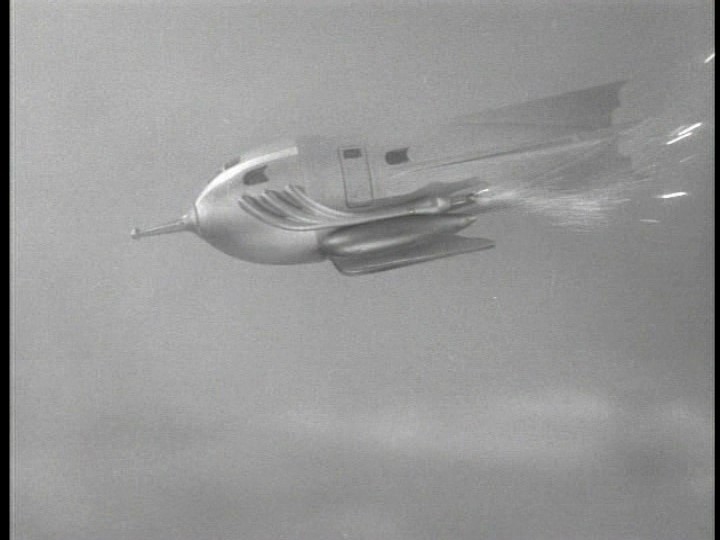
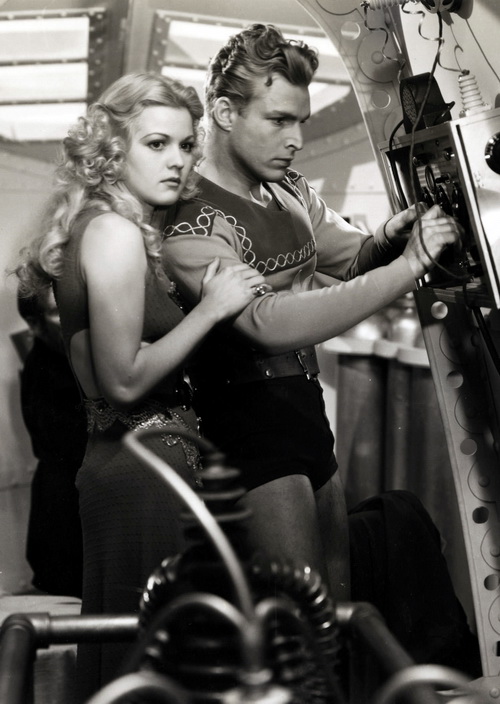
Leaving the jungle for the far reaches of space, he played both Buck Rogers and Flash Gordon. His three Flash Gordon serials were Saturday morning staples in the 30s and 40s. The serials were also compiled into full-length movies. They appeared extensively on American television in the 1950s and 60s, and eventually were edited for release on home video. Later on television, Crabbe also found his way into the French Foreign Legion. As his acting career wound down, he became a spokesman for his own line of swimming pools. He died on April 23, 1983.

Don’t Try This at Home

According to the National Rifle Association, guns don’t kill people, people kill people.  On the other hand, if you were to make a fist with your index finger pointing at your intended victim, and shout Bang, bang, you’re dead, chances are the only injury inflicted would be to your pride as you endured the derisive laughter all around you.

On yet another hand, take the case of William Lawlis Pace. Nine-year-old Billy was accidently shot in the head by his older brother. Pace died on April 23, 2012.  In his sleep.  At a California nursing home – 94 and a half years after the incident. The bullet was still in his head.

Doctors in Texas where the shooting took place left the .22 caliber bullet in his head because – well, because that’s what they do in Texas.

In 2006, Pace was crowned the Guinness world record holder in the category of “unwanted cranial ammunition acquisition.” A proud moment indeed, and Wayne LaPierre did not attend the ceremony.

Thank God, the Second Amendment still protects a citizen’s right to walk around for 94 years with a bullet in his head.

APRIL 5, 1951: FIRST CAME THE WHEEL

Inventors are born every day, and April 5, 1951, was no exception. Dean Kamen was an inventor as well as a master of hype. Among his inventions are the iBOT an all-terrain electric wheelchair and a device that uses compressed air to launch SWAT teams to the roofs of tall buildings in a single bound.  Interestingly enough, Kamen’s father was an illustrator for Mad and Weird Science.

The most famous of his inventions by far was a closely guarded secret that he claimed would change the world when made public.  Among those touting its revolutionary potential was Apple’s Steve Jobs. Unveiled in 2001, the Segway is an electric, self-balancing human transporter. It has two parallel wheels and is controlled by the shifting of the operator’s body weight. Its computerized gyroscopes make it almost impossible to tip over (although George W. Bush did in a test drive).

Consumer reaction was more a whimper than a bang. About the only groups it caught on with are mall and airport security personnel. Adding to the insult, Time Magazine included the Segway in its list of the 50 worst inventions.

British entrepreneur Jimi Heseleden bought the Segway company in 2010. He died that same year when he fell off a cliff while riding his Segway.

Back Before the Wheel

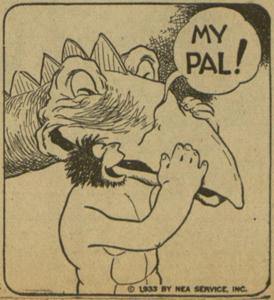
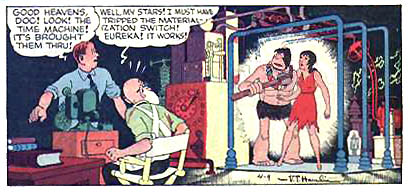
Another important invention made its debut on April 5, 1939 — Dr. Elbert Wonmug’s time machine. Oh, there had been time machines before this, but this would be the first to transport an honest-to-goodness caveman from way back in the Bone Age right into the 20th century. The caveman was none other than Alley Oop, beamed in from the kingdom of Moo where for the past seven years he had been doing typical caveman things — riding around on his pet dinosaur in a furry loincloth, brandishing his big club at his many enemies, and courting the lovely Ooola.
But once in the 20th century with a time machine to beam him about, Oop was no longer bound by prehistoric limitations. He became a roving ambassador, traveling to such destinations as ancient Egypt, Arthurian England and the American frontier, rubbing elbows with such folks as Robin Hood, Cleopatra, Ulysses, Shakespeare and Napoleon. At one point he even visited the moon. Pretty impressive for a Neanderthal.

March 2, 1985: Steering the Ark of Decorum to Saner Shores

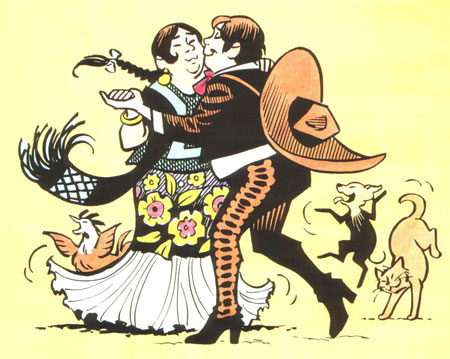
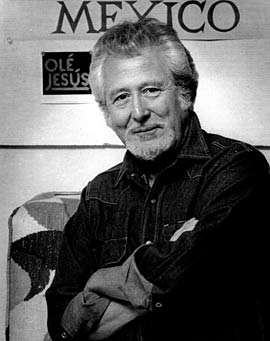
When he put down his pencil on March 2, 1985, Gus Arriola brought to an end a classic comic strip that had endured for 45 years, appearing in as many as 270 newspapers. During that span, Gordo (meaning Fatso) had evolved from a Mexican version of Li’l Abner — a lazy, overweight bean farmer who fit the American stereotype of Mexicans (but not yet as rapist and murderer) — to an “accidental ambassador’ for Mexican culture.

Arriola wrote, illustrated and produced the strip throughout its run except during a stint in the army, although he regularly used tongue in cheek pseudonyms such as Overa Cheever, Liv Anlern, Kant Wynn, and Bob N. Frapples for his Sunday strips.

Along with Gordo, there were his nephew Pepito, poet Paris Juarez Keats Garcia, housekeeper Tehuana Mama and the widow in hot pursuit of bachelor Gordo, Artemesia Rosalinda Gonzalez. And pets Poosy Gato, Señor Dog, and Bug Rogers (a spider).

As Arriola became aware of the strip’s cultural influence over the years, he began to present Gordo as a more complex sympathetic character — more depth, less girth. In 1954, Gordo lost his farm and went to work as a tour guide, traveling throughout Mexico and presenting a more nuanced view of Mexican life.

Charles Schulz said Gordo was “probably the most beautifully drawn strip in the history of the business.” Arriola died in 2008.

Gordo strip for March 2, 1985:

Th-th-that’s All Folks

On March 2, 1935, Warner Brothers introduced a new cartoon character name of Porky Pig.  Next day on his dressing room, they hung a star, and Porky went on with the show for another 153 cartoon appearances,  Warner’s longest running character.

December 7, 1970: Cartoonist (A) Draws Invention (B)

He is probably the patron saint of inventors everywhere – or at least their idol – for his uncanny ability to devise an incredibly convoluted method to carry out the simplest tasks. In fact the Merriam-Webster dictionary adopted his name as an adjective in 1931 meaning just that, to accomplish something simple through complex means.

Rube Goldberg died on December 7, 1970, at the age of 87, leaving a legacy for inventors and cartoonists alike. He was a founding member and first president of the National Cartoonists Society and is the namesake of its Reuben Award for Cartoonist of the Year. In 1948, he won his own Pulitzer Prize for his political cartooning.  And he is the inspiration for many competitions challenging would-be inventors to create machines using his scientific principles.

Professor Butts and the Self-Operating Napkin offers a typical scenario for a Rube Goldberg invention: A soup spoon (A) is raised to the mouth, pulling string (B) and thereby jerking a ladle (C), which throws cracker (D) past parrot (E). Parrot jumps after cracker and perch (F) tilts, upsetting seeds (G) into pail (H). Extra weight in pail pulls cord (I), which opens and lights automatic lighter (J), setting off skyrocket (K), which causes sickle (L) to cut string (M) and allow the pendulum with the attached napkin to swing back and forth, wiping the user’s chin.

rube3

rube1

rube2

AUGUST 25, 1913: WE HAVE MET THE ENEMY

Starting his career as an anonymous young storyboard artist for Walt Disney Productions on Donald Duck cartoons and other shorts, the cartoonist who would later be compared to everyone from Lewis Carroll and James Joyce to Aesop and Uncle Remus moved to the animation department in 1939. There, during the next five years he contributed to such Disney classics as Pinocchio (Gepetto in the whale), Fantasia (a drunk Bacchus riding a donkey), and Dumbo (the crow sequence).  Walt Kelly was doing pretty well at $100 a week.

During the 40s, Kelly devoted himself more and more to comic book art at Dell. The little possum with whom he is now most closely associated came on the scene in 1943 in Dell’s Animal Comics. Pogo would go on to star in 16 issues of his own comic book and 26 years as a syndicated newspaper comic strip.  Along with Pogo, there were  Albert the Alligator, Churchy LaFemme (a turtle), Howland Owl, Beauregard (Houndog), Porkypine, and Miz Mamzelle Hepzibah (a skunk).

Kelly’s liberal political and social views were rarely disguised as he used the strip to champion the powerless and the oppressed and to satirize political dogmas and figures such as Senator Joseph McCarthy (Simple J. Malarkey, a gun-toting bobcat), Vice President Spiro Agnew, and FBI Director J. Edgar Hoover. Many newspapers dropped Pogo, and others moved it to the editorial page. Walt and Pogo were probably most remembered for their campaign on behalf of the environment and the battle cry: “We have met the enemy, and he is us.”

Walt Kelly died in 1973.

kelly

AUGUST 24, 1850: MEET ME AT THE FAIR

London’s Bartholomew Fair, a wild celebration on the eponymous saint’s anniversary, died not with bartha bang but a whimper after enduring for more than seven centuries, Although originally established for legitimate business purposes, the fair had become all eating, drinking and amusement (for shame!) and a bit of a public nuisance with rowdiness and mischief.

Serious pursuits, uplifting exhibits, and dramatic entertainments had given way to shows and exhibits catering to the lowest common denominator of British fair-goers tastes – conjurers, wild beasts, monsters, learned pigs, dwarfs, giants. A prodigious monster with one head and two distinct bodies, a woman with three breasts, a child with three legs. A mermaid with a monkey’s head and the tail of a fish. Puppet shows, pantomimes, and coarse melodramas. A pig-faced lady and a potato that looked like King Henry VIII.

Eventually the fair grew less curiouser and curiouser, and on August 24, 1850, when the mayor went as usual to proclaim the opening of the fair, he found nothing to make it worth the trouble. No mayor went after that, and in 1855 the fair rolled over and expired.

I went to the animal fair,

The Birds and the Beasts were there.
The big baboon, by the light of the moon,
Was combing his auburn hair.
The monkey, he got drunk,
And sat on the elephant’s trunk.
The elephant sneezed and fell on his knees,
And what became of the monk, the monk?
The monk, the monk, the monk.

— Minstrel Song

July 4, 1883: Cartoonist (A) Draws Invention (B)

He is probably the patron saint of inventors everywhere – or at least their idol – for his uncanny ability to devise an incredibly convoluted method to carry out the simplest tasks. In fact the Merriam-Webster dictionary adopted his name as an adjective in 1931 meaning just that, to accomplish something simple through complex means.

Reuben Garrett Lucius (Rube) Goldberg was born on July 4, 1883.  He died in 1970, at the age of 87, leaving a legacy for inventors and cartoonists alike. He was a founding member and first president of the National Cartoonists Society and is the namesake of its Reuben Award for Cartoonist of the Year. In 1948, he won his own Pulitzer Prize for his political cartooning.  And he is the inspiration for many competitions challenging would-be inventors to create machines using his scientific principles.

Professor Butts and the Self-Operating Napkin offers a typical scenario for a Rube Goldberg invention: A soup spoon (A) is raised to the mouth, pulling string (B) and thereby jerking a ladle (C), which throws cracker (D) past parrot (E). Parrot jumps after cracker and perch (F) tilts, upsetting seeds (G) into pail (H). Extra weight in pail pulls cord (I), which opens and lights automatic lighter (J), setting off skyrocket (K), which causes sickle (L) to cut string (M) and allow the pendulum with the attached napkin to swing back and forth, wiping the user’s chin.

rube3

rube1

rube2

THE DAY WE MOVED OUT

On July 4, 1776, the Continental Congress adopted the Declaration of Independence stating that the thirteen American colonies regarded themselves as a new nation, the United States of America, and were no longer part of the British Empire.

“When in the Course of human events, it becomes necessary for one people to dissolve the political bands which have connected them with another, and to assume among the powers of the earth, the separate and equal station to which the Laws of Nature and of Nature’s God entitle them, a decent respect to the opinions of mankind requires that they should declare the causes which impel them to the separation.

We hold these truths to be self-evident, that all men are created equal, that they are endowed by their Creator with certain unalienable Rights, that among these are Life, Liberty and the pursuit of Happiness. . .”

july4framed

JUNE 16, 1917: WHIPPING BOY

Harrison Ford cracked a mean bullwhip as the title character in the Indiana Jones series of films. Ford wasn’t born brandishing a bullwhip; he had to learn it for the films. And he was taught by bullwhip master, Lash LaRue born on June 16, 1917.

Like many actors in the 40s and 50s, LaRue spent most of his career making B-Westerns. Originally hired because he looked enough like Humphrey Bogart that producers thought this would draw in more viewers, he used his real last name as the name for most of his film characters. He was given the name Lash because, although he carried a gun, he was noted for preferring to use an 18-foot-long bullwhip to take on bad guys. Lash not only disarmed bad guys, he performed many stunts such as saving people about to fall to their doom by wrapping his whip around them — often while at full gallop on Black Diamond, his trusty horse — and pulling them to safety. Lash, like a guy named Cash, was also known for always wearing black.

After starting out as a sidekick to singing cowboy Eddie Dean, he earned his own series of Western films and his own sidekick, Fuzzy Q. Jones (Al St. John), inherited from Buster Crabbe. He also got his very own villain — an evil, cigar-smoking twin brother, The Frontier Phantom.

His films ran from 1947 to 1951. The comic book series that was named after his screen character lasted even longer, appearing in 1949 and running for 12 years as one of the most popular western comics published.


face down in a cranberry bog, part 5: driving mr. corpse

We needed my car because she had asked me, and I had agreed, to mind the body for a few hours while she got a government car and fussed with the paperwork so that the vehicle would never have been on the island. I had agreed to this cloak-and-dagger enterprise only because I couldn’t come up with a better one and, face it, I was seduced. When I returned I found her standing at the scene of the accident, looking down into the bog. For a moment, I was afraid she’d moved him again. She smiled and took my hand as I reached her, then led me off toward the bushes, our arms swinging between us – a most romantic portrait, except for the corpse. He was still lying face down and I was happy for that. The red boxer shorts had been cloaked by a distinguished dark gray governmental suit.
“You dressed him,” I said.

“It was the least I could do,” she said, with a little laugh. “After all, I undressed him.”

We lugged the body out of the bushes and slipped it into the trunk of my car, keeping a wary watch for prying policemen until the deed was done.

We agreed to meet at my place – foolish, perhaps, but my garage is more private than most places. I slept for two hours – fitfully, even though the morning had exhausted me – and, once up, puttered impatiently, waiting for her arrival. Finally I turned on the TV and watched two senators calling each other names over an appropriations bill. The political repartee immediately brought to mind the politician in my trunk and I felt the need to check up on him – possibly afraid he’d disappear again. I went to the garage and, with just a little foreboding, carefully opened the trunk. Unwarranted foreboding, for he was still there. I never thought I’d be relieved to find a body in the trunk of my car. Unfortunately, he had shifted, and his ghostly face now looked up chidingly, suggesting that I was somehow unAmerican. I tried to push him back over and felt something hard in the jacket pocket. I reached in and pulled the object out – a knife, an ugly knife. Working almost mechanically now in the grip of this new fear, I unbuttoned the crisp white shirt and – to no great surprise – found a wound in his chest. Looking back to the knife, I was certain it was the father of the wound.

I returned to the house. On TV the smiling anchor paused to glare at me as though I had been holding up his news program and only now could he continue . . . “And boarding a private jet at Logan Airport, here is Prince Leopold, chief of state of this tiny but strategically important nation. No one has indicated why the Prince made this secretive trip to the United States, but rumors suggested that he was seeking financial backing to save his crumbling empire. Those rumors, and his own angry statements, suggest also that he is going home empty-handed. His companion, thought by many to actually be his mistress….”

And there she was, my bicyclist, my co-conspirator, my would-be lover, once again gazing at me. Even though she was getting on that plane and even though the smile wasn’t there, I could see it in her eyes – she probably still loved me.

The knife is sitting on the table in front of me. I’m sure mine will be the only prints on it. Did she seduce him for the cause, hoping to blackmail him, or did she kill him because he turned them down? Did she actually make love to him? Probably not. Probably just the promise of it, like the promise to me. I probably should feel sorry for myself. A lot of people bicycle to ‘Sconset, but I’m pushing sixty and had to stop halfway. And now there’s a knife on my table, a dead Secretary of State in the trunk of my car, and the chief of police doesn’t like me much.

The snarl at the other end of the line tells me I’ve reached him. “Hello there. I don’t know if you remember me. I’m the one who found the body this morning – you know, the body that disappeared. Well, you’re not going to believe this. No, let me put that another way. This is quite extraordinary, but I’m sure if you look at it logically and carefully, you will believe it. Anyway . . .”


This story is included in the collection Naughty Marietta and Other Stories.