JULY 29, 1887: NAUGHTY NOMADS AND SINGING SOTS

Born in 1887, Sigmund Romberg moved to the United States in 1909 and, after a short resume builder in a pencil factory (as a sharpener?), found work as a pianist.  An instrument here, an instrument there, and pretty soon he had his own orchestra. He published a few songs that caught the attention of the Shubert brothers, who in 1914 hired him to write music for their Broadway shows. Next day on his dressing room, they hung a star.
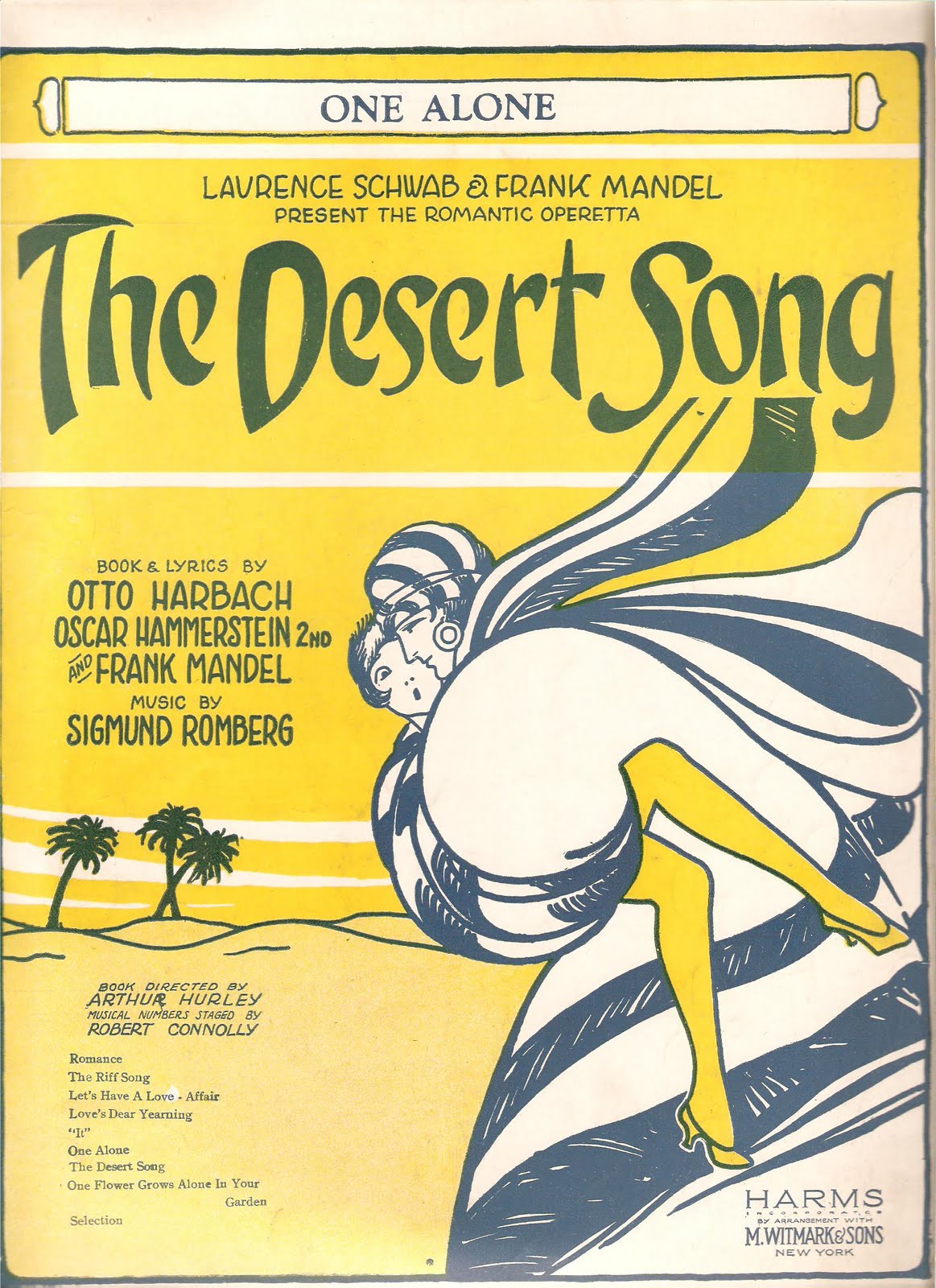
Career off and running, he wrote his best-known operettas, The Student Prince in 1924, The Desert Song in 1926, and The New Moon in 1928.

The Student Prince was the most successful of Romberg’s works, the longest-running Broadway show of the 1920s at 608 performances, even longer than the classic Show Boat.  The “Drinking Song,” with its rousing chorus, was especially popular in 1924, with Prohibition is full swing:

Drink! Drink!
  Let the toast start!
  May young hearts never part!
  Drink! Drink! Drink!
  Let every true lover salute his sweetheart!
  Let's drink!

The Mario Lanza version from the 1954 movie remains popular with imbibers everywhere.

The Desert Song (with lyrics by Oscar Hammerstein) is your typical superhero-adopts-mild-mannered disguise-to-keep-his true-identity-secret saga much like Zorro and Superman but with better music and no phone booths. The Red Shadow loves a beautiful and spirited girl, who loves his hero persona but not his wimpy side.  Will true love win out over hero worship? After much sophisticated music, lust in the dust and naughty humor, we learn the answer, especially in a lavish 1929 film production of the operetta – but only until the 1940s when it became illegal to view or exhibit the 1929 film in the United States because the folks in charge feared the naughty bits would morally harm us.

A second feature version was made in 1943, which had our hero fighting the Nazis, and a third version with Kathryn Grayson and Gordon MacRae in 1953 was about as squeaky clean as you can get.  Thank god for censors.

I drink to make other people more interesting. ― Ernest Hemingway

February 24, 1942: The Bombs Bursting in Air

It had been less than three months since the Japanese attack on Pearl Harbor brought the United States into World War II, and tensions were running high.  And then on the evening of February 24, 1942, in Los Angeles, it appeared that we were being attacked once again.  The United States Navy responded with an anti-aircraft artillery barrage.  The resulting brouhaha lasted through the night with 1,400 shells fired until the Secretary of the Navy announced the end of the air raid.  He also admitted that the entire incident had been a false alarm, a case of “war nerves.”

The attacking force, it seems, was an errant weather balloon, and “once the firing started, imagination created all kinds of targets in the sky and everyone joined in.”  The incident was later derisively dubbed the “Battle of Los Angeles” or the “Great Los Angeles Air Raid.”

A Midsummer Night’s Prayer Meeting

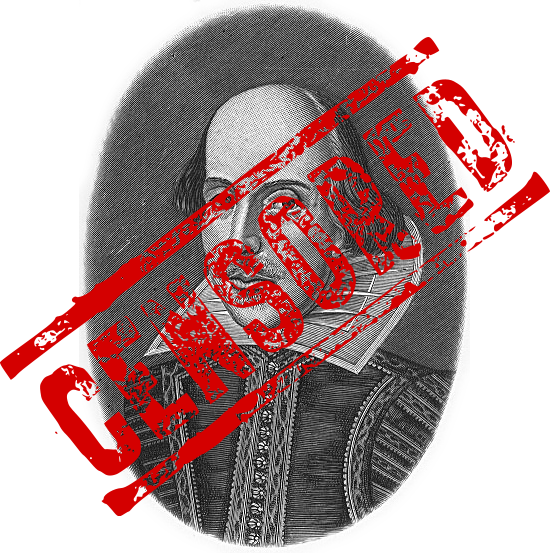
“The Family Shakespeare — in which nothing is added to the original text,censored-shakespeare but those words and expressions are omitted which cannot with propriety be read aloud in a family. My great objects in this undertaking are to remove from the writings of Shakespeare some defects which diminish their value.”

Thus read an introduction for the 1807 edition of Shakespeare’s works, finally made suitable for general audiences by Thomas Bowdler some 200 years after the Bard was safely buried. Certainly Shakespeare, were he alive, could not have objected to having the defects which diminished their value removed from his works. Shakespeare and family values — together at last.

Bowdler undertook this project, along with his sister Henrietta, thanks to childhood memories in which his father had entertained his family with readings from Shakespeare. Only later as an adult did Bowdler realize that his father had been leaving out some of the naughty parts of the plays, anything he felt unsuitable for the ears of his wife and children. Realizing that not all fathers were clever enough to censor on the spot, Bowdler decided it would be worthwhile to publish an edition which came already sanitized.

Shakespeare no doubt would have thanked Thomas Bowdler who joined him in the hereafter on February 24, 1827.


January 19, 1944: Patriotism and Promiscuity

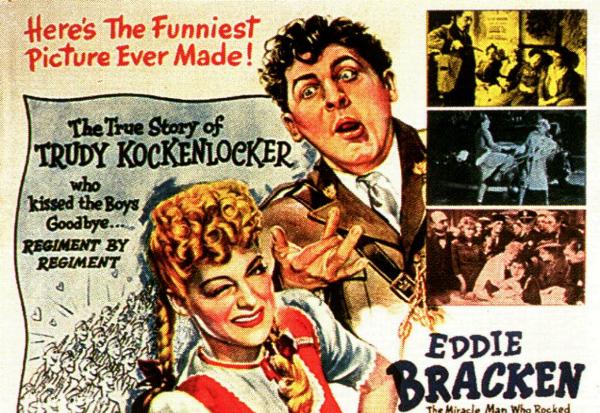
A movie released for national distribution back on January 19, 1944, depicted the predicament of a young woman named Trudy Kockenlocker. It’s seen today as a rather tame screwball comedy (except in Florida maybe) – something that would be at home in the Ozzie and Harriet and Ward and June era – but back when it was released, it was downright scandalous.”Miracle at Morgan’s Creek” starred Betty Hutton and Eddie Bracken and was directed by Preston Sturges. It tells how Trudy wakes up one morning after a farewell party for a group of soldiers to discover that, while drunk, she married one of them whose name she can’t remember. A short time later, she discovers she is pregnant.

Well, didn’t the alarms go off at the Hays Office, that noble outfit charged with protecting Americans from perversion through diligent censorship. The script was sent to the office in 1942, and Paramount quickly received a seven-page catalog of complaints, starting with the fact that Trudy was drunk and working its way up to the possible comparison of Trudy’s dilemma with the virgin birth of Jesus. When the Hays Office had finished its snipping, only ten pages of the script remained in tact. The War Department weighed in, objecting to the moral conduct depicted by the departing soldiers. A pastor in the film who delivers the moral warning against mixing patriotism with promiscuity got the hook as well.

The film was finally released, the Hays Office was bombarded with complaints, including one critic’s suggestion that the office had been “raped in its sleep” for allowing the film to be released, (evidently, Sturges had somehow forgotten to share the film’s ending with the Hays Office). and it became Paramount’s highest-grossing film of the year. It also won an Oscar for Best Screenplay.

The American Film Institute has listed the film as #54 on it’s list of all-time best comedies.


Except in Florida Maybe

A lot of folks would spin the channel to CBS in 1953 to catch  another birth, this one a tad less controversial as Lucy gave birth to Little Ricky (Ricky Ricardo Jr.) – 71.7% of all television sets in the United States were tuned into the I Love Lucy program. On the same day, Lucy gave birth to a nonfictional son, Desi Arnaz Jr.

JULY 29, 1887: NAUGHTY NOMADS AND SINGING SOTS

Born in 1887, Sigmund Romberg moved to the United States in 1909 and, after a short resume builder in a pencil factory (as a sharpener?), found work as a pianist.  An instrument here, an instrument there, and pretty soon he had his own orchestra. He published a few songs that caught the attention of the Shubert brothers, who in 1914 hired him to write music for their Broadway shows. Next day on his dressing room, they hung a star.


Career off and running, he wrote his best-known operettas, The Student Prince in 1924, The Desert Song in 1926, and The New Moon in 1928.


The Student Prince was the most successful of Romberg’s works, the longest-running Broadway show of the 1920s at 608 performances, even longer than the classic Show Boat.  The “Drinking Song,” with its rousing chorus, was especially popular in 1924, with Prohibition is full swing:

Drink! Drink!
  Let the toast start!
  May young hearts never part!
  Drink! Drink! Drink!
  Let every true lover salute his sweetheart!
  Let's drink!

The Mario Lanza version from the 1954 movie remains popular with imbibers everywhere.

The Desert Song (with lyrics by Oscar Hammerstein) is your typical superhero-adopts-mild-mannered disguise-to-keep-his true-identity-secret saga much like Zorro and Superman but with better music and no phone booths. The Red Shadow loves a beautiful and spirited girl, who loves his hero persona but not his wimpy side.  Will true love win out over hero worship? After much sophisticated music, lust in the dust and naughty humor, we learn the answer, especially in a lavish 1929 film production of the operetta – but only until the 1940s when it became illegal to view or exhibit the 1929 film in the United States because the folks in charge feared the naughty bits would morally harm us.

A second feature version was made in 1943, which had our hero fighting the Nazis, and a third version with Kathryn Grayson and Gordon MacRae in 1953 was about as squeaky clean as you can get.  Thank god for censors.

I drink to make other people more interesting. ― Ernest Hemingway