JUNE 30, 1987: BROTHER, CAN YOU SPARE A LOONIE?

When the Canadian government announced in 1986 that a new dollar coin would be launched the following year and the dollar bill phased out, they had planned to continue using the voyageur theme of its predecessor, and the master dies for the coin were sent from Ottawa to the Mint in Winnipeg. Somehow they were lost in transit.

An investigation found that there were no specific procedures for transporting master dies and that they had been shipped using a local courier in order to save $43.50. The investigation also found it to be the third time that the Mint had lost master dies within five years. Fingers started pointing.  An internal review by the Royal Canadian Mint found that an existing policy did require the two sides of the dies to be shipped separately. The new coins dies were indeed packaged separately but they were part of a single shipment. The Royal Canadian Mounted Police contended that the dies were simply lost in transit. But the Mint said the dies were stolen. They were never recovered.

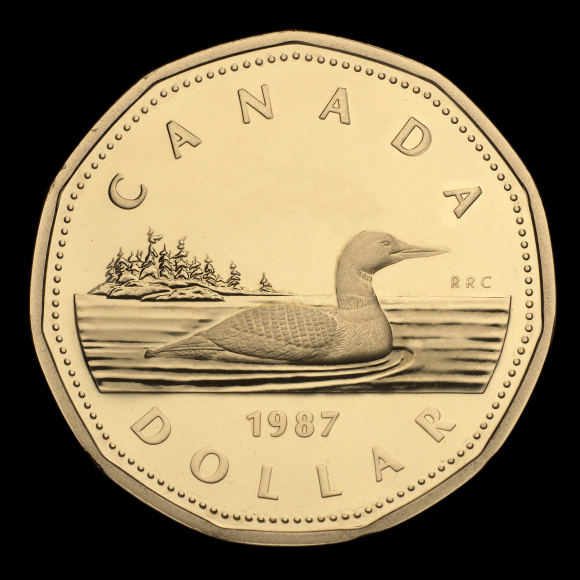
Fearing possible counterfeiting, the government approved a new design for the reverse side of the coin, replacing the voyageur with an engraving of a common loon floating in water. The coin was immediately christened the “loonie” throughout English Canada (“huard” in Quebec) when 40 million coins went into circulation on June 30, 1987.

The final dollar bills were printed two years later on June 30, 1989.  And in 1996, Canadians got a two-dollar coin, the “toonie.”


It was one of the dullest speeches I ever heard. The Agee woman told us for three quarters of an hour how she came to write her beastly book, when a simple apology was all that was required. ― P.G. Wodehouse
APRIL 17, 1610: SOMEWHERE A RIVER BEARS YOUR NAME

Back at the dawn of the 17th century, the holy grail among explorers was the Northwest halfPassage, that elusive sea route that Europeans had been seeking ever since they discovered that North America stood right in the middle of their way to China. (For some reason, they longed to go west to China even though it was a lot closer going east.)

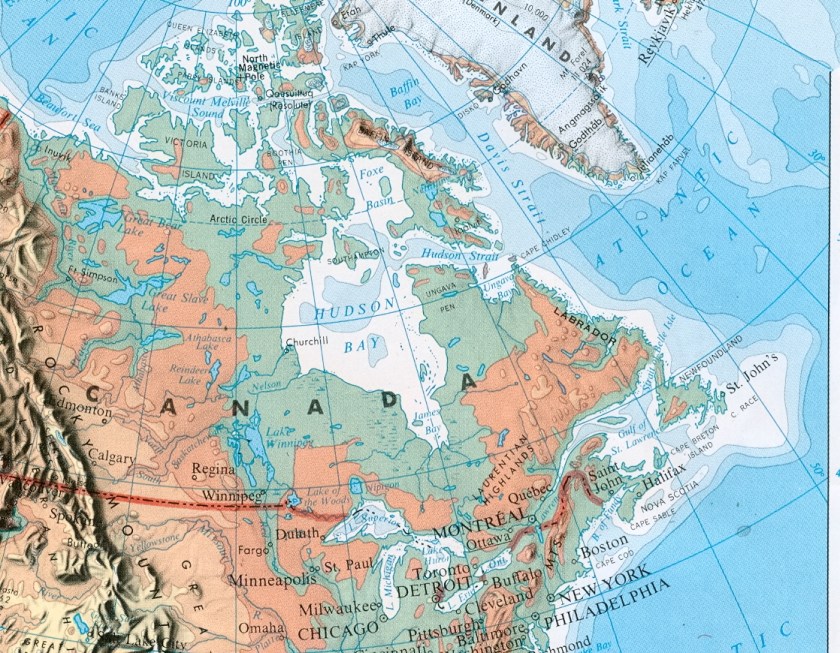
On April 17, 1610, intrepid British explorer Henry Hudson. already famous for having discovered and explored a river that just happened to share his last name, set sail on his latest attempt to find the passage that would at last allow Europeans to take (as the popular song tells us) a slow boat to China.

It was his fourth expedition, financed by adventurers from England. Sailing across the Atlantic, slipping between Greenland and Labrador, he entered the Hudson Strait (another remarkable coincidence) and soon reached (you’re not going to believe this) Hudson Bay. Unfortunately after all this seeming good luck, the expedition took a nasty turn.  After three months dawdling around the bay, Hudson was surprised by the onset of winter. Why winter north of Labrador in November would be a surprise is anyone’s guess. Nevertheless, Hudson and his crew were forced to set up a winter camp. The next few months were not pleasant, and many of the crew members were not amused. They grumbled and held their tongues throughout the winter until June. But once they were sailing again, they up and mutinied, setting Hudson, his son and seven friends adrift.  Although Hudson was never seen again, England laid claim to everything that shared his name — river, strait, bay and even a funny looking vehicle that seemed to have no useful purpose.


SEPTEMBER 18, 1981: THE LOT IS FULL

Guinness, when not brewing stout, keeps busy by recording great moments in the history of human endeavors – the largest ball of aluminum foil, the most people in the trunk of a 1973 Volkswagen, the highest this, the longest that. The recording of such precious and penultimate moments has over the years given so many their 15 minutes of fame and, at the very least, an asterisk in the annals of time.

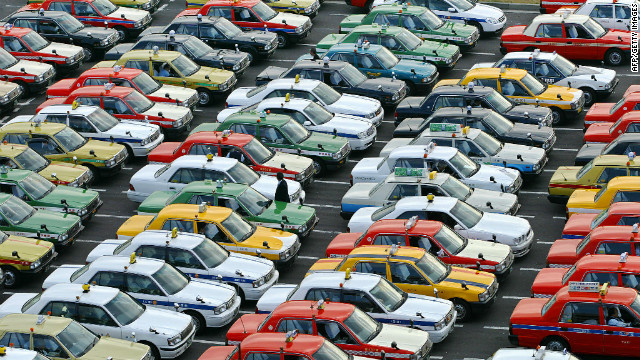
And so it was on September 18, 1981, for the city of Edmonton in the province of Alberta in Canada. On that day, the West Edmonton Mall made the Guinness Book of World Records as the largest parking lot in the world with designated spots for 20,000 automobiles. What a step in the shopping experience! What a giant leap for mankind!

Of course a 20,000-car parking garage is nothing without somewhere for all those parking people to go. And the West Edmonton Mall has plenty of places to go: more than 800 stores, 100 restaurants, and 19 movie theaters. It has a full-size ice-skating rink, where the Edmonton Oilers practice; two hotels, a chapel; and several nightclubs.

The mall is arranged in a series of themed wings. There’s a 19th-century European boulevard, a Bourbon Street, and a Chinatown wing arranged around a koi pond. A replica of Christopher Columbus’ Santa Maria shares a lagoon with real submarines and exotic fish. When the mall opened, its developer gushed: “You don’t have to go to New York or Paris or Disneyland or Hawaii. We have it all here for you in one place, in Edmonton, Alberta, Canada!”

The mall has held other records, too: At one time or another it’s been the World’s Largest Shopping Mall (48 city blocks), the World’s Largest Indoor Amusement Park and the World’s Largest Indoor Water Park (which includes the World’s Largest Indoor Lake and the World’s Largest Indoor Wave Pool). And all of this in the World’s Nicest Country (at 35 million nice people).

Naturally every parking lot has its detractors; some parking lot purists argue that the Edmonton Mall shouldn’t hold the record because the lot is half indoors and half outdoors and therefore actually two parking lots. Picky, picky, picky.

The Edmonton Mall parking lot most likely added an unintended world’s record to its trophy case: the most people looking for their lost cars.

JUNE 30, 1987: BROTHER, CAN YOU SPARE A LOONIE?

When the Canadian government announced in 1986 that a new dollar coin would be launched the following year and the dollar bill phased out, they had planned to continue using the voyageur theme of its predecessor, and the master dies for the coin were sent from Ottawa to the Mint in Winnipeg. Somehow they were lost in transit.

An investigation found that there were no specific procedures for transporting master dies and that they had been shipped using a local courier in order to save $43.50. The investigation also found it to be the third time that the Mint had lost master dies within five years. Fingers started pointing.  An internal review by the Royal Canadian Mint found that an existing policy did require the two sides of the dies to be shipped separately. The new coins dies were indeed packaged separately but they were part of a single shipment. The Royal Canadian Mounted Police contended that the dies were simply lost in transit. But the Mint said the dies were stolen. They were never recovered.

Fearing possible counterfeiting, the government approved a new design for the reverse side of the coin, replacing the voyageur with an engraving of a common loon floating in water. The coin was immediately christened the “loonie” throughout English Canada (“huard” in Quebec) when 40 million coins went into circulation on June 30, 1987.

The final dollar bills were printed two years later on June 30, 1989.  And in 1996, Canadians got a two-dollar coin, the “toonie.”


It was one of the dullest speeches I ever heard. The Agee woman told us for three quarters of an hour how she came to write her beastly book, when a simple apology was all that was required. ― P.G. Wodehouse