Harrison Ford cracked a mean bullwhip as the title character in the Indiana Jones series of films. Ford wasn’t born brandishing a bullwhip; he had to learn it for the films. And he was taught by bullwhip master, Lash LaRue born on June 16, 1917.
 Like many actors in the 40s and 50s, LaRue spent most of his career making B-Westerns. Originally hired because he looked enough like Humphrey Bogart that producers thought this would draw in more viewers, he used his real last name as the name for most of his film characters. He was given the name Lash because, although he carried a gun, he was noted for preferring to use an 18-foot-long bullwhip to take on bad guys. Lash not only disarmed bad guys, he performed many stunts such as saving people about to fall to their doom by wrapping his whip around them — often while at full gallop on Black Diamond, his trusty horse — and pulling them to safety. Lash, like a guy named Cash, was also known for always wearing black.
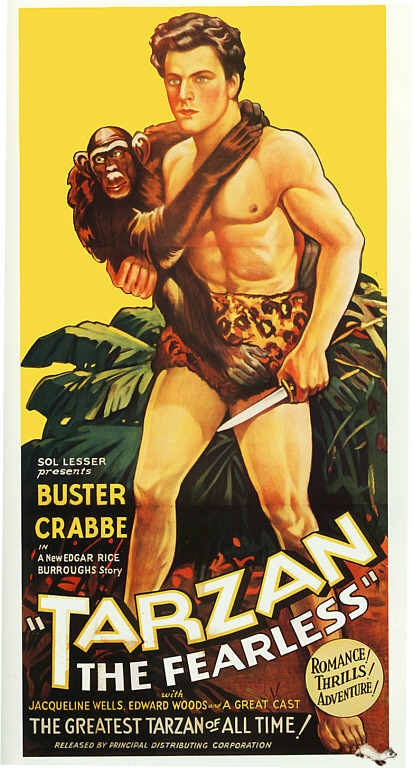
After starting out as a sidekick to singing cowboy Eddie Dean, he earned his own series of Western films and his own sidekick, Fuzzy Q. Jones (Al St. John), inherited from Buster Crabbe. He also got his very own villain — an evil, cigar-smoking twin brother, The Frontier Phantom.
His films ran from 1947 to 1951. The comic book series that was named after his screen character lasted even longer, appearing in 1949 and running for 12 years as one of the most popular western comics published.
face down in a cranberry bog, part 5: driving mr. corpse
We needed my car because she had asked me, and I had agreed, to mind the body for a few hours while she got a government car and fussed with  the paperwork so that the vehicle would never have been on the island. I had agreed to this cloak-and-dagger enterprise only because I couldn’t come up with a better one and, face it, I was seduced. When I returned I found her standing at the scene of the accident, looking down into the bog. For a moment, I was afraid she’d moved him again. She smiled and took my hand as I reached her, then led me off toward the bushes, our arms swinging between us – a most romantic portrait, except for the corpse. He was still lying face down and I was happy for that. The red boxer shorts had been cloaked by a distinguished dark gray governmental suit.
“You dressed him,” I said.
“It was the least I could do,” she said, with a little laugh. “After all, I undressed him.”
We lugged the body out of the bushes and slipped it into the trunk of my car, keeping a wary watch for prying policemen until the deed was done.
We agreed to meet at my place – foolish, perhaps, but my garage is more private than most places. I slept for two hours – fitfully, even though the morning had exhausted me – and, once up, puttered impatiently, waiting for her arrival. Finally I turned on the TV and watched two senators calling each other names over an appropriations bill. The political repartee immediately brought to mind the politician in my trunk and I felt the need to check up on him – possibly afraid he’d disappear again. I went to the garage and, with just a little foreboding, carefully opened the trunk. Unwarranted foreboding, for he was still there. I never thought I’d be relieved to find a body in the trunk of my car. Unfortunately, he had shifted, and his ghostly face now looked up chidingly, suggesting that I was somehow unAmerican. I tried to push him back over and felt something hard in the jacket pocket. I reached in and pulled the object out – a knife, an ugly knife. Working almost mechanically now in the grip of this new fear, I unbuttoned the crisp white shirt and – to no great surprise – found a wound in his chest. Looking back to the knife, I was certain it was the father of the wound.
I returned to the house. On TV the smiling anchor paused to glare at me as though I had been holding up his news program and only now could he continue . . . “And boarding a private jet at Logan Airport, here is Prince Leopold, chief of state of this tiny but strategically important nation. No one has indicated why the Prince made this secretive trip to the United States, but rumors suggested that he was seeking financial backing to save his crumbling empire. Those rumors, and his own angry statements, suggest also that he is going home empty-handed. His companion, thought by many to actually be his mistress….”
And there she was, my bicyclist, my co-conspirator, my would-be lover, once again gazing at me. Even though she was getting on that plane and even though the smile wasn’t there, I could see it in her eyes – she probably still loved me.
The knife is sitting on the table in front of me. I’m sure mine will be the only prints on it. Did she seduce him for the cause, hoping to blackmail him, or did she kill him because he turned them down? Did she actually make love to him? Probably not. Probably just the promise of it, like the promise to me. I probably should feel sorry for myself. A lot of people bicycle to ‘Sconset, but I’m pushing sixty and had to stop halfway. And now there’s a knife on my table, a dead Secretary of State in the trunk of my car, and the chief of police doesn’t like me much.
The snarl at the other end of the line tells me I’ve reached him. “Hello there. I don’t know if you remember me. I’m the one who found the body this morning – you know, the body that disappeared. Well, you’re not going to believe this. No, let me put that another way. This is quite extraordinary, but I’m sure if you look at it logically and carefully, you will believe it. Anyway . . .”
This story is included in the collection Naughty Marietta and Other Stories.


 Like many actors in the 40s and 50s, LaRue spent most of his career making B-Westerns. Originally hired because he looked enough like Humphrey Bogart that producers thought this would draw in more viewers, he used his real last name as the name for most of his film characters. He was given the name Lash because, although he carried a gun, he was noted for preferring to use an 18-foot-long bullwhip to take on bad guys. Lash not only disarmed bad guys, he performed many stunts such as saving people about to fall to their doom by wrapping his whip around them — often while at full gallop on Black Diamond, his trusty horse — and pulling them to safety. Lash, like a guy named Cash, was also known for always wearing black.
 Wretched Richard's Almanac