December 20, 1880: Remember Me to Herald Square

On December 20, 1880, the stretch of Broadway between Union Square and Madison Square in New York City was illuminated by electric lights for the first time, becoming one of the first streets in the country to be lit up.  It had been exactly one year since over in New Jersey, in broadwayMenlo Park, Thomas Edison had demonstrated his incandescent light.  By the 1890s, the section of Broadway from 23rd Street to 34th Street had become so brightly illuminated by electrical advertising signs, that it was dubbed “The Great White Way.”  Later, when the theater district moved uptown to the Times Square area, the name moved with it.

Broadway is the oldest north-south thoroughfare in New York City, dating back to the first New Amsterdam settlement.  The name Broadway is an English translation of the Dutch breede weg, which means something like “street of hot pretzel vendors.”  Although best known for the boulevard portion that runs through Manhattan, Broadway also runs through the Bronx and north for another 18 miles through Westchester County to Sleepy Hollow.  There are countless landmarks along the route, but the one that first springs to mind this time of year is Macy’s Herald Square department store, between 34th and 35th Streets, where Christmas begins with Macy’s annual parade,  and its windows spectacularly celebrate the season.

Talk About Holiday Spirit

On December 20, 1989, Vice President Dan Quayle mailed out 30,000 Christmas cards with the inscription “May our nation continue to be the beakon of hope.”

JULY 29, 1887: NAUGHTY NOMADS AND SINGING SOTS

Born in 1887, Sigmund Romberg moved to the United States in 1909 and, after a short resume builder in a pencil factory (as a sharpener?), found work as a pianist.  An instrument here, an instrument there, and pretty soon he had his own orchestra. He published a few songs that caught the attention of the Shubert brothers, who in 1914 hired him to write music for their Broadway shows. Next day on his dressing room, they hung a star.

Career off and running, he wrote his best-known operettas, The Student Prince in 1924, The Desert Song in 1926, and The New Moon in 1928.

The Student Prince was the most successful of Romberg’s works, the longest-running Broadway show of the 1920s at 608 performances, even longer than the classic Show Boat.  The “Drinking Song,” with its rousing chorus, was especially popular in 1924, with Prohibition is full swing:

Drink! Drink!
  Let the toast start!
  May young hearts never part!
  Drink! Drink! Drink!
  Let every true lover salute his sweetheart!
  Let's drink!

The Mario Lanza version from the 1954 movie remains popular with imbibers everywhere.

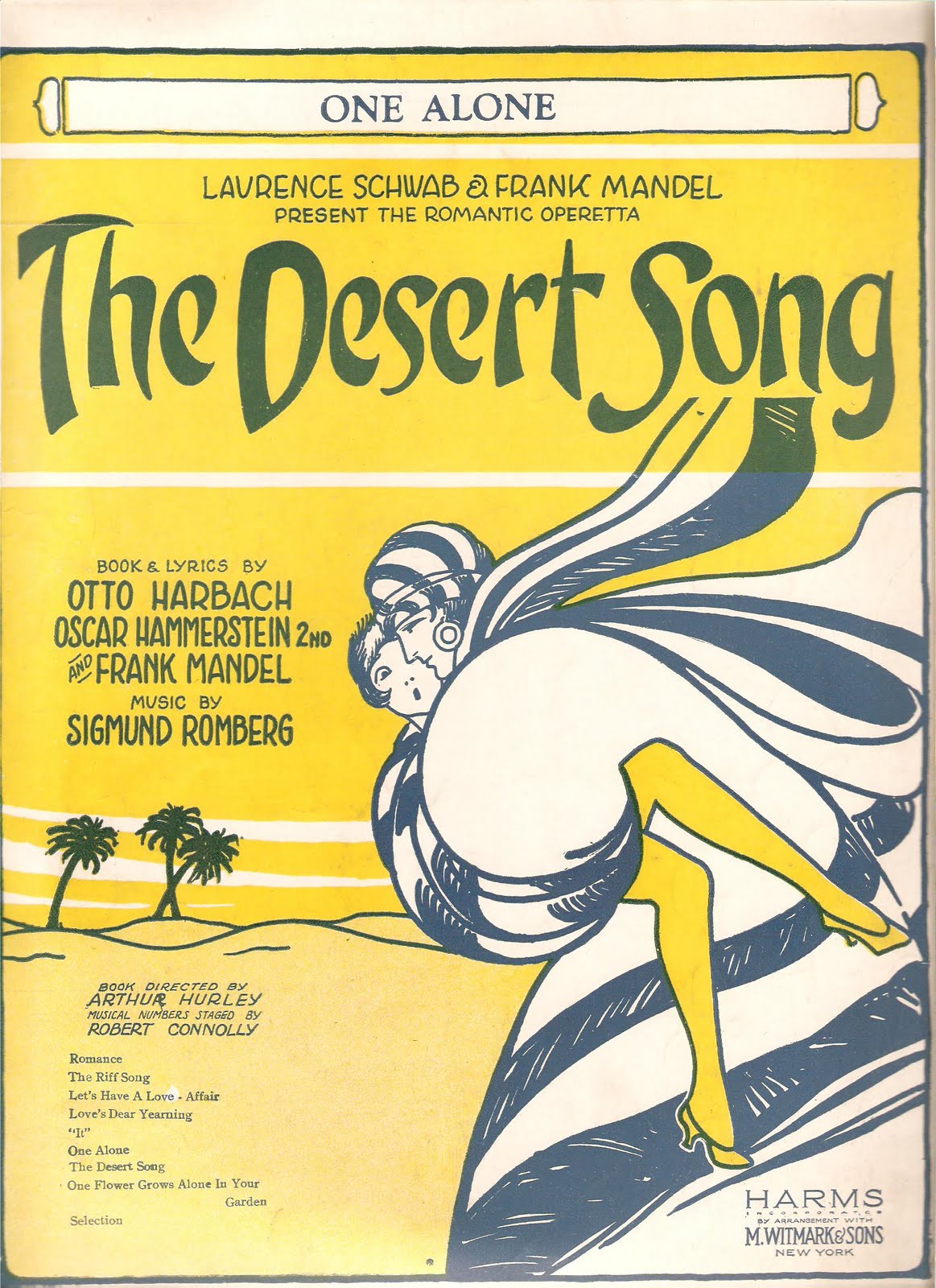
The Desert Song (with lyrics by Oscar Hammerstein) is your typical superhero-adopts-mild-mannered disguise-to-keep-his true-identity-secret saga much like Zorro and Superman but with better music and no phone booths. The Red Shadow loves a beautiful and spirited girl, who loves his hero persona but not his wimpy side.  Will true love win out over hero worship? After much sophisticated music, lust in the dust and naughty humor, we learn the answer, especially in a lavish 1929 film production of the operetta – but only until the 1940s when it became illegal to view or exhibit the 1929 film in the United States because the folks in charge feared the naughty bits would morally harm us.

A second feature version was made in 1943, which had our hero fighting the Nazis, and a third version with Kathryn Grayson and Gordon MacRae in 1953 was about as squeaky clean as you can get.  Thank god for censors.

I drink to make other people more interesting. ― Ernest Hemingway

April 8, 1904: It Was the Best of Times Square . . .

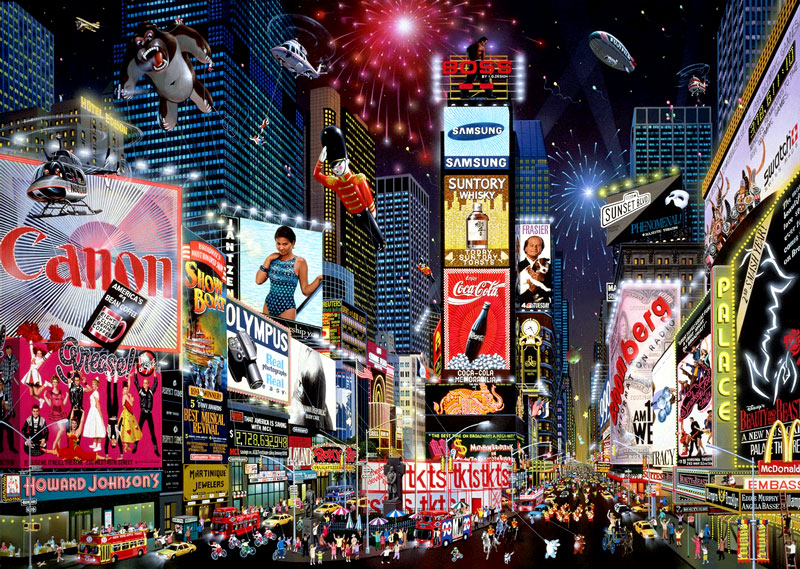
In 1904, a bit of real estate in the middle of Manhattan called Long Acre Square got a new name. New York Times publisher Adolph S. Ochs had just moved his newspaper’s operations to a new skyscraper on 42nd Street. He persuaded the City of New York to construct a subway station there, and the area was renamed Times Square. Just three weeks later, the first electrified sign appeared at the corner of 46th Street and Broadway.

During its heyday through the 1920s, celebrities such as Irving Berlin, Fred Astaire, and Charlie Chaplin were closely associated with the area, nicknamed The Tenderloin because of its desirable location in Manhattan. However, crime and corruption, and their friends gambling and prostitution were sneaking in. Beginning with the onset of the Great Depression in the 1930s and through the following decades, Times Square gained its reputation as a dangerous neighborhood. The seediness of the area became a symbol of the dismal state of the city. The tourists who continued to flock to the city’s most famous landmark were greeted by go-go bars, sex shops, adult theaters, and a very unDisneylike atmosphere. (oh, you got trouble right here in New York City)

Revitalization began in thew 1990s and today Times Square is a place you’d take your elderly mother.  And lots of people do.  Times Square is the world’s most visited tourist attraction, hosting over 39 million visitors (and their elderly mothers) yearly.

It’s squeaky clean now and glitzier than ever. (It’s the only neighborhood with zoning ordinances requiring building owners to display illuminated signs.)

Dream on, Las Vegas; Times Square is king.

Take My Wife . . . Please

Earlier centuries saw a great many practices that were commonplace then but which would be considered inappropriate in our more enlightened age. Nowhere was this truer than in (merry old) England — purchasing a plump Irish child for special dinner occasions in the 18th century, for instance, or in the 19th century, selling a spouse one had grown weary of.  One such sale took place on April 8, 1832, an account of which was recorded for the amusement of generations that followed.  Joseph Thompson, a farmer, had been married for three unhappy years when he and his wife decided to call it quits.  As was customary, Thompson took his wife to town and set her up for public auction.  At noon, the sale commenced with Thompson delivering a short speech:
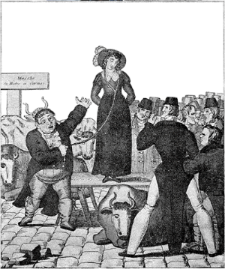
“Gentlemen, I have to offer to your notice my wife, Mary Ann Thomson . . . whom I mean to sell to the highest and fairest bidder.  Gentlemen, it is her wish as well as mine to part for ever.  She has been to me only a born serpent.  I took her for my comfort, and the good of my home; but she became my tormentor, a domestic curse, a night invasion, and a daily devil.  Gentlemen, I speak truth from my heart when I say — may God deliver us from troublesome wives and frolicsome women!  Avoid them as you would a mad dog, a roaring lion, a loaded pistol, cholera morbus, Mount Etna, or any other pestilential thing in nature.”

What a sales pitch!  This guy could sell anything. The asking price for Mary Ann was 50 shillings. Eventually, the price was knocked down and a deal was made — 20 shillings and a Newfoundland dog.

Everyone satisfied, they parted company, Mary Ann and a gentleman named Henry Mears in one direction, Joseph and the dog in the other.

January 21, 1903: Give My Regards to Toto

A little girl lives in the middle of the great Kansas prairies with her aunt, wizard_of_oz_1902uncle and a little dog. One day, while she is playing with her pet, she is interrupted by a fierce whirlwind. The little girl and the dog take shelter in the farmhouse, which is whisked away into the stratosphere, plopping down in a strange, alien land.

The plot of the Wizard of Oz, written by L. Frank Baum in 1900 is easily recognized. Many children read the Wizard or one of the many Oz books. And is there anyone on the planet who has not seen the 1939 movie version?

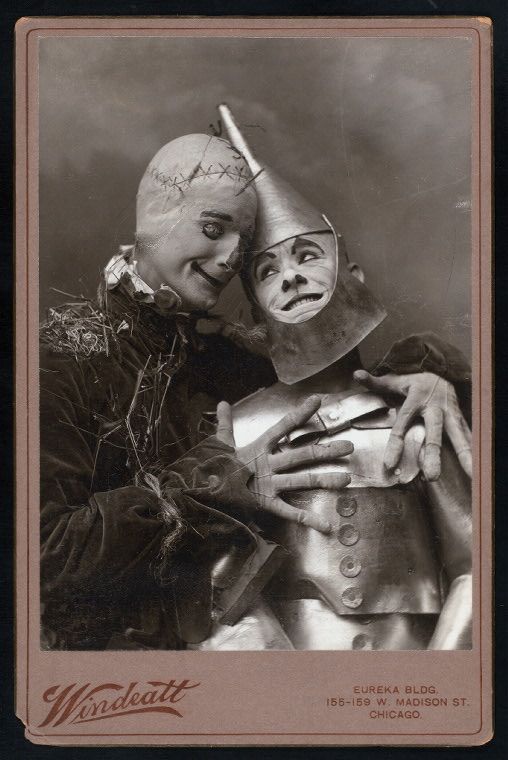
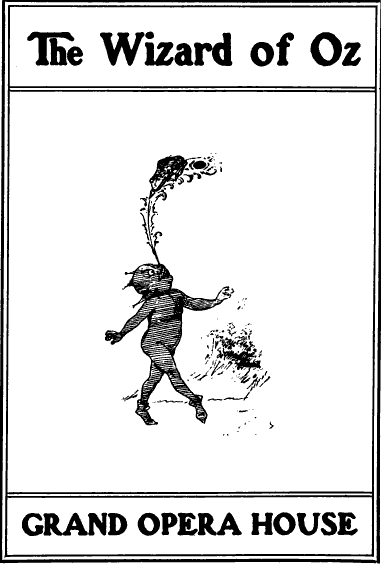
The first outing, other than in print, for the Wizard of Oz came just a few years after publication of the book. A musical extravaganza for the stage opened on Broadway on January 21, 1903, and ran for 293 performances, closing at the end of 1904. It starred pretty much forgotten performers: Anna Laughlin as Dorothy, Fred Stone as the Scarecrow and David Montgomery as the Tin Man. The Cowardly Lion was reduced to a bit part, and the Wicked Witch was completely eliminated. (Fans of the current hit musical Wicked might dispute the logic of that move.) Toto was replaced by Dorothy’s pet cow, Imogene (probably because it created work for two actors instead of one little dog). New characters included King Pastoria II and his girlfriend, Trixie Tryfle, a waitress; Cynthia Cynch, a lunatic; Sir Dashemoff Daily, the Oz poet laureate; Sir Wiley Gyle; and General Riskitt.

The main plot of the musical is King Pastoria’s attempts to wrest the throne from the Wizard of Oz. Dorothy and her fellow protagonists become fugitives searching for the Wizard. The music is pretty much forgotten as well. Such tunes as “Just a Simple Girl from the Prairie” and “Budweiser’s a Friend of Mine” haven’t found their way into medleys with “Somewhere Over the Rainbow.”

Ready When You Are, Cecil

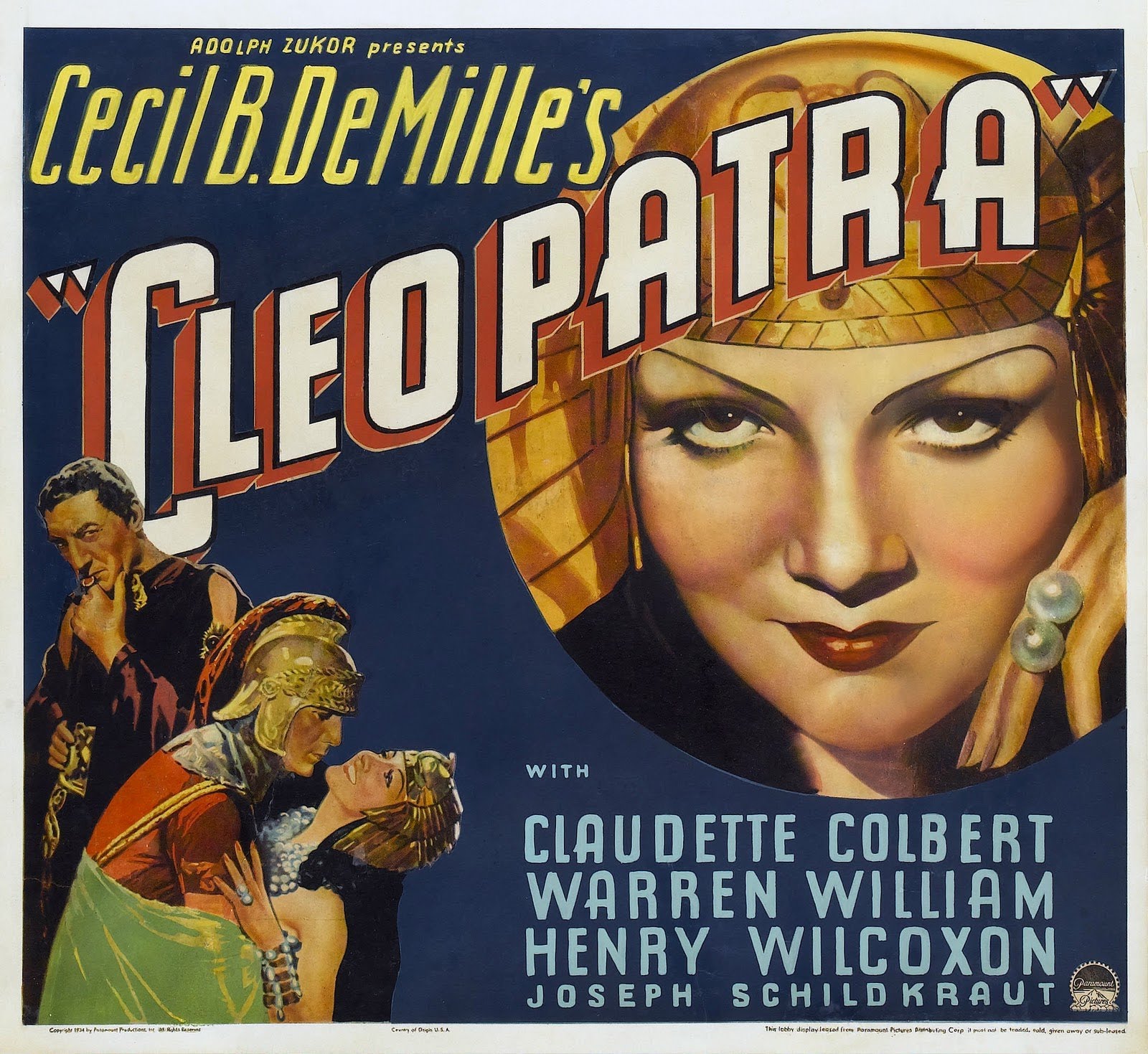
Cecil Blount DeMille (it’s easy to see why he was known as C.B.) died on January 21, 1959.  As a film director, he was most widely known for his Biblical epics “with a cast of thousands.”

What About Bob?

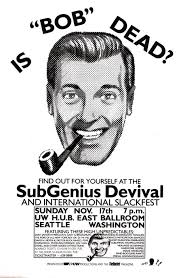
J. R. “Bob” Dobbs (not of who killed J.R.? fame) did not make as big a splash in the religious world.  Founder of the Church of the SubGenius, he died in 1984 at the hands of an assassin.  (Okay, somebody probably asked who killed J.R.?)  Dobbs early career was that of a salesman until on one fateful day in 1953, he saw a vision of God on a television set, inspiring him to found the religion whose motto was “Eternal Salvation — or triple your money back.”  Although he died in 1984, he has come back from the dead a number of times, according to his church.


December 20, 1880: Remember Me to Herald Square

On December 20, 1880, the stretch of Broadway between Union Square and Madison Square in New York City was illuminated by electric lights for the first time, becoming one of the first streets in the country to be lit up.  It had been exactly one year since over in New Jersey, in Menlo Park, Thomas Edison had demonstrated his incandescent light.  By the 1890s, the section of Broadway from 23rd Street to 34th Street had become so brightly illuminated by electrical advertising signs, that it was dubbed “The Great White Way.”  Later, when the theater district moved uptown to the Times Square area, the name moved with it.
Broadway is the oldest north-south thoroughfare in New York City, dating back to the first New Amsterdam settlement.  The name Broadway is an English translation of the Dutch breede weg, which means something like “street of hot pretzel vendors.”  Although best known for the boulevard portion that runs through Manhattan, Broadway also runs through the Bronx and north for another 18 miles through Westchester County to Sleepy Hollow.  There are countless landmarks along the route, but the one that first springs to mind this time of year is Macy’s Herald Square department store, between 34th and 35th Streets, where Christmas begins with Macy’s annual parade,  and its windows spectacularly celebrate the season.

Talk About Holiday Spirit

On December 20, 1989, Vice President Dan Quayle mailed out 30,000 Christmas cards with the inscription “May our nation continue to be the beakon of hope.”

miracle

JULY 29, 1887: NAUGHTY NOMADS AND SINGING SOTS

Born in 1887, Sigmund Romberg moved to the United States in 1909 and, after a short resume builder in a pencil factory (as a sharpener?), found work as a pianist.  An instrument here, an instrument there, and pretty soon he had his own orchestra. He published a few songs that caught the attention of the Shubert brothers, who in 1914 hired him to write music for their Broadway shows. Next day on his dressing room, they hung a star.


Career off and running, he wrote his best-known operettas, The Student Prince in 1924, The Desert Song in 1926, and The New Moon in 1928.


The Student Prince was the most successful of Romberg’s works, the longest-running Broadway show of the 1920s at 608 performances, even longer than the classic Show Boat.  The “Drinking Song,” with its rousing chorus, was especially popular in 1924, with Prohibition is full swing:

Drink! Drink!
  Let the toast start!
  May young hearts never part!
  Drink! Drink! Drink!
  Let every true lover salute his sweetheart!
  Let's drink!

The Mario Lanza version from the 1954 movie remains popular with imbibers everywhere.

The Desert Song (with lyrics by Oscar Hammerstein) is your typical superhero-adopts-mild-mannered disguise-to-keep-his true-identity-secret saga much like Zorro and Superman but with better music and no phone booths. The Red Shadow loves a beautiful and spirited girl, who loves his hero persona but not his wimpy side.  Will true love win out over hero worship? After much sophisticated music, lust in the dust and naughty humor, we learn the answer, especially in a lavish 1929 film production of the operetta – but only until the 1940s when it became illegal to view or exhibit the 1929 film in the United States because the folks in charge feared the naughty bits would morally harm us.

A second feature version was made in 1943, which had our hero fighting the Nazis, and a third version with Kathryn Grayson and Gordon MacRae in 1953 was about as squeaky clean as you can get.  Thank god for censors.

I drink to make other people more interesting. ― Ernest Hemingway