November 14, 2006: Wings on a Pig

When the first Pig Stand opened, it was a restaurant like no other that had gone before. The year was 1921, the onset of the Roaring Twenties. Americans were in love with their pigstandautomobiles. More than eight million Fords and Oldsmobiles and Pierce Arrows roamed newly created highways.

Located on a Texas highway between Dallas and Fort Worth, the Pig Stand catered to those automobile folks – the first drive-in restaurant in the United States. The restaurant’s owner, Dallas entrepreneur Jessie Kirby, reckoned that all those drivers would flock to a roadside barbecue where they could drive up, fill their faces with good Texas vittles, and drive off, without ever stepping out of their automobile. “People with cars are so lazy,” said Kirby, “they don’t want to get out of them.”

Kirby was a showman who knew how to attract customers. The Pig Stand had a red-tiled pagoda-like roof set on a rectangular building framed of wood and covered in stucco. As a customer was pulling in, teenage boys in spiffy white shirts and black bow ties would dash over to the car, hop onto the running board, and take an order – before the driver even came to a stop. For this derring-do, the servers were given the nickname carhops. Food historians credit the Pig Stand with the introduction of deep-fried onion rings, chicken-fried steak sandwiches, Texas Toast and high cholesterol.

The Pig Stand was a big hit with hungry drivers, and it soon became a chain, through one of the first franchising arrangements in restaurant history. Pig Stands popped up everywhere. By 1934, there were more than 130 of them in nine states, sporting the slogan “America’s Motor Lunch.” And dinner – Pig Stands boasted that more than 5,000 people enjoyed pig sandwich dinners every evening in Dallas alone. Pig Stand drive-ins soon replaced male carhops with attractive young women on roller skates, but maintained the formula that had got them this far: good-looking young carhops, tasty food, and speedy service – all in the comfort of your automobile.

Wartime gasoline and food rationing took its toll on the Pig Stand chain. And then came McDonald’s.  And Burger King.  And Wendy’s. By the end of the 1950s, all of the Pig Stand franchises outside of Texas had closed. And by 2005, only six remained in the state. Then on November 14, 2006, state officials closed the last two Pig Stands restaurants for unpaid sales taxes. And an icon oinked off into the Texas sunset.

 

JULY 30, 2003: TAKE A SPIN IN MY KRAFT-DURCH-FREUDE-WAGEN?

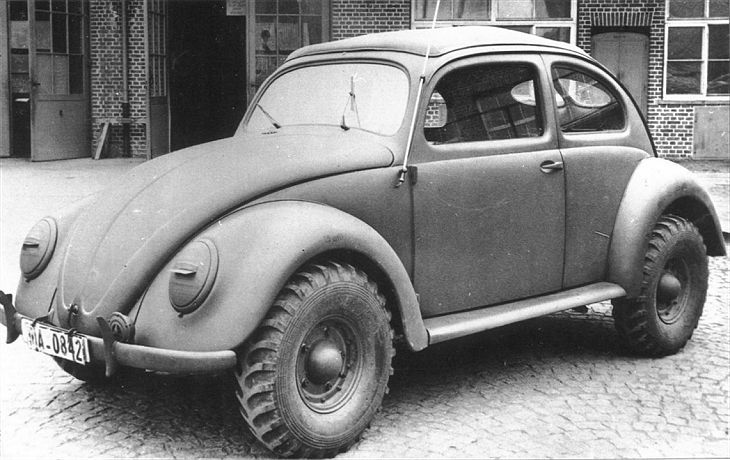
Volkswagen Beetle number 21,529,464 rolled off the production line at the VW plant in Puebla, Mexico, on this day in 2003. It was the last of the Beetles, a car that had been built since World War II. kdf-wagenIt was baby blue and destined for a museum near Volkswagen headquarters in Wolfsburg, Germany, where its oldest ancestors were made.

This was the classic VW Beetle, the real one, not the redesigned retro Beetle that Volkswagen started producing in 1998. It was first visualized back in the 1930s by Austrian automotive engineer Ferdinand Porsche (yes, that Porsche).  Adolf Hitler wanted a small, affordable passenger car to satisfy German transportation needs, something smaller than a Panzer and more family-friendly. Porsche’s auto fit the bill and was introduced in 1939 as the Kraft-durch-Freude-Wagen (or “Strength-Through-Joy” car), not a moniker that would send anyone other than Nazis running to their nearest automobile dealer.  A much-needed name change would later make it the “people’s car” or Volkswagen.

The Kraft-durch-Freude-Wagen was quickly given the nickname “Beetle” for its funny round shape and because — well, would you call it the “Kraft-durch-Freude-Wagen?”  The Wolfsburg factory churned out vehicles until production was halted by Allied bombing in 1944.

Production was resumed after the war, and the Beetle was distributed throughout the world during the following years. After a slow start in the United States, the Beetle became the top import by 1960 as the result of a clever advertising campaign. In 1969, a Beetle named Herbie starred in a hit movie The Love Bug and a couple of sequels.

Hard times hit in 1977, however, as the Beetle was banned in America for failing to meet safety and emission standards. Sales throughout the world declined and, by the late 1980s, the classic Beetle was sold only in Mexico. The Beetle was doomed even in Mexico, thanks to increased competition from other compact cars and burros. And in 2003 it was adios fraulein.


February 21, 1937: It Was a One-eyed, One-horned Flying Purple Studebaker

Like so many youngsters of his age, Waldo Waterman looked up at the heavens and wanted to fly. The Wright brothers had already done their thing, and the skies were becoming littered with aviators. In 1909, at the age of 15, Waldo built himself a glider, a year later a powered flying machine. Not quite enough power it turned out; it seems Waldo was mostly adept at crashing things.

But Waldo soldiered on. He studied aeronautical engineering and turned to teaching the theory of flight. Theory was one thing, but Waldo still had the driving desire to build flying machines. In 1932, he introduced his Waterman Whatsit, a flying wing with a cockpit on top and a tricycle undercarriage. It crashed a lot. A few years of tinkering led to an improved flying wing he called the Arrowplane that actually stayed in the air from Santa Monica, California, to Washington DC as part of a government competition to produce a flying machine that would cost under $700 to build.

Nobody could get the cost down that far, but attempts by Henry Ford got Waldo to thinking flying car, and the result was his Arrowbile. The cockpit was now below the wing. It had a radiator grille, a single headlight, automobile type doors and a single Studebaker automobile engine. Its successful maiden flight took place on February 21, 1937, when the Arrowbile, lifted off, landed safely and drove off into the sunset.

Unfortunately, the story kind of peters out here. Only five were ever produced, the five that were bought by Studebaker.

Penance and Pancakes

Shrove Tuesday is a day to reflect upon past indiscretions and seek pancakepenance in preparation for Lent which can be counted on to follow one day later. Shrove Tuesday is also Mardi Gras or Fat Tuesday, a day on which some folks, far from reflecting on past indiscretions, seek to find new ones in a wild last blast before Lent. In a few places it’s also International Pancake Day, a day to run through the streets flipping pancakes. It remains to be seen whether this is penance or a wild last blast.

Since February 21, 1950, the International Pancake Day Race has been a rock solid institution in Liberal, Kansas. How this town in oh-so-conservative western Kansas (the last liberal was spotted in 1964) got its name is anyone ‘s guess. Liberal’s pancake race was modeled after the pancake race in Olney, England. The Olney tradition dates back more than 500 years to 1445, when the last liberal was spotted there. She was using up cooking fats (forbidden during Lent) by making pancakes. Hearing the church bells ring, calling everyone to the shriving service, she grabbed her head scarf and ran to the church, forgetting that she was still carrying her skillet and a pancake. This so amused the townspeople that they made it an annual event, women bearing skillets of pancakes racing to see who could get to the church first. (There wasn’t a whole lot happening in England at the time.) The fastest would win a kiss from the church bellringer. The contest, which continues today in both Olney and Liberal, requires runners to wear a traditional apron and scarf and carry a frying pan in which they toss a pancake at the beginning and ending of the race.

Evidently there isn’t a whole lot happening in Kansas either.

November 14, 2006: Wings on a Pig

When the first Pig Stand opened, it was a restaurant like no other that had gone before. The year was 1921, the onset of the Roaring Twenties. Americans were in love with their pigstandautomobiles. More than eight million Fords and Oldsmobiles and Pierce Arrows roamed newly created highways.

Located on a Texas highway between Dallas and Fort Worth, the Pig Stand catered to those automobile folks – the first drive-in restaurant in the United States. The restaurant’s owner, Dallas entrepreneur Jessie Kirby, reckoned that all those drivers would flock to a roadside barbecue where they could drive up, fill their faces with good Texas vittles, and drive off, without ever stepping out of their automobile. “People with cars are so lazy,” said Kirby, “they don’t want to get out of them.”

Kirby was a showman who knew how to attract customers. The Pig Stand had a red-tiled pagoda-like roof set on a rectangular building framed of wood and covered in stucco. As a customer was pulling in, teenage boys in spiffy white shirts and black bow ties would dash over to the car, hop onto the running board, and take an order – before the driver even came to a stop. For this derring-do, the servers were given the nickname carhops. Food historians credit the Pig Stand with the introduction of deep-fried onion rings, chicken-fried steak sandwiches, Texas Toast and high cholesterol.

The Pig Stand was a big hit with hungry drivers, and it soon became a chain, through one of the first franchising arrangements in restaurant history. Pig Stands popped up everywhere. By 1934, there were more than 130 of them in nine states, sporting the slogan “America’s Motor Lunch.” And dinner – Pig Stands boasted that more than 5,000 people enjoyed pig sandwich dinners every evening in Dallas alone. Pig Stand drive-ins soon replaced male carhops with attractive young women on roller skates, but maintained the formula that had got them this far: good-looking young carhops, tasty food, and speedy service – all in the comfort of your automobile.

Wartime gasoline and food rationing took its toll on the Pig Stand chain. And then came McDonald’s.  And Burger King.  And Wendy’s. By the end of the 1950s, all of the Pig Stand franchises outside of Texas had closed. And by 2005, only six remained in the state. Then on November 14, 2006, state officials closed the last two Pig Stands restaurants for unpaid sales taxes. And an icon oinked off into the Texas sunset.


JULY 30, 2003: TAKE A SPIN IN MY KRAFT-DURCH-FREUDE-WAGEN?

Volkswagen Beetle number 21,529,464 rolled off the production line at the VW plant in Puebla, Mexico, on this day in 2003. It was the last of the Beetles, a car that had been built since World War II. kdf-wagenIt was baby blue and destined for a museum near Volkswagen headquarters in Wolfsburg, Germany, where its oldest ancestors were made.

This was the classic VW Beetle, the real one, not the redesigned retro Beetle that Volkswagen started producing in 1998. It was first visualized back in the 1930s by Austrian automotive engineer Ferdinand Porsche (yes, that Porsche).  Adolf Hitler wanted a small, affordable passenger car to satisfy German transportation needs, something smaller than a Panzer and more family-friendly. Porsche’s auto fit the bill and was introduced in 1939 as the Kraft-durch-Freude-Wagen (or “Strength-Through-Joy” car), not a moniker that would send anyone other than Nazis running to their nearest automobile dealer.  A much-needed name change would later make it the “people’s car” or Volkswagen.

The Kraft-durch-Freude-Wagen was quickly given the nickname “Beetle” for its funny round shape and because — well, would you call it the “Kraft-durch-Freude-Wagen?”  The Wolfsburg factory churned out vehicles until production was halted by Allied bombing in 1944.

Production was resumed after the war, and the Beetle was distributed throughout the world during the following years. After a slow start in the United States, the Beetle became the top import by 1960 as the result of a clever advertising campaign. In 1969, a Beetle named Herbie starred in a hit movie The Love Bug and a couple of sequels.

Hard times hit in 1977, however, as the Beetle was banned in America for failing to meet safety and emission standards. Sales throughout the world declined and, by the late 1980s, the classic Beetle was sold only in Mexico. The Beetle was doomed even in Mexico, thanks to increased competition from other compact cars and burros. And in 2003 it was adios fraulein.