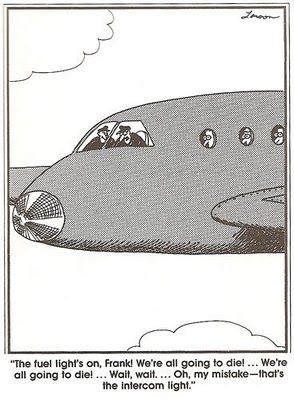
November 8, 1957: Flying Too High

Pan Am’s Flight 7 was known as the Clipper Romance of the Skies, an around-the-world flight that originated in San Francisco and flew west, eventually arriving in Philadelphia. The plane itself was a Boeing B-377 Stratocruiser. Introduced in 1947, the aircraft was the biggest, the fastest, and the fanciest, called “the ocean liner of the air.”

Pullman-style sleeping berths, separate men’s and women’s dressing rooms, a cocktail lounge in the belly of the airplane, reclining seats that offered 60 inches of something they used to have called legroom. Seven-course dinners, with champagne and caviar, catered by Maxim’s of Paris. This you could happily go through searched luggage and patdowns for, but there weren’t any.

Of course it was expensive – a $1,600 round-the-world fare (equivalent to $10,500 today).

When the November 8, 1957, flight left the gate shortly before noon for its first leg, the nine-and-a-half-hour flight to Honolulu, 38 passengers were aboard. They included the vice president of Renault Auto, a French flying ace, the general manager of Dow Chemical in Tokyo, a well-known Phoenix dress designer, a Louisville surgeon, a spice company honcho, and a U.S. Air Force major on a mysterious mission to southeast Asia with a briefcase full of classified documents.

At 4:04 p.m., the flight captain radioed a routine position report from an altitude of 10,000 feet to the Pontchartrain, a Coast Guard weather ship stationed in the Pacific. Romance of the Skies had just passed the point of no return, on course and on schedule, 1,160 miles from Honolulu and about 10 miles east of the Pontchartrain. The skies were clear and the seas calm, the sun low in the western sky. The plane was never heard from again.

The biggest air-sea search since the disappearance of Amelia Earhart ended just days later with the discovery of 19 bodies and floating wreckage about 1,000 miles northeast of Honolulu. And the little that was recovered from the flight only deepened the mystery. There had been no distress call; the location of the debris showed that the Clipper was well off course; and, finally, elevated levels of carbon monoxide were found in several of the recovered bodies.

The definitive cause of the accident has never been determined. Speculation includes a malfunctioning engine, a disgruntled flight crew member, and insurance related fraud that involving an explosive device. And then there’s that mysterious major.

Way Bigger Than a Breadbox

To most people, Dorothy Kilgallen was known as a long-time panelist on the television game show What’s My Line? (Does ‘Is it bigger than a breadbox?’ ring a bell?) or as a high society New York newspaper columnist. She was also throughout her career a rather enterprising reporter. Her journalism coming out party was a 1936 race around the world against two male colleagues. Her cabled columns and a book Girl Around the World made her a celebrity.

In 1963, she once again took up the role of daring reporter. According to a biographer, Kilgallen was devastated when President Kennedy was shot by Lee Harvey Oswald. She was among those who refused to believe that Oswald acted alone. She spent the next two years in her own investigation of the assassination, gathering evidence and conducting interviews. She was the only reporter to interview Jack Ruby, and she somehow got hold of an advance copy of the Warren Commission report even before President Lyndon Johnson had seen it. He was miffed.

So was J. Edgar Hoover. The FBI and CIA both began to follow her and her friends. She was interrogated, and her phone was tapped. In 1965, she told her lawyer that she was going to break the real story and that it would be the scoop of the century. She planned to meet a secret informant in New Orleans.

On November 7, she appeared on What’s My Line? as usual, and afterward wound down with a few drinks along with other members of the show before returning to her apartment. The next day — November 8, 1965 — she was found dead, sitting up in bed in a blue bathrobe and still wearing in her hair a floral accessory from the previous evening. On her nightstand, an empty sleeping pill bottle and a drinking glass. The police playing the bumblers they traditionally play in detective fiction found nothing suspicious. Her death was attributed to an accidental overdose.
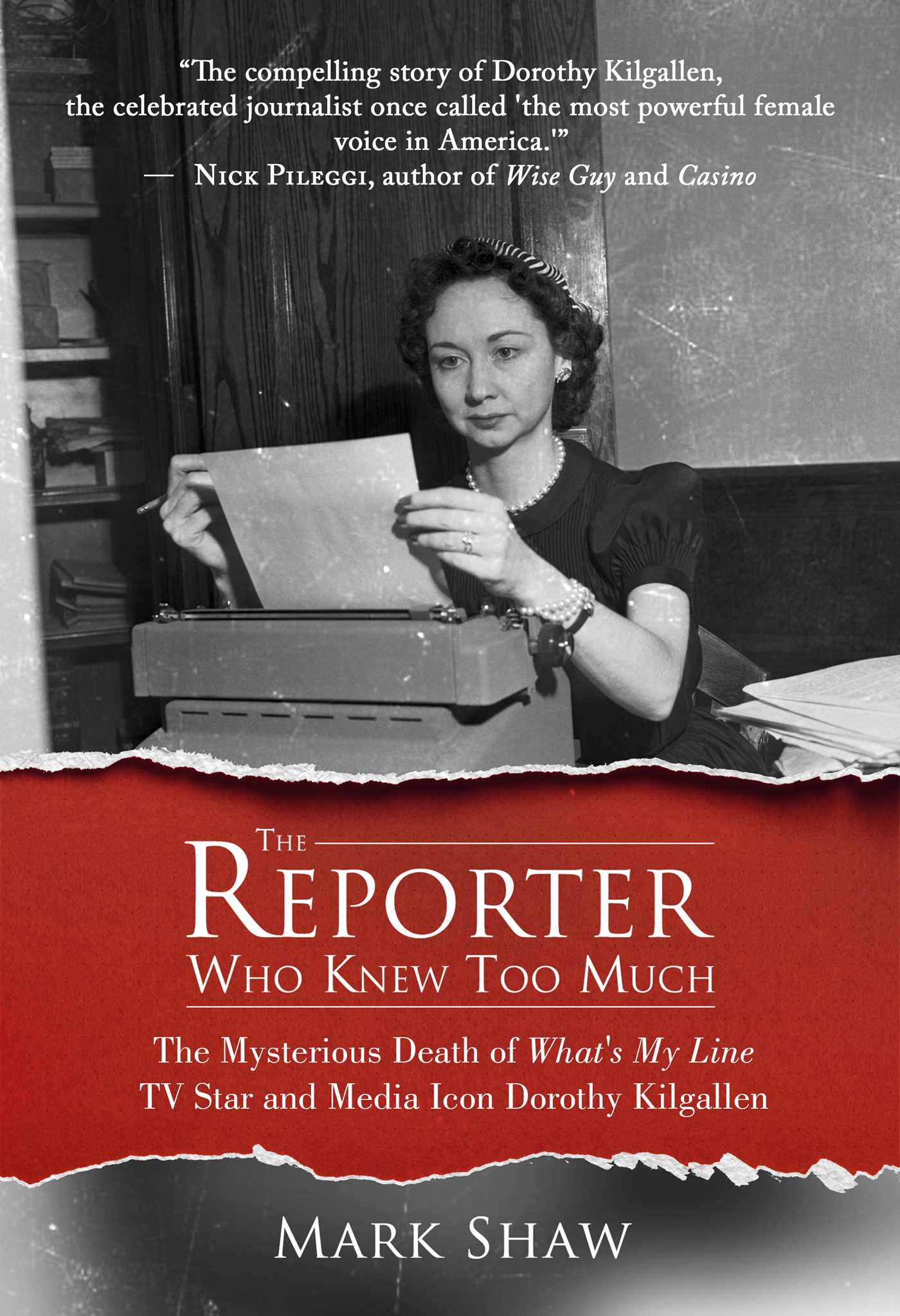
Loose ends included the fact that her accumulated evidence had gone missing, that she was found in a bed she never slept in wearing clothes she never wore to bed, that she had recently bought a gun telling her hairdresser she was ‘scared for her life.’ Lawyer and author Mark Shaw suggested in a 2016 book The Reporter Who Knew Too Much that Kilgallen’s death was orchestrated by a mobster who feared her book would name him as the mastermind behind Kennedy’s assassination.


AUGUST 17, 1978: GIVE ‘EM HELIUM

Three Americans from New Mexico completed the first transatlantic balloon flight, landing in a barley field 60 miles from Paris, 138 hours and six minutes after lifting off from Presque Isle, Maine. The helium-filled Double Eagle II covered 3,233 miles in its six-day journey.

Almanac devotees will remember (having most certainly taken notes) that Frenchman Jean-Pierre Blanchard crossed the English Channel to great fanfare some two hundred years earlier.

Balloonists began attempting the Atlantic crossing in the mid-1800s, with 17 unsuccessful flights, resulting in the deaths of at least seven balloonists. Two of our three balloonists gave it their first shot in September 1977, aboard the Double Eagle I, but were blown off course, landing off Iceland after 66 hours.  After recovering from bruises, embarrassment and frostbite, they were ready to foolishly rush in again.  A third pilot was brought in to spread the pain.

The Eagle Junior was a big balloon – 11-stories of helium.  It made good progress after blastoff, but during mid-trip, plunged from 20,000 feet to a hair-raising 4,000 feet, forcing them to jettison ballast material and many of their inflight amenities.  Among the items chucked overboard was evidently all of their finer cuisine, for they were forced to finish the trip dining only on hot dogs and sardines. Toward the end of the trip, one balloonist was heard to remark somewhat testily: “Skip the bun; just grease up my hot dog with mustard real good and I’ll shove it in my ear.”

Panic set in when the balloonists couldn’t find the Eiffel Tower.  Blown off course, they touched down just before dusk on August 17, 1978, near the hamlet of Miserey, missing the wine and ticker-tape parade in Paris. Parisians, not wanting to give up a celebratory occasion, amused themselves in honor of the storming of the Bastille.


JUNE 8, 1988: THE EYES OF JAPAN ARE UPON YOU

Japanese carrier All-Nippon Airways announced in 1988 that painting eyeballs on its jets cut bird collisions by 20 percent. The menacing-looking eyes painted on the engine intakes of its jet aircraft frightened away the birds, preventing them from throwing themselves at the plane during takeoff.

This conclusion was drawn after a controlled experiment in which the Japanese domestic

Another misstep: passengers in the rear compartment complained about congestion and lousy meals, passengers up front (ten to a wing) were annoyed by collisions with birds

airline painted the evil eyes on 26 of its Boeing 747’s and 767’s, leaving the rest of its fleet eyeless. After a year, an average of only one bird had hit each of the eyeballed engines while nine birds struck each unpainted engine.

The airline estimated that the reduction in bird strikes during the testing period reduced the damage to its aircraft from $910,000 to $720,000. Consequently, All-Nippon said it would paint eyes on all its large-body aircraft.

Continuing its program of thinking outside the fuselage to reduce costs, the company in 2009 planned to ask all passengers to use restrooms before boarding. During a four-week test, agents at the gates suggested that passengers use terminal restrooms to relieve themselves before getting on the plane. All-Nippon’s bathroom experiment was a way to cut fuel consumption, thereby resulting in decreased carbon emissions and lower costs. Travelers, however, did not warm up to the plan, finding it embarrassing and offensive. The plan went the way of the eyeballs. Oh yeah, the eyeballs were removed from planes in 2000 because – well, the company didn’t say why – just eye strain, perhaps.

The Killer Bee Chronicles Continue

When last we visited our gang of killer bees (yesterday) they were holding our happy home hostage. Having attacked me and left me swollen up like a giant bullfrog, they were celebrating, getting a real buzz on, so to

Killer bees at two o’clock

speak.

The hive, I might point out, was in the wall behind our bed. They were in there – not just a handful but a whole  army – trying to tunnel their way through the plaster and lath to mount a massive shock and awe attack as we slept.

They might have been the depraved, cowardly black hats from a vintage western movie who have driven the last bit of law and order out of town. We needed that staple of vintage westerns, the guy in the white hat on a silver horse – the guy who would ride in during the last reel to vanquish the evildoers and save the day in an action-packed climax.

Enter the Beebusters. They didn’t exactly ride in in the last reel and race to an action-packed climax. They studied a lot. They took pictures. They discussed, made plans, took more pictures.

Finally, after an eternity of waiting, the day of reckoning arrived. The Beebusters themselves arrived late morning with loads of paraphernalia and a plan. First they would seal off our bedroom. Then from the outside, they would seal off the entrance so that no one could enter or leave. Then they would open up the wall and start vacuuming like crazy, capturing the critters in their specially rigged shopvac. It

Beebusters at work

sounded a bit reckless to me, but I wasn’t vacuuming, so let them be reckless.

I should point out that it’s all about the Queen Bee who sits on her throne inside the hive while all the drones bow a lot and buzz “Yes your majesty. How high, your majesty?”  If the Beebusters can capture this Queen Bee, all the obsequious, bootlicking drones will follow her wherever she goes (Sort of like the obsequious, bootlicking Republicans bowing before Queen Donald).

But what if you can’t find the Queen Bee, I asked. It seems they were prepared for this possibility. They would use a make-believe queen if necessary. The little girls from across the street both began jumping up and down and shouting “I want to be a make-believe queen. I want to be a make-believe queen.” until we hosed them down and got on with our work. The make-believe queen is actually a drone in drag who will lure his fellow drones into “The Box.”

“The Box”

“Come into the box, my dears. It’s nice in the box. Nothing bad in here. Just me. And I’m sooo hot. C’mon handsome. Fly right in and we’ll have such a good time.” They will eagerly follow this siren into the bowels of “The Box” just as if he were the real thing. Bees are industrious, but they’re none too smart.

It was a big job – there were approximately 43,267 bees in our wall, and the Beebusters were able to bring most of them back alive. They now live in a pleasant retirement community on a farm far, far away.

But the killer bees hadn’t been gone two weeks when I discovered a gigantic anthill in one of our flower beds. Radioactive fallout and steroids have made the ants themselves monstrous, capable of carrying off small dogs and children. We gave them the little girls from across the street and a few strays that wandered into the yard, but they’re not satisfied. Does anyone know where I can get a giant anteater?

November 8, 1957: Return with Us Now to Those Days of Legroom

Pan Am’s Flight 7 was known as the Clipper Romance of the Skies, an around-the-world flight that originated in San Francisco and flew west, eventually arriving in Philadelphia. The plane itself was a Boeing B-377 Stratocruiser. Introduced in 1947, the aircraft was the biggest, the fastest, and the fanciest, called “the ocean liner of the air.”

Pullman-style sleeping berths, separate men’s and women’s dressing rooms, a cocktail lounge in the belly of the airplane, reclining seats that offered 60 inches of something they used to call legroom. Seven-course dinners, with champagne and caviar, catered by Maxim’s of Paris. You could happily go through searched luggage and patdowns for this, but there weren’t any.

Of course it was expensive – a $1,600 round-the-world fare (equivalent to $10,500 today).

When the November 8, 1957, flight left the gate shortly before noon for its first leg, the nine-and-a-half-hour flight to Honolulu, 38 passengers were aboard. They included the vice president of Renault Auto, a French flying ace, the general manager of Dow Chemical in Tokyo, a well-known Phoenix dress designer, a Louisville surgeon, a spice company honcho, and a U.S. Air Force major on a mysterious mission to southeast Asia with a briefcase full of classified documents.

At 4:04 p.m., the flight captain radioed a routine position report from an altitude of 10,000 feet to the Pontchartrain, a Coast Guard weather ship stationed in the Pacific. Romance of the Skies had just passed the point of no return, on course and on schedule, 1,160 miles from Honolulu and about 10 miles east of the Pontchartrain. The skies were clear and the seas calm, the sun low in the western sky. The plane was never heard from again.

The biggest air-sea search since the disappearance of Amelia Earhart ended just days later with the discovery of 19 bodies and floating wreckage about 1,000 miles northeast of Honolulu. And the little that was recovered from the flight only deepened the mystery. There had been no distress call; the location of the debris showed that the Clipper was well off course; and, finally, elevated levels of carbon monoxide were found in several of the recovered bodies.

The definitive cause of the accident has never been determined. Speculation includes a malfunctioning engine, a disgruntled flight crew member, and insurance related fraud  involving an explosive device. And then there’s that mysterious major.

Way Bigger Than a Breadbox

To most people, Dorothy Kilgallen was known as a long-time panelist on the television game show What’s My Line? (Does ‘Is it bigger than a breadbox?’ ring a bell?) or as a high society New York newspaper columnist. She was also throughout her career a rather enterprising reporter. Her journalism coming out party was a 1936 race around the world against two male colleagues. Her cabled columns and a book Girl Around the World made her a celebrity.

In 1963, she once again took up the role of daring reporter. According to a biographer, Kilgallen was devastated when President Kennedy was shot by Lee Harvey Oswald. She was among those who refused to believe that Oswald acted alone. She spent the next two years in her own investigation of the assassination, gathering evidence and conducting interviews. She was the only reporter to interview Jack Ruby, and she somehow got hold of an advance copy of the Warren Commission report even before President Lyndon Johnson had seen it. (He was miffed.)

So was J. Edgar Hoover. The FBI and CIA both began to follow her and her friends. She was interrogated, and her phone was tapped. In 1965, she told her lawyer that she was going to break the real story and that it would be the scoop of the century. She planned to meet a secret informant in New Orleans.

On November 7, she appeared on What’s My Line? as usual, and afterward wound down with a few drinks along with other members of the show before returning to her apartment. The next day — November 8, 1965 — she was found dead, sitting up in bed in a blue bathrobe and still wearing in her hair a floral accessory from the previous evening. On her nightstand, an empty sleeping pill bottle and a drinking glass. The police, playing the bumblers they traditionally play in detective fiction, found nothing suspicious. Her death was attributed to an accidental overdose.

Loose ends included the fact that her accumulated evidence had gone missing, that she was found in a bed she never slept in wearing clothes she never wore to bed, that she had recently bought a gun telling her hairdresser she was ‘scared for her life.’ Lawyer and author Mark Shaw suggested in a 2016 book The Reporter Who Knew Too Much that Kilgallen’s death was orchestrated by a mobster who feared her book would name him as the mastermind behind Kennedy’s assassination.

SEPTEMBER 17, 1908: FLYING TOO HIGH WITH SOME GUY IN THE SKY

It had been about five years since Wilbur and Orville Wright made history with their airplane flight at Kitty Hawk, North Carolina. During the following years, the brothers developed their flying machine into the first practical fixed-wing aircraft, the Wright Flyer. And in 1908, Orville took the Flyer flyerto Fort Myer, Virginia, to demonstrate it for the US Army Signal Corps division.

     Lieutenant Thomas Selfridge arranged to be a passenger on the demonstration flight while Orville piloted the craft.  Selfridge might be considered one of the first frequent flyers. Selfridge took his first flight in 1907, a flight that took him 168 feet in the air above Bras d’Or Lake in Nova Scotia, Canada. He also piloted a Canadian craft that flew three feet off the ground for about 100 feet.  He next took to the air in Hammondsport, New York, traveling 100 feet on his first attempt and 200 feet on his second. The next day he added another 800 yards to his mileage credit. A successful flight with Orville would no doubt have given him an upgrade if not a free flight.

     On September 17, 1908, Selfridge and Orville circled Fort Myer in the Wright Flyer 4½ times at 150 feet. Halfway through the fifth go-round, the right propeller broke, losing thrust. A nasty vibration ensued, causing the split propeller to hit a guy wire bracing the rear vertical rudder. Luggage flew out of the overhead storage compartments; the wire tore out of its fastening and shattered the propeller; the rudder swiveled and sent the Flyer into a nose-dive. Orville ordered Selfridge to return to his seat and fasten his seat belt. Then he shut off the engine and managed to glide to about 75 feet, but the Flyer hit the ground nose first — not a smooth landing.

     Orville was bruised and quite embarrassed.  His passenger was unfortunately dead, the first ever airplane fatality.  If Selfridge had been wearing a helmet of some sort, he most likely would have survived the crash. The fatality also saddled the fledgling flying industry with a pretty poor safety track record – one death per 2,500 passenger-feet,  just slightly better than traveling on the back of a hungry lion.


SEPTEMBER 17, 1908: FLYING TOO HIGH WITH SOME GUY IN THE SKY

It had been about five years since Wilbur and Orville Wright made history with their airplane flight at Kitty Hawk, North Carolina. During the following years, the brothers developed their flying machine into the first practical fixed-wing aircraft, the Wright Flyer. And in 1908, Orville took the Flyer flyerto Fort Myer, Virginia, to demonstrate it for the US Army Signal Corps division.

     Lieutenant Thomas Selfridge arranged to be a passenger on the demonstration flight while Orville piloted the craft.  Selfridge might be considered one of the first frequent flyers. Selfridge took his first flight in 1907, a flight that took him 168 feet in the air above Bras d’Or Lake in Nova Scotia, Canada. He also piloted a Canadian craft that flew three feet off the ground for about 100 feet.  He next took to the air in Hammondsport, New York, traveling 100 feet on his first attempt and 200 feet on his second. The next day he added another 800 yards to his mileage credit. A successful flight with Orville would no doubt have given him an upgrade if not a free flight.

     On September 17, 1908, Selfridge and Orville circled Fort Myer in the Wright Flyer 4½ times at 150 feet. Halfway through the fifth go-round, the right propeller broke, losing thrust. A nasty vibration ensued, causing the split propeller to hit a guy wire bracing the rear vertical rudder. Luggage flew out of the overhead storage compartments; the wire tore out of its fastening and shattered the propeller; the rudder swiveled and sent the Flyer into a nose-dive. Orville ordered Selfridge to return to his seat and fasten his seat belt. Then he shut off the engine and managed to glide to about 75 feet, but the Flyer hit the ground nose first — not a smooth landing.

     Orville was bruised and quite embarrassed.  His passenger was unfortunately dead, the first ever airplane fatality.  If Selfridge had been wearing a helmet of some sort, he most likely would have survived the crash. The fatality also saddled the fledgling flying industry with a pretty poor safety track record – one death per 2,500 passenger-feet,  just slightly better than traveling on the back of a hungry lion.


AUGUST 17, 1978: GIVE ‘EM HELIUM

Three Americans from New Mexico completed the first transatlantic balloon flight, landing in a barley field 60 miles from Paris, 138 hours and six minutes after lifting off from Presque Isle, Maine. The helium-filled Double Eagle II covered 3,233 miles in its six-day journey.

Almanac devotees will remember (having most certainly taken notes) that Frenchman Jean-Pierre Blanchard crossed the English Channel to great fanfare some two hundred years earlier.

Balloonists began attempting the Atlantic crossing in the mid-1800s, with 17 unsuccessful flights, resulting in the deaths of at least seven balloonists. Two of our three balloonists gave it their first shot in September 1977, aboard the Double Eagle I, but were blown off course, landing off Iceland after 66 hours.  After recovering from bruises, embarrassment and frostbite, they were ready to foolishly rush in again.  A third pilot was brought in to spread the pain.

The Eagle Junior was a big balloon – 11-stories of helium.  It made good progress after blastoff, but during mid-trip, plunged from 20,000 feet to a hair-raising 4,000 feet, forcing them to jettison ballast material and many of their inflight amenities.  Among the items chucked overboard was evidently all of their finer cuisine, for they were forced to finish the trip dining only on hot dogs and sardines. Toward the end of the trip, one balloonist was heard to remark somewhat testily: “Skip the bun; just grease up my hot dog with mustard real good and I’ll shove it in my ear.”

Panic set in when the balloonists couldn’t find the Eiffel Tower.  Blown off course, they touched down just before dusk on August 17, 1978, near the hamlet of Miserey, missing the wine and ticker-tape parade in Paris. Parisians, not wanting to give up a celebratory occasion, amused themselves in honor of the storming of the Bastille.


JUNE 8, 1988: THE EYES OF JAPAN ARE UPON YOU

Japanese carrier All-Nippon Airways announced in 1988 that painting eyeballs on its jets cut bird collisions by 20 percent. The menacing-looking eyes painted on the engine intakes of its jet aircraft frightened away the birds, preventing them from throwing themselves at the plane during takeoff.

This conclusion was drawn after a controlled experiment in which the Japanese domestic

Another misstep: passengers in the rear compartment complained about congestion and lousy meals, passengers up front (ten to a wing) were annoyed by collisions with birds

airline painted the evil eyes on 26 of its Boeing 747’s and 767’s, leaving the rest of its fleet eyeless. After a year, an average of only one bird had hit each of the eyeballed engines while nine birds struck each unpainted engine.

The airline estimated that the reduction in bird strikes during the testing period reduced the damage to its aircraft from $910,000 to $720,000. Consequently, All-Nippon said it would paint eyes on all its large-body aircraft.

Continuing its program of thinking outside the fuselage to reduce costs, the company in 2009 planned to ask all passengers to use restrooms before boarding. During a four-week test, agents at the gates suggested that passengers use terminal restrooms to relieve themselves before getting on the plane. All-Nippon’s bathroom experiment was a way to cut fuel consumption, thereby resulting in decreased carbon emissions and lower costs. Travelers, however, did not warm up to the plan, finding it embarrassing and offensive. The plan went the way of the eyeballs. Oh yeah, the eyeballs were removed from planes in 2000 because – well, the company didn’t say why – just eye strain, perhaps.

The Killer Bee Chronicles Continue

When last we visited our gang of killer bees (yesterday) they were holding our happy home hostage. Having attacked me and left me swollen up like a giant bullfrog, they were celebrating, getting a real buzz on, so to

Killer bees at two o’clock

speak.

The hive, I might point out, was in the wall behind our bed. They were in there – not just a handful but a whole  army – trying to tunnel their way through the plaster and lath to mount a massive shock and awe attack as we slept.

They might have been the depraved, cowardly black hats from a vintage western movie who have driven the last bit of law and order out of town. We needed that staple of vintage westerns, the guy in the white hat on a silver horse – the guy who would ride in during the last reel to vanquish the evildoers and save the day in an action-packed climax.

Enter the Beebusters. They didn’t exactly ride in in the last reel and race to an action-packed climax. They studied a lot. They took pictures. They discussed, made plans, took more pictures.

Finally, after an eternity of waiting, the day of reckoning arrived. The Beebusters themselves arrived late morning with loads of paraphernalia and a plan. First they would seal off our bedroom. Then from the outside, they would seal off the entrance so that no one could enter or leave. Then they would open up the wall and start vacuuming like crazy, capturing the critters in their specially rigged shopvac. It

Beebusters at work

sounded a bit reckless to me, but I wasn’t vacuuming, so let them be reckless.

I should point out that it’s all about the Queen Bee who sits on her throne inside the hive while all the drones bow a lot and buzz “Yes your majesty. How high, your majesty?”  If the Beebusters can capture this Queen Bee, all the obsequious, bootlicking drones will follow her wherever she goes (Sort of like the obsequious, bootlicking Republicans bowing before Queen Donald).

But what if you can’t find the Queen Bee, I asked. It seems they were prepared for this possibility. They would use a make-believe queen if necessary. The little girls across the street both began jumping up and down and shouting “I want to be a make-believe queen. I want to be a make-believe queen.” until we hosed them down and got on with our work. The make-believe queen is actually a drone in drag who will lure his fellow drones into “The Box.”

“The Box”

“Come into the box, my dears. It’s nice in the box. Nothing bad in here. Just me. And I’m sooo hot. C’mon handsome. Fly right in and we’ll have such a good time.” They will eagerly follow this siren into the bowels of “The Box” just as if he were the real thing. Bees are industrious, but they’re none too smart.

It was a big job – there were approximately 43,267 bees in our wall, and the Beebusters were able to bring most of them back alive. They now live in a pleasant retirement community on a farm far, far away.

But the killer bees hadn’t been gone two weeks when I discovered a gigantic anthill in one of our flower beds. Radioactive fallout and steroids have made the ants themselves monstrous, capable of carrying off small dogs and children. We gave them the little girls from across the street and a few strays that wandered into the yard, but they’re not satisfied. Does anyone know where I can get a giant anteater?