September 12, 1878: Threading Cleo

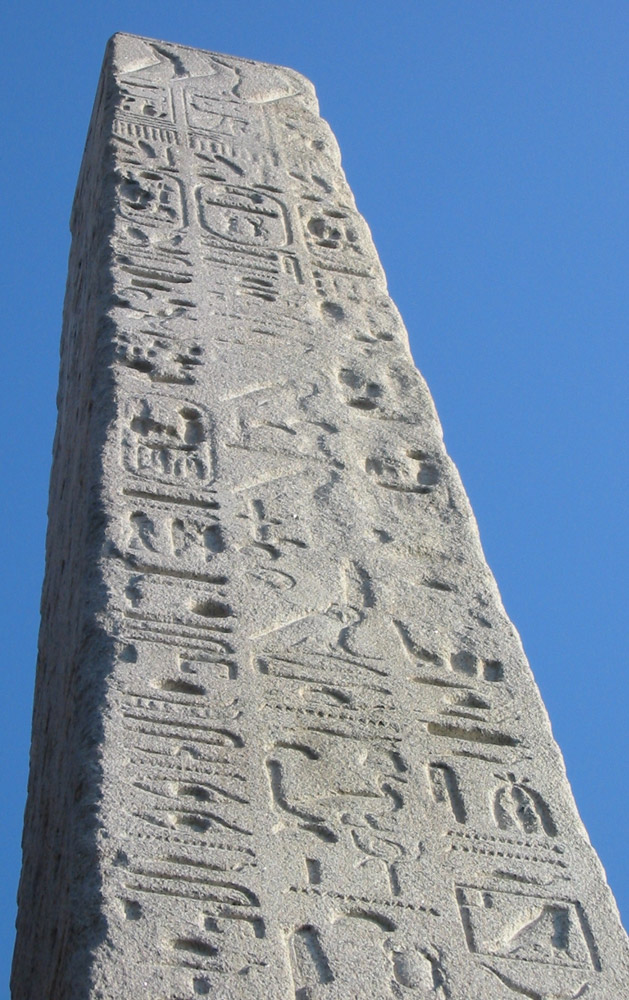
Cleopatra’s needle is not really a needle. Nor did it belong to Cleopatra. It is actually an obelisk, which at some 70 feet is a lot longer than most needles. This tall hunk of granite was first erected by Egypt’s Thutmose III in 1450 BC, give or take a few years. It was erected once again in London on September 12, 1878, after a rather curious 3,000-year history.

The obelisk was moved from its first site at Heliopolis to Alexandria during the reign of Augustus Caesar. It was toppled several years later by persons unknown and left face down in the shifting, whispering sands. After the obelisk lay there, collecting dust for 2,000 years, the Egyptian ruler Muhammad Ali came up with a great idea — they’d give it to the British in commemoration of some battle or another. And so they did, in1819.

The Brits were tickled, of course, but they let the big gift lie there for another 58 years, not quite tickled enough to foot the bill for a trip to England. Finally a private citizen agreed to pay for its transportation in a specially built ship named coincidentally, the Cleopatra, towed by another ship, the Olga. A storm at sea almost put a disastrous end to the venture, as the Cleopatra began rocking violently. Six men were killed trying to bring the her under control, and she was finally reported “abandoned and sinking.”

But Cleo didn’t sink. She was found drifting four days later by Spanish trawlers, then towed to Spain by a Glasgow steamer. Several months later, after repairs, she was finally towed to England where the was erected on the Victoria Embankment, flanked by two faux sphinxes.

Voila!, He Barked

On a beautiful afternoon in 1940, un chien Francaise named Robot was out for a walk in the Dordogne region of southwestern France, sans leash. Monsieur Dog, skipping away from his handler, 18-year-old

Marcel, found himself a big beautiful hole in the ground. Naturally, he bounded right in, not giving a moment’s thought to the enormity of the hole and the possible enormity of the creature who might have dug it.

Robot returned from the depths of the hole, uneaten, and Marcel sought the aid of some fellow teenagers to explore the hole. The four boys entered the hole, not giving a moment’s thought to the possibility that the creature found Robot too small a snack to be bothered with.

The hole stretched for 65 feet, qualifying itself as a cave, with not a single creature in it. These boys discovered that some other naughtier boys appeared to have painted graffiti all over the walls. Being good boys, and wondering if they should somehow wash down the walls, they sought adult guidance.

Well, didn’t the graffiti turn out to be 17,000 to 20,000 years, some 2,000 images of animals and strange prehistoric symbols that became famous as the Lascaux cave paintings But not one dog in the whole bunch. Robot remained unimpressed.

SEPTEMBER 11, 1680: THE UNFORTUNATE ROGER CRAB

Seventeenth century England was not without its share of eccentrics, folks who were not the sharpest arrows in the quiver. Roger Crab may certainly be categorized as one of them, although his misfortune at having his skull split open while serving in the Parliamentary Army might provide some excuse for his eccentricity. The unfortunate Crab was sentenced to death after the incident (for having his skull in the wrong place at the wrong time?), but his sentence was later commuted and, upon his release, he became a haberdasher of hats.

His wandering mind somehow happened upon the idea that it was sinful to eat any kind of animal food or to drink anything stronger than water. Determined to pursue a biblical way of life, Crab sold all his hats and other belongings, distributing the proceeds among the poor. He then took up residence in a makeshift hut, where he lived on a diet of bran, leaves and grass (the 16th century equivalent of a kale and edamame diet), and began to produce pamphlets on the wonders of diet.

“Instead of strong drinks and wines,” he wrote, “I give the old man (referring to his body) a cup of water; and instead of roast mutton and rabbit, and other dainty dishes, I give him broth thickened with bran, and pudding made with bran and turnip-leaves chopped together.”

mad-hatterJust as Crab persecuted his own body, others began to persecute him. He was cudgeled and put in the stocks. He was stripped and whipped. Four times he was arrested on suspicion of being a wizard. He bounced from prison to prison until his death on September 11, 1680.  Fortunately, our modern society treats its vegetarian eccentrics much more humanely.

Some scholars believe Crab was the inspiration for Lewis Carroll’s Mad Hatter.

Curb Your Carnal Enthusiasm

Sylvester Graham was ordained as a Presbyterian minister in 1826. The Reverend Graham was not your run of the mill minister. He waged a lifelong crusade against alcohol, lust, and white bread.

His disdain of alcohol was inspired by the temperance movement. white breadWhile he accepted the premise that alcohol had useful medicinal qualities, he felt that social drinking was a social danger that could lead to other social activities — namely lust. An unhealthy diet (Graham was also a vegetarian) led to wanton carnal desire, which led to poor health, which led to disease (with a capital D that rhymes with P which stands for you know what).

As one might guess, Graham, like poor Roger Crab, was ridiculed by the media and the public at large (though never cudgeled). He might have been written off as just another crackpot zealot and soon forgotten had it not been for his campaign against white bread. White bread was a bit of a status symbol at the time. Its paleness and the fact that it was purchased rather than homemade separated sophisticates from those bumpkins who made their own dark bread.

Graham thought the use of chemical additives such as alum and chlorine somehow made white bread less than wholesome. Nutritionists tended to agree with him. The whiter the bread, the sooner you’re dead, became their battle cry. Graham went on to create a healthier flour, a healthier bread and — you’ve been waiting for this — the graham cracker.

Sylvester Graham died on September 11, 1851. He probably would not have approved of s’mores.

How To Make S’mores

You’ll need: Wood, matches, graham crackers, chocolate squares (smaller than the graham cracker and fairly thin), marshmallows, a s'morepointy stick.

1. Start a campfire.

2. Break a graham cracker along it’s perforation to create two perfect squares.

3. Place a chocolate square on one of the graham cracker squares.

4. Place a marshmallow on the pointy stick and hold it over the fire until it is a nice golden brown (unless you like your marshmallows almost black).

5. Carefully slip the marshmallow off the pointy stick and onto the chocolate graham cracker stack.

6. Place the other graham cracker on top of the marshmallow and press down until the marshmallow just starts to ooze out. This may require some practice.

7. Cleanse your palette with the alcoholic beverage of your choice.

8. Eat the S’more.

9. Cleanse your palette again.

SEPTEMBER 10, 1913: On the Road Again

Beginning on September 10, 1913, a motorist could hop into his or her automobile at Times Square in New York City and drive for 3,389 miles on a paved road all the way across the country arriving (eventually) at Lincoln Park in San Francisco. Said motorist would be traveling the transportation marvel known as the Lincoln Highway on an odyssey through New York, New Jersey, Pennsylvania, Ohio, Indiana, Illinois, Iowa, Nebraska, Colorado, Wyoming, Utah, Nevada, and California — passing through more than 700 cities, towns and villages.

In the 1920s, when highways began to be numbered, a good chunk of the Lincoln Highway got the more colorful designation U.S. Route 30, and with the introduction of the Interstate Highway System in the 1950s, the even more fanciful I-80.

Part of the fun of the Lincoln Highway was all the wonderful oddities created by local entrepreneurs to squeeze a few dollars out of passing motorists — the mystery spots, the reptile farms, the world’s largest this and the world’s smallest that.

When was the last time you stopped by one of these places?

Do Do That Voodoo

Get a lover, keep a lover, get rid of a lover. She could do it all. “She could keep anybody from harming you and she could do anything you wanted done to anybody. How she used to do it, I don’t know. She used to say prayers and mix different things to give people to drink, to rubMarieLaveau with, to throw over your shoulder, to throw in the river. Oh! She had a million things to do but everything would happen just like she would say.” (Aileen Eugene, 1930)

For most of the 19th century, Marie Laveau was the most famous and powerful Voodoo Queen of New Orleans. Rich and poor, black and white, they all respected and feared her. She was born a Free Woman of Color on September 10, 1794. A devout Catholic, she attended Mass daily. She worked as a hairdresser and a nurse before becoming involved in the practice of voodoo, a religion that draws freely from both West African ancestor worship and Catholicism.

Even after her death in 1881, she continued to influence the people of New Orleans. People still visit her grave in the city’s St. Louis Cemetery, leaving money, cigars and rum with the hope she will fulfill their wishes.

Speaking of Voodoo . . .

I got your voodoo.  It’s all in this fun little novel — charms spells, magic, romance, danger — all sorts of things that go bump in the Caribbean night.  Take a look.  I’ve been known to stick pins into little dolls to get what I want.


SEPTEMBER 9, 1754: ET TU, FLETCHER?

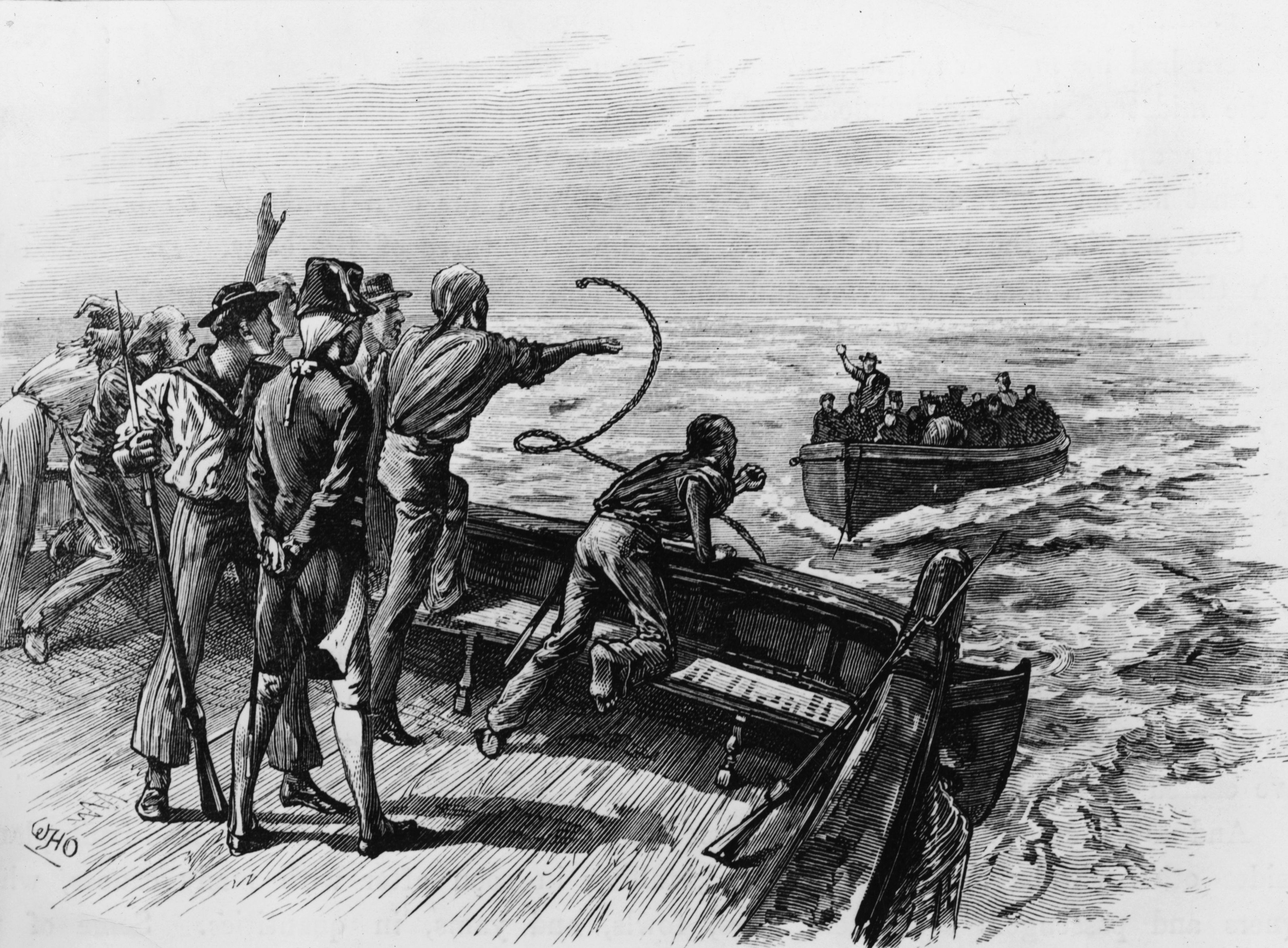
When little Billy Bligh, born on September 9, 1754, joined the British Royal Navy at the tcirca 1817: English naval officer and victim of the celebrated mutiny on the bounty William Bligh (1754 - 1817) is cast adrift. (Photo by Hulton Archive/Getty Images)ender age of seven, he certainly never thought he’d grow up to haul breadfruit around the world. At sixteen, he became an able seaman, then a year later a midshipman. And in 1787, Bligh became Captain of the Bounty.

The Royal Society was offering special prizes to those who would travel to Tahiti, pick up a bunch of breadfruit trees and haul them back to the Caribbean as a source of cheap high-energy food for slaves. It sounded simple enough on paper, but getting there was far from half the fun. First, there was Cape Horn. The Bounty tried to get round it for a month before giving up and taking a longer route. Then Bligh and his crew had to sit around in the tropical sunshine for five months waiting for the little breadfruit babies to get big enough to travel. And when finally they set off for the Caribbean, didn’t Fletcher Christian and his cohorts, having grown fond of the Tahitian ambiance, up and mutiny.

Bligh and his loyalists were loaded into a launch with nary a breadfruit tree and set adrift. Amazingly, they survived and sailed over 4,000 miles to Timor, from where they returned to England. And two years later Bligh headed another expedition and this time successfully carried a load of trees to the Caribbean. However, the slaves refused to eat the breadfruit, wanting no part of a fruit that tasted like day-old bread.

The Ballad of Breadfruit

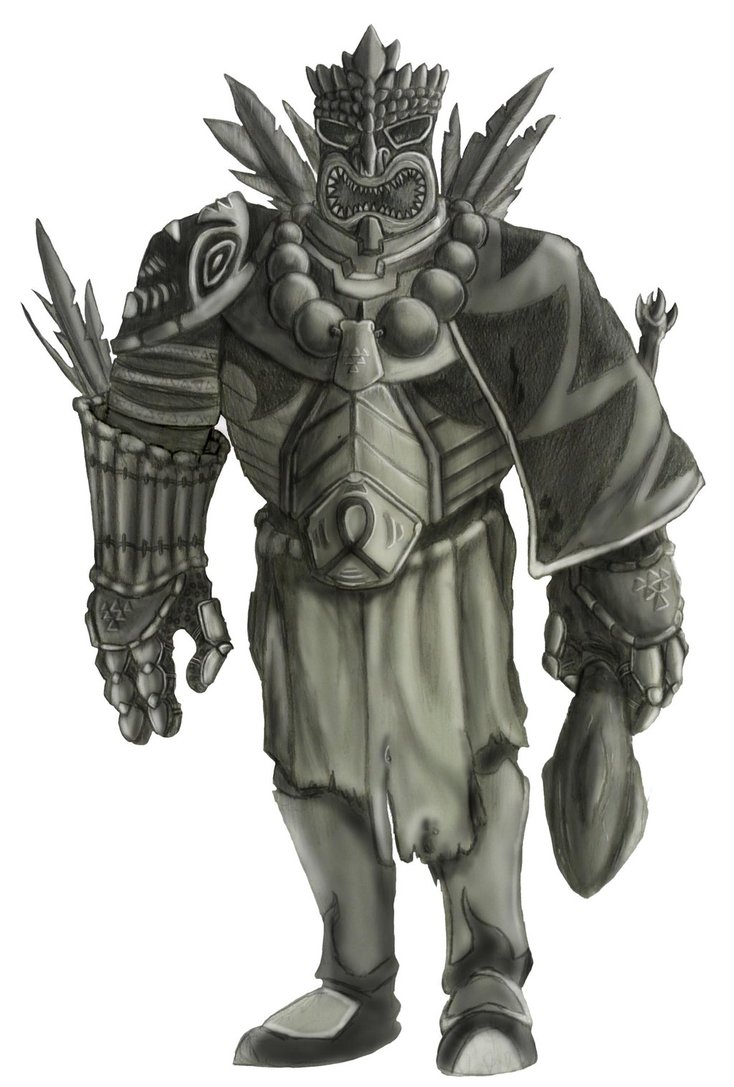
Once upon a time, according to Hawaiian legend, Kū , the war god, for reasons known only to Kū, decided to live secretly among the common folk and pass himself off as a mortal. He posed as a farmer and even went so far as to marry and have a family. Kū and his family lived quite happily, but being a war god Kū wasn’t such a hot farmer, and famine struck (as famine will). When everybody got pretty darn hungry,

Ku posing as a farmer

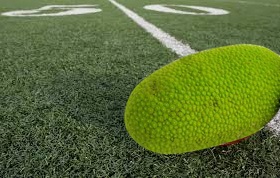
Kū realized it was time to shed his disguise and do some god thing. One would think his action would involve a battle of some kind, his being the god of war and all. Instead he disappeared into the ground right before his astonished family’s eyes. They were quite distressed by this, so they stood around where he had last been seen and cried day and night, thus watering the ground until a tiny green sprout emerged. The tiny sprout grew into a magnificent tree heavy with fruits that looked like big ugly green footballs. After tossing one around for a bit, they wondered if they might eat it since they were starving. They tried it, and it tasted awful. But they ate it anyway, saving themselves from starvation, and always remembering that this tree was their beloved Kū, finally providing for his family.


SEPTEMBER 8, 1892: PLEDGE, SALUTE, SING OUT THE CHORUS

Daniel Sharp Ford was a bit of a flag-waver. He thought the country needed a little more patriotism, and so launched a crusade to get flags into every school in the country. As the owner of the magazine Youth’s Companion he had a ready-made platform for the promotion of his ideas. As part of his patriotism package, he asked a socialist minister, Francis Bellamy, to create a pledge to the flag of one’s country, a pledge that could be used throughout the world.

Bellamy came up with a pledge that was simplicity itself, and Ford published it in the September 8, 1892, issue of his magazine. The Pledge of Allegiance, as it was called, read:

“I pledge allegiance to my Flag and the Republic for which it stands, one nation, indivisible, with liberty and justice for all.”

The pledge was incredibly popular, repeated in schools, public gatherings, government meetings, in Congress. However, Ford and Bellamy found it awkward that folks just stood there while pledging, so they came up with a nifty salute. Pledgers would face the flag, extend their right arm forward and slightly upward — the Bellamy Salute.

Years passed and folks were happily pledging, but then the tinkering began. In 1923, the words, “the Flag of the United States” were added, thanks to the efforts of the American Legion and the Daughters of the American Revolution who fretted that immigrant children might be confused about just which flag they were pledging allegiance to. A year later, the worriers added “of America.”

Then the Bellamy Salute came under fire; it looked a little too much like the German Nazi salute.

Come 1954, Congress got into the act, adding the words “under God” as a way of thumbing their noses at those godless communists, and giving the pledge its current form.

SING OUT THE CHORUS

BelafontecalypsoHarry Belafonte is an American singer, songwriter, actor, activist, and of course the King of Calypso. His third album, Calypso, hit the top of the charts on September 8, 1956, and had everyone singing out the chorus “Day-o.” It became the first album by a single artist to sell a million copies. In addition to “Day-o (Banana Boat Song),” the album included such calypso standards as “Jamaica Farewell,” “Man Smart,” and “Will His Love Be Like His Rum?” Discerning readers will note that some of those calypso standards serve as titles for short stories included in Calypso: Stories of the Caribbean.

SEPTEMBER 7, 1978: IT’S NOT THE UMBRELLAS THAT KILL . . .

Mary Poppins used her umbrella to fly. The artist Christo used giant umbrellas to decorate a California mountain pass. The mysterious Agent Piccadilly used his to assassinate Bulgarian dissident writer Georgi Markov in a fantastic Cold War spy drama that took place on September 7, 1978, during a bustling London rush hour.

Markov, who had defected several years earlier, was on his way to work at the BBC. Standing in a crowd of commuters on Waterloo Bridge, he felt a sudden pain in the back of his thigh, something like the sting of a nasty insect. A heavy set man standing nearby stooped to pick up an umbrella from the ground and mumbled “I’m sorry” with a thick foreign accent. The man hurried off and jumped into a taxi.

Markov later discovered a painful red bump on the back of his leg. During the day he became ill and grew steadily worse. That evening he was hospitalized with a high fever, and he died four days later.

The case, which has never been closed, came to be known as the Umbrella Murder. Scotland Yard has long suspected the Bulgarian secret service, perhaps with Russian involvement. The weapon is now called a Bulgarian Umbrella.

In a recent documentary, Markov’s wife said:“I wish, that, when people talk about it in the west, they wouldn’t say ‘Oh the guy, that got stuck by an umbrella’, they’d say ‘oh the great writer’, you know. The writer was so brave, that he risked his life to tell the truth, this would be fantastic.”

RETURN OF THE KILLER UMBRELLAS

Perhaps umbrellas and death don’t go hand in hand, but you wouldn’t want to stand under an umbrella in an open field during a lightning storm.  Those 500-pound umbrellas that the artist Christo stretched across a California mountain pass turned deadly with one breaking loose and killing a woman.  And Mary Poppins had a mean streak as well as a mean umbrella.

Rain1a

MAY 28, 1539: I KNOW A DARK SECLUDED PLACE

Spanish explorer and conquistador Hernando de Soto landed in Florida  in 1539 to begin the first European expedition deep into the territory of the modern-day United States. A formidable undertaking, de Soto’s expedition took him throughout the southeastern florida_mapUnited States searching for gold, silver and the ever-elusive passage to China. Although he was not the first explorer to visit Florida, he was the first to reach and cross the Mississippi River (and the only Spanish explorer to have a large-finned automobile named after him).


De Soto got his start in the conquistador business under the tutelage of that explorer and great statesman, Francisco Pizarro, traveling with Pizarro and his Spanish ambassadors as they befriended the native Incas.  Along the way, he became a wealthy man, returning as such to Spain. But an explorer is an explorer, and de Soto was not one to sit around on his Incan gold. He returned to the New World as the Governor of Cuba. From there, de Soto was expected to colonize the North American continent for Spain within four years, for which his family would be given a sizable piece of land (Georgia maybe).


De Soto selected 620 eager Spanish and Portuguese volunteers for the governing of Cuba and conquest of North America. They embarked from Havana on seven ships and two caravels, with tons of heavy armor and equipment, more than 500 livestock, including 237 horses and 200 pigs. Their planned four-year foray took them through Florida to Georgia, Mississippi, Arkansas, Louisiana, and Texas.

Unfortunately, de Soto was unable to complete the trip; he died in 1542 on the banks of the Mississippi River in Arkansas or Louisiana. This was a bit of an embarrassment since de Soto had passed himself off as an immortal sun god to the local natives, although some of the them had become skeptical of his deity claims (“Him no God, kemo sabe, him Spanish.”) His men concealed his death and hid his body somewhere along or in the Mississippi. And to this day the actual location of his burial remains a mystery, known only as Hernando’s Hideaway.  Olé!


Suddenly It’s Summer

And once again Wretched Richard’s Almanac will be social distancing itself from the Internet, but not before one last plug for my summer reading program. Have a happy, fully vaccinated summer.

MAY 27, 1936: PROUD MARY KEEP ON BURNIN’

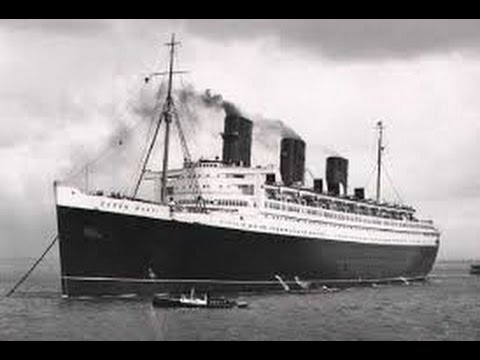
Although, out of superstition, women were banned from the workplace during the construction of the ocean liner Queen Mary, she was christened by a woman in September 1934.  By a queen actually — Queen Mary herself, the wife of George V who had died earlier that year and queen mother to Kings Edward VIII and George VI.

On May 27, 1936, throngs of cheering spectators looked on as the 80,000-ton liner, “the most beautiful ship afloat,” departed Southhampton on her maiden transatlantic crossing.. She carried 2,100 passengers who were pampered by a crew of 1,100. The passengers were as stylish as the ship’s Art Deco interior as they strutted through ballrooms, promenaded on deck, frolicked in the swimming pool, and occasionally visited their children in the nursery or their dogs in the kennel. Along with an amazing amount of food (50,000 pounds of meat), the Queen Mary carried over 14,000 bottles of wine and 25,000 cigarette packs.

The Queen Mary pretty much ruled the Atlantic for the rest of the decade until elegance gave way to utility as she was refitted as a troop ship during World War II. After the war the Queen Mary was returned to passenger service and along with her sister ship the Queen Elizabeth dominated transatlantic travel until 1967 when she left Southhampton on her last voyage arriving in Long Beach, California, where she was permanently moored.

Converted to a hotel, the Queen Mary has the dubious distinction of giving tourists a taste of transatlantic travel without ever leaving dry land. Yippee!

Don’t Stop the Carnival

Pulitzer Prize winner Herman Wouk was born in 1915. His books include The Caine Mutiny, The Winds of War, War and Remembrance, andMarjorie Morningstar.   Don’t Stop the Carnival, a must-read for anyone interested in the Caribbean, was written in 1965. In the following excerpt, Norman and Henny Paperman have embarked on a new Caribbean enterprise and, at a party, they tell their friends about it:

During this evening, nearly every person there told Norman or Henny, usually in a private moment, that they were doing a marvelous, enviable thing. The Russians at the time were firing off new awesome bombs in Siberia, and the mood in New York was jittery, but there was more than that behind the wistfulness of their friends. All these people were at an age when their lives were defined, their hopes circumscribed. Nothing was in prospect but plodding the old tracks until heart disease, cancer, or one of the less predictable trap-doors opened under their feet. To them, the Papermans had broken out of Death Row into green April fields, and in one way or another they all said so.

Wouk died in 2019.

MAY 26, 1755: READ HIS FRENCH LIPS

Louis Mandrin was to France what Robin Hood was to England and Rob Roy to Scotland. Having served in the war of 1740 in a light brigade noted for undertaking dangerous missions to surprise the enemy, he was left idle and without income by peace, which made a remarkable appearance in 1748. He had no way of supporting his life other than by continually risking it. Thus he came up with the idea of assembling a corps of men like himself with himself as their leader and waging war against the fermiers, collectors of royal revenues from taxes  levied on salt, tobacco, and farming. The fermiers paid an agreed upon amount to the king, but could exact unspecified sums themselves. They naturally became fat and rich in the process – and hated.

Mandrin became the master of a portion of central France, pillaging public treasuries to pay his troops, whom he also put to work forcing the wealthy to buy his stolen merchandise. He successfully warded off the many detachments of government troops sent against him, instilling fear among their numbers and in the government itself. Eventually the people came to consider him their protector against the oppression of government revenue officers.

Finally, a regiment did attack and destroy his corps, but Mandrin himself escaped into the Duchy of Savoy. From there, he continued to make forays across the border and a terrible nuisance of himself. The French government was not not happy. The fermiers entered the Duchy illegally, disguising 500 men as peasants. Mandrin was betrayed by two of his men, seized, and whisked across the border. When the King of Savoy, learned of the French intrusion into his territory, he immediately wrote to the French King, demanding that the prisoner be turned over to him. But before the message arrived, Mandrin was hurriedly tried, condemned to be broken at the wheel, and executed on May 26, 1755.


MAY 25, 2006: GEEK NIRVANA

2006 marked the very first celebration of Día del orgullo friki in Spain, local at first but now celebrated in such far-ranging places as Halifax, Nova Scotia; Timisoara, Romania; and San Diego, California; making it a truly international, sort of, event. The date commemorates the release of the first Star Wars film on May 25, 1977. (This was the second such commemoration for the movie; the first, Star Wars Day,  held on May 4 so celebrants could say “May the fourth be with you.”). The latest fest was the brainchild of a Spanish blogger known as Senor Buebo.

In 2008, the “holiday”was officially celebrated for the first time in the U.S., sporting its English translation, Geek Pride Day, its goal having become the promotion of geek culture. Today it has a manifesto and everything. Imagine if you will 300 proud geeks coming together to form a human pacman or, better still, a prime-number float in a Fifth Avenue parade.

As if this celebration wasn’t heady enough all by itself, Geek Pride Day shares the same date as two other similar fan “holidays”: Towel Day, for fans of The Hitchhiker’s Guide to the Galaxy on which true believers carry about a favorite towel, and the Glorious 25th of May for fans of Terry Pratchett’s Discworld.

Dinner Leaps This Way

An English gentleman who identified himself only as a friend to the Poor wrote a letter to the Public Advertiser on May 25, 1772, describing a novel idea. The idea had occurred to him after reading a passage in a guidebook about a town in France: “There are three small rivers that run through the town, one of which is much frequented by frogs, though one would imagine that in time they would be destroyed, as they commonly compose a dish or two at each meal at the tables of both rich and poor; the latter mostly living on them.”

Your entree

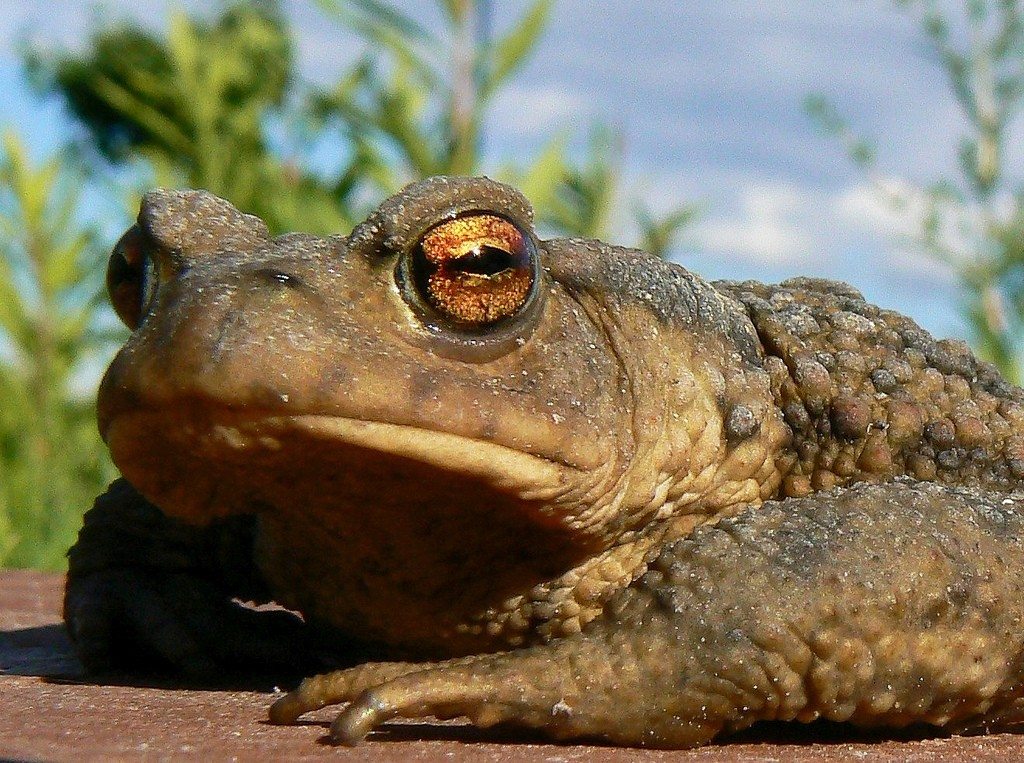
The letter went on to suggest that the poor of England could avoid the high cost of most kinds of food by procuring frogs as food for themselves, since the ponds and ditches of England were full of them. Although the letter writer had never personally tasted a frog, he had been assured that when fried in butter and parsley one could not distinguish it from fricassee of chicken. To those that worried that the ignorant might mistakenly eat a toad, he pointed out that the frog is light brown whereas the toad is almost black, that frogs leap, toads creep.

The gentlemen closed by saying let those that can afford it have roast beef every day, but to those poor wretches who cannot he offers this hint for their benefit.