SEPTEMBER 24, 1991: OH, THE THINGS YOU’LL WRITE

Probably the foremost children’s book author of the 20th century died on September 24, 1991, at the age of 87. Dr. Seuss, Theodor Geisel, published 46 books for children including a new kind of first reader that sent Dick and Jane into well-deserved retirement.

Dr. Seuss was born in the early 1920s, when Geisel (born in 1904) was attending Dartmouth College. Among his pursuits there was work on the humor magazine Dartmouth Jack-O-Lantern, for which he rose to the rank of editor-in-chief. However, one dark day at Dartmouth, Geisel was caught drinking gin at a party in his room. This was frowned upon by the Dean, who insisted that he resign from all extracurricular activities, including the college humor magazine. To continue work on the Jack-O-Lantern surreptitiously, Geisel began signing his work with the pen name Dr. Theophrastus Seuss. (Other pseudonyms included Theo LeSieg and Rosetta Stone.

Geisel had a successful career in advertising (Flit, Standard Oil, U.S. Army) and as an editorial cartoonist denouncing fascists, racists, isolationists and Republicans.  But it was his children’s books that gave him lasting recognition. His first, published in 1937, was And to Think I Saw It on Mulberry Street. He followed with such celebrated books as The 500 Hats of Bartholomew Cubbins, Horton Hatches the Egg, Horton Hears a Who!, and How the Grinch Stole Christmas!. In 1954, Geisel was challenged to write a book using only 250 words appropriate to beginning readers, “a book children can’t put down.” Nine months later, using 236 of the words given to him, Geisel completed The Cat in the Hat.

Geisel made a point of not beginning the writing of his stories with a moral in mind. “Kids can see a moral coming a mile off,” he said.

Numerous adaptations of his work have been created, including 11 television specials, four feature films, a Broadway musical and four television series.

“Today you are You, that is truer than true. There is no one alive who is Youer than You.”

“I meant what I said and I said what I meant. An elephant’s faithful one-hundred percent!”

“If you never did you should. These things are fun and fun is good.”

“They say I’m old-fashioned, and live in the past, but sometimes I think progress progresses too fast!”

“I do not like green eggs and ham, I do not like them Sam-I-Am.”

“Writing simply means no dependent clauses, no dangling things, no flashbacks, and keeping the subject near the predicate. We throw in as many fresh words we can get away with. Simple, short sentences don’t always work. You have to do tricks with pacing, alternate long sentences with short, to keep it vital and alive…. Virtually every page is a cliffhanger–you’ve got to force them to turn it.”

Froggie went A-forecasting

On September 24, 1788, the Morning Chronicle and London Advertiser described a rather ingenious barometer devised by an unnamed Frenchman. The instructions: Equip a clear glass bottle with earth and water to a depth of about four fingers and a tiny ladder that reaches from the bottom to the lower part of the neck. Find a small green frog and put it in the bottle. Cover the bottle with a piece of parchment pricked with a pin to admit air. As long as the weather remains fair, the frog will perch at the top of the ladder, but if rain approaches the frog will go down into the water.
 

SEPTEMBER 23, 1889: DEAL ME IN, YAMAUCHI-SAN

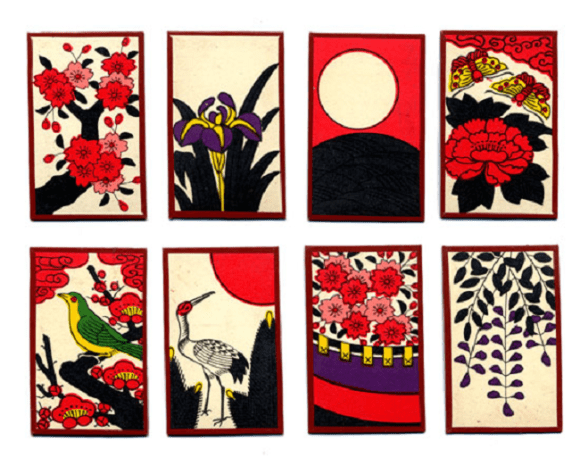
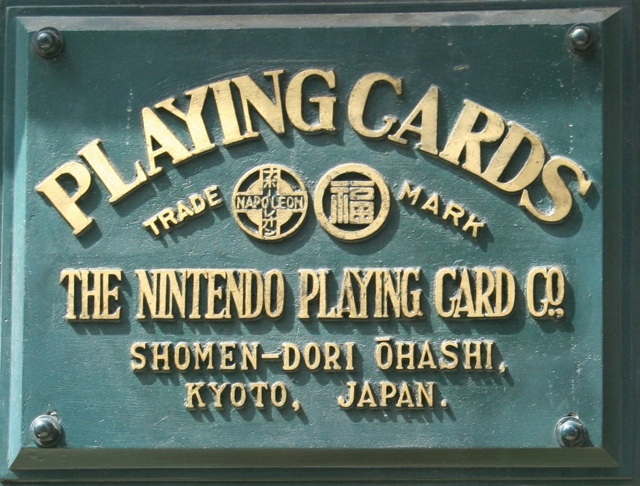
Nintendo, the consumer electronics giant was founded on September 23, 1889. No, it wasn’t the first video gaming company, a hundred years ahead of its time. Super Mario Brothers and Pokémon were not evennintendo1 glints in some developer’s eyes. The company was founded to produce playing cards. Playing cards had been introduced to Japan centuries earlier, but each time a card game became popular, folks began gambling on it, and the government banned it. One card game, hanafuda, resisted this trend. It used Western style cards with images but no numbers. The lack of numbers and the fact that the game was quite complicated limited its appeal to gambling types.

Nintendo founder Fusajiro Yamauchi produced and sold handcrafted hanafuda cards painted on mulberry tree bark — hardly high tech. The company hummed along happily producing its cards for another fifty years or so until an antsy grandson of the founder began to expand. His expansion efforts were rather haphazard and for the most part less than successful. There was a taxi company and a TV network, a food company selling instant rice. Then there was the chain of “love hotels,” offering accommodations for “resting” at hourly rates with such amenities as unseen staff members and hidden parking lots.

Nintendo stock soon bottomed out. In 1966, Nintendo got into the toy business with such products as Ultra Hand, Ultra Machine and Love Tester. During the 1970s, the company moved into electronics and arcade games. Then in 1981, it introduced Donkey Kong and the rest is — well, you know what they say.

Nintendo still makes hanafuda cards.

Madame Would-Be President

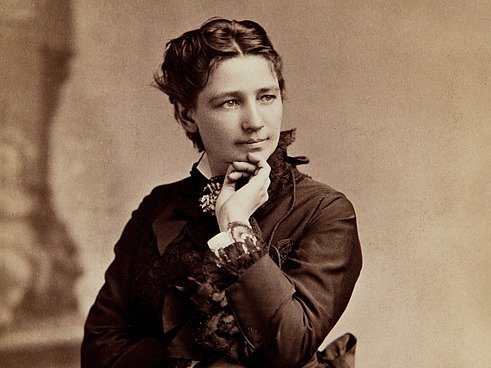
Born on September 23, 1838, Victoria Woodhull, although rather woodhullfamous or infamous in her day, does not jump readily to mind today. She wore many hats: newspaper publisher, stock broker, lobbyist, traveling clairvoyant, public speaker on women’s suffrage. She was also the first woman to run for president in the United States. That was in 1872 as the candidate of the Equal Rights Party. Noted abolitionist Frederick Douglass was selected as her running mate. However, he never acknowledged it, and campaigned for Republican Ulysses S. Grant.

She had a few things going against her. Women couldn’t vote, so she couldn’t even vote for herself. She was not old enough to serve as president. And just a few days before the election she was arrested on obscenity charges for publishing an account of an adulterous affair between the minister Henry Ward Beecher and Elizabeth Tilton.

She didn’t receive any electoral votes, and no one knew her popular vote total since her votes weren’t counted. One gentleman in Texas did publicly admit voting for her.

One of the world’s most popular entertainments is a deck of cards, which contains thirteen each of four suits, highlighted by kings, queens and jacks, who are possibly the queen’s younger, more attractive boyfriends.”
― Lemony Snicket

SEPTEMBER 22, 1761: GEORGE, THE SEQUEL

With the usual pomp and circumstance, the marriage and coronation of King George III of England and Charlotte Sophia of Mecklenburg-Strelitz took place on September 22, 1761. The couple were married on the day they met, but remained married for 50 years and 15 children.  George was a notable monarch for several reasons, the most familiar being the loss of the American colonies and his supposed madness. Although many people see a link between the two, it’s a stretch. He was also the longest reigning monarch at 60 years until the reign of his granddaughter Queen Victoria.

George didn’t really lose the American colonies any more than George Washington found them. But independence “happened on his watch” a phrase Americans in the future would delight in applying to practically anything gone wrong. Also on his watch, Great Britain defeated the French in the Seven Year’s War and once again many years later the French under Napoleon at the Battle of Waterloo.

In his later life, George III had recurrent, and eventually permanent, mental illness. Finally in 1810, a regency was established, and George III’s oldest son, George (coincidentally), ruled as Prince Regent. On III’s death, George Jr. succeeded his father as George IV.

The subject of George III’s mental illness was explored in the play The Madness of George III which inspired the movie The Madness of King George. The name change was supposedly for other reasons, but some maintain that it was because American audiences would think The Madness of George III was a sequel and wonder what happened to the first two movies.

O Mighty Caesar

“He is blessed with a kind of magic truth, the uncanny ability to project the core and humanity of the character he is playing. Beneath the surface humor there is a wry commentary on the conventions and hypocrisies of life.”  Sid Caesar was born on September 22, 1922. He lit up 50s television with his incomparable humor on Your Show of Shows and Caesar’s Hour as well as many movies during his long career.

SEPTEMBER 21, 1219: I’M-A GONNA GIVE YOU APPLE AND A PLUM AND AN APRICOT OR TWO

Every history buff is familiar with the great Khwarezmian Empire. No? The Khwarezmian Empire under the stewardship of Shah Ala ad-Din Muhammad reached the height of its glory during the early 13th century. It also reached its nadir during the early 13th century. The story of the Khwarezmian Empire is a cautionary tale about the  genghisimportance of peace, friendship and good manners and as such would be uplifting in its own special way were it not for all the bloodshed and gore.

Khwarezmia was a neighbor to Mongolia whose benevolent commander-in-chief was none other than Genghis Khan, who had a bit of a bad reputation throughout the East. Nevertheless Genghis offered an olive branch to the shah by sending him a rather lavish fruit basket with the Hallmark words of friendship: ‘You are the ruler of the land of the rising sun and I of the setting sun.’

Comes a watershed moment in the history of Khwarezmia and possibly the reason it doesn’t trip off our tongues today. Genghis sent a delegation of several hundred men to deliver the fruit basket, but the shah, in an admittedly bad start to a relationship, had them tossed into a dungeon. He kept the fruit basket.

Genghis was irked, but thought maybe the shah misunderstood his intentions (his being a foreigner and all). So he sent three royal ambassadors — two Mongols and a Muslim interpreter –to make inquiries. The shah, in what we can all agree was a doozie of a tactical blunder, had everyone in the first delegation killed, shaved the heads of the two Mongol ambassadors, and sent them back with the head of the interpreter as his answer to Genghis.

Genghis Khan sent no further pleasantries. On September 21, 1219, he personally visited Khwarezmia, along with thousands of his best cutthroats. Khwarezmian cities fell like dominoes. The shah’s army was decimated and four million Khwarezmians were killed. Genghis even diverted rivers to erase the shah’s birthplace. The empire ceased to exist.

Violence never settles anything. — Genghis Khan

Since we Americans are no longer allowed to travel to Europe, the Almanac, as a public service, will bring Europe to you. This will be accomplished through the magic of occasional postcards from Europe and other faraway places with strange sounding names. You’re welcome.

Wish You Were Here: Greece

The Trojan Horse dates way back to the war between the Trojans and the Greeks in the thousand or so BC. The Greeks pretended to sail away, leaving the large wooden beast as a going away gift. But weren’t there a gaggle of Greeks hiding inside. Laocoon, a Trojan priest warned the others that he feared the Greeks bearing gifts. Perhaps if he had been more precise, counseling the Trojans to beware a gift bearing Greeks or not to look a gift horse in the mouth or you might see a Greek looking back at you, the outcome may have been different. But it wasn’t.

The Trojan Horse became a symbol of Greek might and was revered through the ages, resting at its home in the Trojan Horse National Park. Inexplicably, the Greeks tired of it and it was eventually converted to a condo. The horse which had once been filled with ancient Greek warriors came to house only five Greeks, the Thermopolis brothers — Dmitri, Ergo, Aristotle, Zorba and Smitty.

SEPTEMBER 18, 1981: THE LOT IS FULL

Guinness, when not brewing stout, keeps busy by recording great moments in the history of human endeavors – the largest ball of aluminum foil, the most people in the trunk of a 1973 Volkswagen, the highest this, the longest that. The recording of such precious and penultimate moments has over the years given so many their 15 minutes of fame and, at the very least, an asterisk in the annals of time.

And so it was on September 18, 1981, for the city of Edmonton in the province of Alberta in Canada. On that day, the West Edmonton Mall made the Guinness Book of World Records as the largest parking lot in the world with designated spots for 20,000 automobiles. What a step in the shopping experience! What a giant leap for mankind!

Of course a 20,000-car parking garage is nothing without somewhere for all those parking people to go. And the West Edmonton Mall has plenty of places to go: more than 800 stores, 100 restaurants, and 19 movie theaters. It has a full-size ice-skating rink, where the Edmonton Oilers practice; two hotels, a chapel; and several nightclubs.

The mall is arranged in a series of themed wings. There’s a 19th-century European boulevard, a Bourbon Street, and a Chinatown wing arranged around a koi pond. A replica of Christopher Columbus’ Santa Maria shares a lagoon with real submarines and exotic fish. When the mall opened, its developer gushed: “You don’t have to go to New York or Paris or Disneyland or Hawaii. We have it all here for you in one place, in Edmonton, Alberta, Canada!”

The mall has held other records, too: At one time or another it’s been the World’s Largest Shopping Mall (48 city blocks), the World’s Largest Indoor Amusement Park and the World’s Largest Indoor Water Park (which includes the World’s Largest Indoor Lake and the World’s Largest Indoor Wave Pool). And all of this in the World’s Nicest Country (at 35 million nice people).

Naturally every parking lot has its detractors; some parking lot purists argue that the Edmonton Mall shouldn’t hold the record because the lot is half indoors and half outdoors and therefore actually two parking lots. Picky, picky, picky.

The Edmonton Mall parking lot most likely added an unintended world’s record to its trophy case: the most people looking for their lost cars.

SEPTEMBER 17, 1908: FLYING TOO HIGH WITH SOME GUY IN THE SKY

It had been about five years since Wilbur and Orville Wright made history with their airplane flight at Kitty Hawk, North Carolina. During the following years, the brothers developed their flying machine into the first practical fixed-wing aircraft, the Wright Flyer. And in 1908, Orville took the Flyer flyerto Fort Myer, Virginia, to demonstrate it for the US Army Signal Corps division.

     Lieutenant Thomas Selfridge arranged to be a passenger on the demonstration flight while Orville piloted the craft.  Selfridge might be considered one of the first frequent flyers. Selfridge took his first flight in 1907, a flight that took him 168 feet in the air above Bras d’Or Lake in Nova Scotia, Canada. He also piloted a Canadian craft that flew three feet off the ground for about 100 feet.  He next took to the air in Hammondsport, New York, traveling 100 feet on his first attempt and 200 feet on his second. The next day he added another 800 yards to his mileage credit. A successful flight with Orville would no doubt have given him an upgrade if not a free flight.

     On September 17, 1908, Selfridge and Orville circled Fort Myer in the Wright Flyer 4½ times at 150 feet. Halfway through the fifth go-round, the right propeller broke, losing thrust. A nasty vibration ensued, causing the split propeller to hit a guy wire bracing the rear vertical rudder. Luggage flew out of the overhead storage compartments; the wire tore out of its fastening and shattered the propeller; the rudder swiveled and sent the Flyer into a nose-dive. Orville ordered Selfridge to return to his seat and fasten his seat belt. Then he shut off the engine and managed to glide to about 75 feet, but the Flyer hit the ground nose first — not a smooth landing.

     Orville was bruised and quite embarrassed.  His passenger was unfortunately dead, the first ever airplane fatality.  If Selfridge had been wearing a helmet of some sort, he most likely would have survived the crash. The fatality also saddled the fledgling flying industry with a pretty poor safety track record – one death per 2,500 passenger-feet,  just slightly better than traveling on the back of a hungry lion.


September 16, 1732: How Hot Is It?

Some people find their true calling early on in life, some take a good part of their lives to find it and fahrothers never find it.  A young man named Gabriel who lived in Danzig around the turn of the 18th century took some time to find his calling. Starting out as a merchant, Gabriel found himself ill-suited as an entrepreneur; every business he touched failed.

     Stand-up comedy didn’t work so well either. If anyone were foolish enough to rise to the bait of Gabriel’s opening remarks about how hot it had been with the question “How hot is it?” they didn’t even get the mediocre chuckle of “It’s so hot that my chickens are laying hard-boiled eggs” or “It’s so hot that even Mitt Romney seems cool.” Gabriel might answer, “On a scale of 32 to 212, I’d give it a 92.” Yawn.

     But hidden in his failure as a comedian was success of a sort – he had actually constructed the device that measured the temperature of which he joked. Up until that time all measurements of temperature were as vague as “hot as a basted turkey” or “cold as a Republican’s heart.” Many a scientist – including Isaac Newton – had tried to develop a means of measuring the temperature. Gabriel had done it – and had found his calling.

     At first, he made his temperature measuring devices using wine-filled tubes, but he couldn’t achieve any degree of accuracy and someone was always drinking the contents of his thermometer. Switching to mercury solved both problems. He marked the tube at the point where the mercury stood when the tube was placed in freezing water and again at the point it reached in boiling water. The freezing point became 32 degrees (his lucky number, perhaps). He then divided the space between that and the boiling point into 180 parts (something to do with half a circle). It was just mysterious enough that it caught on, and it became oh so trendy to measure the temperature of things.

     His thermometer took his name, and would from then on be known as the Gabriel. Well it might have been, but his agent insisted that his last name, Fahrenheit, was much more scientific sounding. Even after Gabriel Fahrenheit’s death on September 16, 1736, the Fahrenheit Thermometer remained the standard by which temperature was measured, used by everyone except some guy from Stockholm named Celsius.

A Harvard Medical School study has determined that rectal thermometers are still the best way to tell a baby’s temperature. Plus, it really teaches the baby who’s boss. — Tina Fey

Since we Americans are no longer allowed to travel to Europe, the Almanac, as a public service, will bring Europe to you. This will be accomplished through the magic of occasional postcards from Europe and other faraway places with strange sounding names. You’re welcome.

SEPTEMBER 15, 1907: IT WAS BEAUTY KILLED THE BEAST

W.C. Fields cautioned against working with children or animals because they’re sure to steal the scene. You might say the same about a 50-foot gorilla. But scream queen Fay Wray had the big guy eating out of the palm of her hand (actually she spent quite a few scenes in the palm of faywrayhis hand). Born Vina Fay Wray on September 15, 1907, she became well-known for her roles in a series of horror movies, spanning the evolution from silent to talkie. But it was her role as the love of King Kong’s life that remained her primary claim to fame throughout a 57-year career in both movies and television.

In 2004, Peter Jackson approached her for a cameo in his remake of King Kong. She turned down the role, saying that the first Kong was the true King (Long live the King). Fay Wray died in her sleep that same year, before filming of the remake had begun.

Two days later, the Empire State Building went dark for 15 minutes in her memory.

King Kong had more than its share of “you’re going to regret saying that” lines, such as:

“Yeah, but what’s on the other side of that wall; that’s what I wanna find out.”

“He’s always been king of his world, but we’ll teach him fear.”

“Suppose it doesn’t like having its picture taken?”

Working the Little Gray Cells

In 1920, a new detective appeared upon the literary scene.– a former Belgian police officer with twirly “magnificent moustaches” and an egg-shaped head. Hercule Poirot debuted in The Mysterious Affair at Styles, the first novel by Dame Agatha Christie, “the Queen of Crime,”agatha born on September 15, 1890. It is one of 66 detective novels and 14 short story collections featuring the Belgian detective and several other characters, most notably Miss Marple.

Christie’s career was full of superlatives. She is the best-selling novelist of all time, over 2 billion copies of her books having been sold. Her books are the third most widely-published in the world, trailing only Shakespeare and the Bible. And Then There Were None is the best-selling mystery ever — 100albert_finney_plays_poirot million copies thus far. The Mousetrap is the longest running stage play with more than 25,000 performances and still running. The Murder of Roger Ackroyd was named the best crime novel ever by the 600-member Crime Writers’ Association.

Hercule Poirot appeared in half of Christie’s novel and in 54 short stories. By midway through her career, she was finding him “insufferable.” And by the 1960s she described him as an “egocentric creep.” Finally in the 1975 novel Curtain, she disposed of him (although the book was written many years earlier and stored in a bank vault for publication at the end of her life). Most of her books and stories have been adapted for television, radio and movies.

Agatha Christie died in 1976.


It is the brain, the little gray cells on which one must rely. One must seek the truth within–not without. ~ Hercule Poirot

SEPTEMBER 14, 1914: THOSE THRILLING DAYS OF YESTERYEAR

It may be every kid’s dream to run away and join the circus. Not many do, but Jack Carlton Moore, born September 14, 1914 did at the tender age of eight. It may also be every kid’s dream to grow up to be the Lone Ranger. Jack did that too. With his new name, Clayton Moore, he donned a black mask, picked up a Native American buddy and rode into television history.

Following his stint in the circus, Moore worked as a model, a stunt man and a bit player in western movies. In 1949, his work in the serial Ghost of Zorro brought him to the attention of the producer of the Lone Ranger radio program. He was signed to play the ranger in the television series, along with Jay Silverheels as Tonto. The series was the first Western written specifically for television. It aired for eight seasons — 221 episodes.

tontoAfter the series ended, Moore refused to give up his mask, wearing it in public appearances. This rather dismayed the owner of the rights to the character who in 1979 secured a legal ruling preventing Moore from wearing his mask in public. In response, the daring and resourceful masked rider of the plains began wearing oversized sunglasses. The ruling was eventually reversed.

Return with us now to those thrilling days of yesteryear. The Lone Ranger rides again!

We Come in Pieces

Back in 1957, the Soviet Union had stunned the rest of the world with the success of Sputnik. In the United States this was viewed as a major crisis, triggering a catch-up effort. The Space Race, the scientific side of the Cold War, was on. And two years later, on September 14, 1959, those pesky commies did it again. Luna 2 landed on the moon.

Luna 2, son of Luna 1, was the first spacecraft to reach the surface of the moon, and in fact the first man-made object to land anywhere in space.

It certainly wasn’t the last. Since then, the moon has become somewhat of a landfill for us Earthlings. Crash landings, the preferred method of landing for unmanned spacecraft, have left the remains of more than 70 vehicles spread across the moon. Other spacecraft, just passing by, have jettisoned junk of all sorts, it too finding a home on the lunar surface. And visiting moon1astronauts rarely practiced “carry in, carry out” when visiting. Estimates suggest the moon is home to over 400,000 pounds of man-made castoffs.

A highly selective inventory: Rovers, modules and orbiters; a dozen pair of boots; hammers, rakes and shovels: cameras; javelins: objets d’art; barf bags; golf balls; a silicon disc with the words “Man has reached out and touched the tranquil moon. May that high accomplishment allow man to rediscover the Earth and find peace there. –Pierre Elliot Trudeau;” a plaque that reads “we came in peace for all mankind.”

And left you our garbage.

SEPTEMBER 13, 1916: A TALE OF TWO CHOCOLATE FACTORIES

When Roald Dahl’s mother offered to pay his tuition to Cambridge University, Dahl said: “No thank you. I want to go straight from school to work for a company that will send me to wonderful faraway places like Africa or China.” And Dahl born on September 13, 1916, did go to wonkafaraway places — Newfoundland, Tanzania, Nairobi, and Alexandria, Egypt, where as a fighter pilot a plane crash left him with serious injuries.

Following a recovery that included a hip replacement and two spinal surgeries, Dahl was transferred to Washington, D.C., where he met author C.S. Forrester, who encouraged him to start writing. His becoming a writer was a “pure fluke,” he said. “Without being asked to, I doubt if I’d ever have thought to do it.”

Dahl wrote his first story for children, The Gremlins, in 1942, for Walt Disney, coining the word. He didn’t return to children’s stories until the 1960s, winning critical and commercial success with James and the Giant Peach and Charlie and the Chocolate Factory. Other popular books include Fantastic Mr. Fox (1970), The Witches (1983) and Matilda (1988).

Despite his books’ popularity, some critics and parents have have taken him to task for their portrayal of children’s harsh revenge on adult wrongdoers. In his defense, Dahl claimed that children have a cruder sense of humor than adults, and that he was simply trying to satisfy his readers.  Charlie and the Chocolate Factory was filmed twice, once under its original title and once as Willy Wonka & the Chocolate Factory.

Dahl died in 1990 and was buried with his snooker cues, an excellent burgundy, chocolates, pencils and a power saw. Today, children continue to leave toys and flowers by his grave

Chocolate for the Masses

hersheyAnother really big name in chocolate was born on September 13, 1857. After a few years dabbling in caramel, Milton Snavely Hershey became excited by the potential of milk chocolate, which at that time was a luxury. Hershey was determined to develop a formula for milk chocolate and that he could sell to the mass market. He produced his first Hershey Bar in 1900, Hershey’s Kisses in 1907, and the Hershey’s Bar with almonds was in 1908. Willie Wonka created a chocolate factory; Milton Hershey created a chocolate empire with its own town, Hershey, Pennsylvania.

Researchers have discovered that chocolate produces some of the same reactions in the brain as marijuana. The researchers also discovered other similarities between the two but can’t remember what they are. ~ Matt Lauer