November 5, 1975: And Stop Calling Me Dopey

On November 5, 1975, Travis Walton and a half dozen co-workers had finished up their day’s work in the Apache-Sitgreaves National forest near Snowflake, Arizona. As they departed the forest in a pickup truck, they found themselves facing a huge hovering subject blocking the road a hundred feet ahead of them and making an unfriendly buzzing sound. It was of course saucer-shaped.

Travis, evidently the bravest of the bunch, jumped out of the truck and approached the saucer. It is unclear whether he planned to welcome it to Earth, say take me to your leader or tell them to get the hell out of the way before he called in the army with its grenade launchers, bazookas and itchy trigger fingers. It really didn’t matter because before he could say anything that saucer up and zapped him with a nasty beam of light that knocked him unconscious.

Naturally his coworkers ran to his aid. Not really. Actually, they turned that truck around and sped off.

Travis was missing for five days. During those five days, he says, he awoke in what appeared to be a hospital being poked and prodded by three creatures that looked a lot like Dopey of the Seven Dwarfs. They were little, so Travis attempted to beat them up, but was himself subdued by a big guy in a helmet. The big guy and several cohorts forced a plastic mask over Travis’ face and he once again passed out. He awoke on a lonely stretch of highway with the saucer speeding off into the twilight.

Fortunately for Travis, a $5,000 National Enquirer prize for the best true account of an alien abduction took some of the sting out of his unpleasant experience.

Please To Remember, the Fifth of November

As if the juvenile delinquents of the world couldn’t get in enough trouble on Halloween, they get another opportunity to misbehave, at least in England, on Guy Fawkes Day. On this day, November 5, it has long been customary to dress up a scarecrow figure and, sitting it in a chair, parade it through the streets. Those unlucky enough to be passers by are solicited for cash contributions with shouts of “Pray remember Guy” which the passers by hear as “Your money or your life.” Once the revelers have extorted enough money, they built a big bonfire and merrily burn their scarecrow, pretending it is Guy Fawkes or the Pope or the Prime Minister or their history teacher.

Who Is Guy Fawkes, You Ask

Guy Fawkes was a protester some four hundred years ago, a member of a group of English Catholics who were dismayed at having a Protestant as King of England.  Their protests eventually moved beyond the verbal assaults (“Hi de hay, hi de ho, King James the First has got to go”) down the slippery slope to gunpowder, treason and plot.

Guy Fawkes was born in England in 1570 but as a young man went off to Europe to fight in the Eighty Years’ War (not the entire war, of course) on the side of Catholic Spain.  He hoped that in return Spain would back his Occupy the Throne movement in England.  Spain wasn’t interested.

Guy  returned to England and fell in with some fellow travelers.  Realizing that the Occupy the Throne movement required removing the person who was currently sitting on it, the group plotted to assassinate him.  They rented a spacious undercroft beneath Westminster Palace  where they amassed a good supply of gunpowder.  Guy Fawkes was left in charge of the gunpowder.

Unfortunately, someone snitched on them and Fawkes was captured on November 5.  Subjected to waterboarding and other enhanced interrogation methods, Fawkes told all and was condemned to death. (Evidently, James I was not amused.)  Just before his scheduled execution, Fawkes jumped from the scaffold, breaking his neck and cheating the English out of a good hanging.

Since then the English have celebrated the failure of the Gunpowder Plot in 1605 with the November 5 celebration, an integral part of which is burning Guy Fawkes (and sometimes others) in effigy.  Seems like a long time to hold a grudge.

November 4, 1879: The Incorruptible Cashier

James Ritty was by his own description a dealer in pure whiskies, fine wines and cigars. Common folk would probably just refer to him as a saloonkeeper. He opened his first saloon in Dayton, Ohio, in 1871. His life as the owner of a saloon was not without its angst; Ritty was certain his bartenders – a disreputable lot – were pocketing a portion of his profits. In those days, beer was but a nickel a stein or fifteen cents a bucket and came with a free lunch of boiled eggs, sardines, blind robins (little nuggets made from salt and herring), cold meats, pigs’ feet, pickles, pretzels, crackers, and bread. Every penny counted.

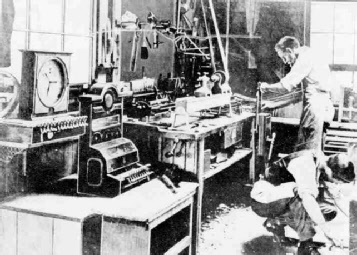
In 1878, on a steamboat trip to Europe but worrying about the saloon back home, Ritty became fascinated by a mechanism that counted how many times the ship’s propeller went around. Could something like this record the cash transactions made at his saloon? As soon as he returned home to Dayton, Ritty and his brother, a mechanic, began working on a design for such a device. Eventually, they devised a machine operated by pressing a key that represented a certain amount of money. The Rittys patented the design on November 4, 1879, calling it “Ritty’s Incorruptible Cashier.”

They opened a small factory in Dayton to manufacture the devices while still operating the saloon. The company didn’t do all that well, and Ritty was overwhelmed by the running of two businesses, so in 1881, he sold the cash register business. The buyers were a group of investors who formed the National Manufacturing Company which was renamed the National Cash Register Company a few years later.

Free of the cash register business and able to keep those pesky bartenders honest, Ritty opened another saloon, the Pony House, in 1882, in a historic Dayton building that had been a school of French and English for young ladies. For the Pony House, Ritty had wood carvers create a 32-foot bar that looked like the interior of a passenger railcar with Honduras mahogany, hand-tooled leather, and giant mirrors . Dining, drinking and gaming were the specialties of the Pony House – along with occasional fruitless searches for young French-speaking ladies. The saloon had it’s share of notable customers: Buffalo Bill Cody once rode his horse right up to the bar; John Dillinger (who never robbed a saloon) was a regular; and Jack Dempsey frequently took his spirits, never taking part in a barroom brawl.

The Pony House building was torn down in 1967, but the bar was saved and today resides at Jay’s Seafood in Dayton.


If I had to live my life over, I’d live over a saloon. ~ W. C. Fields

NOVEMBER 3, 1883: STAGECOACH POETICA

STAGECOACH POETICA

The California Gold Rush was in full swing by the latter half of the 19th century. Stagecoaches and Wells Fargo wagons were hauling gold out of blackbartCalifornia by the, well by the wagonload.  All this gold was just too much of a temptation for some folks, transplanted New Yorker Charles Boles being one such tempted soul.

In the summer of 1875, Boles donned a white linen duster, put a flour sack over his head and a black derby on top of that and set about robbing the gold from a stagecoach leaving the mining city of Copperopolis. Boles stepped out in front of the stage, aimed a shotgun at the driver, forcing him to stop and demanding him to “Throw down the box.” The driver was reluctant to comply until he saw several gun barrels aimed at them from nearby bushes. He calculated the odds, and turned over the strongbox. Boles whacked the strongbox with an ax until it disgorged its treasure, which Boles hauled off while the stagecoach driver remained a captive of Boles’ fellow conspirators. After this standoff had lasted a bit too long, he moved to retrieve the empty strongbox and found that the rifles pointing at him were nothing but sticks tied to branches of the bushes.

Boles was rather amazed at how easy this robbery business was and so, adopting the moniker Black Bart, he embarked on a life of crime. He became a bit of a legend due to his daring, the fact that he never rode a horse and leaving bits of verse “po8try” behind at each robbery:

I’ve labored long and hard for bread —

For honor and for riches —

But on my corns too long you’ve tred,

You fine-haired sons of bitches.

His victims also called him a gentleman. Once after ordering a stage drive to throw down the box, a frightened passenger tossed him her purse. Bart returned it to her, saying that he wanted only the strongbox and the mailbag.

Black Bart the Po8 robbed his last stagecoach on November 3, 1883 — that is, attempted to rob his last stage. Wells Fargo, not amused at having lost close to half a million to bandits, had secreted an extra guard on the stage. Bart escaped the trap but dropped his derby and left several other incriminating items behind a nearby rock. Within days, Black Bart had been apprehended.

During his eight years as a highwayman, Black Bart never shot anyone, nor did he ever rob an individual passenger. He stole a grand total of $18,000. Sentenced to six years in prison, he served four before receiving a pardon and disappearing into retirement.


November 2, 1886: Brother, Can You Spare a Vote

Robert Love Taylor, “Bob,” the Democratic candidate for governor of Tennessee, defeated his Republican opponent, Alfred Alexander Taylor, “Alf,” on November 2, 1886. One might guess that two candidates with the same last name would confuse voters at the polls, especially since they looked a lot alike, they both played the fiddle and they called the same two people mom and pop. Bob bested Alf, his older brother, 125,151 to 109, 837, in what would be called the “War of the Roses” because Bob’s fans all carried white roses and Alf’s carried red.  (Or was it the other way around?”) Their pappy, when asked to run as the Prohibition Party candidate, chose not to, evidently deciding that he would be one Taylor too many.

The brothers were born in Happy Valley, Tennessee, Alf in 1848, Bob in 1850. Their father, a Methodist minister, was a Whig; their mother, a gifted pianist was a Democrat. Bob and Alf both found their way into politics, lecturing and writing. They fiddled together, and collaborated on  a fairly successful play. Their gubernatorial campaign was nothing like the typical rough and tumble political contest. They campaigned together, lacing their political banter with humorous stories, then fiddling while their audiences danced.  It is rumored that a good portion of the electorate tossed coins to choose a candidate.

Bob served as governor from 1887 to 1891 and again from 1897 to 1899. He also served as U.S. senator from 1907 until his death in 1916. Alf was elected governor in the 1920’s. He died in 1931.

November 1, 1609: I Was Just Drinking a Health and Wound Up Debauched and Drunk

Sir Matthew Hale, born November 1, 1609, was an influential English legal scholar, barrister and judge throughout a good part of the 17thhealth1 century. Perhaps he was a bit of a stick in the mud as well. When he died, he left a rather unusual bit of advice for his grandchildren: “I will not have you begin or pledge any health, for it is become one of the greatest artifices of drinking, and occasions of quarreling in the kingdom. If you pledge one health, you oblige yourself to pledge another, and a third, and so onwards; and if you pledge as many as will be drank, you must be debauched and drunk.”

A fellow Englishman Charles Morton agreed, going so far as to dedicate a book to the subject: The great evil of health-drinking, or, A discourse wherein the original evil, and mischief of drinking of healths are discovered and detected, and the practice opposed with several remedies and antidotes against it, in order to prevent the sad consequences thereof. Catchy title, but most people probably just asked their booksellers for that book by Morton.

The French chimed in with their thoughts as well, the writer/philosopher Voltaire saying that “the custom arose among barbarous nations” (England) and that drinking to the health of one’s guests was “an absurd custom, since we may drink four bottles without doing them the least good.”

And of course they were all right. The slippery slope led to toasting any number of things on any number of occasions in addition to one’s health. The word toast, incidentally, crept into the language as a result of putting pieces of toast in the drinks (to make them healthier?).

One of the earliest known toasts or healths was ancient Saxon. At a banquet hosted by one Hengist, a mercenary in the employ of King Vortigern, the beautiful daughter of Hengist lifted a glass of wine to the king and said: “Lauerd kining, wacht heil” (Lord King your health). The king then drank and replied: “Drine heil” (Here’s looking at you, kid).

OCTOBER 31, LONG AGO: THE DEVIL MADE HIM DO IT

One might assume that the carving of jack-o’-lanterns was a clever promotion by the Association of Pumpkin Growers because there just weren’t enough pumpkin pies being eaten in this world. But as it turns out, folks have been making jack-o’-lanterns at Halloween for centuries. And that there’s a proper legend to explain the practice.

It all started with an Irish fellow called Stingy Jack. In addition to being cheap, Jack was a drunkard and a ne’er-do-well. During one of Jack’s benders, the Devil came calling on him with every intention of claiming his miserable soul. As a last request, Jack asked the Devil to have a  drink with him. (It’s a relief to learn the Devil drinks; Hell might not be so bad after all.)

Naturally, Stingy Jack being Stingy Jack had no intention of paying for the drinks, so he convinced the Devil to turn himself into a coin that Jack could use to buy their drinks, and the Devil agreed. (It would appear that the Devil is not the brightest candle in Hell.) Once the Devil had changed himself into a coin, Jack stuffed him into his pocket next to a crucifix, which prevented the Devil from changing back into his original form. Jack, now having all the chips in this game, agreed to free the Devil, on the condition that he would not bother Jack for ten years and that, should Jack die during this time, he would not claim his soul. (Jack wasn’t all that shrewd either.)

Drunkenness tends to make time fly, and before Jack knew it, ten years had passed.   And the Devil, ever prompt, came calling for Jack’s soul once again. And no last drink this time, the Devil said. Then perhaps just one small apple before I go, Jack begged. The Devil acquiesced. Jack lamented that he was in no condition to climb the apple tree, and would the Devil be so kind as to fetch the apple for him? (The Devil is a lot like Charlie Brown and his football. You’d think, being the Evil One, he wouldn’t be so trusting.) So the Devil climbed the tree, and while he was up in the tree, Jack carved a sign of the cross into the tree’s bark. To earn his release this time, the Devil agreed never to take Jack’s soul.

Wouldn’t you know, little time passed before Jack turned up his toes. Jack’s soul foolishly made it’s way toward Heaven where everyone had a good laugh before telling him to get lost. Then Jack journeyed to the Gates of Hell where the Devil, finally wise to Jack’s tricks,  also sent him packing —  to roam the world between good and evil, with only a burning ember inside a hollowed out turnip to light his way.  Jack of the Lantern. Obviously, the Association of Turnip Growers botched this one. Had they been on their toes, we’d all be celebrating Halloween with carved-out rutabagas.


halloween

OCTOBER 30, 1938: JUST ME AND MY RADIO

It’s easy from the comfort of our 21st century recliners to dismiss the mass hysteria of an earlier generation as so many Chicken Littles or Turkey Lurkeys, afraid of their own shadows. We’ve seen it all, any horror one can imagine, right there on the screen in front of us, and should it become too squirmy, well we can always just hit a button. The remote is there to protect us.

But what if you were at home, alone perhaps, on that October night back in 1938. It’s dark out; Halloween and all its spookiness is just a day away. But there’s the radio to keep you company. Like millions of other Americans, you’ll tune in to Edgar Bergen and Charlie McCarthy. That should lighten up a dark night. They finish their comedy routine at ten after eight. A singer you’ve never heard of follows so, like millions of Americans, you surf the radio stations (Wasn’t there supposed to be a dramatic program on?) pausing to hear an unenthusiastic announcer: “. . . the Meridian Room in the Hotel Park Plaza in downtown New York, where you will be entertained by the music of Ramon Raquello and his orchestra.” You listen for a minute; it’s not that great. You’re all set to surf again when the announcer interrupts, reporting that a Professor Farrell of the Mount Jenning Observatory has detected explosions on the planet Mars. The music returns, but only for a minute. The announcer is back with the news that a large meteor has crashed into a farmer’s field in Grovers Mills, New Jersey.

Now your ears are glued to the radio, as announcement after announcement confirms the impossible – a Martian invasion. “Good heavens, something’s wriggling out of the shadow like a gray snake. Now here’s another and another one and another one. They look like tentacles to me … I can see the thing’s body now. It’s large, large as a bear. It glistens like wet leather. But that face, it… it … ladies and gentlemen, it’s indescribable. I can hardly force myself to keep looking at it, it’s so awful. The eyes are black and gleam like a serpent. The mouth is kind of V-shaped with saliva dripping from its rimless lips that seem to quiver and pulsate.”

Now’s the time to surf the radio. If you do, you’ll quickly realize that everything is normal on other radio stations, that you’ve been listening to a realistic but fictional radio drama. But if you don’t, chances are you’ll join the thousands of people jamming highways, trying to flee the alien invasion.

Orson Welles was just 23 years old when his Mercury Theater company broadcast its update of H.G. Wells’ War of the Worlds with no idea of the uproar it would cause. He employed sophisticated sound effects and top notch acting to make the story believable.

And believed it was. In Indianapolis, a woman ran into a church where evening services were being held, yelling: “New York has been destroyed! It’s the end of the world! Go home and prepare to die!”

When the actors got wind of the panic, Welles went on the air as himself to remind listeners that it was just fiction. Afterward, he feared that the incident would ruin his career, but three years later he was in Hollywood working on Citizen Kane.

OCTOBER 29, 1636: HERMIT OF GRUB STREET

Henry Welby was a gentleman of fortune, education and popularity in England during the reign of Queen Elizabeth who suddenly secluded himself from all public life – not as a hermit off in the wilderness but right in the middle of London. His irrevocable resolution to live a solitary life followed an incident in which his younger brother, displeased over some trifle or another, attempted to shoot him at close range, certainly with the intent to kill.

To fulfill his resolution, Henry took a house at one end of Grub Street, known primarily for bohemians and impoverished hack writers. He occupied three rooms himself – one for dining, one for sleeping and one for study. The rest of the house was given over to his servants. A technical quibble here perhaps: can a man truly be a hermit with servants?  But it would seem that he managed. While his food was set on his table by his cook, he would wait in his bedroom. And while his bed was being made, he would retire into his study, and so on – thus avoiding any actual contact with his servants.

He ate only a salad of greens and herbs in the summer and a bowl of gruel in the winter. He drank no wine or spirits, only water or an occasional cheap beer. Occasionally, on a special day, he might eat an egg yolk, no white, or a piece of bread, no crust. Yet he provided a bountiful table for his servants.

And in these three rooms, he remained – for forty-four years, never ever leaving them until he was carried out on a gurney.  Not one of his relatives or acquaintances ever laid another eye on him – only his elderly maid Elizabeth ever saw his face. And she didn’t see much of it because it was overgrown by hair and beard. Elizabeth died just a few days before Henry’s death on October 29, 1636.

Books were his companions for those forty-four years, and not once did one of them shoot at him.

So Round, So Firm, So Fully Packed

Sir Walter Raleigh was one of the most notable figures of the Elizabethan era. A favorite of Queen Elizabeth herself, he was during his life an aristocrat, statesman, courtier, soldier, explorer, spy and poet. He established an English colony on Roanoke Island in Virginia, he led expeditions in search of the legendary City of Gold, El Dorado, and popularized the use of tobacco in England.

When Raleigh returned to England from the New World in 1586, he brought with him corn, potatoes and tobacco. This largesse was viewed with a good amount of skepticism — especially those potatoes. They were deemed unfit for human consumption, possibly poisonous and perhaps even the creation of witches or devils.

Tobacco, on the other hand, was seen as beneficial and even healthful (“more doctors smoke Camels than any other cigarette”). It could relieve toothaches and halitosis, and the smoking of it in those elaborately carved pipes was oh so sophisticated.

One story has it that the first time one of his servants saw Raleigh smoking, he thought Raleigh was on fire and doused him with a bucket of water. Nevertheless, once dry, Raleigh resumed the practice and even convinced Elizabeth to give it a go. She did, and so did the rest of the country. Within a few decades, the English were importing 3 million pounds a year from Virginia, this in spite of James I, Elizabeth’s successor and the surgeon general of his time, calling smoking loathsome to the eye, hateful to the nose, harmful to the brain, dangerous to the lungs with a black and stinking fume.

Raleigh was executed for treason on October 29, 1618. It had nothing to do with tobacco.

October 28, 1993: Moon Over Bogota

National University in Bogota, Colombia, prided itself on its reputation for academic excellence. Like many institutions of higher learning, it also attracted its share of student radicals from across the political spectrum.

On October 28, 1993, University President Antanas Mockus was delivering a speech at the opening of a university art show and enduring frequent interruptions with catcalls from rowdies in the audience. Finally, Mockus stopped mid-sentence, turned around, bent over, dropped his drawers and mooned the audience into a stunned silence. Score one for the prez.

Unfortunately, an enterprising student caught the whole thing on videotape. Naturally, the videotape found its way to the media. The incident was shown over and over on national TV, and stills from the tape made it into print. Radio talk shows were abuzz with calls for his censure, his ouster, his head. He had damaged the image of higher education and of the country itself, according to some.

But there were others such as the columnist who wrote: “That he showed his pale buttocks to some disrespectful, bus-burning anarchists is a thing I understand.”

Mockus made a tearful mea culpa appearance on TV, placing his fate with the Colombian president. And he survived. Two years later he was elected Mayor of Bogota. But maybe mooning was in his blood. In 2018, now age 65 and a Congressman, Mockus mooned his fellow legislators who were interrupting the outgoing president’s farewell speech.

You May Not Kiss the Bride

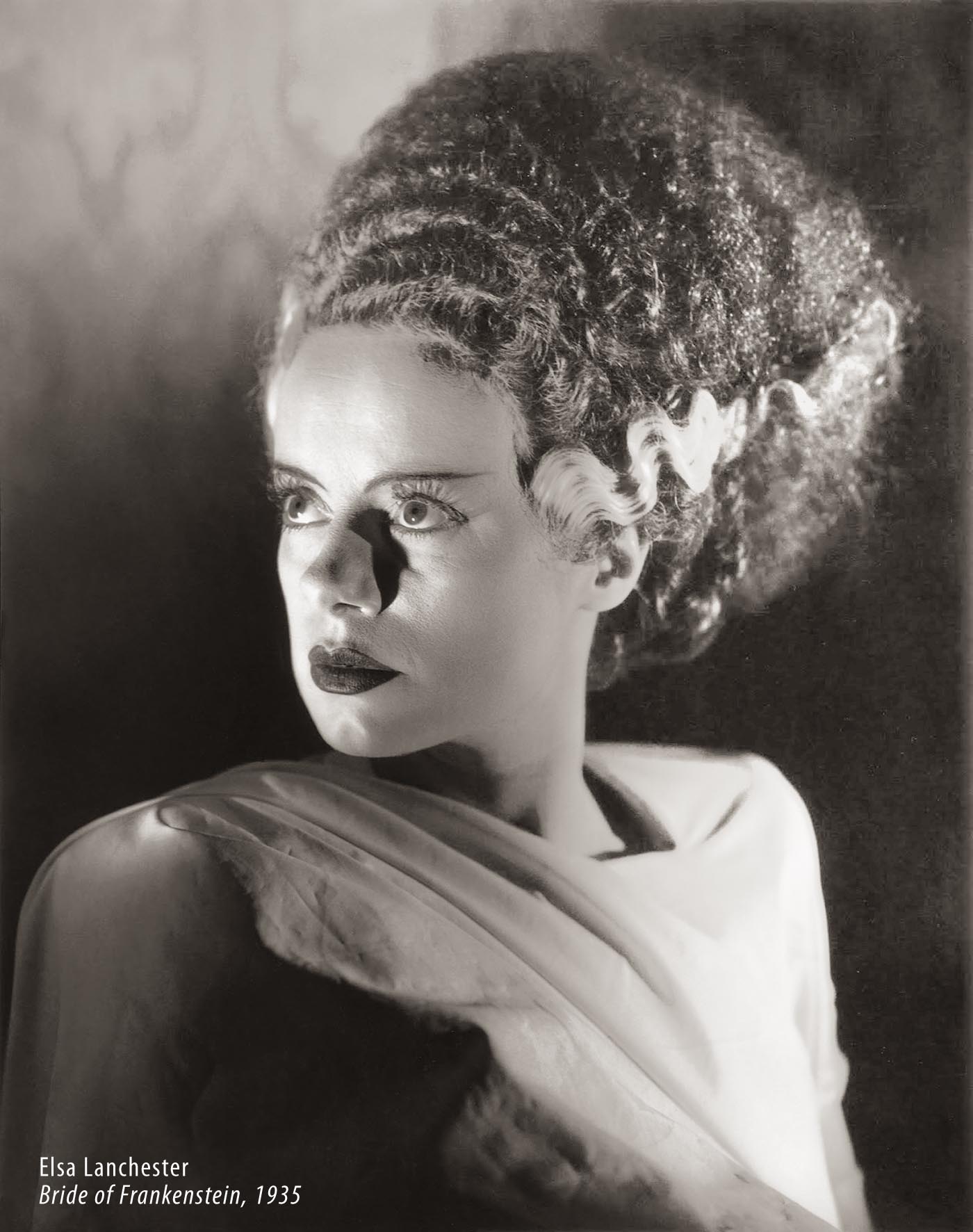
Elsa Lanchester, born in London on October 28, 1902, enjoyed a long show business career first in England then with her husband Charles Laughton in the United States. Her most famous role was probably that of the title character in the 1935 film Bride of Frankenstein ( a good choice for a Halloween movie). She starred with Laughton in a dozen films before his death in 1962. She died in 1986.

OCTOBER 27, 1666: I DID IT WITH MY BOX OF MATCHES

I DID IT WITH MY BOX OF MATCHES

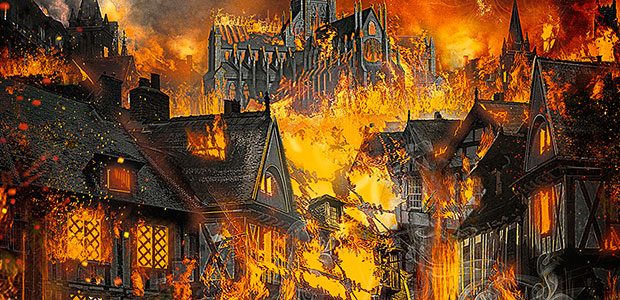
When the ashes settled after the great Chicago Fire, folks looked to assign blame and pointed their fingers at a cow.  The English were fire-of-londonalso looking to fix blame for a fire some two centuries earlier.  In early September 1666, a major fire broke out in Pudding Lane in the City of London and within days had destroyed 80 percent of the old city.
Accusations were flying in all directions — strangers, the Spanish, Dutch, Irish and most particularly the French, Catholics, even King Charles II.

Enter one Robert Hubert.  Hubert was a simple watchmaker who wasn’t quite wound up  — and he was a French Catholic.  He obligingly confessed to being the culprit, telling authorities he deliberately started the fire in Westminster.  He was arrested, but one little problem cropped up: the fire hadn’t even reached Westminster, let alone started there.

When confronted with the fact that the fire originated in a Pudding Lane bakery.  Hubert adjusted his story, saying that he had actually started the fire there, tossing a fire grenade through an open window.  What’s more, he did it because he was a French spy in service of the Pope.

Hubert was hauled before the court.  His story turned out to be riddled with problems.  The bakery had no windows, and Hubert was judged to be so crippled that he could not have thrown the grenade.  An even bigger problem:  he was not in England when the fire started, according to the testimony of the captain of a Swedish ship who had landed him on English soil two days after the outbreak of the fire.

Nevertheless, the court found Hubert guilty, and on October 27, 1666, he was hanged at Tyburn, London.  A year later, the cause of the fire was quietly changed to ‘the hand of God, a great wind and a very dry season.’

Don’t You Be a Meanie

Oh, Mr. Paganini
Please play my rhapsody
And if you cannot play it won’t you sing it?
And if you can’t sing you simply have to . . .

Mr. Paganini, aka (If You Can’t Sing It) You’ll Have to Swing It became a paganinifixture in Ella Fitzgerald’s repertoire back in the 1930s. The Mr. Paganini to whom she refers is composer and violin virtuoso Niccolo Paganini who was born on October 27, 1782. During the height of his career, the legendary “devil violinist”  set all of nineteenth-century Europe into a frenzy. He was a headliner in every major European city.  His technical ability was legend, and so was his willingness to flaunt it. His fame as a violinist was equaled by his reputation as a gambler and womanizer.

Alas, his grueling schedule and extravagant lifestyle took their toll, and he suffered from ever increasing health problems. He died in 1840.