December 2, 1941: Here’s Looking at You, Kid *

World War II had engulfed most of Europe and refugees everywhere were searching for the exits. The most popular way out was through Lisbon, Portugal, but getting there was a bit of a do. A long, roundabout refugee trail led desperate refugees from Paris to Marseilles, across the Mediterranean to Algeria, then by train or auto or even by foot across northern Africa to Casablanca in French Morocco.

Once in Casablanca, those with enough cash or influence could scare up exit visas and scurry off to Lisbon, then the Americas. Ah, but those unlucky ones, those without means, would wait in Casablanca “and wait and wait and wait.”

casablanca2

Picture yourself in an open-air city market, dripping with intrigue, teeming with black marketeers, smugglers, spies, thieves, double agents, and assorted ne’er-do-wells, all loudly engaged in their business activities. And of course there’s the aforementioned refugees attempting to deal and double-deal their way out. It’s December 2, 1941. The news spreads quickly through the market that two German couriers on their way to Casablanca have been murdered. They were carrying “letters of transit” allowing the bearers to travel freely around German-controlled Europe and to neutral Portugal. You better believe these papers are to kill for.

Now walk into a cafe owned by an American expatriate named Rick. It’s the place in Casablanca where everybody and everything eventually show up. And right on cue, the letters of transit do, in the possession of Ugarte, the town weasel. And so does everyone else who is anyone else: There’s Czech resistance leader, Victor Lazlo, Norwegian Ilsa Lund (Rick’s former lover), nasty German Major Strasser, Vichy syncophant Louis Renault, rival club owner and black marketeer Senor Ferrari, Sam the piano player, and a cast of, if not thousands, dozens. Of course, all of this is taking place not in Casablanca but on the lot of Warner Brothers studio in Hollywood, California.

The story line is well-known by most movie-goers, and the cast is like one large dysfunctional family. If you haven’t seen Casablanca during its first 75 years, chances are you never will. But if you have, you’ll probably see it again and again. And you probably have your favorite scene. Maybe it was this one:

* No.5 on the AFI list of top movie quotes

 

December 1, 1929: Gimme a B, Gimme an I . . .

Edwin Lowe is credited as being the Father of the game Bingo, but it’s abingo murky paternity. Lowe was a toy merchandiser in the late 1920s. At a traveling carnival near Atlanta, on December 1, 1929, he noticed players involved tooth and nail in a game called Beano in which they placed beans on numbers on a card as the numbers were called by an official number caller. Lowe took the idea back to New York with him where he amazed his friends with it. It’s popularity grew, and Lowe’s finances grew with it. The name Bingo was said to have originated when an excited player yelled “Bingo” instead of “Beano,” although some conspiracy theorists say the word had been used in England for some 150 years.

Further clouding the picture are the French (as the French will do). They created a similar game called Le Lotto back in in 1778. And they probably plagiarized the Italian Il Giuoco del Lotto d’Italia from the 1500s.

For those who may be in the Bingo dark, today’s typical game uses the numbers 1 through 75 arranged on a card in five columns headed by the letters B – I -N- G – O. Each column has numbers arranged vertically: The B column contains numbers between 1 and 15, the I column contains 16 through 30 and so on. When a player covers five numbers, horizontally, vertically or diagonally, the lucky devil shouts “Bingo!” to the great dismay of everyone else.

The game is now pretty much the province of little old ladies who command dozens of Bingo cards and whom you’d better not mess with if you know what’s good for you. Last year an 18-year-old Kentucky lad was barred by a judge from uttering the word “bingo” for six months after he falsely did that while working security at a Bingo hall. A police officer arrested him for his disorderly conduct which delayed the game by several minutes, causing alarm and real consternation to patrons. Chances are, he was taken into protective custody when the patrons, primarily elderly women, began yelling, cussing and threatening him. The officer explained that you can’t shout “out” in a ballpark or “fire” in a crowded theater.

And in England, two grandmothers were permanently banned from a local Bingo club after an argument over a ‘lucky’ seat led to a broken nose and two black eyes.

November 30, 1667,1835: Have Wit, Will Travel

Jonathan Swift, born on November 30, 1667, was an Anglo-Irish satirist and essayist, remembered for such works as Gulliver’s Travels, A Modest Proposal, A Journal to Stella, Drapier’s Letters, The Battle of the Books, An Argument Against Abolishing Christianity, and A Tale of a Tub. Swift is considered by many to be the foremost prose satirist in the English language.

Swift originally published all of his works under pseudonyms – such as Lemuel Gulliver, Isaac Bickerstaff, MB Drapier – or anonymously.

In 1729, Swift published A Modest Proposal for Preventing the Children of Poor People in Ireland Being a Burden on Their Parents or Country, and for Making Them Beneficial to the Publick, a satire in which the narrator, with bizarre arguments, suggests that Ireland’s poor  could relieve their poverty by selling their children as food to the rich: “I have been assured by a very knowing American of my acquaintance in London, that a young healthy child well nursed is at a year old a most delicious nourishing and wholesome food…”

Gulliver’s Travels, published in 1726, is regarded as his masterpiece. As with his other writings, the Travels was published under a pseudonym, the fictional Lemuel Gulliver, a ship’s surgeon and later a sea captain. Although it has often been mistakenly thought of as a children’s book, it is a brutal satire on human nature and the so-called Enlightenment of the time.

He had been eight years upon a project for extracting sunbeams out of cucumbers, which were to be put in vials hermetically sealed, and let out to warm the air in raw inclement summers.

America’s greatest humorist also went by several names while seeking the right moniker: He was Josh through the penning of several humorous sketches; he also wrote letters which he signed Thomas Jefferson Snodgrass. By the time he wrote “The Celebrated Jumping Frog of Calaveras MarkTwain.LOCCounty,” the short story that brought him international acclaim, he was Mark Twain.

Twain was born on November 30, 1835, shortly after a visit by Halley’s Comet, and he predicted that he would “go out with it,” as well. Which he did, dying the day following the comet’s return in 1910.

Celebrated for much of what he wrote, The Adventures of Huckleberry Finn remains his crowning achievement, the Great American Novel. William Faulkner called Twain “the father of American literature.” His wit and satire, in prose and in speech, earned praise from critics and peers, and he hobnobbed with artists, presidents, titans of industry, and European royalty.

I am said to be a revolutionist in my sympathies, by birth, by breeding and by principle. I am always on the side of the revolutionists, because there never was a revolution unless there were some oppressive and intolerable conditions against which to revolute.


November 29, 1924: Don’t Shoot the Soprano

Giacomo Puccini, who died on November 29, 1924, was a giant in Italian opera, unrivaled in orchestration and a sense of theater. Passion, sensuality, tenderness, pathos and despair infused such operas as Manon Lescaut, La Bohème, Madama Butterfly, and Turandot.

Tosca was one of Puccini’s greatest operas, but it seems to have taken on a bit of a curse, like that Scottish play whose title shall not be uttered in the theater. More things have evidently gone awry in Tosca than in any other opera.  A few vivid examples:

Exit Stage Left . . . Exit Damnit: In Act II of a performance of Tosca featuring Maria Callas in the title role, Tosca stabs her tormentor Scarpia, and then leaves the stage. After doing the deed, Callas who suffered from myopia but couldn’t wear contact lenses wandered the stage, unable to find her way out. Baritone Tito Gobbi, our Scarpia, while lying dead, tried to discreetly point out the exit, but started laughing so much that both his laughing and his pointing were obvious to the audience. The next morning, newspapers raved about his memorable portrayal of Scarpia’s death.

They Shoot Divas, Don’t They?: In another performance, a firing squad is called upon to execute Tosca’s lover Mario in the final act. The players were instructed to enter and shoot the person they found onstage, and then to exit with the principals. But when the players got onstage, they discovered two people and didn’t know which one to shoot. They aimed at one then the other as both principals said not to shoot them. They finally chose Tosca, but when they shot her, Mario keeled over dead. They stood there, further bewildered; they had been told to exit with the principals but neither of the principals were exiting. Mario remained lifeless while Tosca tried to shoo them away. Finally, when Tosca jumped to her death from the castle parapet, they seized the opportunity to exit with at least one principal, and they jumped after her, adding immeasurably to the tragedy.

Follow the Bouncing Diva: Tosca’s leap to her death  from the parapet of the Castel Sant’Angelo is the dramatic conclusion to the opera. Various methods have been employed to keep the jumping soprano safe; usually a mattress does the trick. In a Lyric Opera of Chicago performance,  stage hands replaced the usual mattress with a trampoline to provide added safety for a British soprano. They also added some unintended encores as Tosca bounced back into view several times.


November 28, 1922: Ghost Writers in the Sky

It didn’t take long after the advent of flying for crafty marketing types to come up with a way to use it for advertising.   Skywriting was the way showing the most promise: a small airplane spits out magic smoke during a flight, creating text able to be read by someone on the ground.sky Messages naturally run the gamut from the inane to the weighty. Advertisers had a field day.

The first use of skywriting for advertising came on November 28, 1922, when Captain Cyril Turner of the Royal Air Force flew over New York City, spelling out, “Hello USA. Call Vanderbilt 7200.” Within just a few hours, 47,000 people had done just that. And of course operators were standing by at Vanderbilt 7200 to take their orders although no one had any idea what was being sold.

Pepsi-Cola became the first major brand to use skywriting as a medium to reach a mass market with thousands of flights through the 1930s into the mid-1940s. During the following years, skywriting became more sophisticated with the use of coordinated flights by fleets of planes that could deliver longer and more clearly written text messages.

At one point, rumor has it, an ambitious skywriter produced Pride and Prejudice in its entirety, but most observers fell asleep during the first three paragraphs.

November 27, 1703: What Do We Do with a Drunken Sailor?

The Eddystone Lighthouse sits atop the treacherous Eddystone Rocks off the coast of the United Kingdom. The current lighthouse is actually the fourth to hold sway there.

eddystoneThe original Eddystone Lighthouse was an octagonal wooden structure whose light first shone in November of 1698. It was destroyed just five years later on November 27 during the Great Storm of 1703. The unfortunate builder Henry Winstanley was on the lighthouse, completing additions to the structure at the time. No trace was found of him, or of the other five men in the lighthouse.

The fame of the lighthouse spread well beyond those using it for guidance in the English Channel. It became the subject of a sea shanty sung by drunken sailors around the world. Shanties are those songs sung on board ship to relieve the boredom of shipboard tasks, but during the 20th century and particularly during the mid-century folk craze, sea shanties were adopted by landlubbers everywhere. The Eddystone Light became a particular favorite of many a drunken sailor, armed with a guitar or banjo and a good supply of beer, no matter how far away the nearest navigable waters.


November 26, 1865: O Frabjous Day

On a summer afternoon boat trip in the early 1860s the Reverend Charles Lutwidge Dodgson told the three Liddell sisters – Lorina, Alice and Edith – a story that featured a bored little girl named Alice who goes looking for an adventure. The girls loved the story, and ten-year-old Alice asked Dodgson to write it down for her. In November of 1864, Dodgson gave Alice the handwritten manuscript of the story called Alice’s Adventures Under Ground, with his own illustrations, dedicated as “A Christmas Gift to a Dear Child in Memory of a Summer’s Day”.

A year later on November 26, 1865, he gave the book to the world with a new title, Alice’s Adventures in Wonderland, published under the pseudonym Lewis Carroll.  The book in which Alice falls down a rabbit hole into a world filled with outlandish anthropomorphic characters was not a big success at the time; it has since become a giant of “children’s” literature and Lewis Carroll’s language and logic have become fixtures in modern culture and literature.

Alice as depicted by Rev. Dodgson

“I can’t explain myself, I’m afraid, sir,” said Alice, “because I’m not myself, you see.”

From the original by Tenniel
From the original by John Tenniel

“Begin at the beginning,” the King said, very gravely, “and go on till you come to the end: then stop.”

Alice by Arthur Rackham

“Would you tell me, please, which way I ought to go from here?”
“That depends a good deal on where you want to get to,” said the Cat.
“I don’t much care where –” said Alice.
“Then it doesn’t matter which way you go.”

alice charles pears
Alice by Charles Pears

They drew all manner of things — everything that begins with an M . . . such as mousetraps, and the moon, and memory, and muchness — you know you say things are much of a muchness.

Alice by Charles Robinson

The hurrier I go, the behinder I get.

Alice by George Soper

The rule is, jam tomorrow and jam yesterday-but never jam today

Alice by Harry Rountree
alice disney
By Disney Studios

Speak roughly to your little boy
and beat him when he sneezes!
he only does it to annoy,
because he knows it teases!

By Mervyn Peake
By Mervyn Peake


November 25, 287: Some of My Best Friends Were Martyrs

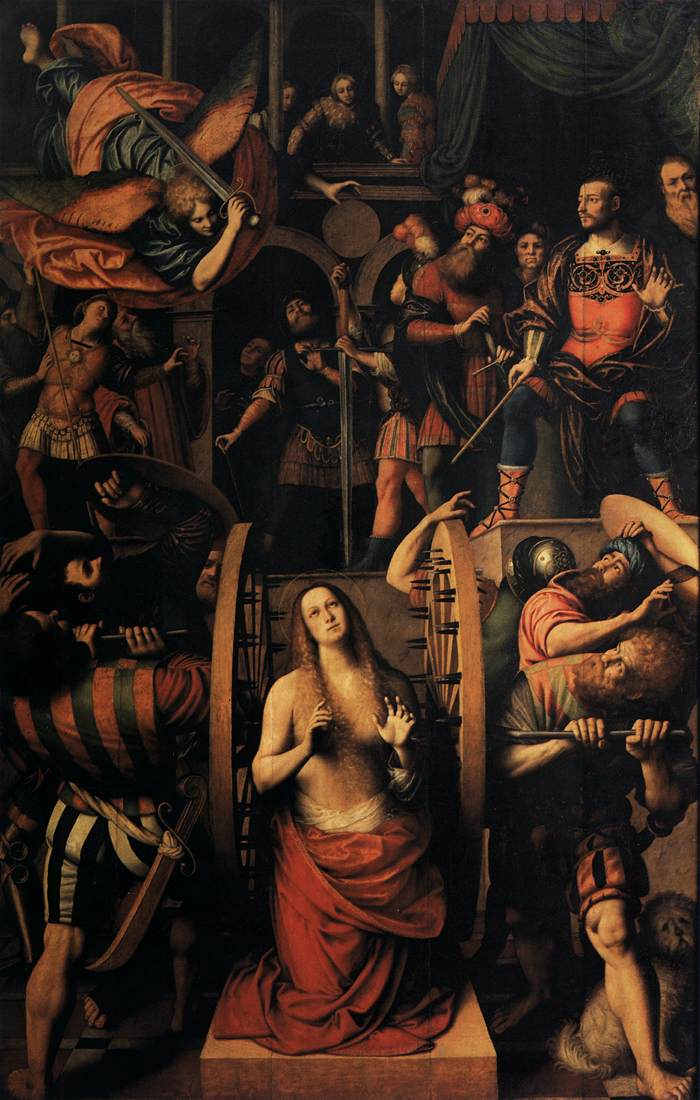
November 25 marks the feast of St. Catherine of Alexandria who was born in 287.  As a young teenager, Catherine was evidently pretty, witty and wise. Devoting herself to an uncharacteristic amount of study for a teenager, she found herself lured into the ways of Christianity, which was not a particularly popular pursuit at the turn of the 4th century. In fact, the evil emperor Maxentius was quite put out by her piety, particularly when she called him on his cruelty, right to his face.

Not only that, he was obsessed enough with her religiosity that he summoned fifty noted pagan philosophers to convince her that her religion was a passing fad.  But didn’t she whup them good in all their debates. In fact, she argued her case so eloquently that many of them converted. They were of course immediately put to death.

Maxentius then had Catherine thrown into prison, where she continued to convert those who came to visit her. He had her tortured, and when that yielded no results, he took the next logical step and asked her to marry him. She refused, giving him the excuse that she wanted to remain a virgin and telling him they could remain friends (if he’d give up the cruelty). This really annoyed him so he condemned her to death on a spiked breaking wheel. When she touched the wheel, however, it shattered, a bit of a miracle for which she would always be remembered by the nickname St. Catherine of the Wheel. Unfortunately, she was beheaded shortly thereafter (at least never being given the sobriquet St. Catherine the Headless).

As a dead virgin, a martyr, and then a saint, her popularity grew steadily, and she was eventually named one of the fourteen most helpful saints in heaven.  As such, she is the patron saint to all sorts of people — potters and spinners (think wheel), unmarried girls and/or virgins, mechanics, knife sharpeners, librarians, milliners and philosophers to name just a few. The latter sought her help to sharpen their minds, guide their pens, and bring eloquence to their words.

Obviously, Wretched Richard’s Almanac got no such help.


November 24, 1859: Insulting Monkeys

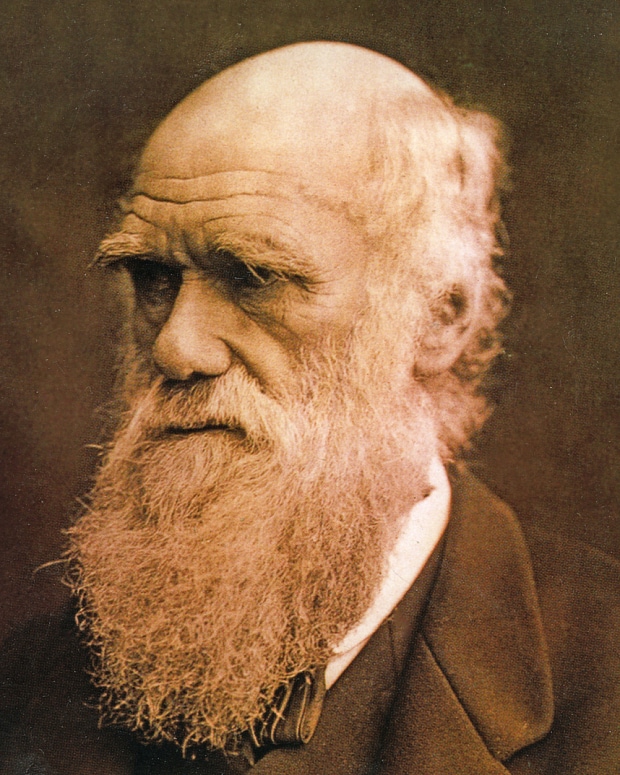
Charles Darwin was not expecting a seismic event when on November 24, 1859, he introduced a little volume with the catchy title On the Origin of Species. Although it didn’t go viral at the time, the printing run of 1,250 copies did sell out.  A few more have sold since then.

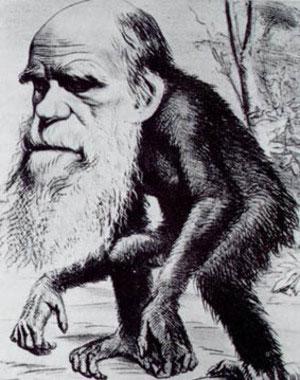
In his book, Darwin suggested that all species of life have descended over time from common ancestors.  That sounds a lot like a plug for family values, but weren’t people upset anyway.  Although Darwin’s only allusion to human evolution was a cryptic “light will be thrown on the origin of man and his history,” the title of his book might just as well have been Men from Monkeys because that’s what detractors brought away from it.  And any attempt on the part of scientists to explain that it’s not about that pretty much put people to sleep.  Even though enlightenment eventually crept into the scientific community, to many others Darwin became forever the symbol of runaway science.  Were he alive today, he’d probably be conspiring with the 99 percent of scientists involved in the vast climate change hoax.

What is Man? Man is a noisome bacillus whom Our Heavenly Father created because he was disappointed in the monkey. ― Mark Twain


New Rule: Stop asking Miss USA contestants if they believe in evolution. It’s not their field. It’s like asking Stephen Hawking if he believes in hair scrunchies. Here’s what they know about: spray tans, fake boobs and baton twirling. Here’s what they don’t know about: everything else. If I cared about the uninformed opinions of some ditsy beauty queen, I’d join the Tea Party. ― Bill Maher


It is even harder for the average ape to believe that he has descended from man. ― H.L. Mencken


Organic life, we are told, has developed gradually from the protozoan to the philosopher, and this development, we are assured, is indubitably an advance. Unfortunately it is the philosopher, not the protozoan, who gives us this assurance. ― Bertrand Russell


November 23, 534 BC: Another Opening, Another Show

Back in the 6th century BC, Greek theatrical performances were generally dithyrambs, choral offerings featuring stories from mythology sung by a chorus of anywhere from a dozen to fifty singers They usually wore masks and might even dance a little. Whatever they did, they did in lockstep.

Then on November 23, 534 BC, a member of one of these choruses known as Thespis of Icaria stepped out of the anonymity of the chorus and spoke several lines not as himself, but portraying the character of the Greek God Dionysus. Well, this had never been done before. No one had ever assumed the character of another person for storytelling Thespis thus became the world’s first actor.

This new idea quickly caught on, and individual actors began to portray different characters in their stories which they now called tragedies. Pretty soon scores of Greeks were saying to each other “Gee, we could put on a play in Farmer Brown’s barn.” And taking their tragedies on the road.

Thespis was the most popular actor of the day, winning the first wooden horse for best actor in a tragedy. And he took his shows on the road, carrying with him costumes, masks and props from town to town. This made him not only the father of theater but also the father of theatrical touring. And actors throughout history have called themselves Thespians in his honor.

Let’s Get a Recording of That Greek Chorus

The scene is the Palais Royale Saloon in San Francisco, November 23, 1889. Entrepreneur Louis Glass has installed a machine destined to become an overnight sensation, and find a permanent spot in the psyche of the nation, even the world. He called his device the “nickel-in-the-slot player” a name that would certainly need a bit of massaging in the future.

What it played was music. Inside a handsome oak cabinet was an electric phonograph.  Four stethoscope-like tubes were attached to it, each operating individually after being activated by the insertion of a coin. Four different listeners could be plugged into the same song at the same time! In a nod to sanitation, towels were supplied to patrons so they could wipe off the end of the tube after each listening.

The success of the “nickel-in-the-slot player” eventually spelled the demise of the player piano, then the most common way of providing popular music to saloon patrons, notorious for their love of music.

Most machines were capable of holding only one musical selection, the automation coming from the ability to play that one selection at will. Obviously, after each patron had listened to that one song several times, the novelty wore off and the player went idle. In 1918, another entrepreneur solved that problem with an apparatus that automatically changed records. Ten years later, enter Justus P. Seeburg, who combined an electrostatic loudspeaker with a coin-operated record player that gave the listener a choice of eight records.

This machine was pretty cumbersome: it had eight separate turntables mounted on a rotating Ferris wheel-like device, allowing patrons to select from eight different records. Later versions included Seeburg’s Selectophone, with 10 turntables mounted vertically on a spindle. By maneuvering the tone arm up and down, the customer could select from 10 different records.

There was still no decent name for these devices. That came in the 1940s, when person or persons unknown dubbed it a jukebox, a reference to juke house, slang for a bawdy house, a favorite location for the devices. All that remained necessary in the evolution of the jukebox was the addition of a healthy helping of rock and roll.