APRIL 4, 1914: TO BE CONTINUED

The Perils of Pauline, one of the earliest American movie serials and a classic example of the damsel in distress genre, premiered in Los Angeles on April 4, 1914. Every week for twenty weeks, actress Pearl White faced imminent danger and sure death at the hands of pirates, hostile Indians, gypsies and various mustachioed villains, escaping at the last possible second through her own ingenuity, resourcefulness and pluck. Her adventures in Pauline and the follow-up Exploits of Elaine were popular movie fare through the 1920s. Neither serial was a true “cliffhanger” in which episodes end with an unresolved danger to be resolved at the beginning of the next installment.  Instead White jumped in and out of the jaws of death in each installment.
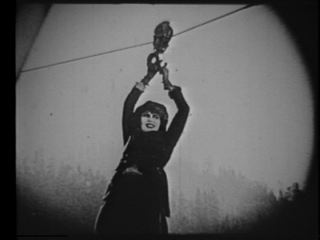
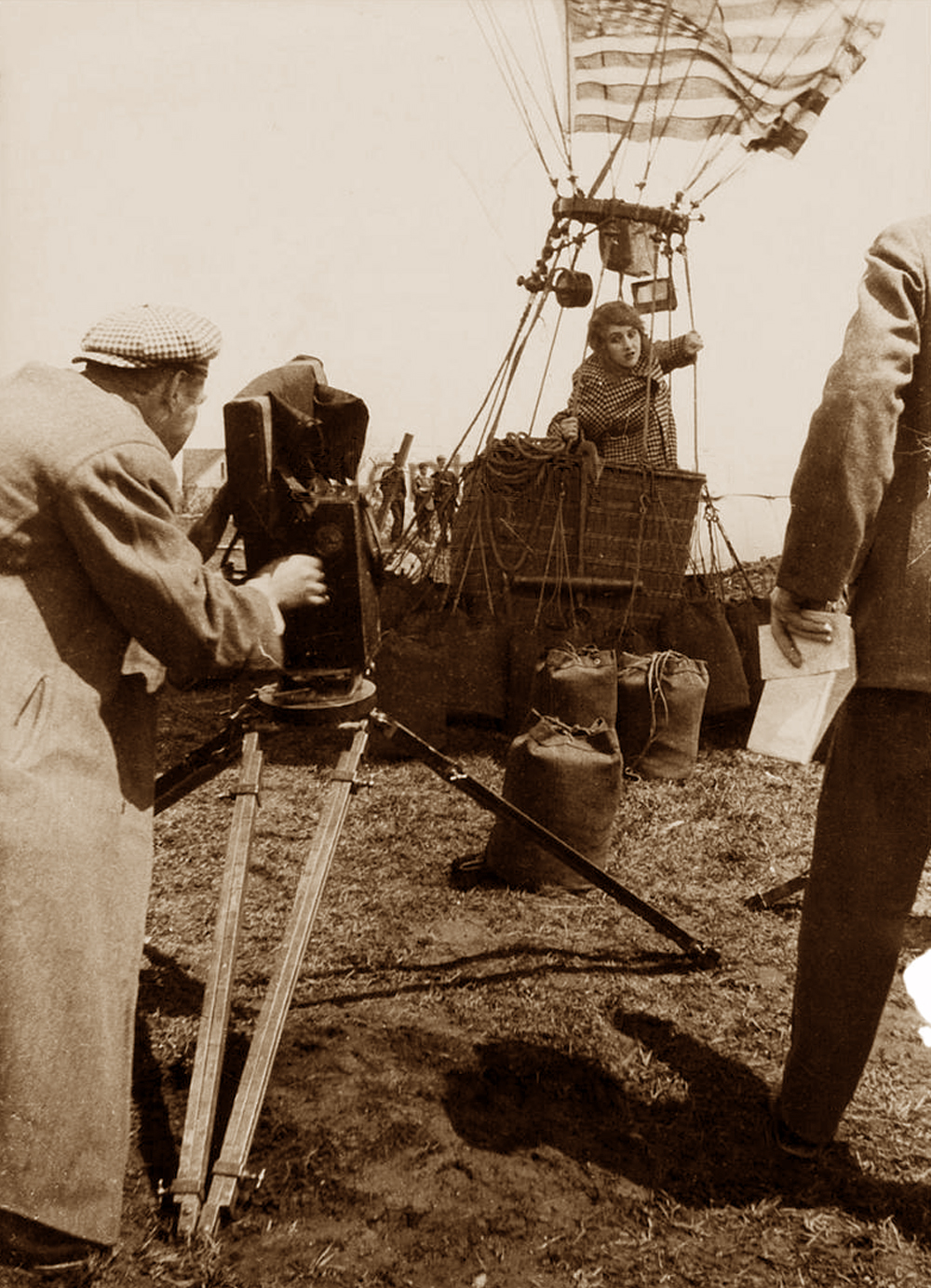
Like many other silent film stars, Pearl White performed her own stunts for the serial, at considerable risk. During one scene, the hot-air balloon she was piloting escaped and carried her across the Hudson River into a storm, before landing miles away. In another incident, she permanently injured her back in a fall.

And of course White was more than once tied to railroad tracks by a mustache-twirling villain. One such scene was filmed on a curved trestle in New Hope, Pennsylvania on the Reading Company’s New Hope Branch. Now referred to as “Pauline’s Trestle,” it is a tourist attraction offering rides from New Hope to Lahaska, Pennsylvania, across the original trestle.

Wretched Richard’s Little Literary Lessons — No. 6

cliff-hanger

[klif-hang-er]

noun

1. a melodramatic adventure serial in which each installment ends in suspense in order to interest the reader or viewer in the next installment.

2. a situation or contest of which the outcome is suspensefully uncertain up to the very last moment:

Stopping for a moment, she convinced herself that she had to have a good lead over her pursuers, if they were even following her. She had to find Paul. Looking around, however, she realized that not only didn’t she know where Paul was, she didn’t know where she was. She decided to work her way back in the same general direction from which she thought she had come, keeping herself hidden. If they were chasing her, they would not be stealthy. She’d hear them before they saw her. And try to find Paul. Or someone else to help. But who?

Her foot caught the bottom of her sarong, and she fell to the ground. “This damn outfit,” she said aloud as she tried to untangle herself. “I might as well be wearing a strait jacket.”

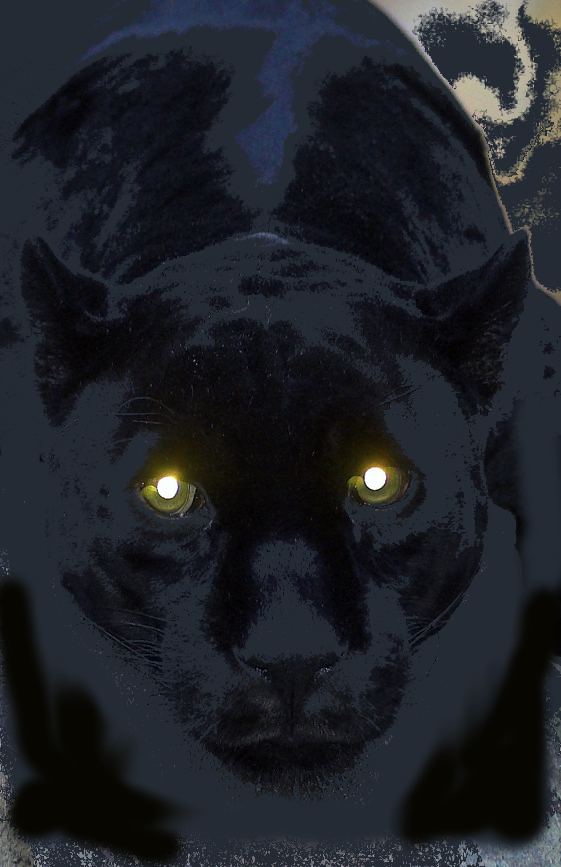
She pulled herself up to her hands and knees and looked around. There just a few feet ahead of her, two golden eyes blazed in the dark. At first they were disembodied, hovering in the air, but as they stared at her, she began to discern an outline of whatever it was that possessed the eyes. It was big, really big, and as black as the night around it. It was a cat, at least four feet at its shoulders. And it wasn’t purring.
Get me off this cliff.

APRIL 3, 1667: THE LIONS ARE COMING, THE LIONS ARE COMING

In addition to being a member of the British peerage, Edward, Marquis of Worcester, who died on April 3, 1667, was a bit of a dabbler, a sort of ersatz inventor, and author of an odd little book called A Century of Inventions. The book, written some ten years earlier, describes, as the title suggests, a hundred speculative projects, none of them, however, detailed enough to allow a reader to actually put them into practice: secret writing with peculiar inks, explosive devices that would sink any ship, ships that would resist any explosive devices, floating gardens, a method to prevent sands from shifting, automatic assault pistols and cannons, a timer for lighting candles at any time during the night, a hundred-foot pocket ladder, flying machines.

Although many of his ideas foreshadowed later inventions, it is unclear whether he had thought through the methods by which they would work. One idea was put to work with success although unusually so. As the owner of Raglan Castle, he had constructed some hydraulic engines and wheels for bringing water from the moat to the top of the castle tower.  During the Civil War, Roundheads had approached the castle with not the best of intentions. The Marquis had his waterworks put into play. “There was such a roaring,” he later wrote, “that the unwelcome visitors stood transfixed, not knowing what to make of it.” On cue, one of the Marquis’ men came running toward them shouting that the lions were loose. The intruders tumbled over one another down the stairs in an effort to escape, never looking back until the castle was out sight.

Fifty more clever ideas

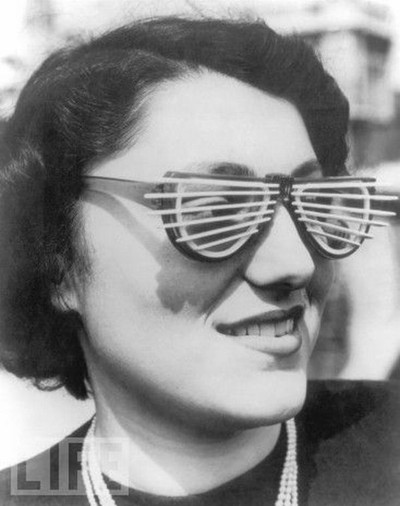
The Marquis’ 100 nifty inventions most likely did not inspire Time Magazine to create its list of inventions at the turn of this century, although it could have.  The Time list heralded fifty creations that it called the worst of all time.  Wretched Richards Almanac has visited some of these in the past and will visit others in the future (like on April 5).  The list includes such sure-fire ideas as Hair in a Can, Tanning Beds, Venetian-Blind Sunglasses, Smell-o-Vision, Hula Chair and many more.


APRIL 2, 1902: THE TERRIBLE, TERRIBLE BIDDLE BOYS

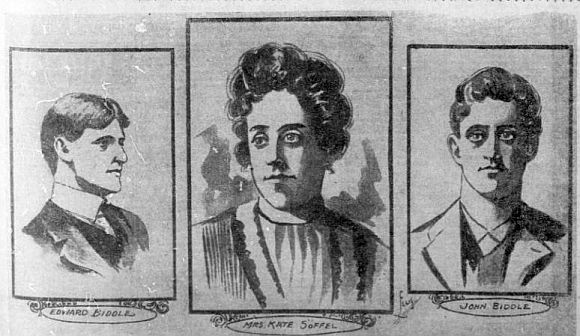
Admission was ten cents. The movie lasted about an hour. There were no cartoons or newsreels. The first theater to show an actual movie was the Electric Theater in Los Angeles on April 2, 1902. The Capture of the Biddle Brothers was an adventure melodrama based on actual events.

A few months earlier, condemned prisoners Jack and Ed Biddle escaped from a Pennsylvania jail using tools and weapons supplied to them by the warden’s wife, Kate Soffel. “Our picture, which is a perfect reproduction of the capture, is realistic and exciting,” the producer exclaimed — breathlessly one might imagine. Two sheriff-filled sleighs pursue the Biddles and Soffel through the white and drifting snow. The dastardly trio turns to make a stand, shotguns and revolvers blazing. Ed Biddle is shot, falls to the ground in a snow bank. On one elbow, he continues to fire shot after shot until he collapses. The second Biddle continues to fire, and he too is shot. Mrs. Soffel seeing the hopelessness of their situation, if not the error of her ways, attempts to shoot herself. All three are captured. The brothers both die of their wounds. Mrs. Soffel survives, but a reconciliation with her warden husband is probably unlikely.

The movie itself did not survive, and the names of the actors are lost to history. Oddly enough a remake — well maybe not exactly a remake — was released in 1984.  Mrs. Soffel starring Diane Keaton and Mel Gibson once again tells the tale of the terrible, terrible Biddle brothers. But not for a dime.

Hear Me Roar

The baseball season was just getting underway as 17-year-old Jackie Mitchell took the mound for the minor-league Chattanooga Lookouts in an exhibition game against the New York Yankees in Chattanooga, Tennessee, and on April 2, 1931, became  one of the first and female pitchers in professional baseball history.

The game had gotten off to a rocky beginning for the Lookouts with their starting pitcher (male) giving up hits to the Yankees’ first two batters. The teenage Mitchell was brought in to face a couple of guys named Babe Ruth and Lou Gehrig. Mitchell’s first pitch to Ruth was a sinker that darted low for ball one. She followed with a sinker on the outside corner, which the Babe swung through and missed. Grinning, the “Sultan of Swat” swung at her next pitch and missed again for strike two. Another sinker on the corner of the plate, and Ruth watched it sail by for a strike three call. “The Babe kicked the dirt and gave his bat a wild heave as he stormed unhappily to the dugout.”

Gehrig came to bat and promptly missed three straight dipping sinkers, swinging early each time. On seven pitches, the Chattanooga teenager had struck out Ruth and Gehrig, two of the game’s greatest hitters. The hometown crowd rewarded her with a standing ovation. The next day, one newspaper cleverly suggested that “maybe her curves were too much for them.”

Unfortunately, Mitchell’s game against the Yankees was also her last.  Just days after her legendary performance, (male) baseball commissioner Kenesaw Mountain Landis voided her contract because the sport of baseball was “too strenuous for women.” Although Jackie went on to tour with other prominent female athletes and play on women’s teams for a short time, Landis had pretty much wrecked her professional career, and she bowed out of sports at age 23.

APRIL 1, 1903: THE TENOR NOSE

Fabrio Abruzzi was born in a village near Milan in 1883. The Abruzzi family was quite poor with Fabrio’s father cobbling together their existence as a shoemaker. Almost from the time Fabrio could walk, he was put to work pounding leather for his father. He was a nice boy (the villagers lovingly called him bambino brutto) and he was hard-working although his mind would wander and he frequently distracted himself by singing popular Italian folk songs.

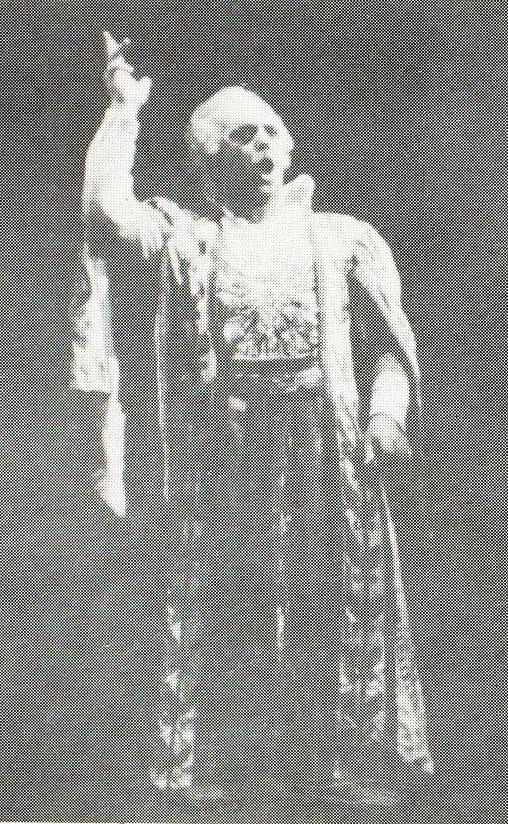
As a child, he always had a pleasant singing voice and when, as a teenager, his voice changed, it became a magnificent tenor voice. Fate smiled on Fabrio. A LaScala impresario happened through the village and heard the young man sing as he pounded leather. He took Fabrio under his wings, coached him extensively and on April 1, 1903, scheduled his debut as the principal tenor in Puccini’s Euripedes et Copernica.

On the day of his performance, he prepared himself (as many leading singers of the day did) by forcing lumps of pancetta up each nostril of his nose to lubricate the nasal passages (he had a magnificent Roman nose). Unfortunately, the pancetta became wedged there and he was forced to go on stage with it still in place. Things looked bad. Fabrio did not sound like a magnificent tenor; his voice was stuffy and nasal. The audience was growing restless with the need to toss tomatoes (which Italians always brought with them to the opera). Fortunately, the famous aria ti amo mortadella comes early in the first act. It’s a robust piece and Fabrio gave it his all, thereby dislodging the pancetta and hurtling meaty projectiles through the air. One put a crack in the second violinist’s Stradavarius; the other slammed into the conductor’s forehead, causing him to lead the orchestra off into an unrestrained allegro punctuated by several tomatoes to the back of his head.

But Fabrio was a success. He went on to have a short but illustrious career and was known throughout Italy as voce bellissima brutte facce.

Pancetta Projectiles in 3-D Perhaps

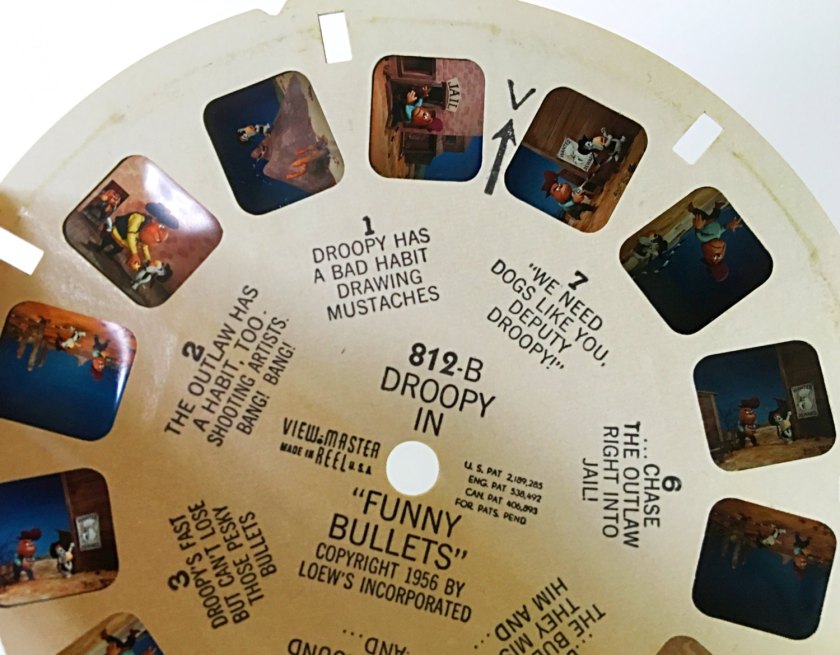
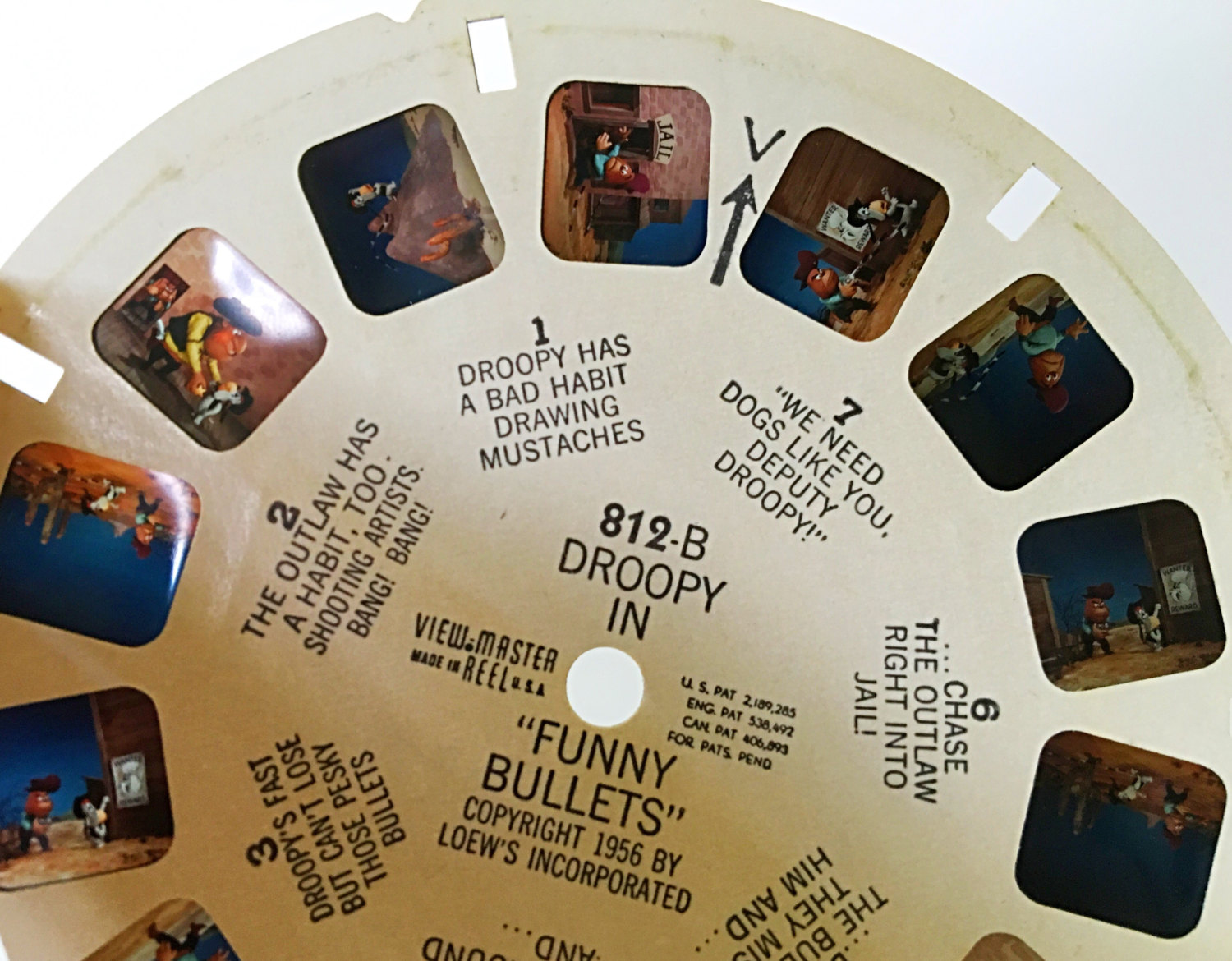
In a letter dated April 1, 1954, Edwin Eugene Mayer explained how he progressed from his early career as a pharmacist in Portland, Oregon, to head of the nation’s largest producer of photographic postcards. Somewhere along the way, Mayer had a eureka moment: updating the old-fashioned 3-D stereoscope. The result, introduced at the 1939 World’s Fair, was the View-Master (although Mayer disliked the name; he thought it sounded like some kind of kitchen appliance).

It must have been cumbersome at first, loading all those tiny people and objects into the viewer, sending the viewer back to the factory to be reloaded with new little people and objects once you got tired of the first bunch. But clever Mayer came up with a fix. Instead of loading actual little people and objects into the viewer, he developed a reel with pictures using the fancy new Kodachrome 16 mm film that had become available. The reel had seven pairs of transparencies, fooling the person looking into the viewer that he or she is seeing 3-D. The original reels were mainly scenic, but through the years, content expanded into adaptations of cartoons, movies and television. Since View-Masters introduction, there have been 25 different viewer models. The reels and the internal mechanisms have remain unchanged so that any of the more than a billion reels that have been produced will work in any viewer.

View-Master has been inducted into the National Toy Hall of Fame.

Still More 3-D

Somewhere between the stereoscope and the View-Master, another inventor was beguiled by the wonders of 3-D.  Mervin Ipod spent several years in an attempt to develop a working 3-D radio.  Unfortunately those years were spent in vain, although Mervin Ipod did go on to a bit more success with the invention that bears his name — the Mervinator.

MARCH 31, 1918: IT’S NOT NICE TO FOOL FATHER TIME

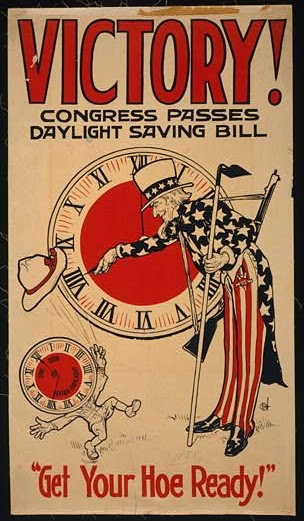
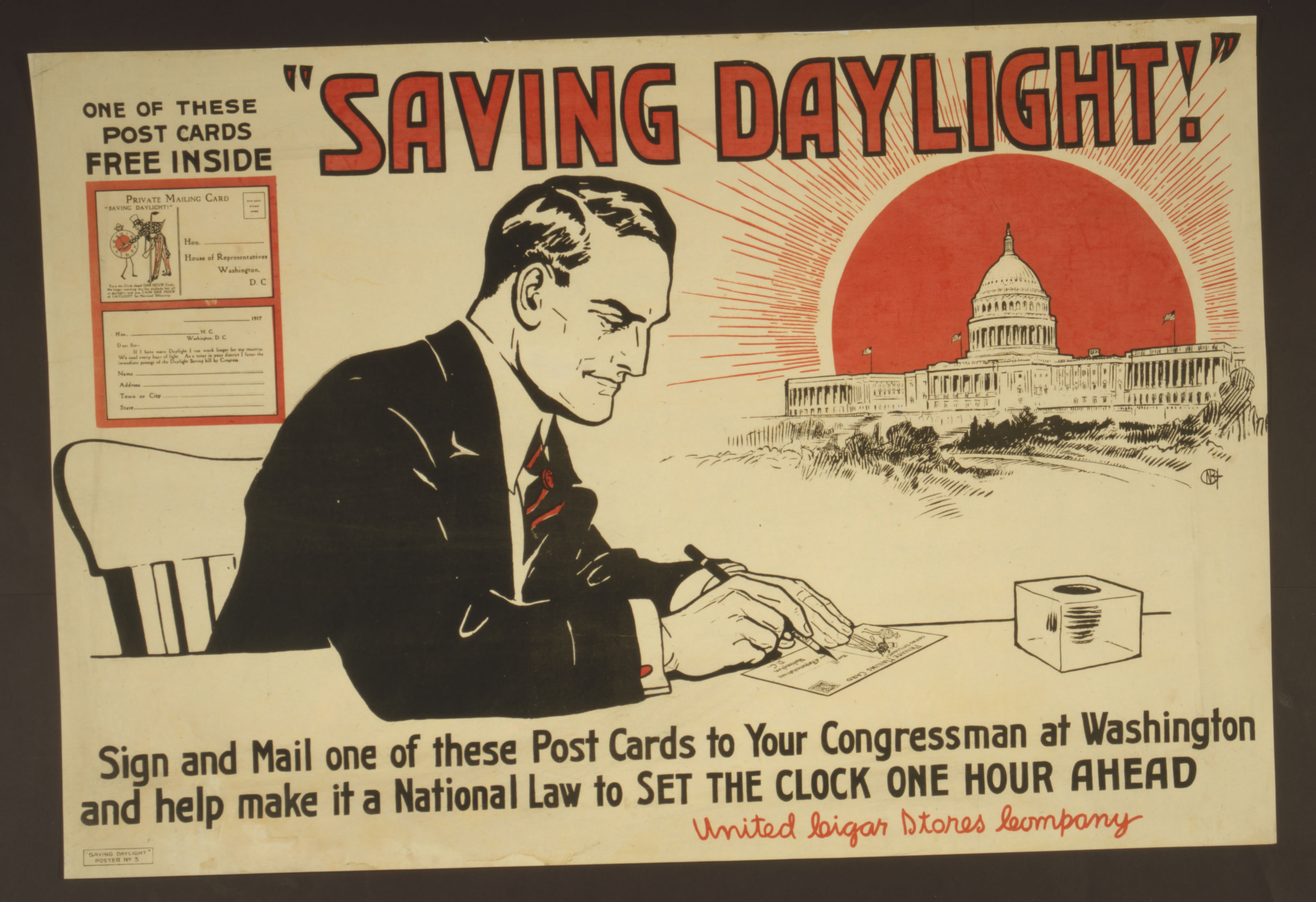
We’ve been enjoying the benefits of daylight saving time for a couple of weeks now – something most of us have always known. But it wasn’t always so. We saved no daylight before March 31 in 1918, when daylight saving time went into effect in the United States for the first time. It was abandoned after World War I and had an off an on again existence for the next half-century.

Strangely enough, the concept was fairly controversial. In a government hearing on daylight saving time back in the late 40s, Senators brought up several unusual points.

The Senator from Louisiana wondered what effect the change would have on his milk supply since “the flow of milk is not governed by any act of Congress.” The Senator from Rhode Island answered: “I am not an authority on milk – I use it once in a while – but I am sure there will not be any trouble with the delivery of milk to the Senator’s door merely because of the variation of one hour in time.”

But the Senator from Louisiana was just getting started: “Daylight savings time or no daylight savings time, the birds are going to their nests according to standard time, and the squirrels will go to their rest in the same way; and the cows will want to go to the barns and get their food at that time, and they are entitled to do so. But the Senate bids the sun and the moon to stand still – why? To accommodate some of these ambitious people who like to get to work early and like to get away from work early and get out in the sun and play golf, and, after a few rounds of golf, retire for proper refreshments.

“Even love would be affected. A boy calls a young lady up and . . . they make a date for the evening and fix an hour. She has standard time and he has daylight savings time and they do not get together at all. It merely makes for confusion all around.”

Nevertheless, fifty-six senators voted for the daylight saving time bill. Calculations indicate that since that time we’ve saved 8,402 hours of daylight per person.


MARCH 30, 1858: PENCIL ME IN

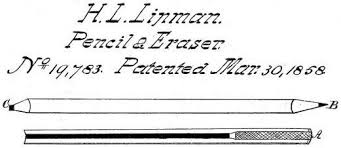
Our story begins in Philadelphia where Hymen J. Lipman in the mid-19th century became one of the city’s leading stationers and founded the first ever envelope company in the United States. Lipman didn’t just content himself with envelopes. His vision took him to pencils as well. And on March 30, 1858, the forward-looking Lipman earned himself a patent for a pencil with an eraser built right into one end of it. This was a giant step for the pencil industry.

Enter Joseph Reckendorfer. Reckendorfer looked at Lipman’s pencil and saw dollar signs. He also saw himself as a titan of the pencil industry. He would be to pencils what Rockefeller was to oil, what Vanderbilt was to railroads. He bought the pencil patent from Lipman for $100,000 (the equivalent of a couple million today).

But alas it wasn’t to be. Pencil manufacturer A. W. Faber began producing eraser-tipped pencils without paying a penny in royalties to Reckendorfer. Reckendorfer sued Faber.  In 1875, the lawsuit made its way to the Supreme Court which declared the patent invalid, reasoning that Lipman’s design combined a known technology, the pencil, with another known technology, the eraser, not creating a new use which was bad news for Reckendorfer.


On the corner of Sodom and Gomorrah

The town of Zion, Illinois, banned all jazz performances on this musicless day, labeling them sinful, right up there with tobacco and alcohol and sexting as things its citizens could well do jazzwithout. The very name was thought (correctly) to have a sexual connotation. The decadent rhythms and wild dancing it elicited were feared (correctly) to be leading young people down the road to sexual abandon, degeneracy, and bad manners. “Oh, you got trouble right here in Zion city.”

Zion is far removed from New Orleans and its bordellos, a place synonymous with jazz and sin. The city was founded in 1901 by John Alexander Dowie as a place where people of faith could come together and live in a moral environment. The population was 24,413 as of the 2010 census. Zion is one of only a few cities in the world to have been completely planned out before building. And Dowie thought of just about everything. The north-south roads in the original plan are all named from the Bible –Ezekiel Place; Gabriel, Galilee, and Gideon Avenues; Matthew, Mark, and Luke, but no John. And no Duke Ellington Circle or Thelonious Monk Boulevard.

March 29, 1876: After the Snark

Lewis Carroll,  aka Charles Lutwidge Dodson, was known primarily for his books Alice’s Adventures in Wonderland and Through the Looking Glass. He did write several other books including A Tangled Tale, Sylvie and Bruno and one of his last works, The Hunting of the Snark, which was published on March 29, 1876.

The Hunting of the Snark (An Agony in 8 Fits) is classic Lewis Carroll nonsense verse in which a crew of ten characters – a Bellman, a Boots, a Bonnet-maker, a Barrister, a Broker, a Billiard-marker, a Banker, a Butcher, a Baker, and a Beaver – set out to hunt the Snark, an animal which may turn out to be a highly dangerous Boojum.

After crossing the sea guided by the Bellman’s map of the Ocean—a blank sheet of paper—the hunting party arrives in a strange land. There its members split up to hunt the Snark: “They sought it with thimbles, they sought it with care; / They pursued it with forks and hope; / They threatened its life with a railway-share; / They charmed it with smiles and soap.” Several odd adventures later, the Baker calls out that he has found a Snark, but when the others arrive, the Baker has mysteriously disappeared.

They hunted till darkness came on, but they found

Not a button, or feather, or mark,

By which they could tell that they stood on the ground

Where the Baker had met with the Snark.

In the midst of the word he was trying to say,

In the midst of his laughter and glee,

He had softly and suddenly vanished away –

For the Snark was a Boojum, you see.

Carroll’s poem has been variously interpreted as an allegory for tuberculosis, a mockery of a notorious Victorian court case, a satire of the controversies between religion and science, the repression of Carroll’s sexuality, and an anti-vivisection tract. Or perhaps it represents a “voyage of life,” “a tragedy of frustration and bafflement,” or “Carroll’s comic rendition of his fears of disorder and chaos, with the comedy serving as a psychological defense against the devastating idea of personal annihilation.” Right.

Dash It All

This day in 1990 marked the beginning of the Hyphen War in Czechoslovakia. Although the USSR had fallen a year earlier, the official name of the country was still the Czechoslovak Socialist Republic. President Václav Havel proposed merely dropping the word Socialist from the name, but Slovak politicians wanted another change – the spelling of the name with a hyphen (i.e., Republic or Federation of Czecho-Slovakia ), as it was spelled from Czechoslovak independence in 1918 until 1920, and again in 1938 and 1939. President Havel agreed to the change, but the Czechoslovak parliament in typical political fashion resolved that the country’s long name was to be spelled without a hyphen in Czech and with a hyphen in Slovak.

This solution was found to be not only dumb but unsatisfactory, and less than a month later, the parliament reversed itself. Problem not solved. Although the Slovaks were demanding a hyphen, the Czechs called it a dash. The Czechs usually use the same term for both; Slovaks use different terms. Thus the Hyphen War began. Oddly enough, the Czechs did not call it the Dash War.

While the Hyphen War was not really a hot war (nor a cold war), it demonstrated differences between Czechs and Slovaks about their identity, that perhaps they really weren’t meant for each other. The slippery slope: the frequent bickering over minor issues, the trial separation, and in 1992, both sides said yes to splitsville. The country was split into two states – the Czech Republic and Slovakia – in what is called the Velvet Divorce (or for some, the Vel-vet Divorce).


MARCH 28, 1910: M-O-U-S-E

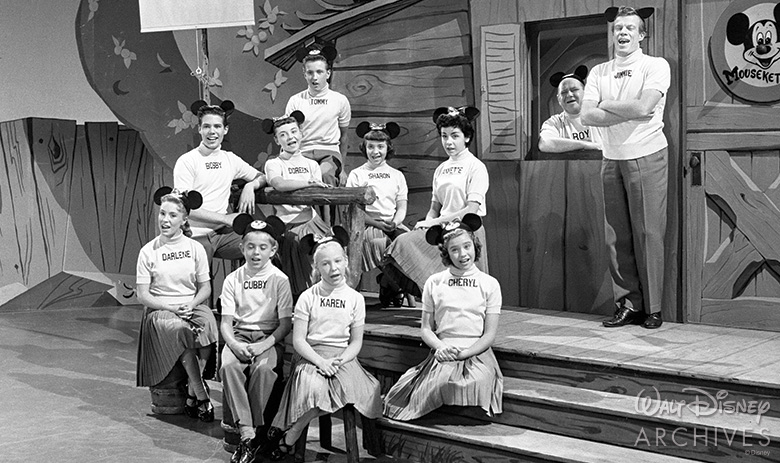
Jimmie Dodd, who was born on March 28, 1910, was an American actor who had small parts in movies during the early 50s. His specialty seemed to be playing taxi drivers (You can check him out in Easter Parade.) His big break came in 1955 when he became the fearless leader of a gang of young teenagers who all performed on TV five times weekly sporting mouse ears.

Dodd was, of course, the head mouseketeer on the Mickey Mouse Club. Dodd also penned the infamous “Mickey Mouse Club March” as well as other songs which he performed on the program accompanying himself on his “mouse-guitar.” It must have been embarrassing enough for teenagers, wearing those mouse ears, but for a guy in his forties — well, chances are he drank heavily.

Kingdoms Can Be Magic or They Can Be Wild

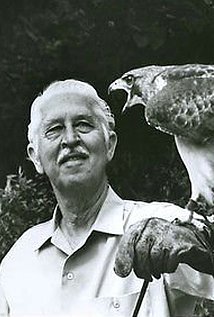
Herding teenagers in mouse ears is one thing, but being chased by wild animals week after week was quite another. It was, however bread and butter for Marlin Perkins, born on this date in 1905. For 35 years beginning in 1950, Perkins was insulted, chased, bitten and stung, first on Zoo Parade and then on Wild Kingdom. Perkins eventually got smart and let his sidekick Jim Fowler interact with the animals while he narrated from a safe distance.

The Maine and Spain

On March 28, 1898, the United States Naval Court of Inquiry found that the American battleship Maine, which had been blown up in February while on an observation visit, was destroyed by a submerged mine.

William Randolph Hearst had already decided the Spanish were to blame and meant to do something about it. He ran a series of articles pushing for war with Spain. Headlines proclaimed “Spanish Treachery!” and “Destruction of the War Ship Maine Was the Work of an Enemy!” Hearst’s New York Journal offered a $50,000 award for the “detection of the Perpetrator of the Maine Outrage.”

Several months earlier, Hearst had sent Western artist Frederick Remington to get sketches of the brave Cuban insurgents fighting for independence. When Remington sent a report stating that everything was quiet — rum, conch fritters and siestas — that there would be no war, Hearst famously responded. “Please remain. You furnish the pictures and I will furnish the war.”

His hyperbolic and breathless accounts of “atrocities” committed by the Spanish in Cuba and his leading role in inciting the war, earned Hearst the nickname Father of Yellow Journalism (a title not really up there with  Father of Quantum Physics or Father of  the Bride), yellow journalism being the presentation of news of questionable legitimacy using exaggeration, sensationalism and eye-catching headlines to sell more newspapers.  Unless it’s true — then it’s called fake news.

The Nays of Texas

On March 28, 1845, Mexico had a diplomatic temper tantrum over the territory of Texas and broke off relations with the United States. (Either both countries wanted Texas or neither country wanted Texas.)  Said the Mexican president: “We’re going to build a big, beautiful wall, and the United States is going to pay for it.”

Wretched Richard’s Little Literary Lessons — No. 5

rep·ar·tee

ˌrepərˈtē,ˌrepˌärˈtē,ˌrepˌärˈtā/

noun

Conversation or speech characterized by quick, witty comments or replies; amusing and usually light sparring with words

For example:

“So here we are,” said Huey. “stuck on Gilligan’s Island – Chickenshit Crusoe and his faithless companion, Good Friday.”

“I was a Boy Scout for two weeks,” Paul offered.

“What a relief. And to think I was starting to get worried. But you obviously know how to start a fire without matches, forage for food, and carve a comfortable existence out of the cruel jungle.”

“Well I did learn how to tie a square knot.”

“Well there you are. You little rascals are always prepared, aren’t you? And kind and reverent and true and God-fearing and above all helpful. If we only had a little old lady, you could help her back and forth across the beach.”

“Are you through?”

“Probably not.” She sat down next to him.

“Since we may be spending the rest of our lives together, we should probably learn to be cordial.”

“Sure, I know your type, Crusoe,” said Huey. “First you get a girl stranded on an island. Then you want to be cordial. And then – ”

And then?

MARCH 27, 1860: Put a Cork in it

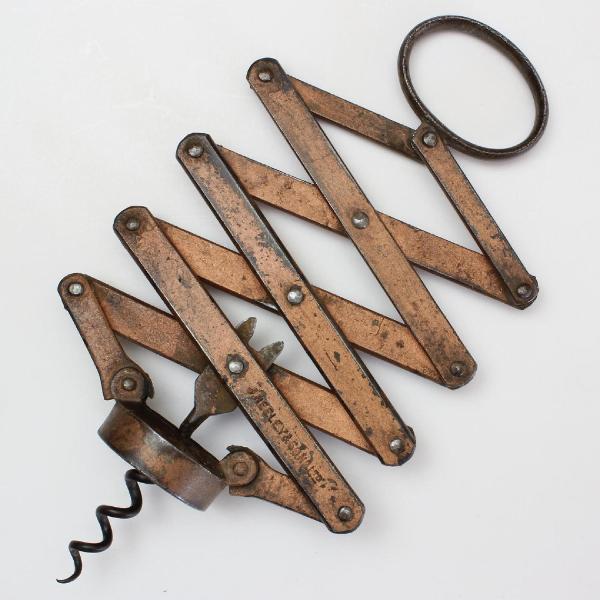
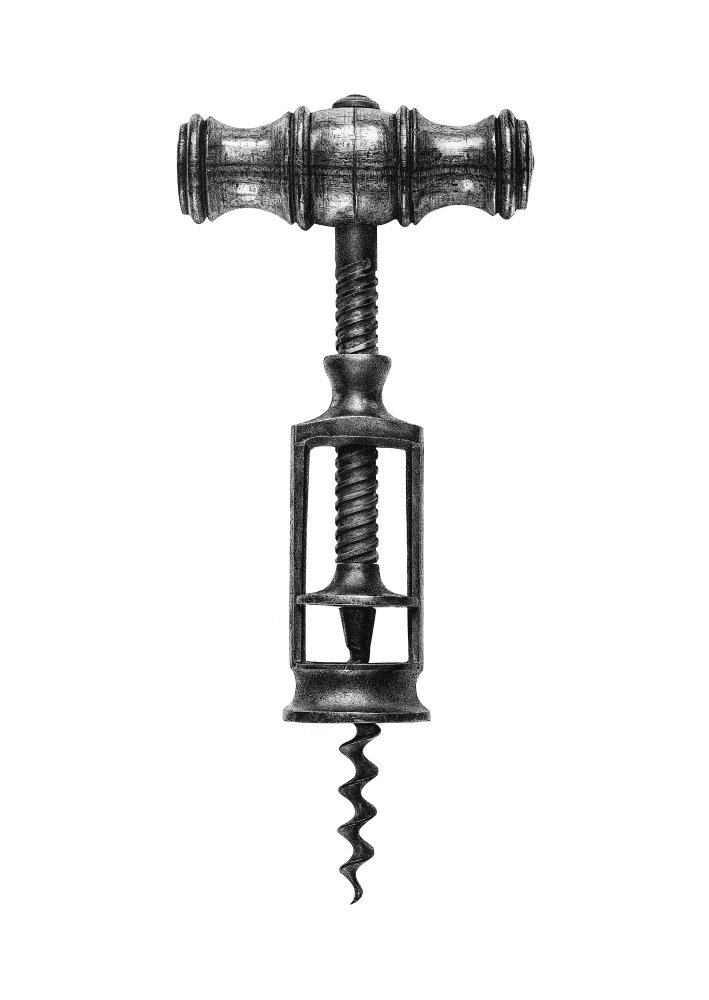
Back through the centuries wine lovers never aged their wines; they consumed it quickly before it went bad.  Then in the 18th century, British glassblowers began to make bottles with narrow necks for wine that made airtight storage possible. Corks were used to seal the bottles. This quickly led to the invention of one of the dandiest little gizmos ever devised — the corkscrew. The design was based on a similar device used to clean muskets. The first corkscrews were T-shaped devices that twisted into the cork and after a certain amount of pulling extracted the cork. Corkscrews were first patented in England and France, then on March 27, 1860, M. L. Byrn of New York City received an American patent.

Since then, hundreds of corkscrews have been designed of every shape, size and mechanics you can imagine — single-lever, double-winged, air pump, electric, mounted. Naturally there are corkscrew books, corkscrew clubs, and corkscrew collectors, helixophiles.

I LEFT MY HEART AND A BUNCH OF QUARTERS . . .

The bane of drivers everywhere, the toll-taker, notably went missing from from San Francisco’s Golden Gate Bridge on March 27, 2013.  Not the tolls themselves,  just those golden gatehuman beings who had previously greeted motorists with smiling faces on and official hands out.  On that morning, officials  threw the switch on a new electronic system of collecting tolls. This was the future; this was progress.

Empty toll booths were joined by a new 27-foot LED sign instructing motorists to keep on moving as the Golden Gate Bridge became the only span in California and one of the few in the world to convert to all-electronic tolls.

Now motorists go online to register license plates and credit card information with the bridge district and pay tolls as they are incurred. Those who don’t have online accounts have about 48 hours after they cross the bridge to pay the toll at one of the payment kiosks located along thoroughfares leading to and from the Golden Gate. Those who don’t pay up receive invoices, because Big Brother knows who they are.

The bridge has been a San Francisco icon since it was opened in 1937. Before that the only practical short route between San Francisco and what is now Marin County was by a half-hour boat trip across San Francisco Bay. During the bridge-opening celebration, before vehicle traffic was allowed, 200,000 people crossed the bridge on foot and roller skate.

In addition to being a major tourist attraction, the bridge is the world’s most popular suicide spot. An official suicide count is kept, sorted according to which of the bridge’s 128 lampposts the jumper was nearest when he or she jumped. (Lamppost #19 is particularly recommended.)  Today,  the suicide count was just a couple of goodbye cruel worlds shy of 2,000.  Formed several decades ago, The Golden Gate Leapers Association, is a sports pool  in which bets are placed on which day the next jump will occur.

A few years ago, savvy officials came up with a plan to thwart would-be jumpers: a “suicide deterrent” net spanning both sides of the bridge that will capture them like hapless butterflies.  The net will have cost $200 million by the time it is completed in 2023.  Most likely there will be a toll collected from those butterflies to help pay for it.

MARCH 26, 47 BC: WITH A LITTLE BIT OF LUCK

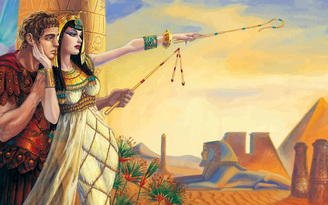
Ptolemy XIII was Pharaoh of Egypt from 51 to 47 BC (remember we’re counting backwards here), his reign pretty much demonstrating the bad luck associated with the number thirteen (in fact he could have been nicknamed Ptolemy the Unlucky or Friday the XIII).

Ptolemy XIII succeeded his father Ptolemy XII, becoming co-ruler by marrying Cleopatra who was his older sister at the time. She was Cleopatra VII, but she was the Cleopatra we all know about — the one of Antony and Caesar and the asp and all that. Since XIII was only 11 at the time, he had a regent — and should you be thinking about the regent’s duties vis-à-vis Cleopatra, we’ll point out that the regent’s name was Pothinus the Eunuch.

Still with us?

Cleopatra, it turns out, was a bit of a grandstander, strutting about as Queen, putting her image on coins, and generally hogging the Egyptian spotlight. Thus in 48 BC, XIII and his eunuch tried to depose her, but she ran off to Syria and raised herself an army.

Enter Roman general Pompey, seeking sanctuary from Julius Caesar.  XIII pretended to welcome Pompey but had him murdered instead.  When Caesar arrived, XIII gave him Pompey’s head as a little welcoming gift. Caesar was unimpressed and took Cleopatra as his welcoming gift instead, giving XIII a cold Roman shoulder and killing his eunuch for good measure.

While Caesar and Cleopatra kept busy trysting the night away, XIII in cahoots with another sister (it’s great to be able to toss in another sibling when things are beginning to slow down) tried again to dump Cleopatra.

XIII and his other sister were no match for Caesar and Cleopatra and in the ensuing Battle of the Nile, XIII was forced to flee. Unfortunately, Ptolemy the Unlucky was drowned as he attempted to cross the Nile.