January 31, 1696: Gobsmacked by a Dutch Undertaker

One would not think of undertakers as having particularly fiery dispositions.  Especially Dutch undertakers. They’d probably look at a current corpse  and realize they had it better than that poor bloke.  The most you might expect would be a mild oath such as “Go stick your finger in a dike.”  Thus it comes as a surprise that Dutch undertakers rose up in revolt on January 31, 1696.  On that day, they rioted in the streets 0f Amsterdam.

The cause of their dudgeon was a death tax, a tax on the burial of people, and since the person being buried would not be paying the tax, the undertakers got stiffed.  Not only that, the Amsterdam City Council reduced the number of official undertakers allowed from 300 to 72.  (They also reduced the number of political commentators to 1, but no one seemed to care.) The petulant undertakers stormed right up to the house of the Mayor of Amsterdam.  Someone in the crowd (most likely an undercover government operative) shouted “We’ll huff and we’ll puff and we’ll blow your house down.”  Which they did.  And they carried off the Mayor and tossed him into the Zuider Zee, wooden shoes and all.  Sailors and Dutch Uncles joined the revolt which moved on to the houses of the City Captain, Burgomasters and other city elite who also received their comeuppance.

Then as quickly as it had started, the riot ended.  Some say the undertaker’s hearts grew three sizes that day; others say it was cocktail time.  Nevertheless the Aansprekersoproer (that’s the official title of the event) ended, and shortly afterward the death tax was repealed.


Glasnost on a Sesame Seed Bun

Muscovites lined up on January 31, 1990, to try a most unRussian guilty pleasure. The Soviet Union might be crumbling around them, but that icon of Western decadence was riding high. McDonald’s had come to town.

Those Big Macs, with fries and shakes might cost a day’s wages, but the people of Moscow were eating them up. The notorious golden arches of capitalism were signs that times they were a’changing in the Soviet Union – in fact, within two years the Soviet Union would dissolve. A Soviet journalist saw no great political earthquake but rather an “expression of pragmatism toward food.” Could the Quarter Pounder be the ultimate example of the People’s Food?

Photographer: Andrey Rudakov/Bloomberg via Getty Images

Located in Pushkin Square, this McDonald’s was the world’s largest, boasting 28 cash registers and a seating capacity of 700. Its opening day broke a McDonald’s record with more than 30,000 customers served.

Moscow resident Natalya Kolesknikova told Russian State Television that when out-of-town guests came to visit, she showed them two things, McDonald’s and the McKremlin.

In 2022, there were 850 McDonald’s in Russia. Then Russia invaded Ukraine.  And McDonald’s is pulling out of a market it’s been a part of for 32 years, “de-arching” and selling every one of its restaurants.


January 30, 1798: Was That a Yea or a Nay?

The US House of Representatives, known for its deliberative diligence, lyonduelgood comradeship, and decorous behavior, was not always thus. Take for instance the morning of January 30, 1798. Members had just concluded a vote on the impeachment of a Tennessee senator, and the House had recessed to tally ho the ballots. Members stood about chatting informally, waiting for the results. One member, Representative Matthew Lyon of Vermont was waxing passionate about another bill before the House. During his rant he took to task Connecticut politicians, whom he accused – rather loudly – of hypocrisy and corruption. He also mentioned greed and a few other deadly sins.

Not surprisingly, given the volume of his oratory, he was heard by one of the very men he disparaged, one Representative Roger Griswold of Connecticut. Griswold fumed, then shouted back, dredging up Lyon’s temporary dishonorable discharge from the Continental Army. Lyon either did not hear Griswold’s comment or chose to ignore it. Griswold naturally felt duty-bound to repeat the comment at closer range; he approached Lyon, grabbed his arm, and repeated once more. Lyon, insulted and embarrassed before his peers, responded as any gentleman would – he spit in Griswold’s face. Without a word, Griswold wiped away the spit and exited the chambers. The Committee of Privileges immediately drew up a formal resolution calling for the expulsion of Matthew Lyon for “a violent attack and gross indecency.”

The two men nursed their respective angers until they were bound to boil over again, which they did on the morning of February 15.  Pandemonium, it is fair to say, broke out when, without a word of warning, Representative Griswold stormed across the chambers to where Lyon sat preoccupied with correspondence of some sort. Cursing him as a “scoundrel,” Griswold pounded the Vermont Republican’s head and shoulders with a thick, hickory walking stick. A witness described the attack:

“I was . . . interrupted by the sound of a violent blow. I raised my head, and directly before me stood Mr. Griswold laying on blows with all his might upon Mr. Lyon, who seemed to be in the act of rising out of his seat. Lyon made an attempt to catch his cane, but failed — he pressed towards Griswold and endeavored to close with him, but Griswold fell back and continued his blows on the head, shoulder, and arms of Lyon who, protecting his head and face as well as he could, then turned and made for the fireplace and took up the fire tongs. Griswold dropped his stick and seized the tongs with one hand, and the collar of Lyon by the other, in which position they struggled for an instant when Griswold tripped Lyon and threw him on the floor and gave him one or two blows in the face.”

The combatants were separated, and Lyon retreated to the House water table; but Griswold approached him again, and Lyon lunged forward with the fire tongs and initiated a second brawl. As Representative Jonathan Mason commented, the central legislative body of the United States of America had been reduced to “an assembly of Gladiators.” A lesson, perhaps, for today’s legislators, although the House of Representatives has become a place of cooperation and reasoned debate where no harsh words, let alone blows, are ever exchanged. Although it’s rumored that Marjorie Taylor Greene beats up fellow legislators and takes their lunch money.

With a Hearty Hi Yo Silver

That iconic Robin Hood of the Old West, the Lone Ranger, made his radio debut in 1933  He and his faithful companion Tonto pursued and vanquished black hats for more than 20 years and 3,000 episodes until 1956.  From 1949 to 1957, they hi yo silvered on TV as well.  Who was that masked man whose selfless heroism and defense of the innocent and helpless tamed the West? Well it certainly wasn’t Marjorie Taylor Greene.


January 29, 1845: And You Can Quoth Me on That

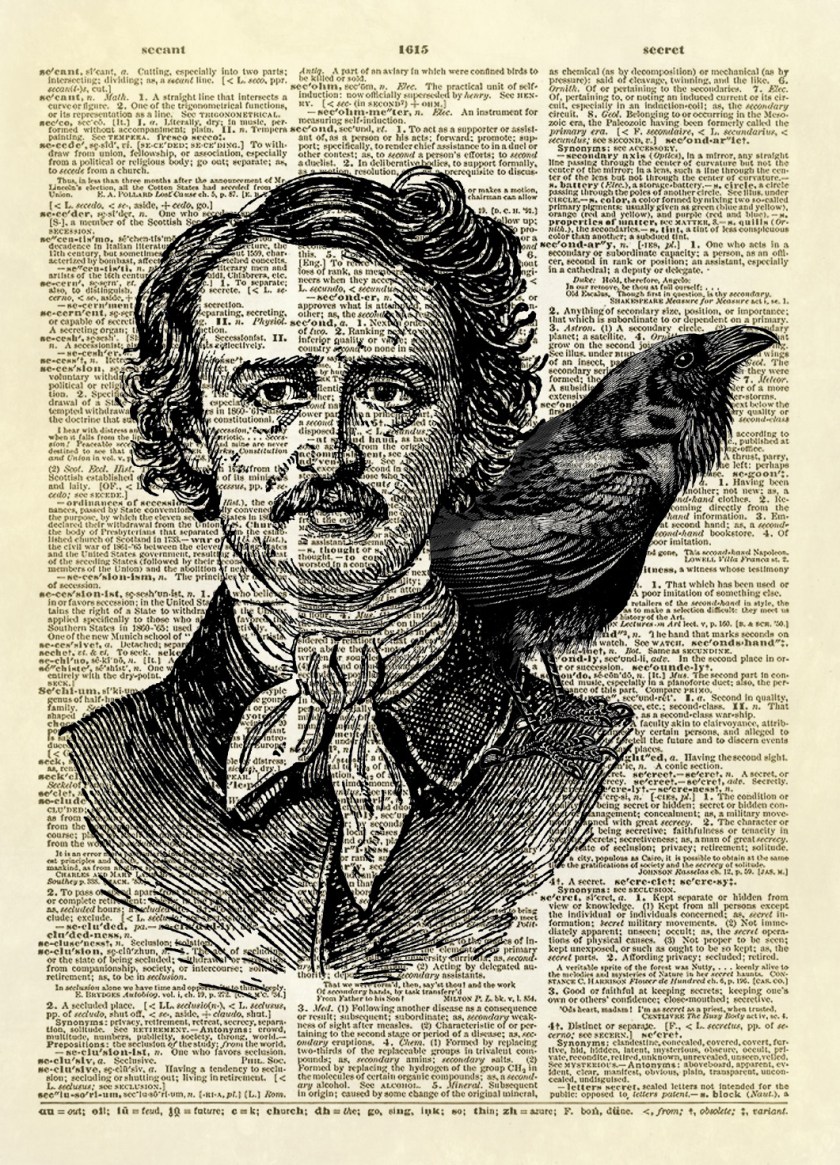
For most of his career during the 1830s and 1840s, Edgar Allan Poe was your typical struggling, hungry writer. His poetry and short stories were often published but rarely paid for. The lack of copyright laws meant that publishers could freely steal the work of British writers rather than pay their American counterparts.

Poe’s life changed dramatically on January 29, 1845, when his atmospheric narrative poem The Raven appeared in the New York Evening Mirror and was attributed to him for the first time. Before you could say “nevermore,” it went viral and Poe became a literary celebrity, although still economically challenged.

The Raven takes place in Poe’s typical Gothic world, full of mystery and the macabre. It traces the descent of a distraught lover into madness. The guy’s pretty broken up over the loss of his love Lenore. He talks this over with a raven, but the raven doesn’t have much empathy or give much sympathy, offering only the heartless refrain “nevermore.”

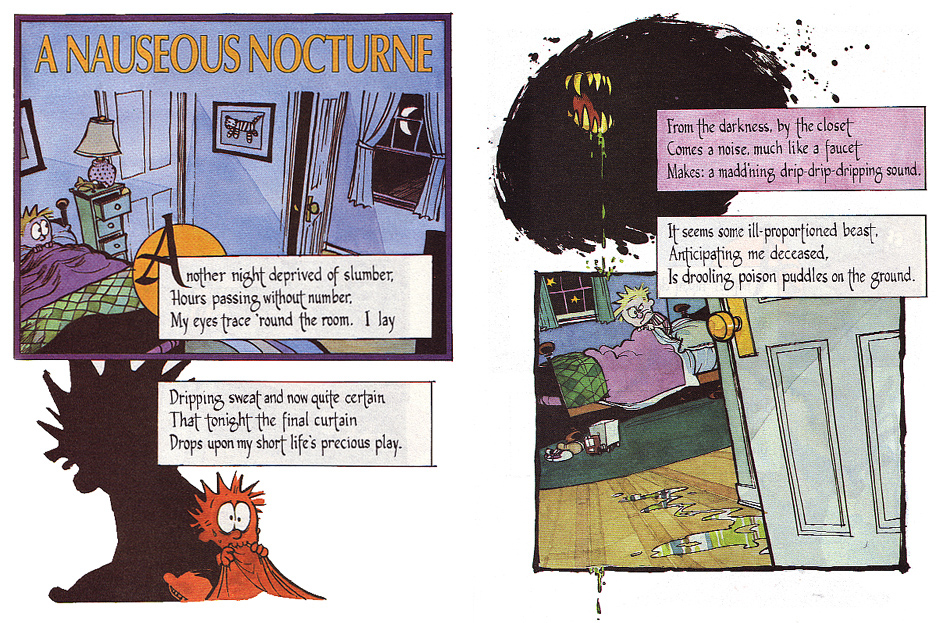
For the poem itself it was evermore, although Poe had just a few year’s left to enjoy its success. Others have enjoyed its success , however, with a steady stream of reprints, analyses, films, parodies, and even comic books.

Once upon a midnight dreary, while I pondered, weak and weary,

Over many a quaint and curious volume of forgotten lore—

While I nodded, nearly napping, suddenly there came a tapping,

As of some one gently rapping, rapping at my chamber door.

“’Tis some visitor,” I muttered, “tapping at my chamber door—

Only this and nothing more.”

Always Carry a Small Snake

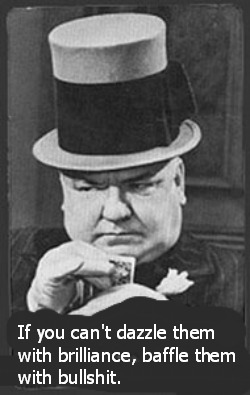
Born on January 28, 1880, as William Claude Dukenfield, W. C. Fields was an iconic American comedian, actor, misanthrope, egotist, drunkard, juggler, and writer who loudly declared his contempt for women, children and small animals. Americans adored him. The publicity departments at Paramount and Universal studios did their best to conceal the fact that he had a happy childhood, had been married, supported two sons, and doted on his grandchildren.

Fields got his start as a juggler in vaudeville and on Broadway. When he found that he could get laughs by adding dialogue to his routines, he developed the mumbling patter and sarcastic asides that became his trademarks. It was in the movies and on radio that he eventually found stardom. A handful of silent films in the 20s led to such classics as You Can’t Cheat an Honest Man, Never Give a Sucker an Even Break, The Bank Dick and My Little Chickadee with Mae West. He also became a popular guest on many radio shows, most notably perhaps Edgar Bergen’s Chase and Sanborn Hour, where he traded barbs with Charlie McCarthy, calling him among other things a woodpecker’s pin-up boy.

Fields always professed to hate Christmas, and to show his disdain for the holiday, he died on Christmas Day in 1946.

I always keep some whiskey handy in case I see a snake. . .which I also keep handy.

Everybody’s got to believe in something. I believe I’ll have another beer.

I never hold a grudge. As soon as I get even with the son-of-a bitch, I forget it.

Reminds me of my safari in Africa. Somebody forgot the corkscrew and for several days we had to live on nothing but food and water.

January 28, 1393: I Don’t Want To Set the World on Fire

A rather unusual celebration took place in France on January 28, 1393 — a masked ball, given by Isabeau of Bavaria, wife of King Charles VI. The ball, which was later given the name Bal Des Ardents or Ball of the Burning Men, celebrated the remarriage of one of the Queen’s ladies-in-waiting. The quaint French custom on such an occasion called for rowdiness and tomfoolery.

At one point during the festivities, six men capered about in costumes portraying wood savages. Their linen outfits were soaked with resin to which flax was attached, making them shaggy from head to toe. They howled like wolves, shouted obscenities, and taunted the audience, inviting them to guess their identities. One of the six men was King Charles himself.

The King’s brother and a drinking buddy arrived late to the party, already drunk. They held torches close to the savages in an attempt to guess their identities — too close, setting the men ablaze. A Duchess, standing near the King, threw her gown over him to protect him. One of the other men jumped into a tub of ale. The other four perished.

Whether or not there was any cause and effect, it was about this time that Charles began to suffer bouts of mental instability, during which he would attack and frequently kill those near him. Modern psychologists, with their advanced knowledge, might refer to the King as mad as a hatter. Charles himself insisted that he was a stable genius and the best king in the history of France.

One of his most celebrated bouts with reality was his belief that he was made of glass and might be easily broken. As a result he allowed no one to touch him and anyone who approached him was required to tread lightly on tiptoe. The windows of the castle remained shut at all times to create an absolutely quiet environment, lest any sudden noise might — well, you know. Modern psychologists refer to this malady as glass delusion or if you break it, you buy it syndrome.

Charles endured his various idiosyncrasies until he was finally shattered in 1422.

Adios Mis Amigos

On January 28, 1948, a DC-3 plane carrying 32 passengers crashed in California’s Diablo Mountain Range, killing everyone aboard. News reports listed only the pilot, first officer and stewardess by name; the others were identified as deportees. The Hispanic victims were buried in a mass grave marked “Mexican Nationals.” At least they were not identified as rapists and murderers and other really bad people.

Woody Guthrie wrote a song about the incident:

His Majesty, the Queen

“I’m sorry you don’t exist,” said Alice, hoping to comfort the Dodo who looked like he might cry at any moment. “But what is a tweetstorm?”

“A tweetstorm is like a shotgun filled with mean words. The Queen uses it to show his great displeasure.”

His displeasure? I don’t understand.”

“Of course you don’t understand,” said the Dodo. “You’re a girl.”

“I resent that.”

“I imagine so. But some people have to be girls.”

“I mean I resent your suggesting that girls are somehow inferior.”

“It wasn’t my idea,” said the Dodo. “The Queen has decreed it so.”

“Why would she . . . ?

“He.”

“Are you saying the Queen is a he?”

“I’m only saying what is so.”

“Why is he a Queen and not a King?”

“Queens are more statuesque, better looking, smarter and more powerful. That’s what he says. And queenliness is next to godliness, after all.”

“And he, the Queen, doesn’t like girls?”

“Well, he does like to grab them,” said the Dodo.

“That’s awful,” said Alice angrily.

“He does have big hands and a big . . .”

“Heart,” interjected the Auk, speaking for the first time. “We try not to notice. It’s easier that way.”

“He says they like it,” said the Dodo. “And who wouldn’t want to be grabbed by someone as important as the Queen?”

“Me, that’s who,” Alice growled.

This conversation was interrupted by the Emu who held up a smart phone and announced: “Incoming tweet.”

They all gathered around and read: “White Knight and his gang of 13 wicked democreeps are DESTROYING our GRATE country. Dumb White Rabbit recused himself. No loyalty. SAD!!”

And another:  Knight is no white knight.  He’s a black night, black black, black. Black Rabbit too. Lyin’ Dodo, Little Auk, Crooked Emoo, Leakin’ Ostrich, Sleepy Devil. All lowlifes who I don’t know! Off with there HEADS!!”

The animals began to sob and lament the unfairness of their situation, giving Alice the perfect opportunity to slip away and continue her exploration.

Stay tuned.

Previously: 

Going Down,  

Caucus Race

January 27, 1874: If It’s Godunov for Boris . . .

Russian composer Modest Mussorgsky (Pictures at an Exhibition, Night on Bald Mountain) wrote only one opera, Boris Godunov, but it is the most recorded Russian opera in history. It takes place during the 16th century era lovingly called the Time of Troubles. Ivan the Terrible has turned up his Tsarist toes. His son, Fyodor I, Too Feeble To Be Terrible, succeeds him but has precious little interest in Tsaring, leaving that to his brother-in-law Boris. Boris soon becomes Tsar in his own right, although his tsardom is contested by a guy named False Dimitriy (with a name like that know he’s got to be ba-a-ad.  All sorts of political intrigue ensues, with murderers, mercenaries, and great pretenders (sort of like our southern border). The opera premiered on January 27, 1874.

A counterpart to Boris Godunov appeared a few centuries later. Boris Badenov, a spy from Pottsylvania, and the self-described world’s greatest no-goodnik. This Boris takes orders from Fearless Leader and Mr. Big. He received a scoundrelship to USC, the University of Safe Cracking, graduating magna cum louse. Most of his nasty deeds and schemes are directed at his nemeses, Rocky and Bullwinkle.

Separated at Birth

Wolfgang Amadeus Mozart, born on January 27, 1756, remains the most enduring and popular of all classical performers. He started in early, becoming a competent musician on both the violin and keyboard, composing and performing, at the age of five. He lived only 35 years but created more than 600 works — symphonies, concertos, operas, chamber and choral music, and quite possibly the Mayberry theme.

Howard McNear was born on January 27, 1905. As an actor, he played a number of diverse roles in over a hundred radio, television and film features, beginning with the role of Doc Adams on radio’s Gunsmoke. As a barber on TV’s Leave It to Beaver, he gave Wally Cleaver his first shave. But it was when he took his tonsorial talents to a little town called Mayberry that he shined. As confused, chatty Floyd the Barber he created the role for which he is remembered. Pretty much forgotten is his role as Shere Khan in the Jungle Book.

And then there’s Sabu. Sabu, you say? Yes, born in 1924, Sabu was a star of stage, screen and jungles everywhere, appearing in such noteworthy films as Cobra Woman, Jungle Hell, White Savage, and Hello Elephant. His most famous role was, of course, Mowgli in the Jungle Book (not the cartoon version).

January 26, 1893: And Doubleday Created Baseball

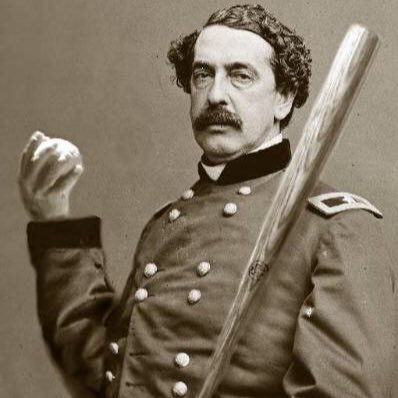
Abner Doubleday fired the first shot in the American Civil War, devised the San Francisco cable car railway, and posthumously invented the game of baseball. That’s our story and we’re sticking to it.

A brouhaha in the late 19th century on the origin of the game of baseball pitted the American faction supporting Doubleday as the true father of baseball against a British faction claiming the concept was stolen from the Brit game of rounders. Baseball fans on both sides got quite worked up. Doubleday was mum on the subject (he had been dead since January 26, 1893).

For the Americans, it was spelled out in a 1905 headline in the Beacon Journal, “Abner Doubleday Invented Base Ball.” Can’t be much more definitive than that. “Fake News,” cried the Brits. In 1908, an American commission declared Abner Doubleday to be the one true inventor of baseball (If the U.S. Post office believes this man to be Santa . . .). Doubleday could not be reached for comment.

Part of the proof offered up as evidence was a letter written by a fellow officer stating that he had seen Doubleday sketch a diagram of a baseball field way back in 1839. The diagram featured four bases and batters who attempted to bat tosses tossed by a tosser standing in a six-foot ring. Base players stood on each base. Who was on first, What was on second, I Don’t Know was on third.

And God Created Woman

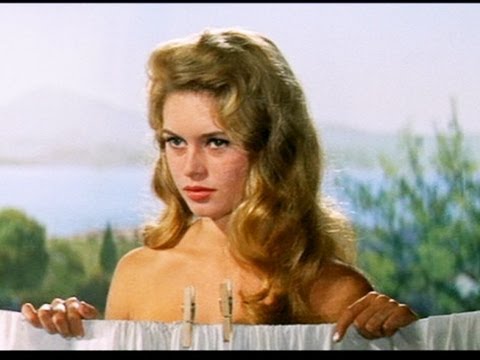
Born on January 26, 1928, Roger Vadim was a French director of lavish erotic films — most notably And God Created Woman, featuring his young bride, Brigitte Bardot, in the nude; Les Liaisons Dangereuses, featuring his young bride, Annette Stroyberg, in the nude; and Barbarella, featuring his young bride, Jane Fonda, in the nude.  All of which explains why we didn’t include a picture of Vadim.

January 25, 1890: I’d Like To Get You on a Slow Boat to China

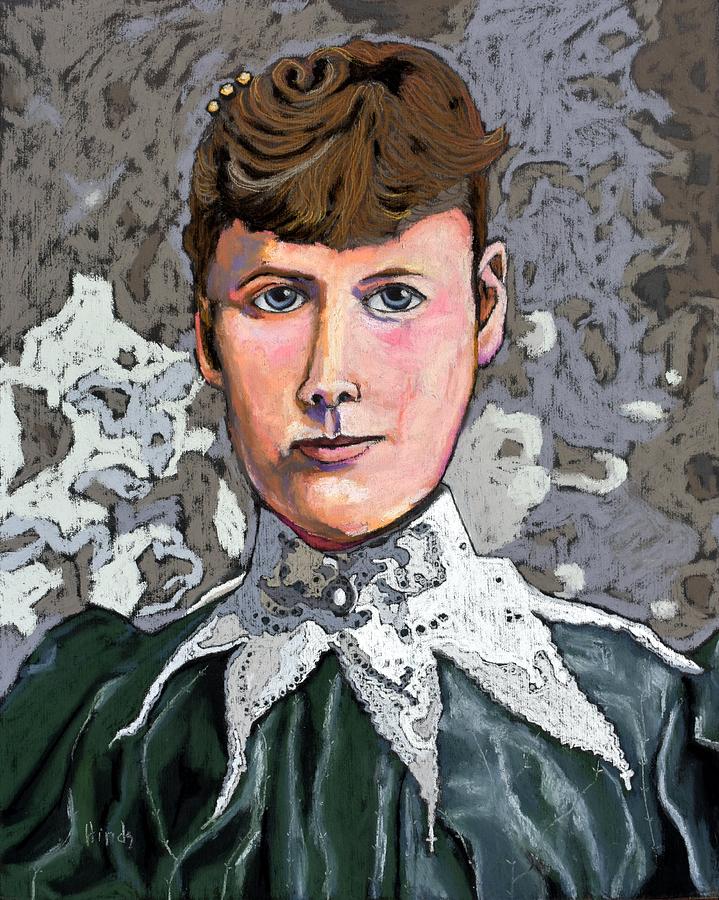
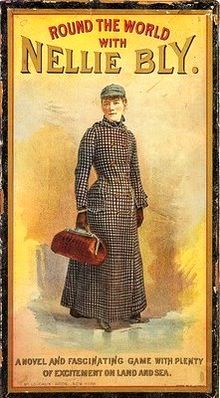
On the morning of November 14, 1889, a reporter for the New York World boarded a steamer and headed across the Atlantic, embarking on a journey of nearly 25,000 miles. Nelly Bly was out to circumnavigate the globe in an attempt to recreate the fictional exploit of Phileas Fogg and perhaps best his time of 80 days.

Nellie Bly was of course a pen-name taken from the Stephen Foster song: blyher real name was Elizabeth Jane Cochran. And calling her an enterprising reporter is like calling the Blob a wad of chewing gum. She had already made a journalistic splash as an investigative reporter by faking insanity and being committed to an asylum. Her expose of the conditions she endured was published as “Ten Days in a Mad-House.” Her career up to this point had been a constant fight against being relegated to stories about fashion, society and gardening, but this expose caused a sensation and pushed her into the limelight and off the so-called women’s pages for good.

For her journey, Nellie brought with her the dress she was wearing, a sturdy overcoat, several changes of underwear, and toiletries, all tucked into a small travel bag. She carried cash and some gold in a bag tied around her neck. She sailed to England, traveled through France, where she met Jules Verne, author of Around the World in 80 Days – then the Suez Canal, Ceylon, Penang, Singapore, Hong Kong, and Japan. She traveled primarily by steamship and railroad, the reliability of which caused many delays and setbacks.

Nellie sent short progress reports back to New York by telegraph and longer reports by slow-moving mail. The World hyped her travels with these reports, along with gimmicks such as a “Nellie Bly Guessing Match” in which readers estimated her exact time of arrival for a chance to win a free trip to Europe.

Seventy-two days, six hours, eleven minutes and fourteen seconds after her departure from Hoboken – on January 25, 1890, at 3:51 p.m. – Nellie Bly was back in New York. Her journey was a world record, although the record lasted only a few months before it was broken by a circumnavigation of 67 days.

In 1895, Nellie Bly married millionaire manufacturer Robert Seaman and retired from journalism, becoming the president of the Iron Clad Manufacturing Co., which made steel containers. She died in 1922 at the age of 57, and was inducted into the National Women’s Hall of Fame in 1998.

January 24, 1940: From This Valley They Say You Are Leaving

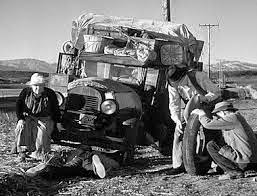
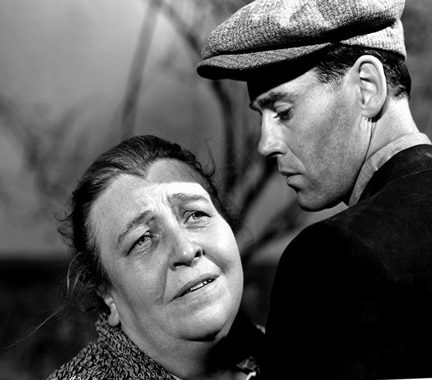
One of the greatest American films of all time, based on one of the greatest American novels of all time, premiered on January 24, 1940. John Ford’s The Grapes of Wrath based on the Pulitzer Prize novel, tells the story of the Joads who lose their Oklahoma farm during the 1930s Depression. They load everything they own into their 1926 Hudson and make a formidable journey across the United States in search of work.

Memorable performances include Henry Fonda as Tom Joad, John Carradine as a preacher who’s “lost the spirit,” and the amazing Jane Darwell in an Oscar-winning portrayal of Ma Joad. It’s her words that conclude the film.

The book was written by John Steinbeck was born and grew up in Salinas, California, a part of the fertile region he would later call the Pastures of Heaven in a collection of short stories and the setting for many of his works. The Nobel-winning novelist was born in 1902.

steinbeckjohnHis first critical and commercial success was Tortilla Flat set in and around Monterey, California, and featuring a small band of ne’er-do-well paisanos living for wine and good times after World War I. The novel was a sort of rogue’s tale, full of rough and earthy humor. From here Steinbeck moved on to more serious portrayals of the economic problems facing the rural working class in the social novels for which he became known — In Dubious Battle in 1936, Of Mice and Men in 1937, and his most important work The Grapes of Wrath in 1939, the saga of America’s migrant workers.

Steinbeck’s California did not take kindly to his portrayal. His books were banned, and in his hometown, twice burned in public protests. In fact, his books were banned in schools and libraries throughout the country and continued to be well into this century. Steinbeck was one of the ten most banned authors from 1990 to 2004 (according to the American Library Association). The Grapes of Wrath and Of Mice and Men are both in the top ten banned books of all time.  They’re most likely being ripped from Florida bookshelves as we speak.  Along with Mickey Mouse

Later novels include Cannery Row, East of Eden, Travels with Charley,  and The Winter of Our Discontent. Steinbeck died in 1968.


January 23, 1919: Nothing in Moderation

He got his first job in television by showing up for an audition wearing apercydovetonsils barrel and shorts. From there his career took off during a ten-year period that carried him from obscurity to stardom, the ride getting steadily wilder and crazier. Although someone else held the title Mr. Television, Ernie Kovacs, born on January 23, 1919, certainly left his imprint on the medium, influencing such shows to come as Saturday Night Live, Sesame Street, Laugh-In, Captain Kangaroo, and the Today Show.

Often referred to as television’s surrealist, the cigar-smoking, poker-playing Hungarian-American comedian could be counted on for the unusual if not the bizarre in any of his many television outings.

One of his first shows, Three to Get Ready, was the first regularly scheduled early morning (7 a.m.) show in a major market, proving that people would watch TV at this unlikely hour. Although the program was billed as news and weather, Kovacs presented it in his own style. If rain was in the weather forecast, Kovacs would get on a ladder and pour water down on the person reading the report. He auditioned goats for a local theater performance, visited a downtown Philadelphia restaurant in a gorilla suit, wrestled a jaguar, and discovered a man who had come through the earth from China to emerge from a construction pit. The program ran for two years before being preempted by a network early morning offering, The Today Show.

Other shows included It’s Time for Ernie, his first network series; Ernie in Kovacsland, a summer replacement for Kukla, Fran and Ollie; and The Ernie Kovacs Show, featuring characters such as poet Percy Dovetonsils, bumbling magician Matzoh Heppelwhite, Frenchman Pierre Ragout, and the Nairobi Trio. He also hosted the Tonight Show twice a week and had a short stint as a celebrity panelist on What’s My Line?, where he strove more for humor than insight. (When Henry J. Kaiser, the founder of the automobile company, was the program’s mystery guest, and the panel had established that the mystery guest’s name was synonymous with an automobile brand, Kovacs asked, “Are you – and this is just a wild guess – but are you Abraham Lincoln?”

A movie career followed his move to California in 1957 with character roles in such films as Operation Mad Ball; Bell, Book and Candle; Wake Me When It’s Over; Sail a Crooked Ship; and Our Man in Havana.

Kovacs was at the peak of his career when he was killed in a late-night automobile accident on his way home from one of the many parties that had become part of his life in California. The inscription on his tombstone reads “Ernie Kovacs 1919 – 1962 — Nothing In Moderation.”


Ale, Ale, the Taster’s Here

It is noted in a dusty record book in the bowels of Oxford University that on January 23, 1617, a certain John Shurle was appointed to the position of ale taster for the university. Now we have your attention. Where can I get myself such an appointment, you’re thinking. Back in the 1600s in England you could easily have got yourself such an appointment; there were many ale-tasting positions throughout the country. Today not so easy; there are only four ale tasters in all of England.

The position of ale taster (also referred to variously as ale conner, ale kenner or ale founder) has been around for a good 700 years. The incumbent of the office was required to visit breweries on the days of their brewing to examine beer and ale (and bread as well) to make certain they were good and wholesome and fairly priced. Each brewery was to pay for this service with a gallon of strong ale and two gallons of beer.

You would have thought this would be a position folks fought for, but in reality it wasn’t that popular. The taste was not uniformly pleasant; bad batches were frequent. The ale taster was often required to fine brewers for irregularities and was therefore not the most popular person around.

And some ale tasters didn’t actually taste the stuff. They tested it by sitting in a puddle of it and judging its quality by how sticky it was when they stood up.