February 20, 1524: Don’t They Know It’s the End of the World?

Those Peruvians must have thought the world was coming to an end end-of-the-world_2038061cwhen the volcano blew its top in 1600 (February 19). In Europe, they were certain the end was near quite a few years earlier. In fact, in 1524 you couldn’t swing a virgin without hitting a prophet of doom. They all pretty much agreed that 1524 was curtains and that a Noah-like deluge would be responsible, thanks to a conjunction of major planets in Pisces (the water sign) — Mercury, Venus, Mars, Jupiter and Saturn, being the culprits along with the sun.

As far back as 1499, astrologer Johannes Stoeffler had identified the exact day of the giant flood as February 20, 1524. His authority on the matter was such that more than a hundred pamphlets were written and published on his prediction.

George Tannstetter, of the University of Vienna, was one of the few astrologers who disagreed with the other Cassandras. Drawing up his own horoscope, he discovered that he would live well beyond 1524, and therefore the world would keep on turning. He was pretty much dismissed as a village idiot and ignored.

In response to the many dire predictions, worried Europeans set about building boats.  Arks were everywhere. One over-achieving would-be Noah, a German Count von Iggleheim, built himself a three-story ark, no doubt with some grand purpose in mind. When, on February 20, the predicted rain sputtered into a brief, inconsequential shower, the mobs awaiting the deluge grew restless, then piqued, and finally they ran amok, stoning the Count to death in the process. For the Count and a few hundred others killed in the melee, it was the end of the world (just as it was for those Peruvians who thought it would be entertaining to watch the volcano explode).

Stoeffler, who somehow escaped the angry mobs, went back to the drawing board and came up with a new doomsday date in 1528. His perseverance, however, did not set afloat any more arks.

Maybe not the End of the World, But Certainly the End of His Cornfield

For weeks the folks living in a small village 200 miles west of Mexico City had been hearing thunder when there wasn’t a cloud in the sky. Then on the afternoon of February 20, 1943, Dionisio Pulido, a farmer who was tending to his cornfield, heard an unfamiliar hissing sound. There was also an unusual smell, like that of rotten eggs. As he stood there, a lump appeared in the ground nearby. It got steadily bigger, swelling to become a dome some seven feet across and seven feet high. A fine gray dust was rising from a fissure in the dome, and the hissing had become loud and continuous.

The dome continued to grow rapidly. By nightfall it was spewing flames a half a mile high, bursting and falling back toward the ground like a fireworks display. Dionisio and hs family escaped the spewing volcano as it began its 9 years of activity, erupting until 1952. When its temper tantrum was over, it had left a cone 1,391 feet high, destroyed an area of 90 square miles, and completely buried two towns.

The volcano, known as Paricutin, is now dormant, and the area has become a major tourist attraction with hordes of hikers scaling the dome in search of grilled corn.


February 19, 1600: All for the Want of a Virgin

Back in the 16th century, the natives of Arequipa in the Andean mountains of Peru led a simple, uncluttered existence, pounding stuff on rocks, doing folk dances and sacrificing bits of clothing, animals and virgins to the neighborhood volcano, Huaynaputina. The sacrifices kept Supay, the god of death, happy. And it’s always best to keep the god of death happy. But then along came the buttinsky Spanish to colonize South America, and right away they outlawed the practice of sacrifice. Well, we can be certain Supay was not amused. In fact, Father Alonso Ruiz of Arequipa in 1599 predicted an imminent “hit from heaven.”

Sure enough, Huaynaputina began to noisily pass gas.  The local natives scrambled to appease the volcano, preparing virgins, pets, and flowers for sacrifice. Huaynaputina just kept chugging and rumbling and carrying on as though it were about to blow its top, and on February 19, 1600, it did. With a huge fiery explosion, it spewed volcanic ash into the Peruvian sky. Rivers of lava flowed down the mountain. Supay was throwing one mean tantrum. Within 24 hours, Arequipa was covered with a foot of ash, and most everyone around was dead.

Not only did Huaynaputina do a number on Peru, it also affected a good part of the world. In the northern hemisphere, 1601 was the coldest year in six centuries. There was a famine in Russia. In China, the peach trees didn’t bloom. In France, the wine harvest was late.

All for the want of a virgin or two.

These Would Make Great Little Sacrifices

Born back in 1896 with the slogan “The More You Eat The More You Want,” the molasses-flavored, caramel-coated popcorn-peanut combo called Cracker Jack is widely considered to be the first junk food. Oddly enough, this treat that is synonymous with “that old ball game” limped along without prizes inside the box for 16 years. Prizes first appeared on February 19, 1912. These “surprizes” included such valuable items as rings, little plastic geegaws, stickers, trading cards, whistles and tattoos. They spawned the catchphrase “came in a Cracker Jack box” used to disparage an item not deemed of great value. (Not valuable? An early metal horse and wagon from a Cracker Jack box is now worth $300.)

When Frito-Lay gained control of Cracker Jack, trinkets went downhill. Geegaws, trading cards and whistles gave way to paper toys, and in 2016 by digital codes that would “allow families to enjoy their favorite baseball moments through a new one-of-a-kind mobile experience, leveraging digital technology to bring the iconic prize inside to life.” Ho-hum.

53 Cents and a Cracker Jack Prize

When Parcel Post was initiated in 1913, it was especially a boon to folks living in rural areas of the United States. The Pierstorff family lived in one of those rural areas — Grangeville, Idaho. They had been planning to send their daughter, five-year-old Charlotte May to visit her grandmother in Lewiston, Idaho, a 73-mile trip, but found the train fare prohibitive. Fortune smiled on the Pierstorffs. Charlotte May was a little slip of a thing, weighing just 48 pounds; the limit for Parcel Post was 50 pounds.

Yes kids, the Pierstorffs mailed Charlotte May to her grandmother. They didn’t put her in a box or anything like that; they simply attached the 53 cents postage to her coat and dropped her off at the post office on February 19, 1914. She spent the entire trip in the train’s mail compartment.  In Lewiston, the mail clerk delivered her safe and sound to her grandmother’s home. How’s that for service, you Postal Service detractors?

Charlotte May, who lived to be 78, never traveled by mail again. Soon after her trip, postal regulations were changed to prohibit sending a person or persons through the mail.

February 18, 1953: Leaping from a Screen Near You

An exciting new kind of movie opened in New York City on February 18, 1953, and quickly took the entire nation by storm. It promised each and every theater patron the cinematic excitement of a lion in his or her lap. It was the latest attempt by desperate movie studios to pry people away from those insidious television sets that had popped up in living rooms everywhere, to get them back into theaters.  In a frenzy they had tried to beat the little box with Cinerama, Cinemascope and a host of other Deadly Cins.

The new kind of movie was of course 3-D, complete with those funny little glasses (sadly lacking a big nose and mustache), and this first film was called Bwana Devil. Not only did audiences have to sit through a newsreel and a featurette about folk dancing in a remote Himalayan village to get to the good stuff, they also had to endure an opening lecture on just how this modern marvel worked. A very serious scientist in a lab coat delivered this lecture. He described the 3-D process in numbing detail while the antsier members of the audience chewed Necco wafers and stared at him through those special glasses, wondering why he remained flat as a pancake in a lab coat.

Bwana Devil was a jungle flick (in case you wondered), obviously chosen so that it could feature lions and tigers and elephants and giraffes leaping from the screen onto the unsuspecting audience, causing most of the ten-year-olds to pee their pants. “Let’s see your 15 inch, black and white TV do that,” Messieurs Metro, Goldwyn and Mayer snickered.

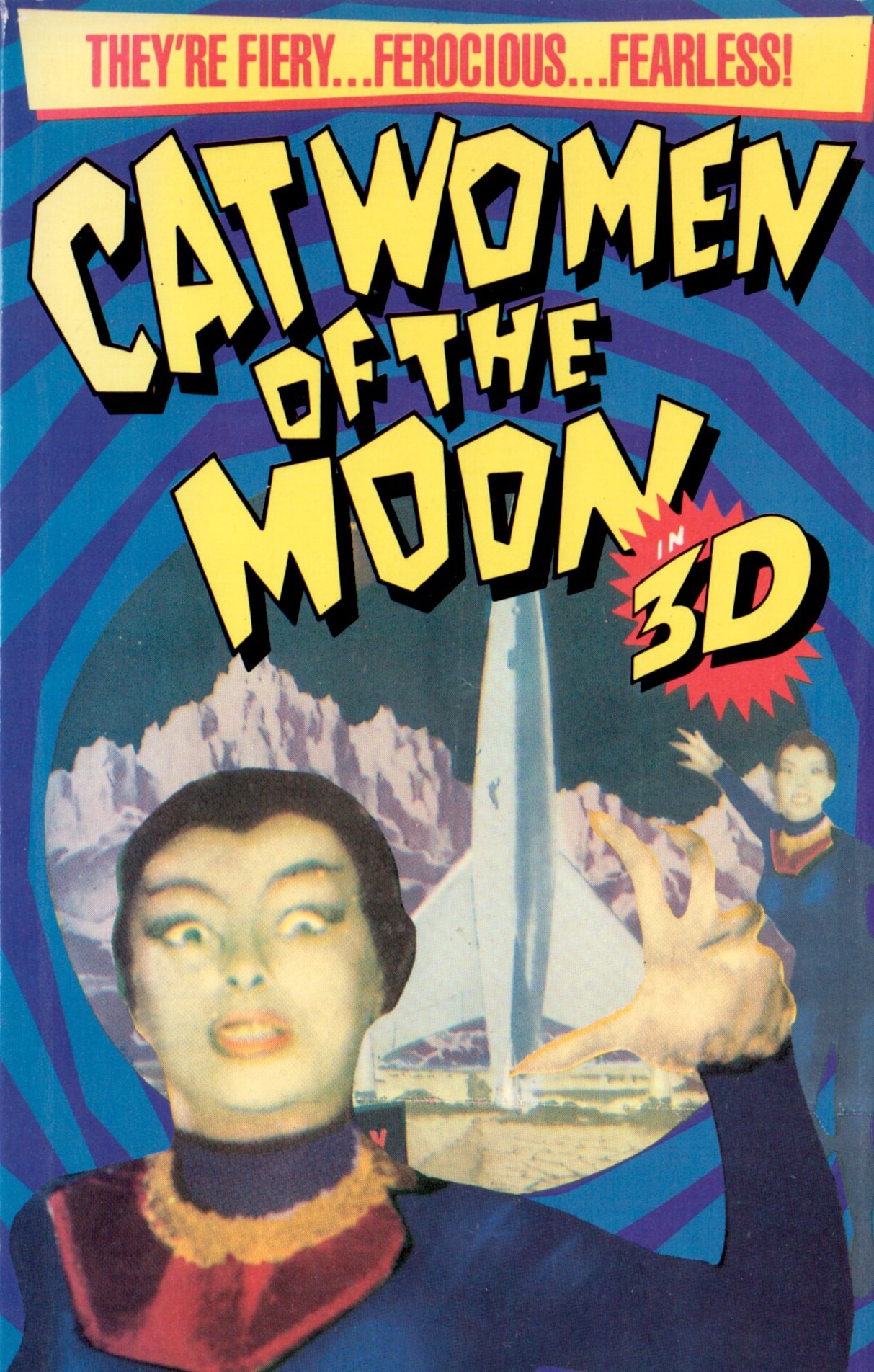
And they continued to do that, with westerns, in which Indians would shoot flaming arrows indiscriminately into the audience – one of them right into the forehead of a kid sitting in the third row. Or creepy horror films in which a mad scientist reached into the audience plucking a comely teenager by the throat, pulling her out of her seat, sucking her into the screen never to be seen again.  And Cat-Women on the Moon — sexy moon maidens in black tights leaping into the aisles and luring ogling men into the lobby for who knows what? Hollywood had struck back.

To experience the sheer terror of 3-D, tape red cellophane over your left eye and blue cellophane over your right eye.  Then look at the picture below and Omigod! Look out for the tiger!.

tiger-large

Naming Rights

Born on this day in 1745, Italian physicist Alessandro Volta, inventor of the electric battery, for whom the volt was named (not to be confused with the Volta Boatman).  There’s also Georg Ohm  and Andre-Marie Ampere, but they weren’t born on February 18.  Ernst Mach was, in 1838.  He was the Austrian physicist who gave his name to a unit of speed.  And way back in 1516, the daughter of Henry VIII,  Mary Tudor, who gave her name to the popular cocktail, the Bloody Tudor.

February 17, 1972: New Kid on the Block

There’s an old tradition among Italian singers: they won’t go on stage unless they see a bent nail.  Don’t ask.  A certain Italian tenor saw a bent nail on February 17, 1972 (one of many planted surreptitiously by stagehands at New York’s Metropolitan Opera House), and it proved to be quite an omen.  Although he had an international reputation, he was the new kid on the block here, making his first appearance in the United States.  The production was Donizetti’s La Fille du Régiment, and Luciano Pavarotti sang the role of the peasant Tonio opposite Joan Sutherland.  He brought down the house with his mastery of the amazing aria “Ah, mes amis” with its nine successive top Cs.  His performance was one for the history books.  At the opera’s conclusion, he received a record 17 curtain calls.

He would go on to do much, much more.  Pavarotti’s 43-year career included 15 Grammy nominations, five wins and two Guinness world records. He would set another record for curtain calls in a 1988 Berlin production of L’elisir d’amore –165 curtain calls, lasting 67 minutes.  His 1990 Three Tenors concert with José Carreras and Plácido Domingo sold 10.5 million albums, the most for a classical recording.

Another Kid, Another Block

Mickey Dugan, a bald, snaggle-toothed kid with a silly grin who always wore an over-sized yellow hand-me-down nightshirt, was right at home in the 19th century New York slum known as Hogan’s Alley, and beginning on February 17, 1895, became right at home in Joseph Pulitzer’s New York World.

In the neighborhood filled with quirky characters that was home to R. F. Outcalt’s comic strip, Mickey, also know as the Yellow Kid was the quirkiest. The Hogan’s Alley comic strip gradually became a full-page Sunday color cartoon with the Kid as its main character. He spoke in a muddled slang that was practically his own language, and everything he said was printed on his nightshirt as though he were a walking billboard.

It may have been a cartoon, but Outcault’s comic strip aimed its humor and social commentary squarely at an adult audience. It has been described as a turn-of-the-century theater of the city, in which a group of mischievous ragamuffins act out the class and racial tensions of the their urban environment.

As the Kid’s popularity  grew, the strip’s presence actually increased paper sales for the World, and led to all sorts of merchandising from dolls to playing cards to cigarettes.  It also earned Outcault the appellation ‘father of the comic strip.’

When You Wish Upon a Book

The Sears & Roebuck catalog may have become the Magilla Gorilla of mail order, but Aaron Montgomery Ward, born on February 17, 1844, beat Mr. Sears and Mr. Roebuck to the punch by 18 years — and there was only one of him. As a young traveling salesman, Ward saw firsthand how rural folk were being poorly served by small town general merchandisers. Couldn’t they have some of the same opportunities to buy lots of stuff as their big city counterparts?  Of course they could, Ward answered, and in 1872, the mail-order catalog was born.

That first catalog was a one-page price list featuring 163 items. By 1874, it had grown to 32 bound pages; by 1895, over 600 pages with thousands of items. Dubbed the Wish Book, it was a magnificent thing, fully illustrated with woodcuts and drawings, hawking anything you could possibly want — tools, jewelry, millinery, musical instruments, furniture, bathtubs and buggies.  Cradle to grave.


February 16, 1923: Beware of the Hippo

This could be the mother of all conspiracy theories. On February 16, 1923, mummy_2in Thebes, Egypt, English archaeologist Howard Carter entered the burial chamber of the Egyptian ruler King Tutankhamen — Tut to his friends and hangers on. As every schoolgirl knows, Tut died and was mummified back in 1324 B.C., give or take a year, while still a teen idol. As every schoolboy knows, anyone foolish enough to enter Tut’s burial chamber would become subject to a pretty nasty curse — involving but not limited to crocodiles, snakes and scorpions.

Tut was the first mummy found in tact and with all his wealth untouched by tomb raiders. And his discovery left scientists scratching their heads. No one knew what had caused the young king’s death. Theories have popped up during the years — genetic disorders, disease, foul play.

An Egyptologist at California State University, Dr. Benson Harer, has come up with a dandy new idea: Tut was done in by an angry hippopotamus. Well, we all know what nasty tempers hippos have. They kill more people each year than lions, gorillas, you-name-it. And ancient Egypt was lousy with hippos — capsizing boats, stomping crops, stampeding through villages, chomping people in half with a single bite.

King Tut loved to hunt hippos, and every schoolgirl knows what dummies hippo hunters can be. We can imagine Tut happening upon a baby hippo: “Isn’t he cute? Let’s get closer. I wonder if his mother’s around somewhere.” Dr. Harer has a lot of scientific stuff that goes along with his theory, but what’s most interesting is the good doctor’s speculation that a coverup took place, with authorities stonewalling and concealing the pharaoh’s death by hippo for political reasons, fearing that the common folk might see Tut as less Trumplike, more Bidenlike — or that the gods always liked hippos best. There you have it, slippery slopers — Hippogate!

When it comes to mummies, they don’t make them like this anymore:

Radio for Dummies

edgarbergenandcharliemccarthyBorn February 16, 1903, Edgar Bergen, along with his cohorts, Charlie McCarthy and Mortimer Snerd, got his start in vaudeville and one-reel movie shorts, but his real success came on radio of all places. The popularity of a ventriloquist on radio, when no one could see the dummies or even whether Bergen’s mouth moved, is a puzzler. But popular they were. Seen at a New York party by Noel Coward, who recommended them for an engagement at the famous Rainbow Room, they were discovered by two producers who booked them for a guest appearance on Rudy Vallee’s radio program. That quickly led to their own show which, under various sponsors, was on the air from 1937 to 1956.  Bergen died in 1978.  Charlie lives on at the Smithsonian.  One might be tempted to think Charlie related to Congressional Republicans because — well, for obvious reasons — but he’s not.

February 15, 1914: Body Snatchers Everywhere

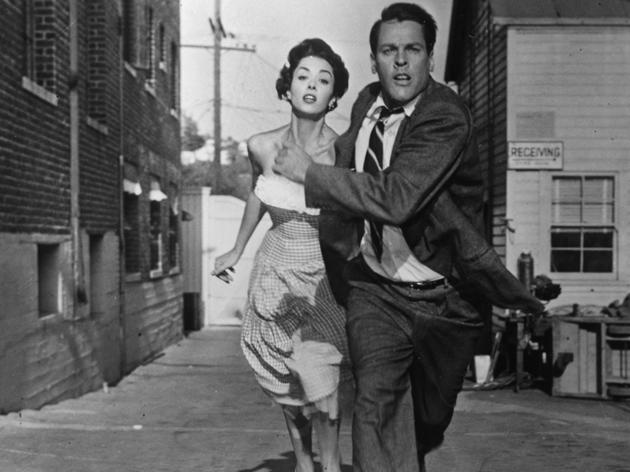
Although he made more than 200 film and television appearances, actor Kevin McCarthy, born February 15, 1914, is forever linked to one film,  Invasion of the Body Snatchers. The 1956 sci-fi horror classic features McCarthy as a small town doctor who discovers an alien invasion in which plant spores from outer space have fallen to Earth where they grow into large pods.

Placed next to sleeping townspeople, the pods replicate their victims assuming their exact physical characteristics, memories and personalities but lacking any human emotion. One by one these pod people take over, leaving only Kevin McCarthy to warn the outside world: “They’re here already! You’re next! You’re next!”

In a 1978 remake of the film, McCarthy makes a cameo appearance playing his original character as an old man still frantically warning passing motorists of the invasion.

McCarthy should not be confused with another Kevin McCarthy the former Republican Minority House Leader and most likely a pod person.

In yet another remake, The Creeping Menace from Mar-a-Lago, the pods attack the US Senate, sidling up to sleeping Republican Senators, sucking away not only their human emotions but their integrity as well. (They skip the House because there’s nothing to suck away.) And there’s no Kevin McCarthy (the actor) to warn them this time, his having died in 2010. But wait, there’s Mitt Romney who has traded in his Etch-a-Sketch for a conscience. For a moment, we think there’s a glimmer of hope for mankind, but then we spot Ted Cruz.

You Too, Fu

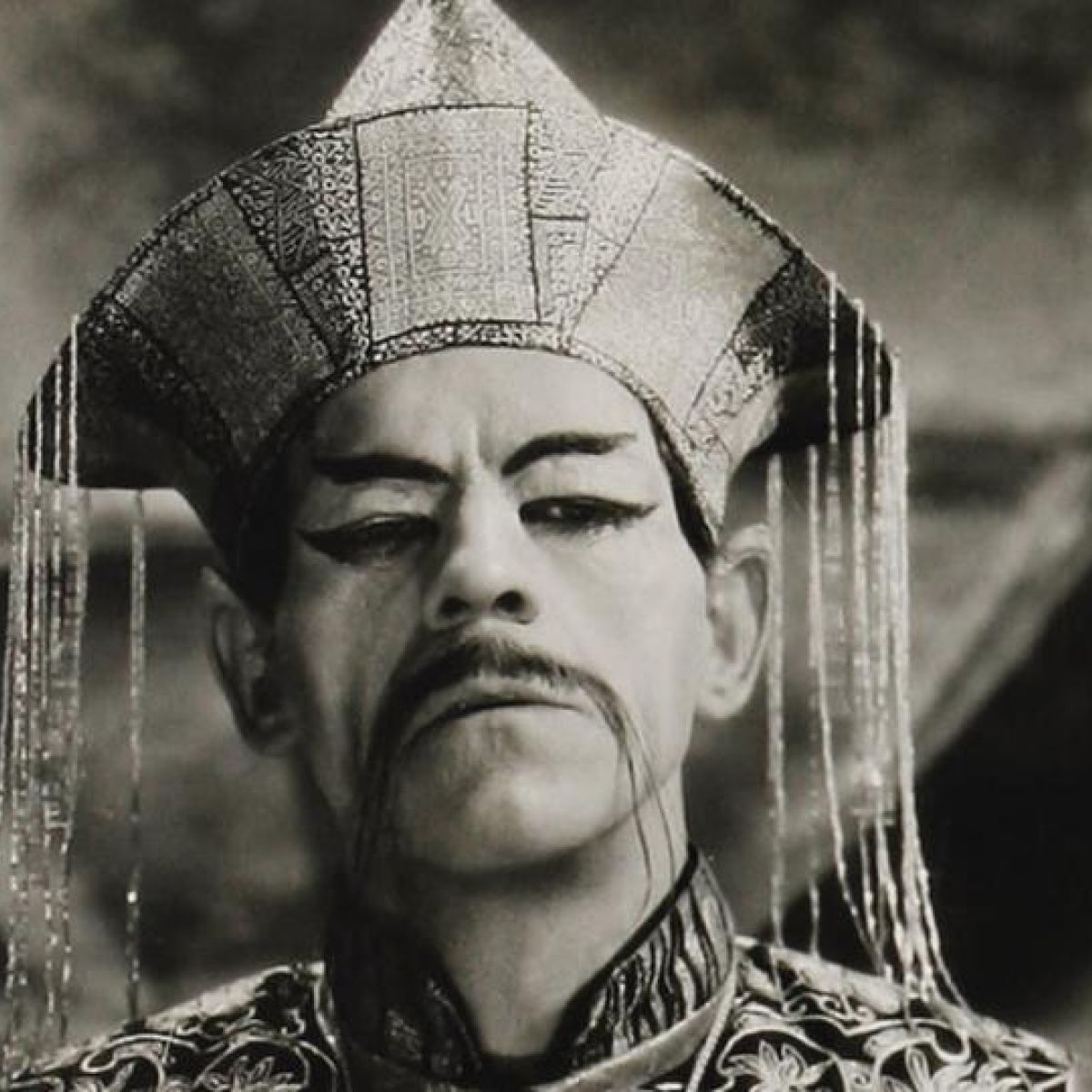
Novelist Sax Rohmer, born on February 15, 1883, is probably not as well-known as his famous villain, the evil genius Fu Manchu (not to be confused with the “stable genius”), “tall, lean, and feline, high-shouldered, with a brow like Shakespeare and a face like Satan, a close-shaven skull, and long, magnetic eyes of the true cat-green.” The 13 fast-paced adventures make lively reading if you can get past the frequent overt racial slurs.  And here we are back at Mar-a-Lago.

February 14, 278: Roses Are Red, Etc., Etc.

How did St. Valentine’s Day become a day associated with hearts and flowers and all things romantic? One account puts a definitely sinister spin on the origin of this holiday. It begins back in the third century with a fellow named Claudius the Cruel. As you might guess, Claudius is not going to be the hero of this tale.

Claudius (II, if you’re counting) was the Emperor of Rome, a barbarian who proved that any young boy can grow up to be emperor if he believes. Valentinus, or Valentine, was not a saint at the time, but he was a holy priest.

Claudius, in addition to his barbarianism and cruelty, was a bit of a warmonger. Continually involved in bloody campaigns to destroy upstart nations throughout the region, Claudius needed to maintain a strong army.  But it was a constant battle to keep his military at full strength what with Christianity gaining a toehold and everyone  into family values. The men for their part were unwilling to be all they could be in the army because of their annoying attachment to wives and families.

Claudius had a fairly simple solution; he banned all marriages and engagements in Rome. Valentine, part of whose livelihood was the performing of marriages, thought this decree unjust and defied the emperor by continuing to marry young lovers on the sly.  Claudius, as emperors will, got wind of Valentine’s doings and, true to his name, ordered that Valentine be put to death. Valentine was arrested and condemned to be beaten about the head, and then have said head cut off. The sentence was carried out on February 14, 278.

Legend has it that while in jail, Valentine left a farewell note for the jailer’s daughter, with whom he had had a brief relationship (that will not be explored here), and signed it “From Your Valentine.”  There may have been other cute little Valentine poems as well,  but they have been lost to history.

For this, Valentine was named a saint and had a holiday created after him, though not a legal one with school closings and such. Conspiracy theorists will naturally jump up and down, saying there were several St. Valentines and the holiday could have been named after any one of them. Or it could have come from the pagan festival Lupercalia, a day of wanton carrying on. They should mind their own business.

February 13, 1862: Thaw Out the Holly

With the giving and getting of gifts growing to a crescendo in late December, it is to many a glass of cold water in the face when the merriment suddenly gives way to a bleak long winter with scarcely a box or a bow in sight. The people of Norwich, a city on England’s east coast, a couple of centuries ago found a way to keep on giving by elevating February 13, St. Valentine’s Eve to a Christmas-like celebration.

According to an 1862 account, this Victorian tradition was evidently peculiar to Norwich: visitors to the city were often puzzled to find the shop windows crammed with gifts in early February and newspapers full of advertisements for ‘Useful and Ornamental Articles Suitable for the Season’ available from local retailers.

As soon as it got dark on St. Valentine’s Eve, the streets were swarming with folks carrying baskets of treasures to be anonymously dropped on doorsteps throughout the city. They’d deposit a gift, bang on the door, and rush away before anyone inside could reach the door. Indoors there were excited shrieks and shouts, flushed faces, sparkling eyes and laughter, a rush to the door, examination of the parcels.

Practical jokers  were everywhere as well, ringing doorbells and running off, leaving mock parcels that were pulled away by string when someone attempted to pick them up. Large parcels that dwindled to nothing as the recipient fought through layer after layer of wrapping, and even larger parcels containing live boys who would jump out, steal a kiss, and run away.

As with most holidays that involve children out after dark and mischief, the celebration of St. Valentine’s Eve fell out of favor, to be replaced by the Hallmark-inspired and saintless Valentine’s Day.

No Valentine, This One

Hal Foster had been drawing the Tarzan comic strip based on the books by Edgar Rice Burroughs for several years, but itched to create his own original strip. He began work on a feature called Derek, Son of Thane, set in Arthurian England. Before the strip had its coming out party on February 13, 1937, it had gone through a couple of name changes, first to Prince Arn and eventually to Prince Valiant.

Prince Valiant was five years old when his story began, a continuous story that has been told through 4,000 Sunday episodes. Without a whole lot of deference to historical accuracy, Val’s adventure’s take him throughout Europe, Africa, the Far East and even the Americas in a time frame covering hundreds of years. He does battle with Huns, Vikings, Sorcerers, witches and a slew of monsters from prehistoric to modern, but always big.

Foster drew the strip until 1971 and wrote the continuity until 1980. Since then, other artists have kept it alive. Foster died in 1982, at age 89.

Fore, I mean duck

Golf is thought of as relatively safe sport.  But for the safety of others, there are just some people who should not be allowed on a golf course.  Vice President Spiro Agnew had the dubious distinction of beaning not just one but three spectators on this day in 1971 during the Bob Hope Desert Classic.  On his very first drive, he sliced into the crowd for a two-bagger, bouncing off a man to nail his wife as well.  On his next shot, he hit a woman, sending her to the hospital.  The previous year, Agnew had managed to hit his partner in the back of the head.


February 12, 1924: Now You Has Jazz

Advertised as an educational event, the “Experiment in Modern Music” drew a capacity crowd to New York City’s Aeolian Hall on the afternoon of February 12, 1924. Noted critics were in attendance as were such luminaries as John Phillip Sousa and Sergei Rachmaninoff.

Organized by the conductor of the Palais Royal Orchestra, Paul Whiteman, the concert was intended to introduce the new form of music called jazz and show audiences that it was a musical form to be reckoned with. True to its billing as educational, most of the concert had consisted of mind-numbing rather than toe-tapping music, two dozen little lessons that began to dissolve into one another as the audience grew antsier and antsier. At last (second to last, actually) a young Broadway composer sat down at the piano to perform a brand new piece written for the occasion.

His composition had been hastily created.  Just over a month earlier, whilegershwin in a Manhattan pool hall, he had read in a newspaper that he was scheduled to perform a jazz concerto at the Whiteman soiree. Painted into the proverbial corner, he set to work. The framework of his concerto came to him on a train journey: “It was on the train, with its steely rhythms, its rattle-ty bang, that is so often so stimulating to a composer – I frequently hear music in the very heart of the noise . . . And there I suddenly heard, and even saw on paper – the complete construction of the Rhapsody, from beginning to end.”

The piece opened with an “outrageous cadenza of the clarinet,” now instantly recognizable, and “Rhapsody in Blue” metamorphosed into a showstopper of American music history. George Gershwin himself would, as a New York Times critic lacking restraint put it, “go far beyond those of his ilk.”

And now you has rock

Forty years later, on February 12, 1964, New York City would again be home to musical history.  This time the venue was Carnegie Hall and the occasion a major skirmish in the British invasion as the Beatles held their first concert in the U.S.  And not everyone thought they would go far beyond those of their ilk:  “Visually they are a nightmare, tight, dandified Edwardian-Beatnik suits and great pudding bowls of hair. Musically they are a near disaster, guitars and drums slamming out a merciless beat that does away with secondary rhythms, harmony and melody.” — Newsweek


FEBRUARY 11, 1847: TOM SWIFT AND HIS ELECTRIC THINGUMAJIG

With over a thousand inventions, many of which have touched the lives of nearly everyone in the world, Thomas Alva Edison is considered by many to be the greatest inventor of the modern era. But it wasn’t always thus. Al, as he was known, was a lousy student whose mother finally decided to home-school him. Edison’s first job was operating a newsstand on a train that ran from Port Huron to Detroit. To make the trips more interesting, he put together a chemistry lab in a boxcar (On the Atchison, Topeka and the Kaboom!). Then working as a telegraph operator, he continued to do scientific experiments in his free time. In 1869, he decided to devote himself full time to inventing.

     His first invention was patented that same year on June 1, a voting machine for use by legislative bodies such as Congress. Having heard that both the Washington, D.C., City Council and the New York State legislature were planning to install electric vote recorders, he stepped up to the plate. Edison’s somewhat Rube-Golbergish system, started with a switch that each legislator could move to either a yes or a no position. The vote would then be transmitted by a signal to a central recorder that listed the names of the legislators in two columns of metal type headed “Yes” and “No.” A recording clerk would then place a sheet of magic paper over the columns of type and move a metallic roller over the paper and type. As an electric current passed through the paper, chemicals in the paper decomposed, leaving the imprint of the name in a manner similar to that of chemical recording automatic telegraphs. Dials on the machine recorded the total number of yeas and nays.

     A fellow telegrapher bought a stake in the invention for $100 and took it to Washington, D.C. to demonstrate it before a Congressional committee. The chairman of the committee less than enthusiastically told him that “if there is any invention on earth that we don’t want down here, that is it.” It seemed legislators liked the slow pace of voting which allowed them to lobby or trade votes or do those other fun legislative things. Edison’s vote recorder was never used.

     Edison persevered, resolving never again to invent something that would not sell. His next invention, an improved stock market tickertape machine, earned him a tidy $40,000. And he went on to invent such other clever devices as the electric light bulb.

A Sport?  Really?

The Westminster Dog Show is the second longest running sports event in the United States, just two years younger than the Kentucky Derby.  More than 2,500 dogs competed in the 2003 running (walking? barking?), in which a Kerry Blue Terrier won for the first time.  Would you know one if you saw one?  The champ’s name was Torums Scarf Michael.  That’s a moniker that one might tire of in a hurry.  “Here Torums Scarf Michael.”  “Heel Torums Scarf Michael.”  “Sit . . .