MARCH 21, 1963: Jailhouse Rock

The Rock, as it’s affectionately known, got started in the incarceration business back in 1934, but this crag poking up out of San Francisco Bay had a much longer history, first as the home of America’s earliest Pacific Coast lighthouse, guiding ships through the bay for over a hundred years, then as the site of a military prison for 75 years. In its thirty years as the nation’s most notorious federal prison, Alcatraz was the iconic slammer, the model for cinematic portrayals.  It’s easy to picture a Pat O’Brien or Roy Best ruling its corridors. 

Although its notable inmates included Al Capone, Machine Gun Kelly and Doc Barker, Alcatraz was not necessarily the home to the most violent.  Rather it was the place to which unruly prisoners were sent from other prisons to learn some manners. Kind of the equivalent of being sent to the principal’s office.  1,576 prisoners made the trip to Alcatraz before it closed on March 21, 1963.


On a Showboat to Broadway

“Curtain! Fast music! Light! Ready for the last finale! Great! The show looks good, the show looks good!”

American Broadway impresario, Florenz “Flo” Ziegfeld, Jr. was born March 21, 1867 (died July 22, ZigfeldFollies19121932). The theater bug came to Ziegfeld early; while still in his teens, he was already running variety shows. In 1893, his father, who was the founder of the Chicago Music College, sent him to Europe to find classical musicians and orchestras. Flo returned with the Von Bulow Military Band — and Eugene Sandow, “the world’s strongest man.”

Ziegfeld was particularly noted for his series of theatrical revues, the Ziegfeld Follies, inspired by the Folies Bergère of Paris – spectacular extravaganzas, full of beautiful women, talented performers, and the best popular songs of the time – and was known as the “glorifier of the American girl”.

MARCH 20, 689: SOME FOLKS JUST WON’T STAY BURIED

Back in the 7th century on an island in northern Britain, the very holy St. Cuthbert gave up the ghost. The exact date of his departure was March 20, 689. Not only was Cuthbert very holy, he was, you might say, holier than thou, or at least holier than all his peers. He devoted his entire life to converting the half-savage heathens (and there were quite a few half-savage heathens at the time) and praying — lots of praying. Such was his devotion that those about him often wondered if he were not a man but an angel.

Cuthbert was duly shrouded and buried, remaining at rest for some 11 years until some curious monks dug him up to have a peek. They found Cuthbert in perfect condition, which they accepted as miraculous proof of his saintly character. They placed him in a new coffin, leaving him above ground so he might perform miraculous cures.

Another 174 years passed and, with Britain facing an invasion by the Danes, the monks (different monks) carried Cuthbert’s still perfect body away and wandered with it from place to place for many years.

Finally in the 11th century, Cuthbert’s body found a permanent home where it was enshrined and enriched with offerings of gold and jewelry from the faithful (there were a lot more of them by the 11th century). In 1104, the body was inspected again and found still fresh. Another 400 years and another inspection.

Three hundred years. It’s 1827 and Cuthbert is past due for inspection. This time, however, the inspectors were much more rigorous, and it was discovered that Cuthbert was an ordinary skeleton swaddled up to look whole, including plaster balls to plump out the eye holes. It would appear that some monks along the way had been quite naughty. St. Cuthbert himself serves as a fine example of a person who was far more interesting dead than alive.

Deciders Unite

The Whigs didn’t last long as as political party. Formed in the 1830s out of annoyance with Andrew Jackson, they gave us four presidents — William Henry Harrison, John Tyler, Zachary republicanTaylor and Millard Fillmore, commonly known by their shared nickname, Who? (not to be confused with the rock group of the same name). As is the case with many political parties, they had disagreements over tents, finding themselves unable to deal with the concept of big ones, and eventually tore themselves asunder with internal disagreements.

The semi-official date of the party’s actual death was March 20, 1854. On that date, a number of don’t wanna-be Whigs met in Ripon, Wisconsin, and the result of that meeting was the birth of the Republican party, which lasted until 2016.


MARCH 19, 2009: Bye Bye Birdie

When the swallows come back to Capistrano/ That’s the day I pray that you’ll come back  to me.

And the day is today, St. Josephs Day, although St. Joseph has nothing to do with swallows. But more of that later.

Like feathered clockwork, cliff swallows year after year migrated from Goya, Argentina, to the Mission San Juan Capistrano in southern California. Every year the good townsfolk of San Juan Capistrano welcomed them back with an annual Swallows’ Day Parade with balloons and food trucks, politicians kissing babies and other festive events. And flocks of tourists would come and everybody was happy.

Was happy. For in 2009, the fabled swallows were no shows. A swallowless decade followed, during which folks at the mission tried unsuccessfully to lure their fickle feathered friends  back.

In 2016, swallow experts created faux nests attached to a large temporary wall in hopes that the birds would move in and eventually spill over and start using the actual mission structures. A couple of years ago, two real nests were discovered at the mission and several swallows were spotted in flight.  Swallow lovers hopes were riding high.

Hold your breath no longer.  They’re back!  And the villagers are happy once again, dancing round and round and singing “When the swallows come back to Capistrano . . .”

About That St. Josephs Day

Joseph was mostly known for being the father of Jesus  Not the actual father of course, but kind of a placeholder for someone else.  And the real father that Joseph was standing in for was, we are told, the big guy himself.  Or as some would say the one and only god. So Joseph, a carpenter and all around nice guy schmuck married the pregnant Mary to save her rep when the big guy asked him to.  Of course refusing an ask by the big guy might just be inviting a smiting.

When the Pigeons Come Back to China

Racing pigeons — win, place, show, poop on the judge’s car.
Known for their remarkable speed and  sense of direction,. They can fly up to 70 miles per hour and never have to stop and ask for directions.
Enter Armando.  Yes, a pigeon with a first name.  And a reputation.  Armando is the fastest pigeon in the world.  And people would welcome him back in a heartbeat.  As a matter of fact — take note you eagles and ospreys — an anonymous gentleman in China wanted him enough to pony up $1.4 million in an auction.  No more racing for Armando.  He’s going to be busy fathering hundreds of Armando Jrs.  And pooping wherever he wants.

The Swallows’ Retort

“When the Swallows Come Back to Capistrano” was written by Leon René and first recorded by The Ink Spots in 1940, reaching #4 on the charts.  It has been recorded by Glenn Miller, Xavier Cugat, Gene Krupa, Fred Waring, Guy Lombardo, Billy May, the Five Satins, Elvis Presley, and Pat Boone to name just a few.  How many people have recorded
“When the Pigeons Come Back to China”?

MARCH 18, 1662: The Bus Is Leaving

As ideas go, it seemed like a pretty good one.  And it was thought up by Blaise Pascal, noted French inventor, mathematician, physicist, philosopher, author and all around heavy thinker.  He shopped the idea around to various French nobles who jumped on the band wagon, so to speak.  He even went right up to King Louis XIV who gave him a royal monopoly.  Those who tried to compete could lose their horses, their carriages and possibly even their heads.  The guillotine was a popular diversion at the time.

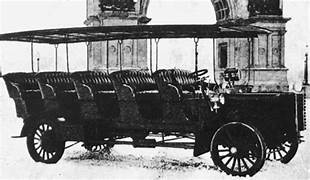
The Carosses à Cinq Sous, or Five-Penny Coaches, debuted on March 18, 1662 — the world’s first bus service.  With a fleet of seven horse-drawn carriages running along three separate routes, each carrying up to eight passengers, it proved a popular but fleeting phenomenon.  It carried only nobles; peasants were pedestrians, relegated to being run down Sadly, the novelty quickly wore off, the nobles not being known for their attention span.  Ennui set in.  By 1675, the carriages no longer cruised the rues.  They were gone, not to reappear until the 19th century when every London, Boston, and New York had them.

C’est la vie.


Don’t Sit Next to Him on the Bus

Ivan IV Vasileyevich, known to his friends as Ivan the Terrible, died in 1584 while engaged in a particularly wicked game of chess. He rose to prominence, and some might say infamy, as the Grand Prince of Moscow, a position he held from 1533 to 1547, when he declared himself the first ever Tsar of All the Russias, a title he held until his death. He was succeeded by his son, Feodor the Not So Terrible.

Historians disagree on the exact nature of Ivan’s enigmatic personality. He was described as intelligent and devout, yet paranoid and given to rages, episodic outbreaks of mental instability, and late-night Truth Social rants.


MARCH 17, 461: IS THAT A SHILLELAGH IN YOUR POCKET?

Today is St. Patrick’s Day, a major holiday for the Irish and for non-Irish hangers on who just want to drink green beer. There is precious little celebration of jolly old St. Patrick himself who died on March 17, 461, which is a pity for he was an interesting guy, turning Druids into Christians with a wave of his shillelagh, hurling blarney stones and sham rocks at unrepentant heathens, and playing his pipe to drive all the snakes out of Ireland.

He was, however, a bit of an enigma. Some believe there were actually two Patricks. That might explain some of the contradictions – a good Patrick and a bad Patrick. The good Patrick worked among the poor, feeding them corned beef and cabbage, encouraging them to be chaste and follow a righteous path. The bad Patrick worked among young women, pinching them if they weren’t wearing green, encouraging them to be unchaste and look at his shillelagh. It was the good Patrick who drove the snakes out of Ireland; the bad Patrick, who when he didn’t get enough recompense, stole all the Irish children to feed to the English.

How high’s the water, mama?

Some medieval calendars suggest that St. Patrick shares his day with a Biblical superstar name of Noah.  They have him boarding his ark on March 17 and disembarking on April 29.  And in religious plays of the time, they give Noah and his wife rather more down-to-earth personalities than depicted in the original source book — particularly the wife who is painted as somewhat of a shrew (which would make three shrews aboard the ark).

In one such play, when Noah brings her the news that God has recruited him as a sailor, she sneers at him, calls him a gullible fool, and complains that he never takes her anywhere, let alone on a cruise with a bunch of animals.  Noah tells her to hold her tongue, she refuses, and they come to blows.  He sulks away to build his ark.  She changes her tune when the waters start to rise, jumping aboard at the last minute, only to start complaining about the ambiance.  They continue their fighting ways — frequently beating each other around their heads with their shillelaghs — for forty days and forty nights.

Shaking His Shillelagh at Prairie Dogs

Legendary mountain man Jim Bridger was born on this day in 1804. He was not Irish. Bridger explored and trapped throughout the West during the mid-1800s which is what mountain men do. Were they on beaches instead of in mountains they would be beachcombers or, worse still, ho-dads. Bridger was one of the first white men to see the geysers of the Yellowstone region and the first European American to see the Great Salt Lake which he misnamed the Pacific Ocean. Most everything else he discovered he named after himself. He was a bit irascible, shaking his shillelagh at prairie dogs and playing his pipe to drive the Mormons out of Utah.

MARCH 16, 1963: PUFF YOUR OWN MAGIC DRAGON

Peter, Paul and Mary released the single, “Puff The Magic Dragon” in 1963. It became a big hit for the folk trio, peaking at number two on the pop charts in spite of its being banned by several radio stations whose management  figured that the song was about the illicit joys of smoking marijuana. The group denied this, saying: “It’s about a magic dragon named Puff.” “Puff” was followed by “Blowin’ in the Wind,” a song about trying to smoke pot on a stormy day, and “Leaving on a Jet Plane,” which is obviously a poorly disguised reference to getting high on the substance of your choice.

Davy, Davy Crockett

On this day eight years earlier, in 1955, “The Ballad of Davy Crockett,” by Bill Hayes, reached the number one spot on the pop music charts and stayed there for five weeks. The smash hit sold more than seven million records by several different artists. Coonskin caps were everywhere, and the words “born on a mountain top in Tennessee” on everyone’s lips – even though the next line “puffed a magic dragon when he was only three” was always bleeped.

Speaking of Substance Abuse:

Giving Up Smoking with Madame Zorene

I stood watching them — laughing young lovers, sitting on the bench, knees touching, talking conspiratorially.  Around them, lilacs and apple blossoms had burst into color, thanks to the fledgling warmth of spring.  As they puffed at long, sleek cigarettes, the exhaled smoke billowed lazily toward the blue sky.  There, sitting in the park, they created a richly satisfying tableau vivant, and I stood mesmerized as I contemplated descending upon them, ripping the cigarettes from their quivering lips and wildly puffing until my heart and lungs cried out in a tobacco-induced orgasm.  Instead, I popped a tiny square of nicotine gum into my mouth — it makes you burp and hallucinate yellow-toothed Doublemint twins — and stormed off.

People were meant to smoke, of course.  Why else tobacco?  A cigarette is tangible; a smoke-free environment hypothetical at best.  And cold turkey is just a dead bird defrosting for Thanksgiving.  Thus I reasoned, when I reached the store and demanded a pack of cigarettes, any brand, with or without filters, from the cowering clerk.  Back to the park, where I hastily lit a cigarette and let its mellowness caress my lungs.  I then smoked the entire pack, one cigarette after another.  It took me less than an hour.

Remorse naturally followed.  I cried out in anguish, bemoaned my weakness, condemned my cowardice — and I began to realize the hopelessness of my situation.  If I were ever to succeed in this quest –and doubts enveloped me — I needed a hired gun.

That evening, I let my fingers do the hobbling through the hypnosis section of the yellow pages.  The trusty phone book paraded before my anxious eyes a plethora of Ph.D.’s, licensed psychologists and certified hypnotherapists, any one of which, I found when phoning the following morning, would be happy to see me two weeks from now, three weeks from now, a month from now.  I had been decisive coming this far, and decisiveness is a fragile, short-lived thing.  I didn’t have that kind of time.

Then I found her.  She was neither psychologist nor hypnotherapist, but Madame Zorene would see me that evening.  I had my moments of doubt when she asked if I wanted her to put a curse on someone, but when I explained that I wanted to quit smoking through hypnosis, she seemed pleased.  “That’s good, too,” she said.

I chain-smoked on the way to my appointment with Madame Zorene, wondering if each cigarette might perhaps be my last.  Her office was tucked away in the back corner of a modern office complex.  I had feared that I would find her in an old shack in the middle of a bayou, although I was pretty certain there wasn’t a bayou within a thousand miles of here.  Upon opening the door, I faced her receptionist, and my fears returned.  A gaunt, colorless woman with stringy hair and sunken eyes, she had a vocabulary of three words:  “You pay first.”

But Madame Zorene herself was a pleasant surprise; a cheerful, chubby woman in her sixties, she smiled reassuringly and greeted me with a hearty handshake.  “Madame Zorene welcomes you,” she said as she opened a door and led me into her office.  “You are a brave man to attempt the smoking cessation.  Smoking is not good for your teeth or your lungs.  You will be happy when you quit.”  It sounded vaguely like a threat.

“Have a seat and relax yourself,” Madame Zorene continued.  “You must be relaxed.”

I settled into a comfortable chair facing her and tried my best to relax, but it wasn’t easy.  Staring at me over Madame Zorene’s left shoulder from the shelves at the other side of the small room was a human skull.  Several smaller skulls stood in a row next to it, each one staring.  On another shelf there were various jars in which dead toads and lizards were suspended in murky water.  There were no medical books, stethoscopes or sphygmomanometers, although there were masks, feathers and various powders.

“Are you a doctor or anything like that?” I asked.

“No, no.  Of course not.”

“What is your background?”

She saw that I was staring past her at her shelves.  “Ah, my little things, they upset you.  No need for you to worry.  I am a much experienced bokor.”

“A bokor?”

“Yes.  A bokor is a sorcerer in the voudun religion.”

“Voudun?”  I asked, growing steadily more anxious.  “Is that voodoo?”

Her eyes lit up and she grinned.  “Yes, yes.”

“And you do curses and things as well as smoking cessation?”

“Of course,” said Madame Zorene.  “But curses are not why we are here, are they?  Why don’t we start?  First I am going to give to you the great sleep.  Then I will lift from your body your ti bon ange.  That is one of your spirits.  I will talk to your ti bon ange, tell it that you no longer want to smoke.  Then when it returns to your body, it will guide you, so that you will no longer smoke.  Now you must relax.”

Madame Zorene stared at me, looked commandingly into my eyes, and began to speak softly in a language I didn’t recognize.  I wanted to turn away from her gaze, which was intimidating, not relaxing, to close my eyes, to stand, to run.  But I couldn’t move and I found myself growing drowsy,  the nagging worry that I would wake up a zombie growing steadily more distant.  I felt as though I were floating through a void.  I could hear Madame Zorene as she continued to talk, and someone answered her.  Was it me, my ti bon ange?

Then I was awake, and Madame Zorene was smiling at me, that same reassuring smile she had first greeted me with.  “Would you like a cigarette?” she asked, and in her smile I now saw the self-satisfaction.

“No, I don’t think so,” I answered truthfully.  I didn’t want one, and I don’t want one now.   I feel good, have no problems.  Well, I do have one problem — it’s odd, really.  The cat stares at me all the time, an evil, possessed stare.  I think it wants a cigarette.


March 15, 44 BC: I Only Have Ides for You

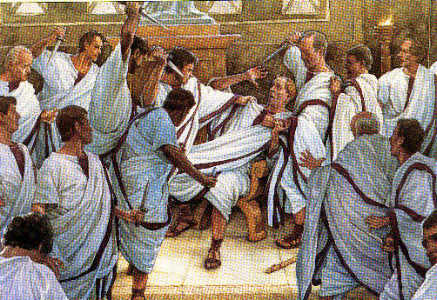
Beware. Today is the ides of March, a day once enthusiastically celebrated among the common people with picnics, drinking, and revelry. In the ancient Roman calendar, each of the 12 months had an ides (from the Latin to divide). In March, May, July and October, the ides fell on the 15th day. In all other months, the ides fell on the 13th.  There is a reason for this, but the logic declined and fell with Rome, and the ides lost their original intent and purpose and eventually came to mean the day that a bunch of guys are going to stick knives into you.

This was thanks to Shakespeare,  Julius Caesar, and Caesar’s pals Brutus et al.  In Act I, Scene 2, of Shakespeare’s history, the old soothsayer utters these words, dripping with foreboding: “Beware the Ides of March.” Pretty straightforward, but does Caesar pay attention? Of course not. And on March 15, 44 BC, aided by his friends, he buys the forum, so to speak, exiting stage left halfway through the play even though it bears his name.

Despite an occasional pretentious allusion to the Ides of March and the popular song, today’s calendar is pretty much ideless (as ideless as a painted ship upon a painted ocean, to slip in a quick pretentious allusion).

March 14, 1880: Away with Rum, By Gum

“The Salvation Army will attract the Kingdom of the Devil in Harry Hill’s Variety Theater on Sunday, March 14, 1880 at 6:30 pm sharp”  Thus read the announcement of the first public meeting of the Army in the United States.  It was a meeting of the strangest of bedfellows — the Army and the infamous Harry Hill who ran New York’s most well-know concert saloon, a place they said was “nothing more than one of the many gates to hell.”

A small platoon of the Salvation Army under the command of George Scott Railton had arrived in New York City just two days earlier.  The enterprising Harry Hill, having read about their arrival from England, contacted Railton with an offer to pay the group to take the stage on Sunday evening.  Although Railton was warned that respectable people would refuse to attend a meeting in such a vile place, Railton was intrigued by the idea that such a notorious sinner would welcome him before any of the local churches did.

On Sunday evening, Railton and seven Salvation Army lasses took the stage.  Railton knelt and the seven lasses formed a semicircle around him assuming “various and curious positions.”    They sang hymns and invited the audience to repent and be saved.  The audience applauded politely, but other than one habitual drunkard, Ashbarrel Jimmie, no one accepted the invitation to repent.

Undeterred, the Salvation Army soldiered on and, red kettle by red kettle, became a fixture in the United States.

Saving Nanki-Poo

Gilbert and Sullivan’s most famous work The Mikado premiered in London in 1885. It almost didn’t happen. A year earlier, Arthur Sullivan, whining about his precarious health and a desire to devote himself to more serious music, told W.S. Gilbert that he couldn’t bring himself to do another piece of the kind the two had previously written. Gilbert was surprised to hear of Sullivan’s qualms, having started work on a new opera in which people fell in love against their wills after taking a magic lozenge. Gilbert wrote Sullivan asking him to reconsider, but the composer replied that he was through with such operas. Gilbert, after much whining of his own, persuaded Sullivan by promising a plot in which no supernatural element occurs “. . . a consistent plot, free from anachronisms, constructed in perfect good faith and to the best of my ability.”

The Mikado was born. With a setting in Japan, an exotic locale far away from Britain, Gilbert was able to poke fun at British politics and institutions by disguising them as Japanese and, with Sullivan’s music, create one of the greatest comic operas, featuring such characters as Nanki-Poo, the wandering minstrel; Yum-Yum, Nanki-Poo’s love; Ko-Ko, the Lord High Executioner; and Pooh-Bah, the Lord High Everything Else.  This is the origin of the word poo-bah — a pretty important person, a high muckety-muck, nabob, honcho, Donald Trump.


March 13, 1923: Rock-a-bye, Baby On the Treetop

In 1906, Eleanor Roosevelt, then a young mother living in New York City, bought a cage made of chicken wire and hung it outside the window of her townhouse. The cage was for her daughter Anna to nap in and enjoy the fresh outside air. Her neighbors threatened to call in the authorities. Young Eleanor wasn’t really a wicked mother; she was just a few years ahead of her time. Fast forward to the 1930s; baby cages are a booming business, particularly in London.

In between, Emma Read of Spokane, Washington, had the foresight to apply for a patent for “an article of manufacture for babies and young children, to be suspended upon the exterior of a building adjacent to an open window, wherein the baby or young child may be placed.” She envisioned a cage with removable curtains and an overlapping slanted roof to protect the suspended tyke from rain and snow — And from rattles and other toys maliciously thrown by the rotten little kid in the cage on the floor above.  Her patent was granted on March 13, 1923.

Interest peaked and petered out in the 1950s, and the baby cage disappeared into history despite the fascinating concept of children being caged.


Gonna Find Me a Planet

An advanced civilization inhabited Mars, but the times were desperate. The planet was becoming arid, and the Martians had constructed a series of canals and oases in an attempt to tap the polar ice caps. This was the theory espoused by Percival Lowell based on studies from his observatory in Flagstaff, Arizona, during the early 20th century. Lowell was born on March 13, 1855, and after many years traveling in and studying the Far East, he turned his attention to the far reaches of space. He was all over Mars, writing three books on the red planet that captured the public imagination and helped give rise to the notion of men from Mars.

The existence of canals was later disproved by more powerful telescopes and space flights, but Lowell would make a more important contribution to planetary studies during the last years of his life. Turning from Mars to Neptune and Uranus, Lowell became convinced that their positions were affected by a hypothetical Planet X. Lowell began searching for the mystery planet in 1906. Dying in 1916, Lowell himself did not witness the discovery, but the Lowell Observatory announced on what would have been his 75th birthday — March 13, 1930 — that they had discovered the planet Pluto.

Sadly, after nearly a century as our ninth planet, Pluto was cruelly downgraded to the status of dwarf planet in 2006.  And the name Pluto will become more associated with the Disney hound dog of that name.

Of Which You Ain’t Nothing But a

Mike Stoller (right), born March 13, 1933, working with his partner Jerry Leiber, helped shape rock leiberand roll with an amazing list of hit songs beginning with Hound Dog in 1952. Elvis Presley , the Beatles, the Rolling Stones, the Beach Boys, John Lennon, Otis Redding, Jimi Hendrix, and Frank Sinatra top the list of the many artists who have recorded their songs. More than three dozen of their hits were featured in the Broadway production Smokey Joe’s Cafe including the title tune, Young Blood, Dance With Me, Searchin’, Kansas City, Poison Ivy, On Broadway, Yakety Yak, Charlie Brown, Loving You, Jailhouse Rock, Spanish Harlem and Stand by Me.

In an interview, Stoller was asked to compare Elvis Presley’s 1956 version of Hound Dog with the original recorded by Big Mama Thornton. “It sounded kind of stiff and a bit too fast, a little nervous,” he answered. “It didn’t have that insinuating groove like on Big Mama’s record.”

Eventually, he grew to like the Presley version.   After it sold seven million copies it began to sound better.”


March 12, 1609: Wanna Get to Heaven, Let Me Tell You What To Do

Prophet, evangelist, guardian of the gates of heaven and hell, and notorious pain in the butt Lodowicke Muggleton was born in 1609. Uneducated, he worked as a tailor until his forties when he began to have revelations, announcing to the world that he and his cousin were the last two witnesses of God that would ever be appointed on earth and the exclusive deciders of who got into heaven and who didn’t. When his cousin died, Muggleton took this great burden upon himself.

Blessing those who listened to him and cursing those who didn’t, he eventually attracted a few followers who became known as Muggletonians. His cursing and raving made him enough of a public nuisance that he was twice jailed, fined and sentenced to stand in the pillory for several days. He had a particular dislike of Quakers which he spelled out in his book with the catchy title The Neck of the Quakers Broken or Cut in Sunder by the Two-Edged Sword of the Spirit Which Is Put Into My Mouth (1663).

Among some of the more interesting Muggletonian beliefs: Heaven is six miles above Earth; God is between five and six feet tall and has absolutely no interest in the affairs of mankind. Man’s greatest enemy is not the Devil, who doesn’t exist, but Reason, which, for humans, is unclean and filthy. They had no organized worship; they would sometimes meet in taverns to talk and sing rancorous Muggletonian songs.

Muggleton died at the age of 88, and his religion more or less continued for centuries after him. One Philip Noakes who bequeathed to the British Library an archive of Muggletonian documents in 1979 is thought to have been the last surviving Muggletonian, although this entry is bound to bring a few more out of hiding.

Perhaps He Was a Muggletonian

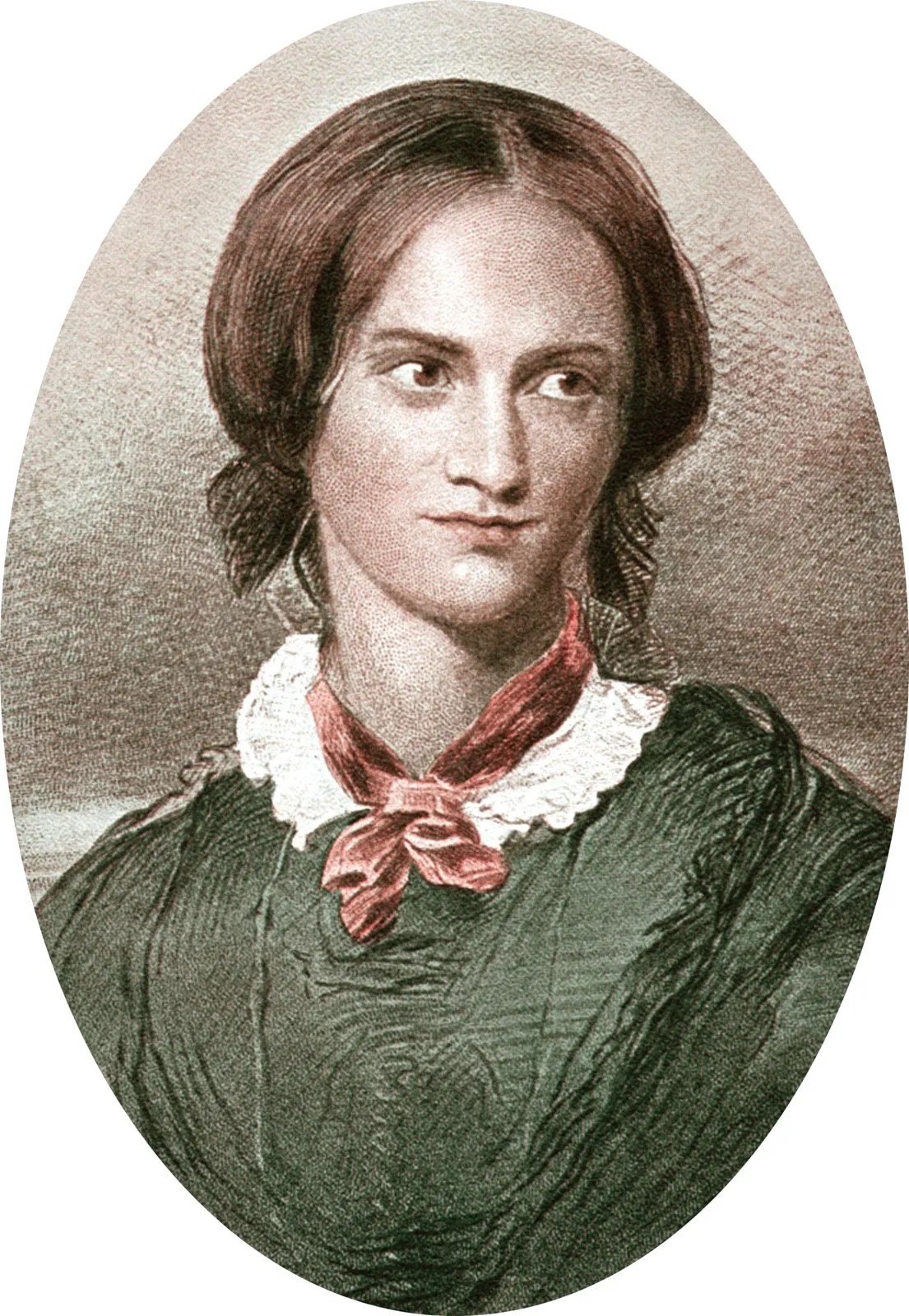
In 1837, British poet laureate Robert Southey wrote a letter to 20-year-old Charlotte Brontë.  The letter was in reply to her letter of a few months earlier asking him for his opinion on whether a poem she enclosed was any good and whether she should continue to write.  Her letter and the poem are lost, but Southey’s infamous reply was not.  One noted passage: “Literature cannot be the business of a woman’s life, and it ought not to be. The more she is engaged in her proper duties, the less leisure will she have for it even as an accomplishment and a recreation. To those duties you have not yet been called, and, when you are, you will be less eager for celebrity.”

Brontë’s thank you letter resonates with veiled sarcasm: “Once more allow me to thank you with sincere gratitude.  I trust I shall never more feel ambitious to see my name in print; if the wish should rise, I’ll look at Southey’s letter and suppress it.”  Ten years later, she wrote Jane Eyre.  Raise your hand if you remember Robert Southey.