Famous real estate deals abound — the sale of Manhattan for beads, the Louisiana Purchase, Seward’s Folly. One of the more unusual is the April 18, 1968, sale of London Bridge for a mere $1 million (of course, as any schoolchild knows, the thing was falling down). American oil magnate Robert McCullough was the buyer and he bought it as a large conversation piece for his Arizona real estate development in an out-of-the-way spot that had previously only been an inspiration for Roadrunner cartoons. The bridge was disassembled in London, each piece numbered, then hauled to Lake Havasu City, Arizona, where it was reassembled.
McCullough had wanted to buy the Brooklyn Bridge for his project, but it had already been sold. Many times, actually. One George Parker had made his living selling the bridge to oil magnates and other naive visitors to New York, some of whom actually tried to erect toll booths.
The relocation of London Bridge inspired, in addition to a great deal of laughter, a forgettable 1985 made-for-television movie Bridge Across Time (aka Arizona Ripper or Terror at London Bridge) in which several murders are committed in Lake Havasu by the spirit of Jack the Ripper, whose soul is transported to the United States in one of the stones of the bridge (sorry you missed it, aren’t you).
Although the Sphinx may have been more architecturally appropriate to the location, McCullough wasn’t interested. “Something about the nose,” he said.
Legumes in Love
British poet and physician Erasmus Darwin died on April 18, 1802. As a physician graduated from Cambridge, he didn’t really distinguish himself. When he is remembered at all, it is for his poetry, and one particular poem, The Loves of the Plants, part of a larger work called The Botanic Garden (the other part being The Economy of Vegetation), in which the physiology and classification of the vegetable world is presented in a rather lofty and lyrical manner. Although the subject was mundane and the technical accuracy questionable, the poetic frenzy reached amazing heights. Had Erasmus Darwin’s grandson Charles presented his discoveries in a more poetic fashion, perhaps they would have been more warmly received.
Back at the dawn of the 17th century, the holy grail among explorers was the Northwest Passage, that elusive sea route that Europeans had been seeking ever since they discovered that North America stood right in the middle of their way to China. (For some reason, they longed to go west to China even though it was a lot closer going east.)
On April 17, 1610, intrepid British explorer Henry Hudson. already famous for having discovered and explored a river that just happened to share his last name, set sail on his latest attempt to find the passage that would at last allow Europeans to take (as the popular song tells us) a slow boat to China.
It was his fourth expedition, financed by adventurers from England. Sailing across the Atlantic, slipping between Greenland and Labrador, he entered the Hudson Strait (another remarkable coincidence) and soon reached (you’re not going to believe this) Hudson Bay. Unfortunately after all this seeming good luck, the expedition took a nasty turn. After three months dawdling around the bay, Hudson was surprised by the onset of winter. Why winter north of Labrador in November would be a surprise is anyone’s guess. Nevertheless, Hudson and his crew were forced to set up a winter camp. The next few months were not pleasant, and many of the crew members were not amused. They grumbled and held their tongues throughout the winter until June. But once they were sailing again, they up and mutinied, setting Hudson, his son and seven friends adrift. Although Hudson was never seen again, England laid claim to everything that shared his name — river, strait, bay and even a funny looking vehicle that seemed to have no useful purpose.
Back at the dawn of the 17th century, the holy grail among explorers was the Northwest Passage, that elusive sea route that Europeans had been seeking ever since they discovered that North America stood right in the middle of their way to China. (For some reason, they longed to go west to China even though it was a lot closer going east.)
On April 17, 1610, intrepid British explorer Henry Hudson. already famous for having discovered and explored a river that just happened to share his last name, set sail on his latest attempt to find the passage that would at last allow Europeans to take (as the popular song tells us) a slow boat to China.
It was his fourth expedition, financed by adventurers from England. Sailing across the Atlantic, slipping between Greenland and Labrador, he entered the Hudson Strait (another remarkable coincidence) and soon reached (you’re not going to believe this) Hudson Bay. Unfortunately after all this seeming good luck, the expedition took a nasty turn. After three months dawdling around the bay, Hudson was surprised by the onset of winter. Why winter north of Labrador in November would be a surprise is anyone’s guess. Nevertheless, Hudson and his crew were forced to set up a winter camp. The next few months were not pleasant, and many of the crew members were not amused. They grumbled and held their tongues throughout the winter until June. But once they were sailing again, they up and mutinied, setting Hudson, his son and seven friends adrift. Although Hudson was never seen again, England laid claim to everything that shared his name — river, strait, bay and even a funny looking vehicle that seemed to have no useful purpose.
Madame (Marie) Tussaud is arguably the world’s most famous wax sculptor. Born in France in 1761, she began her artistic career during the French Revolution, searching through corpses to find the heads of noted guillotine victims from which she made death masks. She herself was imprisoned for three months awaiting execution, but an influential friend intervened and she was released. She and her waxwork friends toured throughout Europe for 33 years before settling into a permanent exhibition in 1835 on Baker Street in London. There she gained prosperity and fame, managing her wax museum until her death on April 16, 1850. Throughout Madame Tussaud’s long existence, its most popular feature has been the Chamber of Horrors (as pictured here).
Where’s the Remote?
Inventor Walter Pichler is the genius behind the amazing TV helmet of 1967. This device allows a user to leave the outside world and slip into his or her own little world of information and entertainment. The user simply inserts his or her head into a capsule that resembles a small submarine and hopes that he or she doesn’t bump into something while enjoying the “virtual world” of Gilligan’s Island.
Pearl Among . . .
“How-w-w-Dee-e-e-e! I’m jes’ so proud to be here!” “Here” might have been the National Comedy Hall of Fame into which, on April 16, 1994, Minnie Pearl became the first woman inducted. But more often it was on the stage of the Grand Ole Opry in Nashville, Tennessee, where Minnie held sway as the resident Southern hillbilly for over 50 years.
Her comedy was a good-natured satire of rural Southern culture. She appeared in her trademark hat, purchased at the Surasky Bros. Department Store in Aiken, South Carolina, for $1.98 before her first stage performance in 1939, along with styleless “down home” dresses. Her self-deprecating humor was usually about her unsuccessful attempts to get “a feller” and her ne’er-do-well relatives. She also sang novelty songs and danced with Grandpa Jones. From the opening How-w-w Dee-e-e-e to her closing “I love you so much it hurts!”, she had the Opry audience in the palm of her hand.
The Little Tramp
Sir Charles Spencer Chaplin, known to millions of film buffs as “Charlie,” was born April 16, 1889. His working life in entertainment began as a child performer in British music halls and spanned 75 years until his death in 1977 at the age of 88. In the United States, he became one of the most important creative personalities of the silent-film era — acting in, directing, scripting, producing and composing the music for his own films.
In 1250, the Mongol Great Council pronounced a fellow named Kublai the one and only Great Khan and set him on a a tear through Asia, conquering a Mongolia here, a Manchuria and Korea there and a bit of southern Siberia for good measure. Kublai was a grandson of Genghis, another Khan known for being rather hard to get along with. Like his grandfather, Kublai was a holy terror right from infancy when he frequently seized power from fellow toddlers. Eventually, Kublai pushed the Mongol Empire to new heights, creating a unified, militarily powerful China and gaining international attention in the process.
Marco Polo, in the accounts of his travels, made Kublai well-known to western audiences, and Samuel Taylor Coleridge added a romantic aura in the early 19th century with his description of Kublai (Kubla to Coleridge) Khan’s summer cottage at Xanadu:
In Xanadu did Kubla Khan
A stately pleasure-dome decree:
Where Alph, the sacred river, ran
Through caverns measureless to man
Down to a sunless sea.
When the sacred river Alph plunged into that sunless sea it naturally created a great waterfall. In the rush of this waterfall, the voices of Kubla’s ancestors could be heard — that strident, discordant one being Genghis.
At Least Kublai Didn’t Cheat on His Taxes
In the United States, several hundred years later, April 15 became mostly thought of as the deadline for filing income taxes, so it is quite fitting that prisoner number 15113-054 entered the federal prison in Lexington, Kentucky, on April 15, 1992, having been convicted of one count of conspiracy to defraud the United States, three counts of tax evasion, three counts of filing false personal tax returns, sixteen counts of assisting in the filing of false corporate and partnership tax returns, and ten counts of mail fraud. Her famous excuse for this bit of naughtiness was “We don’t pay taxes. Only the little people pay taxes.”
Known affectionately as the “Queen of Mean,” Leona Helmsley started her amazing career of acquiring everything she laid her eyes on back in the mid60’s, soon aided and abetted by Harry Helmsley, after they disposed of his wife in 1972. Their real estate empire included the Park Lane Hotel, the Empire State Building, Helmsley Palace and a collection of condos throughout Manhattan.
In 1983 the Helmsleys bought a 21-room mansion weekend retreat in Greenwich, Connecticut, for $11 million. Finding it a tad shabby for their tastes, they had it remodeled for another $8 million, adding among other homey touches a million-dollar dance floor and a mahogany card table. When they tried to stiff the contractors, they were sued for non-payment. The Helmsleys eventually paid up, but it was revealed that most of the work was illegally billed to their hotels as business expenses.
A federal criminal investigation followed, and they were indicted on several tax-related charges, as well as extortion. Harry called in sick, and Leona took the fall alone.
Sounds a lot like another notorious New York real estate nabob. Leona didn’t pay hush money to any porn stars. Nor did she steal any classified government documents or incite an insurrection. Nevertheless she went to jail.
It’s okay to laugh out loud today. You don’t even need a reason because today is International Moment of Laughter Day and that ought to be reason enough. The day is the brainchild of Izzy Gesell, a self-described humorologist.
“Laughter comes right after breathing as just about the healthiest thing you can do,” he says. “It relieves stress, instills optimism, raises self-confidence, defuses resistance to change, and enhances all your relationships.”
To help you celebrate the day, here is a list of ways you can laugh. You can titter, giggle, chuckle or chortle. You can cackle or crow. You can snicker, snigger or snort. Ha-ha, hee-haw, ho-ho, tee-hee, yuk-yuk. You can guffaw, belly laugh or horselaugh. You can roar or shake with laughter. Split your sides, bust a gut, roll in the aisles and perhaps die laughing. And of course there’s the ever-popular laughing until you pee your pants.
THE FUTURE WILL BE BETTER TOMORROW
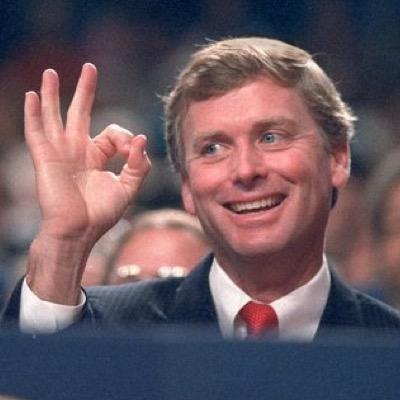
Fireworks, rock music and, yes, laughter punctuated the April 14, 1999, announcement by former Vice President Dan Quayle that he was tossing his hat into the Republican ring for the 2000 presidential race. He offered himself as the antidote for “the dishonest decade of Bill Clinton and Al Gore.” He promised to restore integrity, responsibility and more malaprops to the White House. He exited the race a few months later, after finishing eighth in the first Republican straw poll, cheating the world out of future Quayle gems such as these:
If we don’t succeed we run the risk of failure.
Republicans understand the importance of bondage between a mother and child.
A low voter turnout is an indication of fewer people going to the polls.
It isn’t pollution that’s harming the environment. It’s the impurities in our air and water that are doing it.
When I have been asked during these last weeks who caused the riots and the killing in L.A., my answer has been direct and simple: Who is to blame for the riots? The rioters are to blame. Who is to blame for the killings? The killers are to blame.
Bank failures are caused by depositors who don’t deposit enough money to cover losses due to mismanagement.
I deserve respect for the things I did not do.
I love California, I practically grew up in Phoenix.
The global importance of the Middle East is that it keeps the Far East and the Near East from encroaching on each other.
I believe we are on an irreversible trend toward more freedom and democracy – but that could change.
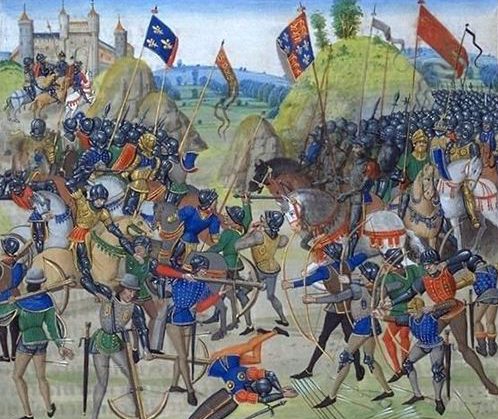
It was the 14th century and once again England was out to conquer France. The hostilities had been going on for nearly 20 years, when England’s King Edward III sailed across the Channel with a huge army — a cast of thousands. The dead of winter set in, and the inconsiderate French refused to face the English invaders in direct combat. Instead they huddled in their warm and cozy castles, drinking cafe au lait while the English plundered the countryside and got frostbite. Come April of 1360, having lasted through the winter, Edward and his men fought and torched their way through the Paris suburbs, and readied themselves to have at Chartres.
Then, on April 13, a sudden violent storm came up. Lightning killed several soldiers, the heavens opened up, and hailstones the size of pommes de terre began hammering the hapless army, killing a thousand men. Naturally, they took this as a sign that God was annoyed. Edward declared the invasion “my bad” and negotiated a peace with the French. The English renounced all claims to the throne of France, and the French gave them croissants.
But wouldn’t you know it, a few years later, the King of France declared war on England ( this was, after all, the Hundred Years’ War, scheduled to last another 75 years or so.)
Historians assure us that this was not the origin of the phrase “Hail to the Chief.”
Ifs, Ands or Butts
Alfred Mosher Butts was born in Poughkeepsie, New York, on April 13, 1899. Who, you ask, is Alfred Mosher Butts? He became an architect when he grew up, though not a famous one. He dabbled in art to no great success. His colorful last name is worth a pathetic seven points in a certain word game that can be found in one-third of American homes. 150 million sets have been sold worldwide in 29 languages. Yes, the game is the ubiquitous Scrabble. And Al Butts is the guy who invented it.
For those who may be new to the planet, Scrabble is a game where players place tiles on a board to spell words and earn points determined by the numerical value of individual letters. Butts determined the values of the individual letters by studying how often each letter appeared on the front page of The New York Times (fake letters in fake words in fake news, some might say).
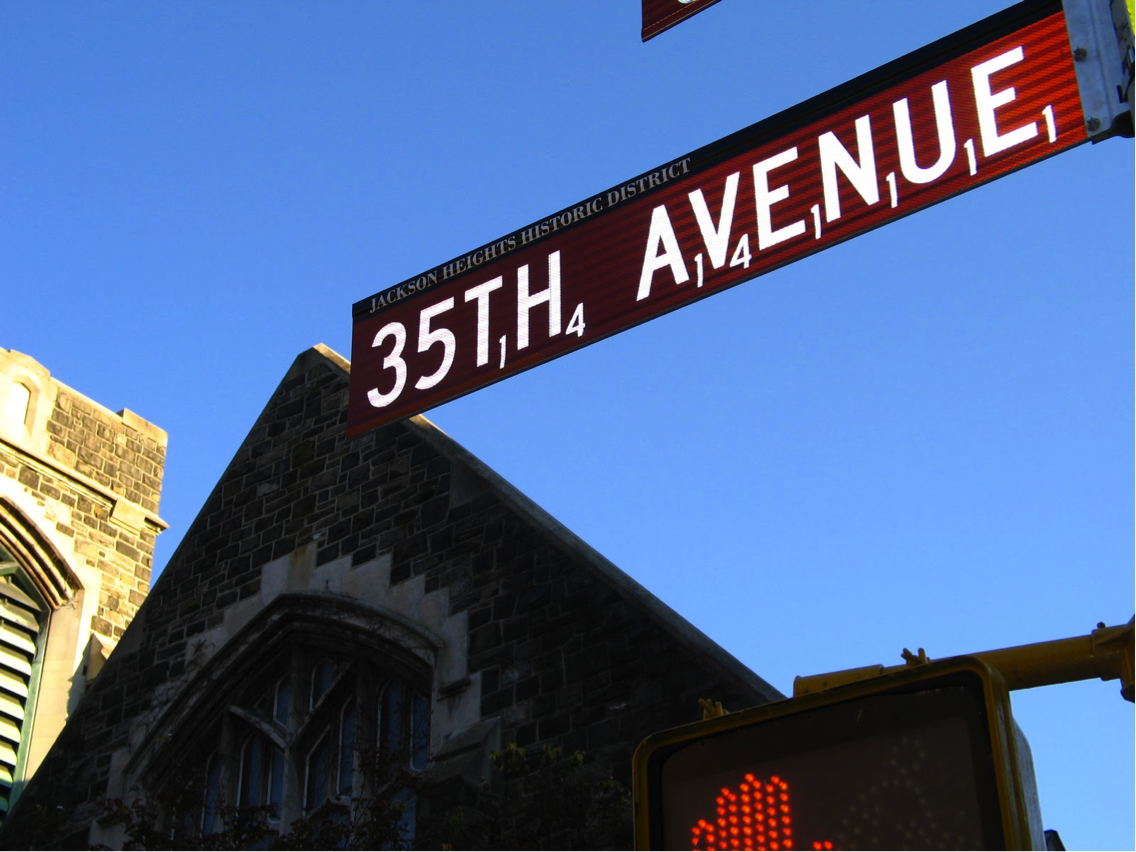
A street sign in Jackson Heights (where Butts lived when he invented the game) memorializes the creation of the game.
It was a Big Apple Fantasyland. Finishing touches were still being put in place on New York City’s Hippodrome just hours before its April 12, 1905, opening. Seating 5300 people, it dwarfed the Metropolitan Opera with its 3000 seats. A marvel of theatrical architecture, its stage was 12 times larger than any existing Broadway house. A four-hour extravaganza opened with A Yankee Circus on Mars, which featured acrobats, clowns, horses, elephants, and space ships, of course. A baboon named Coco joined 60 musicians, several hundred singers, and 150 dancers for a musical spectacle. A depiction of the Civil War featured gunfire, explosions and cavalry troops on horseback swimming across a huge water tank simulating a lake. Harry Houdini made a 10,000-pound elephant disappear.
For the next two decades, the Hippodrome was the largest and most successful theater in New York, hosting operas, circuses, vaudeville and silent movies.The musical spectacular Good Times ran for 456 performances from 1920 to 1921 and Better Times ran for 405 performance in 1922–23. Unfortunately leaner times were ahead. The Sixth Avenue property that the Hippodrome occupied became too valuable for its use. Finally, the elephants all left the stage and marched off to the Bronx Zoo and, in 1939, the Hippodrome closed its doors.
Flying Elephants Perhaps (a Clever Segue to 1992)
Could Mickey Souris really cut it among continental consumers? Would the rodent empire have the necessary je ne sais quoi to win those jaded Gallic hearts and minds? No more guessing or advance planning or idle speculation after D-Day (as in Disney) — April 12, 1992, the day Euro Disney opened its gates in Marne-La-Vallee on the outskirts of Paris. Mickey, Donald Duck and, yes, Dumbo scored. The royaume magique became one of Europe’s leading tourist destinations with some 15 million annual visitors. Disney had created another Fantasyland.
Speaking of Disney (a Clever Segue to a Blatant Commercial Message)
Paul wasn’t sure, but the five-foot duck waddling through the throngs of laughing, crying, shouting, whining children appeared to be waddling toward him – a duck with a destination and, perhaps, a mission. Chances are it had spotted him scowling in a land where grinning is the norm, and it, by God, meant to do something about it.
“Enjoying the Magic Kingdom?” asked the duck upon reaching him. Despite its carefully sculpted plastic smile, this duck wasn’t going to cheer anyone up; its voice dripped sarcasm.
“Of course, I am,” Paul answered, adopting his very own duck attitude. “Isn’t that why you’re here? By the way, didn’t I somewhere get the idea that you’re all supposed to be pleasant and cheerful?”
“I’m not even supposed to talk. Just wave.” The duck waved and, in silence, could have passed for pleasant and cheerful, albeit of a fabricated sort.
“Then why did you talk to me?” Paul asked.
“Because you look bored – like you positively hate the place.”
“Ah, you’re not just an ordinary duck, you’re a member of the happiness squad, here to lift my spirits.”
“No,” answered the duck. “I thought you might have a cigarette.”
“That’s an interesting deduction.”
“Well, do you?” “Yes.”
“May I have one?” the duck asked, sitting next to him on the bench.
“Certainly. I’ve never seen a duck smoke before. Rabbits maybe, hedgehogs maybe, but never a duck. Some people might find that a bit weird.”
“I think most people would agree that what’s really weird is someone talking to a duck.”
It was a Big Apple Fantasyland. Finishing touches were still being put in place on New York City’s Hippodrome just hours before its April 12, 1905, opening. Seating 5300 people, it dwarfed the Metropolitan Opera with its 3000 seats. A marvel of theatrical architecture, its stage was 12 times larger than any existing Broadway house. A four-hour extravaganza opened with A Yankee Circus on Mars, which featured acrobats, clowns, horses, elephants, and space ships, of course. A baboon named Coco joined 60 musicians, several hundred singers, and 150 dancers for a musical spectacle. A depiction of the Civil War featured gunfire, explosions and cavalry troops on horseback swimming across a huge water tank simulating a lake. Harry Houdini made a 10,000-pound elephant disappear.
For the next two decades, the Hippodrome was the largest and most successful theater in New York, hosting operas, circuses, vaudeville and silent movies.The musical spectacular Good Times ran for 456 performances from 1920 to 1921 and Better Times ran for 405 performance in 1922–23. Unfortunately leaner times were ahead. The Sixth Avenue property that the Hippodrome occupied became too valuable for its use. Finally, the elephants all left the stage and marched off to the Bronx Zoo and, in 1939, the Hippodrome closed its doors.
Flying Elephants Perhaps (a Clever Segue to 1992)
Could Mickey Souris really cut it among continental consumers? Would the rodent empire have the necessary je ne sais quoi to win those jaded Gallic hearts and minds? No more guessing or advance planning or idle speculation after D-Day (as in Disney) — April 12, 1992, the day Euro Disney opened its gates in Marne-La-Vallee on the outskirts of Paris. Mickey, Donald Duck and, yes, Dumbo scored. The royaume magique became one of Europe’s leading tourist destinations with some 15 million annual visitors. Disney had created another Fantasyland.
Speaking of Disney (a Clever Segue to a Blatant Commercial Message)
Paul wasn’t sure, but the five-foot duck waddling through the throngs of laughing, crying, shouting, whining children appeared to be waddling toward him – a duck with a destination and, perhaps, a mission. Chances are it had spotted him scowling in a land where grinning is the norm, and it, by God, meant to do something about it.
“Enjoying the Magic Kingdom?” asked the duck upon reaching him. Despite its carefully sculpted plastic smile, this duck wasn’t going to cheer anyone up; its voice dripped sarcasm.
“Of course, I am,” Paul answered, adopting his very own duck attitude. “Isn’t that why you’re here? By the way, didn’t I somewhere get the idea that you’re all supposed to be pleasant and cheerful?”
“I’m not even supposed to talk. Just wave.” The duck waved and, in silence, could have passed for pleasant and cheerful, albeit of a fabricated sort.
“Then why did you talk to me?” Paul asked.
“Because you look bored – like you positively hate the place.”
“Ah, you’re not just an ordinary duck, you’re a member of the happiness squad, here to lift my spirits.”
“No,” answered the duck. “I thought you might have a cigarette.”
“That’s an interesting deduction.”
“Well, do you?” “Yes.”
“May I have one?” the duck asked, sitting next to him on the bench.
“Certainly. I’ve never seen a duck smoke before. Rabbits maybe, hedgehogs maybe, but never a duck. Some people might find that a bit weird.”
“I think most people would agree that what’s really weird is someone talking to a duck.”
Call it destiny. Two men stranded in Kansas City when a storm closed the airport met in a hotel lobby, engaged in conversation, and – go figure – discovered they each had profound worries about the future of the barbershop quartet. This was not just empty lamenting on the part of Owen C. Cash and Rupert I. Hall; these founding fathers acted, and the Society for the Preservation and Encouragement of Barber Shop Quartet Singing in America (SPEBSQSA, as it’s more familiarly known) was born. They wrote a letter that became a mission statement:
“In this age of dictators and government control of everything, about the only privilege guaranteed by the Bill of Rights not in some way supervised or directed is the art of barbershop quartet singing. Without a doubt, we still have the right of peaceable assembly which, we are advised by competent legal authority, includes quartet singing.
“The writers have, for a long time, thought that something should be done to encourage the enjoyment of this last remaining vestige of human liberty. Therefore, we have decided to hold a songfest on the roof garden of the Tulsa Club on Monday, April 11, 1938, at 6:30 pm.”
Twenty-six men attended that first rooftop meeting. Attendance at subsequent meetings multiplied rapidly, and at the third meeting, 150 harmonizers stopped traffic on the street below. A reporter for the Tulsa Daily World put the story on the national news wires and the rest is history. The Society for the Preservation and Encouragement of Barber Shop Quartet Singing in America was born. That acronym SPEBSQSA was the founders’ way of demonstrating that one could be a barbershop quartet enthusiast and still have a sense of humor; it was a parody of the New Deal’s “alphabet soup” of acronyms, and the society has said “attempts to pronounce it are discouraged.”
Ninety years passed (as years will) and the SPEBSQSA evolved (or devolved, perhaps) into the Barbershop Harmony Society. It boasts more than 20,000 enthusiastic members, although unfortunately they are not always singing off the same sheet. Not quite the Hatfields and McCoys, but the Kibbers and the Libbers as they’re known might value harmony but philosophically they practice little of it. We’ll explore this rift, but first we must digress.
The musical style of barbershop dates back to 17th century England. Barbers of course all sing, and the barbers of merry olde were no exception. They generally kept a lute or a flute among the razors to serenade customers waiting for a shave and a haircut, two pence. Patrons, having just come from a nearby alehouse, would join in and the resulting cacophany became known as barber’s music. Centuries passed (as centuries will) and barber’s music grew more refined and subject to rules.
Somewhere it is written that barbershop quartets must have four singers. But, and here’s where it gets a little weird, according to Spin.com, which knows such things: “four striped-shirt, straw-hatted, bow-tied bodies — but five voices. The second tenor sets the stage with a lead melody line, which the first tenor lays a high harmony on. The baritone singer handles mid-range, while the bass, the deepest voice of the four, lays a solid foundation. But when the overtones of these four pitch-perfect voices unite and merge, an invisible fifth voice emerges from the ether, an everywhere-but-nowhere aural apparition not unlike the effect of Buddhist monks chanting in a massive ancient temple. This unified fifth-voice phenomenon is known as harmonic coincidence” not to be confused with harmonic concurrence or harmonic convergence.*
As the genre matured, attempts were made to modernize. Younger members joined the old guard, bringing with them their doo-wop and pop and what-have you, much to the chagrin of the purists — the Kibbers (Keep It Barbershop) as opposed to the Libbers, liberal approach to barbershop.
*Peace Will Guide the Planet
Two days in August of 1987 that marked a grand celestial alignment of the Sun, the Moon, Mars, Mercury, Venus, Jupiter, Saturn, Neptune, and Uranus. Convergence enthusiasts believed that this conjunction would usher in a new age of universal peace — with good karma, good manners and good posture, sort of like the Age of Aquarius** as celebrated in song by a group of five voices, all of which were actual people, therefore not a quartet, barbershop or otherwise.
** Not to be confused with the Age of Aquariums, the period during the 1960s and ’70s, during which it was de rigueur to have a tank of tropical beasties such as neon tetras, seahorses and angel fish.***
*** Not to be confused with Angel Eyes, a song popularized by Frank Sinatra with the haunting conclusion “Excuse me while I disapp . . .”

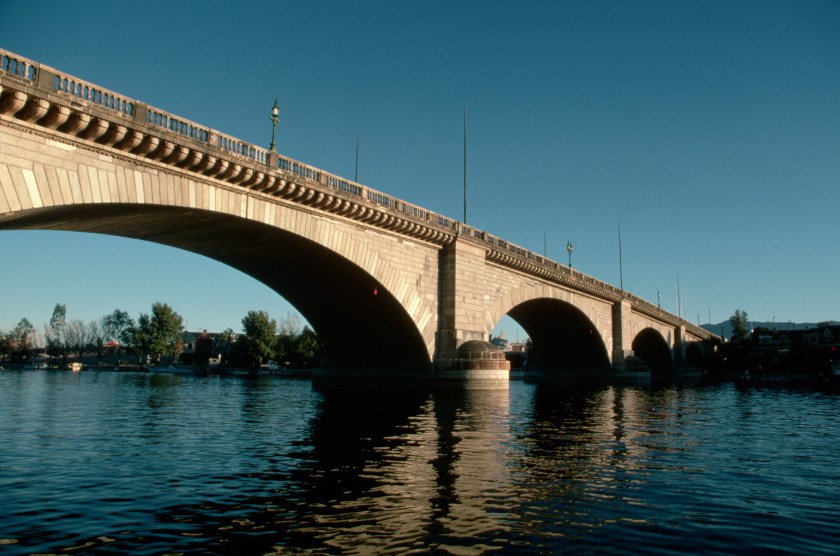
 magnate Robert McCullough was the buyer and he bought it as a large conversation piece for his Arizona real estate development in an out-of-the-way spot that had previously only been an inspiration for Roadrunner cartoons. The bridge was disassembled in London, each piece numbered, then hauled to Lake Havasu City, Arizona, where it was reassembled.
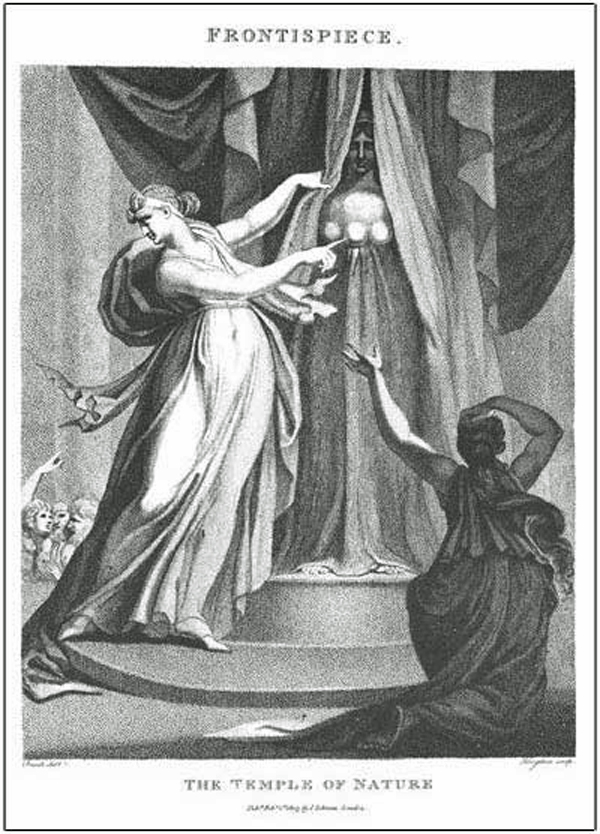 When he is
  remembered at all, it is for his poetry, and one particular poem, The Loves of the Plants, part of a larger work called The Botanic Garden (the other part being The Economy of Vegetation), in which the physiology and classification of the vegetable world is presented in a rather lofty and
 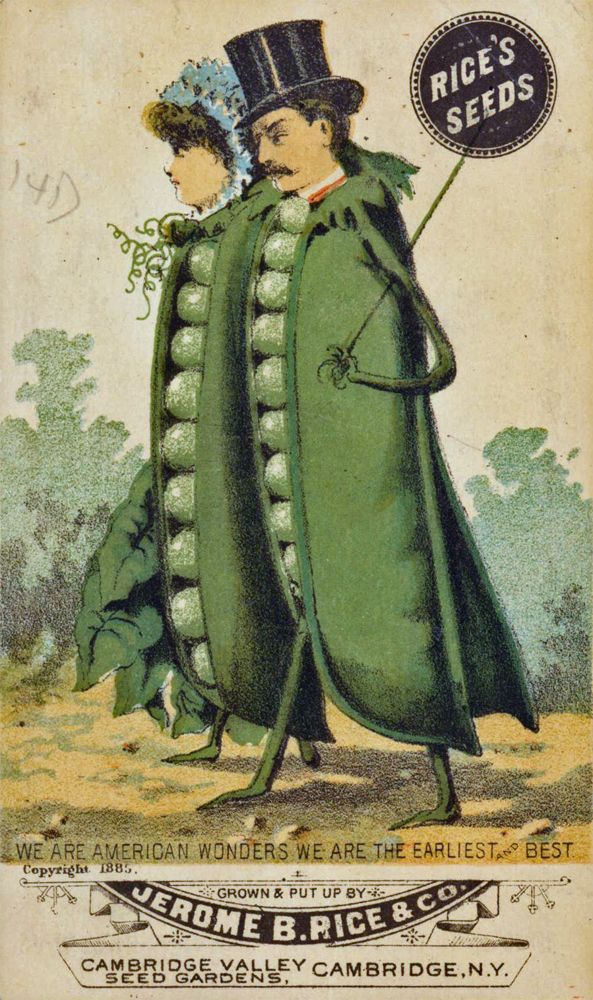 lyrical manner. Although the subject was mundane and the technical accuracy questionable, the poetic frenzy reached amazing heights. Had Erasmus Darwin’s grandson Charles presented his discoveries in a more poetic fashion, perhaps they would have been more warmly received.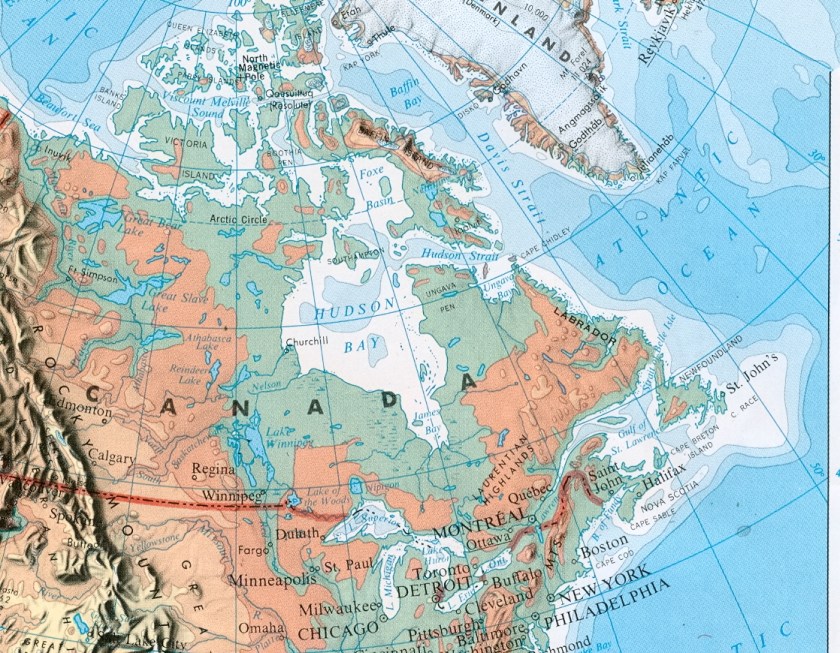








 Wretched Richard's Almanac