
May 17, 1620: Round and Round She Goes

An English traveler happened upon an unusual contraption while passing through what is present-day Bulgaria on May 17, 1620. It was a circular device with seats attached to its perimeter. Children were tethered to the seats and the whole device turned round and round. The Englishman approached the device hoping to save these poor tykes. But as he drew near he heard their squealing and laughter. They were not being punished; they were being entertained. The Englishman’s account of this marvelous contraption is the earliest reference to what ultimately became known as the carousel — or merry go-round to those who disdain the French.
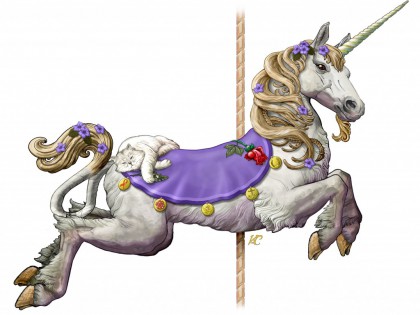
Carousels became popular throughout Europe a century later and in the United States a bit later. These carousels featured carved horses and other fanciful animals — zebras, lions, tigers, unicorns, dragons. At first they were powered by animals or people then eventually by steam engines and finally electricity. Gears and cranks gave the animals their familiar up and down motion.

Today the carousel is mostly favored by those too young or too timid to brave the more heart-pounding rides such as roller coaster, tilt-a-whirl, and loop-the-loop.


Carousels Not Heart-Pounding?

AND KEEP YOUR ELBOWS OFF THE TABLE

As first minister to France’s Louis XIII, Cardinal Richileu was a major player in the politics of the early 17th century, transforming France into a powerful centralized state. On a lesser scale, he was a noted patron of the arts. On an even lesser scale (arguably), he made a singular contribution to the etiquette of French dining, which was at the time anything but refined.

Diners used their hands to move food directly to their mouths or speared pieces of meat with the sharp point of their knives. They even used those same knives to pick their teeth. Having grown weary of these displays of gastronomical unpleasantness, Richileu had an inspiration. On May 17, 1637, he ordered the blades of all the palace dinner knives to be rounded off, thus creating what has become the modern dinner knife.

Talk about a trendsetter. The Richileu dinner knife became le dernier cri, the last word in dining. The craze spread throughout continental Europe, even to England of all places. And the American colonies!

MAY 16, 1988: ONE MAN’S TRASH

trashcan

In 1984, the Laguna Beach Police Department learned from unnamed sources that one Billy Greenwood had a little home-based business selling illegal drugs. An investigator asked the neighborhood’s regular trash collector to turn over to police the plastic garbage bags he collected from the front of Greenwood’s house. In the garbage, the investigator found tell-tale signs of drug use. Using that information, police obtained a warrant to search Greenwood’s home. Lo and behold, when officers searched the house, they found cocaine and marijuana along with dirty dishes and other signs of poor housekeeping. Greenwood was promptly arrested.


California courts ruled that searching the trash was a no-no under both federal and state law. The matter found its way to the U.S. Supreme Court.  On May 16, 1988, the Court reversed lower courts and ruled by a 6–2 vote that no warrant was necessary to search the trash because Greenwood had no reasonable expectation of privacy having put it right out on the curb like that.  No matter that he had put the trash in opaque plastic bags whose contents could not be seen without opening and that he expected it to be on the street only a short time before being taken to the dump.  The Court said it was “common knowledge” that garbage at the side of the street is “readily accessible to animals, children, scavengers, snoops, and other members of the public,” none of whom might have search warrants. Not only that, Greenwood had left the trash there expressly so that the trash collector, a perfect stranger, could take it, and do with it as he pleased.


In dissent, Justice Brennan reasoned that the possibility the police or other “unwelcome meddlers” might rummage through the trash bags “does not negate the expectation of privacy in their contents any more than the possibility of a burglary negates an expectation of privacy in the home.”  Under existing law, the bags could not have been searched without a warrant if Greenwood had been carrying them around in public. Merely leaving them on the curb for the garbage man to collect, Brennan argued, should not be found to remove that expectation of privacy any more than leaving an unattended bag in an airport terminal would. “Scrutiny of another’s trash is contrary to commonly accepted notions of civilized behavior.”


And one person’s trash is another person’s treasure.

MAY 15, 1856: Over the Rainbow

Glinda the Good stepped down from her ruby throne to give the little girl a good-bye kiss, and Dorothy thanked her for all the kindness she had shown to her friends and herself.

Dorothy now took Toto up solemnly in her arms, and having said one last good-bye she clapped the heels of her shoes together three times saying, “Take me home to Aunt Em!

Lyman Frank Baum, born in Chittenango, New York, on May 15, 1856 (died 1919), was best known for writing The Wonderful Wizard of Oz, although he wrote a total of 55 novels, 83 short stories, over 200 poems, and made many attempts to bring his works to the stage and screen.

In 1897, after several abortive early careers, Baum wrote and published Mother Goose in Prose, a collection of Mother Goose rhymes written as prose stories, and illustrated by Maxfield Parrish. The book was a moderate success, allowing Baum to quit his door-to-door sales job and devote time to his writing. In 1899, Baum partnered with illustrator W. W. Denslow, to publish Father Goose, His Book, a collection of nonsense poetry. The book was a success, becoming the best-selling children’s book of the year. Then in 1900, the duo published The Wonderful Wizard of Oz to critical acclaim and financial success.   The book was the best-selling children’s book for two years after its initial publication.

Oz was a popular destination long before the famous 1939 screen version of the book.  A  musical  based closely upon the book,  the first to use the shortened title “The Wizard of Oz”, opened in Chicago in 1902, then ran on Broadway for 293 performances.   Baum went on to write another 13 Oz novels.

Baum’s intention with the Oz books, and other fairy tales, was to tell American tales in much the same manner as the Brothers Grimm and Hans Christian Andersen , modernizing them and removing the excess violence.  He is often credited with the beginning of the sanitization of children’s stories, although his stories do include eye removals, maimings of all kinds and an occasional decapitation.

Most of the books outside the Oz series were written under pseudonyms. Baum was variously known as Edith Van Dyne, Laura Bancroft, Floyd Akers, Suzanne Metcalf, Schuyler Staunton, John Estes Cooke, and Capt. Hugh Fitzgerald.

Baum wrote two newspaper editorials about Native Americans that have tarnished his legacy because of his assertion that the safety of white settlers depended on the wholesale genocide of American Indians. Some scholars take them at face value, others suggest they were satire. Decide for yourself.

The Pioneer has before declared that our only safety depends upon the total extermination of the Indians. Having wronged them for centuries we had better, in order to protect our civilization, follow it up by one more wrong and wipe these untamed and untamable creatures from the face of the earth. In this lies safety for our settlers and the soldiers who are under incompetent commands. Otherwise, we may expect future years to be as full of trouble with the redskins as those have been in the past.

Way Over the Rainbow

Paolo Toscanelli, born in 1397, was your typical Italian Renaissance Man, dabbling in everything from astronomy to mathematics to philosophy to cartography. He rubbed elbows (and influenced) the likes of Leonardo da Vinci and Christopher Columbus. In fact, that fickle finger of fate could have just as easily pointed at Paolo instead of Columbus.

As we all know, Christopher Columbus as a boy used to sit on the docks in Genoa watching ships slowly disappear over the horizon. While all the other boys sitting on the docks attributed this phenomenon to the ships falling off the edge of the world, Christopher determined that ships were gradually disappearing because the world was actually round. A fairy tale, of course. Columbus knew the world was round because Paolo Toscanelli told him it was round. Toscanelli even gave Columbus a map (a flat map admittedly) that showed Asia to the left on the other side of the Atlantic. Neither of them had reckoned on that other continent lying in-between. Yet Columbus got an October holiday and a city in Ohio while Toscanelli got squat.

Another near miss for Paolo was his observation of a comet in 1456. Although Paolo was the first to identify it, it remained known only as the Comet of 1456 until 300 years later when English astronomer Edmond Halley predicted its 1759 return and got naming rights.

Paolo died on May 15, 1482, ten years before Columbus sailed the ocean blue and some 350 years before “Halley’s” Comet did an encore.


MAY 14, 1796: PANDORA’S BOX IN YOUR BELLY– AND IT SERVES YOU RIGHT

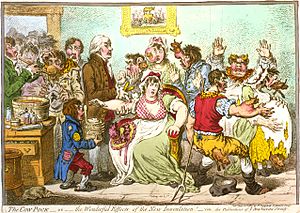
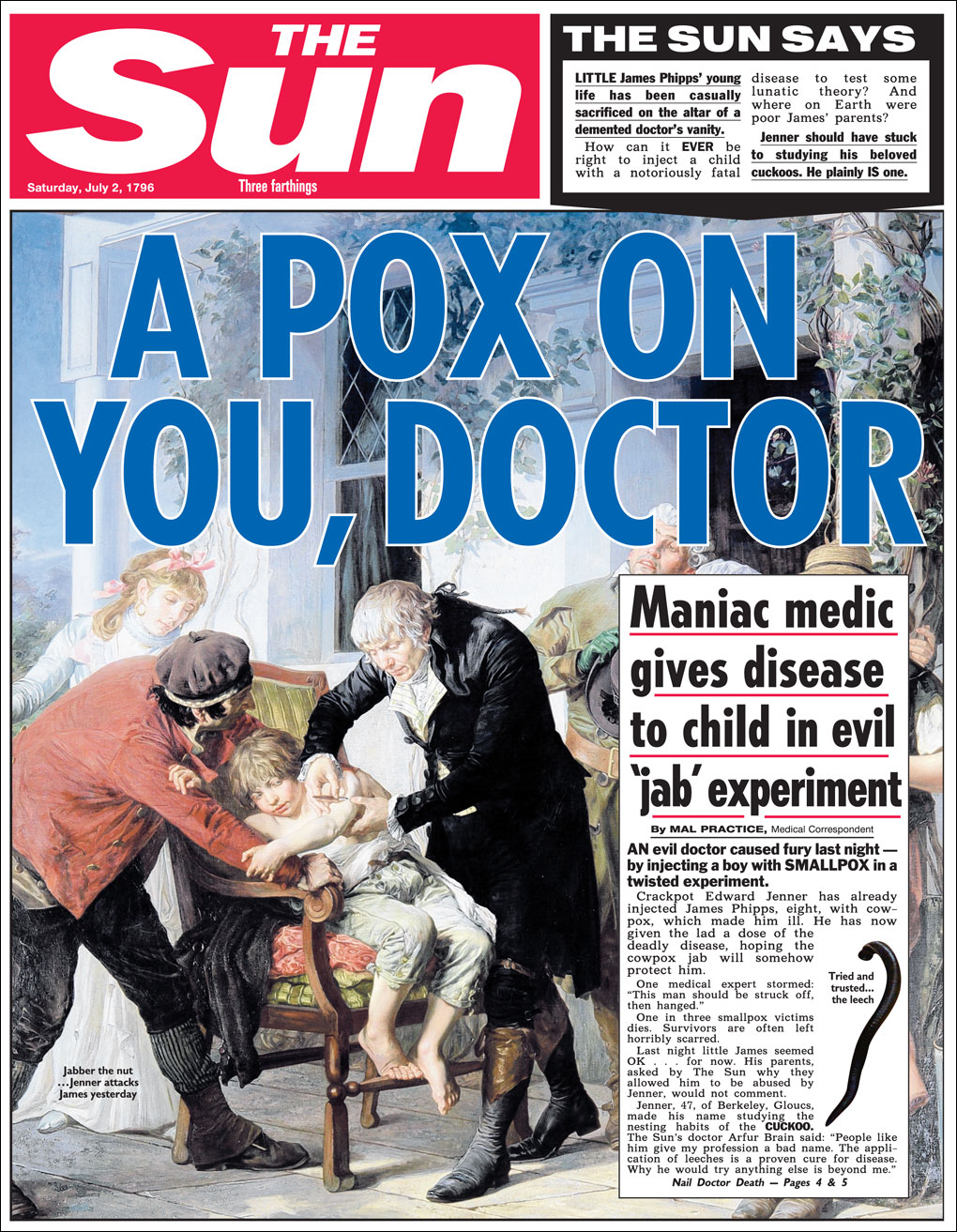
Edward Jenner established the principles of vaccination, proving that it was possible to prevent suffering and death from infectious diseases by artificial inoculation. His findings were made public on May 14, 1796. Rarely has there been a discovery so beneficial and rarely has such a discovery provoked such virulent opposition. It began immediately with a barrage of outrageous charges and continues today, largely on the Internet. (Measles, anyone?)

Although medical and scientific evidence demonstrates that the benefits of immunization far outweigh the rare adverse effects, opponents have claimed that vaccines do not work, that they are dangerous, that individuals should rely on personal hygiene instead, or that mandatory vaccinations violate individual rights or religious principles. If God had decreed that someone should die of smallpox, it would be a sin to thwart God’s will by vaccination.

One of the first anti-vaccinists was a Dr. Mosely who produced a pamphlet claiming no less than 500 cases of “beastly new diseases” produced by vaccination.  The pamphlet included engravings of an ox-faced boy and a girl covered by cow’s hair.

Another pamphleteer included a depiction of Dr. Jenner with a tail and hooves feeding a hideous monster with infants out of baskets. With quiet taste and understatement, he described vaccination as “A mighty and horrible monster, with the horns of a bull, the hind hoofs of a horse, the jaws of a kraken, the teeth and claws of a tiger, the tail of a cow – all the evils of Pandora’s box in his belly – plague, pestilence, leprosy, purple blotches, fetid ulcers, and filthy sores covering his body – and an atmosphere of accumulated disease, pain and death around him . . . (that) devours mankind – especially poor, helpless infants; not by scores only, or hundreds, or thousands, but by hundreds of thousands.”

Of course, we’re far more enlightened today.

MAY 13, 1619: WALK A MILE IN HIS WOODEN SHOES

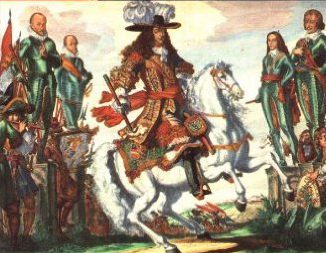
     Johan van Olden Barneveldt was a statesman who played an important role in the Dutch struggle for independence from Spain. His name is also associated – at least, according to British accounts – with a nation’s lack of gratitude for those who devote their lives to its service.  (The English have frequently displayed an antipathy toward the Dutch which has manifested itself in the language. A Dutch uncle is the opposite of a kindly relative; Dutch courage is a synonym for drunkenness; a Dutch treat is a demonstration of stinginess.)

     As Land’s Advocate for the States of Holland, an office he held for 32 years, Olden Barneveldt was the chief civil officer with tremendous influence in a republic without any central executive authority. And it was Olden Barneveldt who obtained for his country a footing among the powers of Europe, gaining peace and prosperity, freeing it from debt. He restored Dutch integrity by gaining back towns which had been surrendered to England as collateral for a loan and gained recognition of Dutch independence from Spain.

     The country owed nearly everything to this capable and upright administrator. Yet he had enemies. One Prince Maurice of Orange, head of the military forces, along with other military and naval leaders and the Calvinist clergy, were opposed to the peace with Spain, contending that the Spanish king was merely seeking time to recuperate his strength for a renewed attack against Dutch independence.

     This coalition against Olden Barneveldt proved to be overwhelming as well as nefarious. In 1619, he was arraigned before a special court of 24 members, only half of whom were Hollanders, and nearly all of whom were his personal enemies. In a mockery of justice, this kangaroo court ( a phrase showing English antipathy toward Australians?) condemned him to death, a sentence which was promptly carried out the following day, May 13, 1619, when the 72-year-old statesman was executed at the Hague.

Dutch Bad, Americans Good?

Fred Turner believed that people are basically  good.  In May of 1992 he set out from Beaufort, South Carolina, on a walk across America to underscore that belief.  A week into his walk, on May 13, Turner was crossing the Tuckaseking Bridge in Georgia when he met several men.  They asked him if he was the one whose walk they had read about in the paper.  When he told them he was they said: “Good, then give me your wallet.”  And when he complied, they beat him up and shoved him off the bridge.  He floated to a nearby island where he spent the night nursing two black eyes and a lot of bruises.  And perhaps reassessing his opinion of mankind.

MAY 12, 1812: POETRY WITHOUT NAUGHTY WORDS

Edward Lear, born in England in 1812, was a true dabbler — artist, illustrator, musician, author, poet. Starting off his career as an illustrator, he was employed to illustrate birds and animals first for the Zoological Society and then for Edward Stanley, the Earl of Derby, who had a private menagerie. He also made drawings during his journeys that later illustrated his travel books. and illustrations for the poetry of Alfred Lord Tennyson. As a musician, Lear played the accordion, flute, guitar, and piano (not simultaneously). He also composed music for a number of Romantic and Victorian poems, most notably those of Tennyson.

Lear is remembered chiefly for his work as a writer of literary nonsense. He might easily have been given the title Father of the Limerick for bringing the much maligned form into popularity (without the raunchiness that later found its way into the form). In 1846, he published A Book of Nonsense, a volume of limericks that went through three editions. In 1871 he published Nonsense Songs, Stories, Botany and Alphabets, which included his most famous nonsense song, The Owl and the Pussycat, which he wrote for the children of the Earl of Derby.

Lear’s nonsense books were successful during his lifetime, but he found himself fighting rumors that he was just a pseudonym and that the books were actually written by the Earl of Derby. Conspiracy theorists cited as evidence the facts that both men were named Edward, and that Lear is an anagram of Earl. A few even suggested he was born in Kenya, not England.

The Owl and the Pussy-cat went to sea
In a beautiful pea green boat,
They took some honey, and plenty of money,
Wrapped up in a five pound note.
The Owl looked up to the stars above,
And sang to a small guitar,
‘O lovely Pussy! O Pussy my love,
What a beautiful Pussy you are,
You are,
You are!
What a beautiful Pussy you are!’

Pussy said to the Owl, ‘You elegant fowl!
How charmingly sweet you sing!
O let us be married! too long we have tarried:
But what shall we do for a ring?’
They sailed away, for a year and a day,
To the land where the Bong-tree grows
And there in a wood a Piggy-wig stood
With a ring at the end of his nose,
His nose,
His nose,
With a ring at the end of his nose.

‘Dear pig, are you willing to sell for one shilling
Your ring?’ Said the Piggy, ‘I will.’
So they took it away, and were married next day
By the Turkey who lives on the hill.
They dined on mince, and slices of quince,
Which they ate with a runcible spoon;
And hand in hand, on the edge of the sand,
They danced by the light of the moon,
The moon,
The moon,
They danced by the light of the moon.

Naughty Words Without Poetry

Stand-up comedian, social critic, satirist, actor, writer/author George Carlin was born on May 12, 1937 (died 2008). Noted for his black humor as well as his thoughts on politics, the English language, psychology, religion, and various taboo subjects, he won five Grammy Awards for his comedy albums. Carlin and his classic “Seven Dirty Words” comedy routine were central to the 1978 U.S. Supreme Court case in which the justices affirmed the government’s power to regulate indecent material on the public airwaves.

In his own words:

george

Swimming is not a sport. Swimming is a way to keep from drowning. That’s just common sense!

Honesty may be the best policy, but it’s important to remember that apparently, by elimination, dishonesty is the second-best policy.

george-carlin2

The very existence of flamethrowers proves that sometime, somewhere, someone said to themselves, “You know, I want to set those people over there on fire, but I’m just not close enough to get the job done.”

Religion has convinced people that there’s an invisible man…living in the sky, who watches everything you do every minute of every day. And the invisible man has a list of ten specific things he doesn’t want you to do. And if you do any of these things, he will send you to a special place, of burning and fire and smoke and torture and anguish for you to live forever, and suffer and burn and scream until the end of time. But he loves you. He loves you and he needs money.

MAY 11, 1888: THE LEADER OF THE BAND

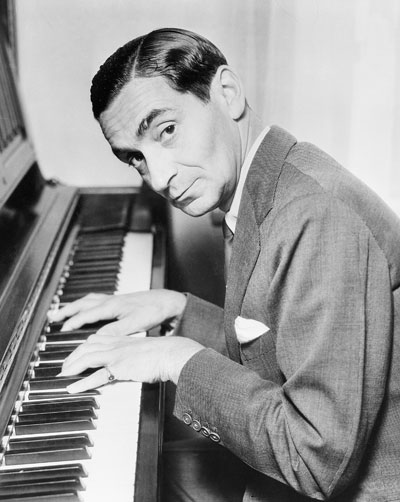
Israel Beilin was born on this day in 1888 in a small village in Belarus.  His father, a cantor in a synagogue, with the intimidating name of Moses, uprooted his family in the face of the anti-Jewish pogroms of the late 19th century, emigrating to the United States, where theyalex settled into a cold-water basement flat with no windows in New York City.  At the age of fourteen, Izzy, as he was called, realized that he contributed less to the family than his siblings and decided to leave home. With few survival skills and little education, he found no real employment. His only ability was acquired from his father’s vocation: singing. He joined with a few other youngsters, singing in Bowery saloons popular ballads for whatever customers would give them. Beilin began to recognize the kind of songs that appealed to audiences. In his free time he taught himself to play the piano, picking out tunes when the bar had closed for the night.


His first attempt at songwriting was a song called “Marie From Sunny Italy,” written in collaboration with the bar’s pianist. The sheet music to this song is important primarily because of a printer’s error.  The name printed on the cover was misspelled as: ‘I. Berlin.’


His meteoric rise as a songwriter came soon after with a song that would become world-famous. “Alexander’s Ragtime Band” firmly established Irving Berlin as an instant celebrity and one of America’s foremost musical wonders. He went on to write an estimated 1,500 songs, many becoming major hits, during his 60-year career, including the scores for 19 Broadway shows and 18 Hollywood films.  His songs were nominated eight times for Academy Awards. A list of noted songs might begin with “A Couple of Swells” and end with “You’re Just in Love,” with a whole lot in between.  Here’s a more complete list.


George Gershwin called him “the greatest songwriter that has ever lived” and composer Jerome Kern concluded that “Irving Berlin has no place in American music—he is American music.”

Meanwhile in Romania

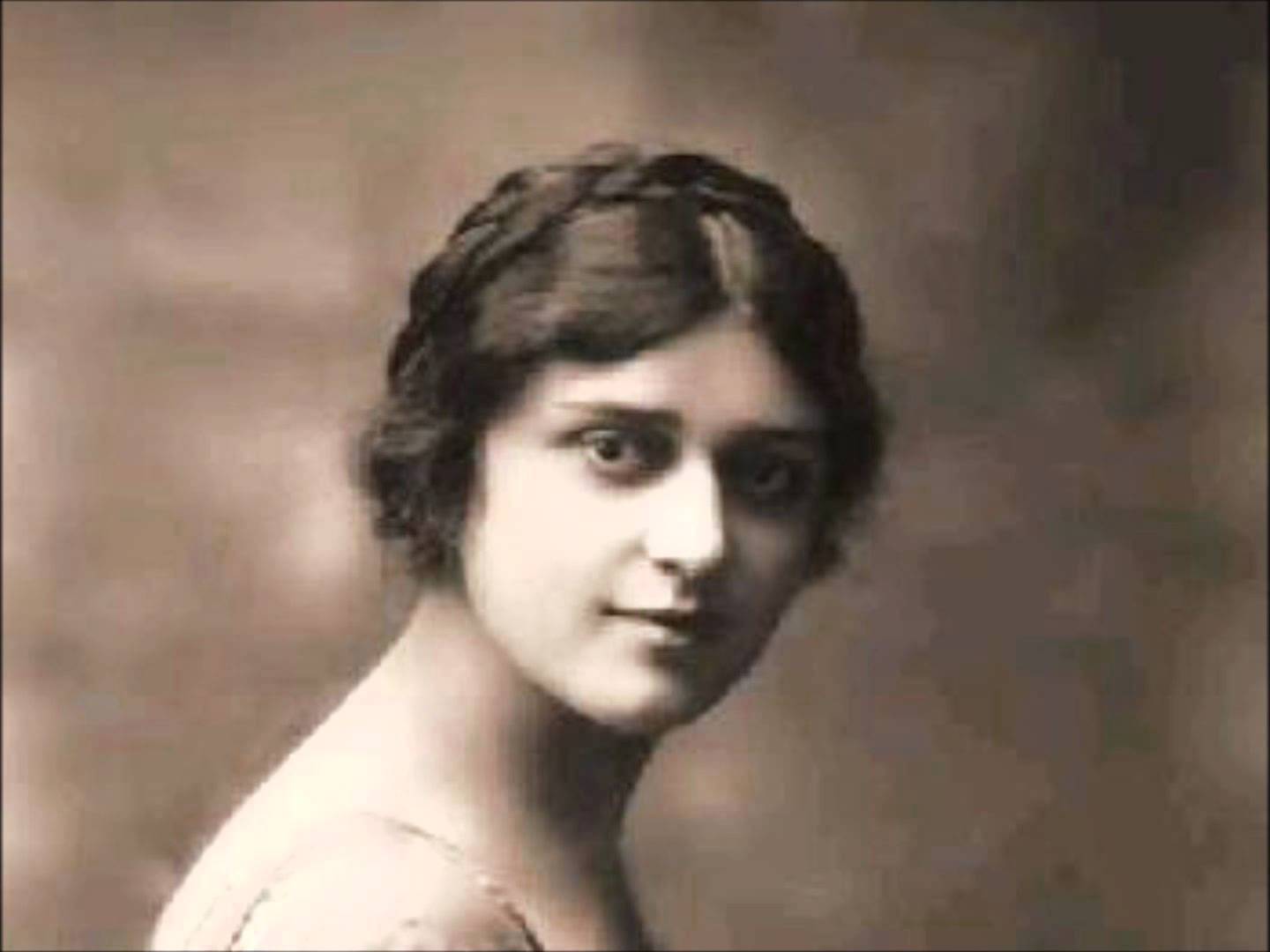
On this same date a few years earlier, in 1884, another musical talent was born in Romania.  Like Irving Berlin she emigrated to America at a young age.  Alma Gluck did not have his lasting fame, but she became a successful performer at  the Metropolitan Opera as well as in concerts throughout the country.  She was an early recording pioneer, and her recording of “Carry Me Back to Old Virginny” sold over a million copies, earning her a gold record, only the seventh to be awarded.


MAY 10, 1893: THE SUPREME COURT SAYS TOMAHTO

An 1883 tariff act required a tax to be paid on imported vegetables, but not fruit. The Nix family, tomato entrepreneurs, went to court to recover back duties paid to the Port of New York under protest, claiming that they owed nothing because, botanically, a tomato is a fruit, a seed-bearing structure growing from the flowering part of a plant. The case made it to the Supreme Court where, on May 10, 1893, the justices unanimously ruled that, botany be damned, a tomato is a vegetable.

At the hearing, both the plaintiffs’ counsel and the defendant’s counsel made extensive use of dictionaries. The plaintiffs’ counsel read in evidence the definitions of the word tomato, while the defendant’s counsel read the definitions of the words pea, eggplant, cucumber, squash, and pepper. In a clear case of one-upmanship, the plaintiff then read in evidence the definitions of potato, turnip, parsnip, cauliflower, cabbage, carrot and bean.

The court decided in favor of the defense and found that the tomato should be classified under the customs regulations as a vegetable, based on the ways in which it is used, and the popular perception to this end.  Justice Horace Gray, in a horticultural burst of logic, stated that:

“The passages cited from the dictionaries define the word ‘fruit’ as the seed of plants, or that part of plants which contains the seed, and especially the juicy, pulpy products of certain plants, covering and containing the seed. These definitions have no tendency to show that tomatoes are ‘fruit,’ as distinguished from ‘vegetables,’ in common speech, or within the meaning of the tariff act.”

He acknowledged that botanically, tomatoes are classified as a “fruit of the vine”; nevertheless, they are seen as vegetables because they were usually eaten as a main course instead of being eaten as a dessert. In making his decision, Justice Gray brought up another case in which the court found that although a bean is botanically a seed, in common parlance a bean is seen as a vegetable. While on the subject, Gray clarified the status of the cucumber, squash, pea, and turnip for good measure.

It would take another century to declare ketchup a vegetable.

MAY 9, 1671: STALKING THE CROWN JEWELS

In the movie The Adventures of Sherlock Holmes, Holmes’ nemesis Professor Moriarty is out to steal the crown jewels. His  battle of wits with Holmes over England’s great treasure lasts about an hour.  Earlier, an Irishman, Colonel Thomas Blood, attempted the same feat with a much more elaborate plan.

Colonel Blood set the plan in motion in April with a visit to the Tower of London. Dressed as a parson and accompanied by a woman pretending to be his wife, Blood made the acquaintance of Talbot Edwards, an aged but trustworthy keeper of the jewels. During this time, the jewels could be viewed by the payment of a fee. After viewing the regalia, Blood’s “wife” pretended to be taken ill, upon which they were conducted to Edward’s lodgings where he gave her a cordial and treated her with great kindness. Blood and his accomplice thanked the Edwardses and left.

Blood returned a few days later with a half dozen gloves as a present to Mrs. Edwards as a gesture of thanks. As Blood became ingratiated with the family, he made an offer for a fictitious nephew of his to marry the Edwardses’ daughter, whom he alleged would be eligible upon their marriage to an income of several hundred pounds. It was agreed that Blood would bring his nephew to meet the young lady on May 9, 1671.  At the appointed time, Blood arrived with his supposed nephew, and two of his friends, and while they waited for the young lady’s appearance, they requested to view the jewels. Edwards accommodated the men but as he was doing so, they threw a cloak over him and struck him with a mallet, knocking him to the floor and rendering him senseless.

Blood and his men went to work. Using the mallet, Blood flattened out the crown so that he could hide it beneath his clerical coat. Another filed the sceptre in two to fit in a bag, while the third stuffed the sovereign’s orb down his trousers.

The three ruffians would probably have succeeded in their theft but for the opportune arrival of Edwards’ son and a companion, Captain Beckman. The elder Edwards regained his senses and raised the alarm shouting, “Treason! Murder! The crown is stolen!” His son and Beckman gave pursuit.

As Blood and his gang fled to their horses waiting at St. Catherine’s Gate, they dropped the sceptre and fired on the guards who attempted to stop them. As they ran along the Tower wharf, they were chased down by Captain Beckman. Although Blood shot at him, he missed and was captured before reaching the Iron Gate.  The crown, having fallen from his cloak, was found while Blood struggled with his captors, declaring, “It was a gallant attempt, however unsuccessful, for it was for a crown!” — a rather eloquent comeuppance speech which today would be something more along the lines of “Oh fuck!”

MAY 8, 1854: A MILE IN WHOSE SHOES?

     Celebrated pedestrian Robert Barclay Allardice, 6th Laird of Ury, generally known simply as Captain Barclay, died on May 8, 1854. During his life he accomplished many feats in the world of walking, and is, in fact, considered the father of pedestrianism, a popular sport of the 19th century.

     His first feat, at the age of fifteen, was to walk six miles in an hour ‘fair heel and toe.’ Heel and toe was a rather vague rule of pedestrianism, that the toe of one foot could not leave the ground before the heel of the other foot touched down. It was randomly enforced. In 1801, at the age of 22, Barclay walked from Ury to Boroughbridge, a distance of 300 miles in five oppressively hot days, and in that same year, he walked 90 miles in 21 and a half hours, winning 5000 guineas for his fancy footwork.

     His most famous feat came in 1809 when he undertook the task of walking 1000 miles in 1000 successive hours, a mile within each hour, a challenge in which many had failed and none had succeeded. At stake was 100,000 pounds (roughly 8 million dollars today). This feat captured the imagination of the public, and 10,000 people came to watch over the course of the event, cheering him on or wishing him ill fortune depending on the direction of their own wagers. He began his course at midnight on June 1 and finished it at 3 p.m. on July 12.

     Pedestrian races were popular with both the media and the public throughout the 19th century, drawing throngs of spectators, along with bookies, touts and other unsavory characters who frequent such competitions. With the coming of the automobile, however, pedestrianism became an endangered sport as pedestrians themselves became an endangered species, serving mostly as targets for mechanized sporting types.  It does remain in our popular culture, however, with such paeans to pedestrianism as “The Stroll,” “Walk on the Wild Side,” “Walk Like a Man,” and “Walk This Way.”


Walking the Dogs

On May 8, 1877, 1,201 of the classiest American canines convened at the Hippodrome in New York City to compete for the the title of top dog.  This was the first dog show to be held under the guidance of the Westminster Kennel Club, and it has been held annually ever since.  Among the luminaries at that first event were two Staghounds from the pack of the late General George Custer and two Deerhounds bred by Queen Victoria.

Eighteen years later, on May 8, 1895, felines had their turn in the spotlight at the first cat show held in New York at Madison Square Garden.  This was a more down to earth affair with prizes given in several categories including the best stray alley cat.