JUNE 6, 1971: THE SHEW MUST GO ON

Ed Sullivan was to the golden age of television what Google is to searching.  He ruled Sunday night TV for 23 years – from 1948 to his very last broadcast on this day in 1971. Sullivan presented acts from the era’s biggest stars to acrobats, dancing bears, puppets, contortionists, you name it.  Ten thousand in all – if they were entertainers, an appearance on the Sullivan show was their holy grail.

Musical performances from rock to opera were a staple of the program. Even its first broadcast, when it was known as Toast of the Town, made music history as Broadway composers Richard Rodgers and Oscar Hammerstein II previewed the score of their upcoming musical, South Pacific. And after that, West Side Story, Cabaret, Man of La Mancha – if it was on Broadway, it was on Sullivan. One of those Broadway musicals, Bye Bye Birdie, was all about making it on the Sullivan show.

Sullivan also chronicled the history of rock and roll from Elvis Presley’s appearance in 1956 through the Supremes, the Beatles, the Rolling Stones, the Doors, the Mamas and the Papas, and on June 6, 1971, the last program, Gladys Knight and the Pips.

When CBS canceled the show, the network let it end with a whimper.  But in the 33 years since cancellation, numerous tribute shows and DVDs have kept Sullivan in the public eye.


JUNE 5, 1850, 1878, 1895: THRICE UPON A TIME IN THE WEST

When the sheriff of Lincoln County, New Mexico, resigned in 1880, the county appointed Pat Garrett, a former bartender known as something of a gunman to replace him.  Garrett was immediately given the task of apprehending a friend from his saloon keeping days, jail escapee Henry McCarty, aka Henry Antrim, aka William Harrison Bonney, but more widely known as Billy the Kid.  The Kid had supposedly killed 21 men, one for every year of his life, but no one could actually name more than nine.

Later that year, Garrett captured the Kid and his companions at the posh New Mexico spa, Stinking Springs, but the Kid escaped from the Lincoln County Jail, killing his two guards. Garrett learned that the Kid was hiding out at the house of a mutual friend, Pete Maxwell. Late one night, Garrett went to Maxwell’s house while the Kid was sleeping.  Accounts differ as to what happened next. Either the Kid woke up and entered Maxwell’s bedroom, where Garrett, standing in the shadows, shot him as he asked “Who is it?” (“It is I” or even “It’s me,” being the more gentlemanly response). Or Garrett went into Maxwell’s wife’s room and tied her up, and when the Kid walked into her room (for what purpose, we can only guess), Garrett blasted him with a single rifle shot. Either account pretty much tarnished Garrett’s reputation as a straight shooter.

Conspiracy theorists maintain that Billy the Kid was not killed at all and that Garrett staged it all so the Kid could escape. They also insist that Garrett was born (on June 5, 1850) in Kenya.

At about the same time (1878, to be exact) Pancho Villa was born on this same day a bit farther south in the northern Mexican state of Chihuahua. During the early 20th century, he pretty much ran the state.  He and his supporters played Robin Hood, seizing haciendas and land for distribution to peasants and soldiers. They robbed and commandeered trains, and printed their own money to pay for the 1910-20 revolution.

After Villa’s rather infamous incursion into New Mexico in 1916, U.S. Army General John J. Pershing pursued Villa for nine months unsuccessfully (probably because he refused to ambush him in a lady’s bedroom) before turning his attention to World War I. Villa retired in 1920 on a large estate where he could have spent a gracious hero’s retirement, sipping Margaritas in comfort, had he not decided to get back into politics, whereupon he was assassinated.

A few years later, back in the US, William Boyd (born June 5, 1895), was making a name for himself as a straight shooting, upright good guy, that name being Hopalong Cassidy.  Hoppy, as his friends called him, eschewed the role of  a hard-drinking, rough-living wrangler, opting instead to be the very model of a cowboy hero, one who did not smoke, drink or swear and who always let the bad guy strike the first blow (and never ever ambushed a bad guy in a lady’s bedroom).

Conspiracy theorists maintain that Boyd was not a real cowboy, that Hoppy was a fictional character. They point to the 66 Hopalong Cassidy films and the memorabilia such as watches, comic books, dishes, Topps trading cards, and cowboy outfits as proof.  Next they’ll say he was born in Kenya.

There’s always a man faster on the draw than you are, and the more you use a gun, the sooner you’re gonna run into that man. — Gunfight at the O.K. Corral
JUNE 4, 1411: THE CHEESE STANDS ALONE

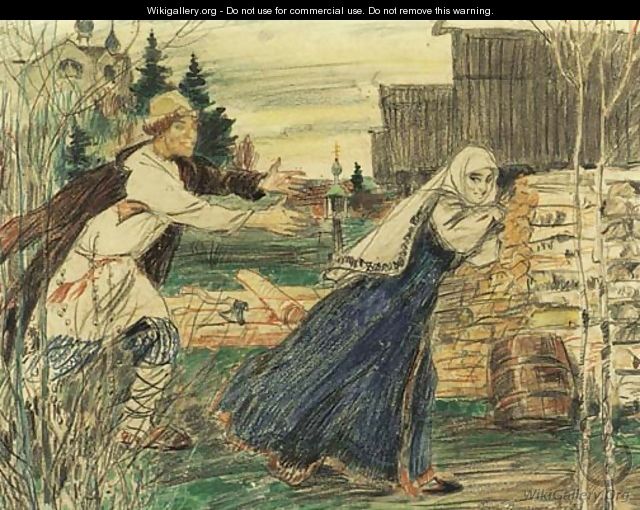
Even in 1411, the people of Roquefort-sur-Soulzon had been making cheese as long as anyone could remember.  And all because a young man was lured away from his lunch by a fair young maiden. Or so the story goes.

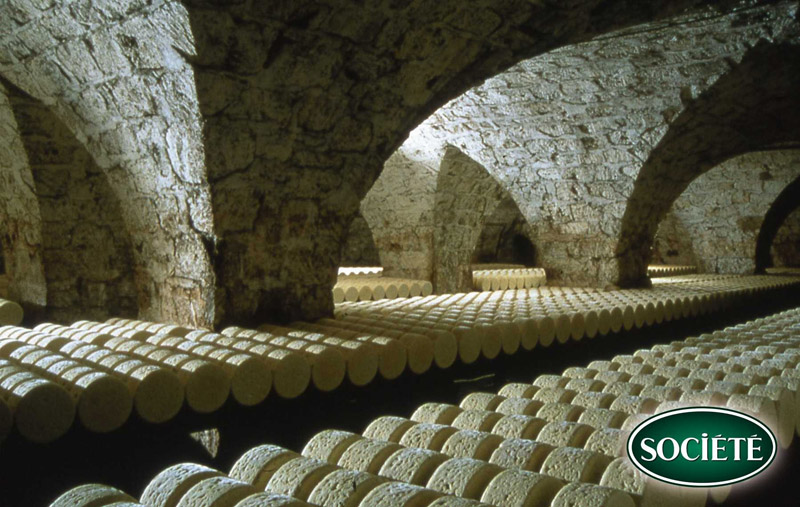
The cheese-making folks of Roquefort-sur-Soulzon were probably the only ones making the tangy, crumbly sheep’s milk cheese with its distinctive veins of green mold. Nevertheless on June 4, 1411, French King Charles VI granted them a monopoly for the ripening of the Roquefort cheese.

What makes Roquefort Roquefort is its aging in the Combalou caves of Roquefort-sur-Soulzon. Popular legend suggests that the cheese was discovered when a young man eating his lunch of bread and ewe’s milk cheese spied a hot young woman in the distance. Naturally, he ran off to pursue her, leaving his lunch in the cave. Legend leaves the results of his amorous pursuit to our imaginations, but his appetite must have been somehow satisfied since he didn’t return to the cave for several months. When he did, the mold present in the cave – Penicillium roqueforti to be exact – had done an ugly duckling number on his lump of cheese transforming it into a cheese of beauty. The bread, however, was another story.

The French take their wine and their cheese seriously. A ruling in 1961 decreed that although the Roquefort-sur-Soulzon method for the manufacture of the cheese could be followed across the south of France, only those cheeses ripened in the natural caves of Mont Combalou could bear the name Roquefort. Today, its production involves some 4,500 people who herd special ewes on 2,100 farms in a carefully defined grazing area. In 2008, 19,000 tons were produced, with 80% of it consumed in France.  It’s a laborious process — 4,500 folk dropping their 4,500 lumps of ewe’s milk cheese and running off in hot amorous pursuit of 4,500 other folk.


JUNE 3, 1956: I KNOW SUGGESTIVE STIMULATING AND TANTALIZING MOTIONS WHEN I SEE THEM

A dance party in the beach town of Santa Cruz, California, a quiet oasis 70 miles south of San Francisco, back in 1956 (years before it became a counterculture capital),  led to a bit of overreaction by the town’s conservative adult authorities. Two hundred teenagers had taken over the Santa Cruz Civic Auditorium on a Saturday night to dance to the music of a group called Chuck Higgins and his Orchestra, regional favorites with a few hit rock recordings. Shortly after midnight, Santa Cruz police entered the auditorium to check on the event, and didn’t like what they saw: a crowd “engaged in suggestive, stimulating and tantalizing motions induced by the provocative rhythms of an all-negro band.” Although that sounds like a pretty good endorsement for the affair, the police did not view it as a positive. Without so much as a “save the last dance for me,” they shut the place down and sent everyone home to bed.

And they didn’t stop there. On the following day, June 3, city fathers further endeared themselves to city teenagers and captured national attention when they announced a total ban on the playing of rock and roll and other forms of “frenzied music” at public gatherings (the other forms probably meant to pull Wayne Newton into the loop).  Such music was, they said, “detrimental to both the health and morals of our youth and community.”

Not everyone saw this as an absurdity, it’s concern with “undesirable elements” not so subtly racial, and an effort that was bound to fail. Within two weeks, similar bans were enacted in Asbury Park, New Jersey, and in San Antonio, Texas.  But in spite of such valiant efforts, rock and roll would soon dominate the Billboard Hot 100, and teenagers everywhere would be singing “It’s got to be rock-roll music, if you want to dance with me.”


JUNE 2, 1855: GIVE ME A MARTINI OR GIVE ME DEATH

In the early 1850s, the city of Portland, Maine, with a population of 21,000 might be called a sleepy little burg. But that was about to change thanks to a Maine law enacted in 1851 outlawing the manufacture and sale of alcohol anywhere in the state, except for medicinal and mechanical purposes.

Portland Mayor Neal S. Dow was an outspoken prohibitionist who fully supported the law, so much so that he was dubbed the “Napoleon of Temperance. ” However, Dow had authorized a large shipment of “medicinal and mechanical alcohol” that was being stored in the city vaults for distribution to pharmacists and doctors (authorized under the law). The good citizens of Portland got wind of this cache of alcohol and suspected the worst, that Dow was a hypocrite and a secret sot.

The Maine law had an interesting little clause allowing any three voters to apply for a search warrant if they suspected someone was selling liquor illegally. Three men did just that, appearing before a judge who issued a search warrant.

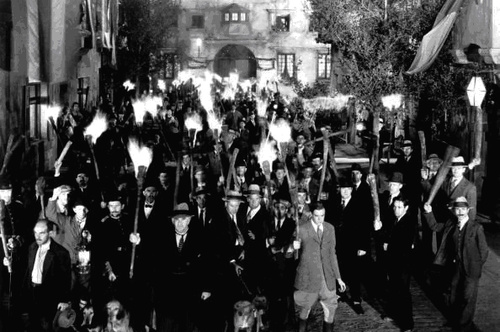
On the afternoon of June 2, a crowd of several hundred people, already irate over the law coming between them and their Harvey Wallbangers, gathered outside the building where the alcohol was being held. The crowd grew larger and surlier as it became obvious that the police were not going to seize the booze. As the crowd swelled, jostling became shoving, and the hurling of angry words became the hurling of rocks. The infamous Portland Rum Riot of 1855 was in full swing.

Police were unable to control the mob, and Mayor Dow called out the militia. When the protesters ignored the order to disperse, the militia, on Dow’s orders, fired into the crowd killing one man and wounding several others.

Dow was widely criticized for his strong-arm tactics during the incident and was later prosecuted for improperly acquiring the alcohol but was acquitted. The Maine Law was repealed the following year.


JUNE 1, 1869: TOM EDISON AND HIS ELECTRIC THINGUMAJIG

With over a thousand inventions, many of which have touched the lives of nearly everyone in the world, Thomas Alva Edison is considered by many to be the greatest inventor of the modern era. But it wasn’t always thus. Al, as he was known, was a lousy student whose mother finally decided to home-school him. Edison’s first job was operating a newsstand on a train that ran from Port Huron to Detroit. To make the trips more interesting, he put together a chemistry lab in a boxcar (On the Atchison, Topeka and the Kaboom!). Then working as a telegraph operator, he continued to do scientific experiments in his free time. In 1869, he decided to devote himself full time to inventing.

     His first invention was patented that same year on June 1, a voting machine for use by legislative bodies such as Congress. Having heard that both the Washington, D.C., City Council and the New York State legislature were planning to install electric vote recorders, he stepped up to the plate. Edison’s somewhat Rube-Golbergish system, started with a switch that each legislator could move to either a yes or a no position. The vote would then be transmitted by a signal to a central recorder that listed the names of the legislators in two columns of metal type headed “Yes” and “No.” A recording clerk would then place a sheet of magic paper over the columns of type and move a metallic roller over the paper and type. As an electric current passed through the paper, chemicals in the paper decomposed, leaving the imprint of the name in a manner similar to that of chemical recording automatic telegraphs. Dials on the machine recorded the total number of yeas and nays.

     A fellow telegrapher bought a stake in the invention for $100 and took it to Washington, D.C. to demonstrate it before a Congressional committee. The chairman of the committee less than enthusiastically told him that “if there is any invention on earth that we don’t want down here, that is it.” It seemed legislators liked the slow pace of voting which allowed them to lobby or trade votes or do those other fun legislative things. Edison’s vote recorder was never used.

     Edison persevered, resolving never again to invent something that would not sell. His next invention, an improved stock market tickertape machine, earned him a tidy $40,000. And he went on to invent such other clever devices as the electric light bulb.

And today in 1880, another inventor’s bright idea gone awry, the first pay telephone was made available to the public in the New Haven office of the Connecticut Telephone Company. No “deposit ten cents for another ten minutes” here. A proud attendant stood next to the phone collecting those dimes.

MAY 31, 1578: What’s in a Name I: Martin Frobisher

English sailor/privateer Sir Martin Frobisher visited the New World three times on his quest for — what else? — that elusive Northwest Passage to Asia.  Setting sail from England on May 31, 1578, on his second voyage, he sailed up Labrador way and into — talk about coincidences — Frobisher Bay.  One piece of luck followed another.  Ashore, on what is now Baffin Island, he discovered gold ore.  Lots of it.  He loaded three ships with 200 tons of the stuff and returned merrily to England.  He sailed right back to the New World for more gold ore with an even larger fleet of ships, giving nary a thought to that damn Northwest Passage.  1,350 tons this time around.

Time passed, and as the gold ore was smelted, Frobisher basked in the thoughts of his future wealth.  Alas, it wasn’t to be.  Efforts to extract gold revealed that the supposed gold ore was worthless rock.  The ore was repurposed for road construction, and thus the streets of London were paved with gold — fool’s gold, that is.

What’s in a Name II: Engel K0r . . . What’s Her Name

Engel Korsendochter was the daughter of wealthy burghers (not to be confused with, well you know) Corsgen Elbertsznoon and Geertruyt Hendriksdr van der Schelling.  She married Heiman Jacobsnoon, the mayor of the Frisian city of Amstelerdam. Astute almanackers will realize that we have journeyed back to the world of windmills, tulips, wooden shoes and Dutch masters (painters not cigars).  Engel and Heiman of the moniker mouthfuls were stars of a rebellion that took place on May 31, 1531.  (Those same astute almanackers will probably remember the Dutch undertakers rebellion, January 31, 1696.)  Heiman was a Protestant sympathizer;  Engel was Catholic through and through, with two sister sisters and a Franciscan father to prove it.  Engel herself was the head of the Guild of the Holy Sacrament, a society charged with protecting a chapel (between Kalverstraat and Rokin, if you care).

City authorities had called for the chapel to be torn down to make room for a wool shed (was Heiman involved?) Engel led three hundred women in a protest march that brought a lot of attention to their cause but got them banished from Amsterdam for four years.  They were later pardoned by Catholic King Charles V.

An altarpiece attempts to honor Engel Korsendoc —


MAY 30, 1908: THAT’S ALL FOLKS

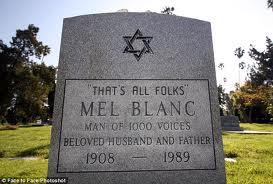
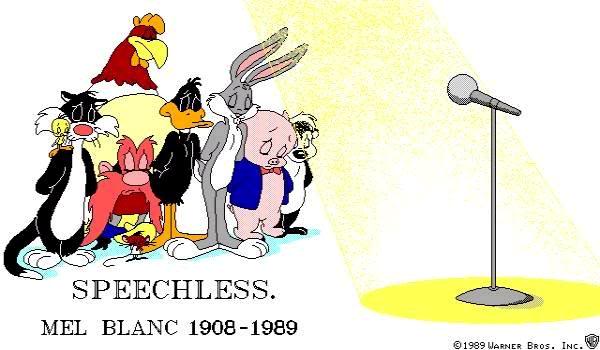
Although Mel Blanc, “the Man of a Thousand Voices,” is most often remembered as the voice of Bugs Bunny, Porky Pig, Daffy Duck, Woody Woodpecker, Tweety Bird, Sylvester, Yosemite Sam, Speedy Gonzales, Foghorn Leghorn, Pepé Le Pew, the Tasmanian Devil and many of the other characters from theatrical cartoons and Hanna-Barbera’s television cartoons, he had a long career as a comedian and character actor in radio and television. He was born on May 30, 1908, and died in 1989.

Blanc was a regular on The Jack Benny Program in various roles, and appeared on many other shows (Fibber McGee and Molly, Great Gildersleeve, Abbott and Costello, Burns and Allen), including his own which ran from September 1946 to June 1947. In the Jack Benny radio show he was Carmichael, the irascible polar bear who guarded the comedian’s underground vault; his outspoken parrot; his violin teacher, Monsieur Le Blanc; his Mexican gardener, Sy; and even his Maxwell automobile.

Blanc was easily the most prolific voice actor in the history of the industry and the first to be identified in the ending credits. In his 60-year career, he helped develop nearly 400 characters and provided voices for some 3,000 animated cartoons. During the cartoon heydays of the 1940’s and 50’s, he voiced 90 percent of the Warner Brothers cartoon empire. As movie critic Leonard Maltin said, “It is astounding to realize that Tweety Bird and Yosemite Sam are the same man!”

A gem from The Jack Benny Program:

MAY 29, 1913: ILL-MANNERED FACTIONS? IN PARIS?

On the evening of May 29, 1913, the Theatre des Champs-Elysees, the newest venue in Paris, open for just over a month, was packed.  According to a newspaper report: “Never. . . has the hall been so full, or so resplendent; the stairways and the corridors were crowded with spectators eager to see and to hear.” What they were eager to see and to hear was a ballet program celebrating the works of many of the leading composers of the day. Ticket sales were priced accordingly.

Parisian ballet audiences of the time fell into two distinct groups: the wealthy and fashionable set, who would be expecting to see a traditional performance with beautiful music, and a “Bohemian” group favoring anything new and nontraditional because it would annoy the snobs in the boxes.

The evening began tranquilly with Les Sylphides, in which Vaslav Nijinsky and Tamara Karsavina danced the main roles, followed by the premiere of Stravinsky’s The Rite of Spring (Pictures of Pagan Russia in Two Parts) in which, after various primitive rituals celebrating the advent of spring, a young girl is chosen as a sacrificial victim and dances herself to death.

There is a consensus among eyewitnesses and commentators that the disturbances in the audience began during the Introduction, which was greeted by derisive laughter, and grew into a crescendo when the curtain rose on the “Augurs of Spring” with its pipers piping and dancers stomping. The terrific uproar, along with the on-stage noises, pretty much drowned out the performers.  The two factions in the audience began attacking each other, but their anger was soon diverted toward the orchestra, and anything not tied down was quickly thrown in its direction. The plucky orchestra played on. Forty or so of the most energetic offenders were forcefully ejected by the police who had arrived somewhere toward the end of Part I. Throughout all this the performance continued without interruption.

Things grew somewhat quieter during Part II, and by some accounts the final “Sacrificial Dance” was watched in reasonable silence, albeit with a certain amount of muttering.  At the end there were several curtain calls (as opposed to catcalls) for the dancers, the orchestra, and Stravinsky before the evening’s program continued.

Press reviews called the work “a laborious and puerile barbarity” on one hand and “superb, with the disturbances, being merely a rowdy debate between two ill-mannered factions” on the other.

Paris survived.  The Rite of Spring became a classic.  And puerile barbarity is alive and well.


MAY 28, 1539: I KNOW A DARK SECLUDED PLACE

Spanish explorer and conquistador Hernando de Soto landed in Florida  in 1539 to begin the first European expedition deep into the territory of the modern-day United States. A formidable undertaking, de Soto’s expedition took him throughout the southeastern florida_mapUnited States searching for gold, silver and the ever-elusive passage to China. Although he was not the first explorer to visit Florida, he was the first to reach and cross the Mississippi River (and the only Spanish explorer to have a large-finned automobile named after him).


De Soto got his start in the conquistador business under the tutelage of that explorer and great statesman, Francisco Pizarro, traveling with Pizarro and his Spanish ambassadors as they befriended the native Incas.  Along the way, he became a wealthy man, returning as such to Spain. But an explorer is an explorer, and de Soto was not one to sit around on his Incan gold. He returned to the New World as the Governor of Cuba. From there, de Soto was expected to colonize the North American continent for Spain within four years, for which his family would be given a sizable piece of land (Georgia maybe).


De Soto selected 620 eager Spanish and Portuguese volunteers for the governing of Cuba and conquest of North America. They embarked from Havana on seven ships and two caravels, with tons of heavy armor and equipment, more than 500 livestock, including 237 horses and 200 pigs. Their planned four-year foray took them through Florida to Georgia, Mississippi, Arkansas, Louisiana, and Texas.

Unfortunately, de Soto was unable to complete the trip; he died in 1542 on the banks of the Mississippi River in Arkansas or Louisiana. This was a bit of an embarrassment since de Soto had passed himself off as an immortal sun god to the local natives, although some of the them had become skeptical of his deity claims (“Him no God, kemo sabe, him Spanish.”) His men concealed his death and hid his body somewhere along or in the Mississippi. And to this day the actual location of his burial remains a mystery, known only as Hernando’s Hideaway.  Olé!