Known as Cœur de Lion or the Lionheart because of his reputation as a great military leader and warrior, Richard I became King of England on July 6, 1189, and ruled until his death ten years later. He was the stuff of which legends were made, particularly in the story of Robin Hood, although he’s strictly an offstage presence, being held prisoner in a far-off land until the very end and his triumphant return. Robin, you will remember, battled the evil Prince John who was doing his best to usurp Richard’s throne in his absence. Eventually, Richard returns triumphantly to England, but in a bit of a slap in the face to Robin, he forgives John and names him his heir to the throne. Robin is abandoned to Sherwood Forest and his “merry men” (see Robin Hood – Men in Tights).
In reality, Richard, it seems, was a rather lackluster king, spending only six months of his ten-year reign in England (“hates London, it’s cold and it’s damp”) preferring to spend his time on crusades, battling Saladin, and waging wars throughout the world (“who would Jesus invade?”).
He died as a result of an arrow wound (live by the arrow, die by the arrow). According to a 13th century bishop, Richard was required to spend 33 years in purgatory atoning for his many sins before finally being allowed into heaven in March 1232.
Richard III also began his reign on July 6, nearly 300 years later in 1483. He took the crown shortly after having his nephew 12-year-old King Edward V declared a bastard and sent to the Tower. His only accomplishment as king seems to have been the murder of his two nephews (and a number of scholars would take that away from him too). Bishops have not said how many years he had to spend in purgatory before joining his ancestors up above, but we can guess it was quite a few.
Chopped pork shoulder meat, with ham meat added, salt, water, modified potato starch just for fun, and sodium nitrite to give it chemical balance – who in 1937 would have thought such ingredients might add up to one of the most ubiquitous meat products known to the world. In 2007, the seven billionth serving was sold. Sure, McDonald’s has sold more burgers, but they don’t come in a can. Spam do.
Known in some circles as a precooked luncheon meat product and in others as mystery meat, Spam has probably been the butt of more food jokes than any other product. Its pervasiveness led to the lending of its name to junk email.
World War II saw a huge increase in the use of Spam. Replacing fresh meat, it was served for breakfast, lunch, and dinner and called “ham that didn’t pass its physical” or “meatloaf without basic training.” After the war, a troupe of former servicewomen, the Hormel Girls, toured the country promoting the eating of Spam as being downright patriotic. The show went on to become a radio program all about selling Spam. Hawaiians eat the most Spam per capita in the United States. It’s even sold at Burger King and McDonald’s. Hawaii holds an annual Spam Jam in Waikiki during the last week of April.
In 1963, Spam was introduced to schools in South Florida as cheap food and was even used for art sculptures. It was so successful that Hormel Foods introduced Spam in school colors, the first being a blue and green variety that is still used today.
The North American home of Spam is Austin, Minnesota – “Spam Town USA.” It’s home to the Spam Museum, celebrating the history of the Hormel company, the origin of Spam and its place in world culture. Austin is also the location of final judging in the national Spam recipe competition. Competing recipes are collected from winning submissions at the top forty state fairs in the nation. And there’s a restaurant with a menu devoted exclusively to Spam – Johnny’s SPAMarama.
Don’t you want to run right out and buy a can?
We’d be remiss if, after the foregoing adulation, we didn’t give you a Spam recipe. Here’s a nice easy one:
Hawaiian Spamburger
1 (12-ounce) can Spam cut into 8 slices
1 (8-ounce) can pineapple rings, drained
4 hamburger buns, split and toasted
4 slices American cheese
Brown the Spam slices in a skillet.
Place 2 slices on each bottom half of a hamburger bun.
He is probably the patron saint of inventors everywhere – or at least their idol – for his uncanny ability to devise an incredibly convoluted method to carry out the simplest tasks. In fact the Merriam-Webster dictionary adopted his name as an adjective in 1931 meaning just that, to accomplish something simple through complex means.
Reuben Garrett Lucius (Rube) Goldberg was born on July 4, 1883. He died in 1970, at the age of 87, leaving a legacy for inventors and cartoonists alike. He was a founding member and first president of the National Cartoonists Society and is the namesake of its Reuben Award for Cartoonist of the Year. In 1948, he won his own Pulitzer Prize for his political cartooning. And he is the inspiration for many competitions challenging would-be inventors to create machines using his scientific principles.
Professor Butts and the Self-Operating Napkin offers a typical scenario for a Rube Goldberg invention: A soup spoon (A) is raised to the mouth, pulling string (B) and thereby jerking a ladle (C), which throws cracker (D) past parrot (E). Parrot jumps after cracker and perch (F) tilts, upsetting seeds (G) into pail (H). Extra weight in pail pulls cord (I), which opens and lights automatic lighter (J), setting off skyrocket (K), which causes sickle (L) to cut string (M) and allow the pendulum with the attached napkin to swing back and forth, wiping the user’s chin.
THE DAY WE MOVED OUT
On July 4, 1776, the Continental Congress adopted the Declaration of Independence stating that the thirteen American colonies regarded themselves as a new nation, the United States of America, and were no longer part of the British Empire.
“When in the Course of human events, it becomes necessary for one people to dissolve the political bands which have connected them with another, and to assume among the powers of the earth, the separate and equal station to which the Laws of Nature and of Nature’s God entitle them, a decent respect to the opinions of mankind requires that they should declare the causes which impel them to the separation.
We hold these truths to be self-evident, that all men are created equal, that they are endowed by their Creator with certain unalienable Rights, that among these are Life, Liberty and the pursuit of Happiness. . .”
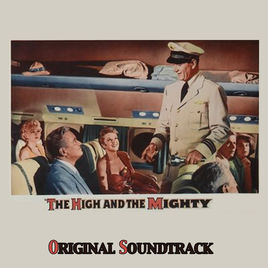
In 1954, a gaggle of Hollywood VIPs boarded a DC-4 airliner headed from Hawaii to California. Their troubled flight made a bit of film history — in Cinemascope, no less. The High and the Mighty premiered on July 3, 1954, with a roster of stars that included Claire Trevor, Robert Stack, Laraine Day, Phil Harris, and shepherding them through the sky, John Wayne.
Introducing the scenario that would be used so successfully by the Airport movies of the 1970s as well as countless other disaster movies, the film details the lives and interactions of the passengers and crew when calamity strikes the flight. Calamity comes in the form of a ‘whoops there goes the first prop’ moment and another, followed by a nasty engine fire. Co-pilot Wayne leaps to the fore and (spoiler alert) guides the plane to its destination. And what happened to the pilot, you ask. The pilot, played by Robert Stack goes all squishy and useless (probably because Wayne produced the film and Stack didn’t).
Stack, incidently, showed up in a 1980 film that brought the air disaster genre to its illogical conclusion. In Airplane he stays on terra firma trying to talk an experienced pilot through a landing: “Striker, listen, and you listen close: flying a plane is no different than riding a bicycle, just a lot harder to put baseball cards in the spokes”.
Composer Dimitri Tiomkin won an Academy Award for his original score of The High and the Mighty. The title song was nominated for an award but did not win.
MIAMI WIT
Dave Barry, born July 3, 1947, is a Pulitzer Prize-winning columnist and humorist who wrote a nationally syndicated column for The Miami Herald from 1983 to 2005. He has also written numerous books of humor.
• The word user is the word used by the computer professional when they mean idiot.
• If you were to open up a baby’s head – and I am not for a moment suggesting that you should – you would find nothing but an enormous drool gland.
• Although golf was originally restricted to wealthy, overweight Protestants, today it’s open to anybody who owns hideous clothing.
• Gravity is a contributing factor in nearly 73 percent of all accidents involving falling objects.
• Dogs feel very strongly that they should always go with you in the car, in case the need should arise for them to bark violently at nothing right in your ear.
• The simple truth is that balding African-American men look cool when they shave their heads, whereas balding white men look like giant thumbs.
• Thus the metric system did not really catch on in the States, unless you count the increasing popularity of the nine-millimeter bullet.
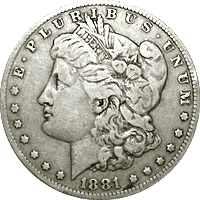
The dollar coin has a long and checkered history in the United States. The first ones were minted back in 1794, just 1,758 of them. Produced rather sporadically through the years, they came in various flavors: Flowing Hair, Draped Bust, Seated Liberty, Morgan, Peace and lastly Eisenhower. Because of the size and weight of the dollar coins, they circulated minimally throughout their history, except in the West (where they were commonly used in casinos and shootouts). As a result, the coins were generally shipped to Washington and stored in the vaults of the US Treasury; where they sometimes numbered into the hundreds of millions.
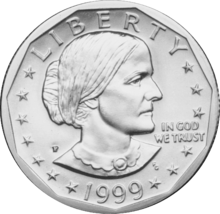
In an attempt to get dollar coins into wide circulation, the government introduced a slimmed down, feminine coin on July 2, 1979; 888 million were minted. Coin-carrying Americans took to them like a cat takes to water. Featuring a portrait of Susan B. Anthony on one side and an eagle on the other, they were an instant failure. Because of their similar size and color, it was found to be easy to mistake the coin for a quarter. The originally-planned hendecagon-shaped edge, which would have distinguished it from the quarter, was changed to a picture of a hendecagon on a round coin. While a Canadian dollar coin released into general circulation a few years later gained wide acceptance and was referred to lovingly as the “loonie,” the Anthony dollar was disparagingly referred to as the “Carter quarter,” “Suzie Bucks” or the “Anthony quarter.”
Even with the catchy slogan “Carry three for Susan B,” it went nowhere, and was not minted again until 1999 when the Treasury’s almost endless supply ran out a year ahead of the introduction of the Sacagawea dollar, another doomed dollar coin.
And Americans continue to clutch their wrinkled, grubby dollar bills that wear out every ten minutes.
Delving into the musical history of July 1 during the 20th century can be instructional for trendspotters if not for music lovers. On this day in 1935, Benny Goodman and his band recorded the “King Porter Stomp.” Elvis Presley appeared on “The Steve Allen Show” on July 1, 1956, wearing tails and singing “Hound Dog” to a basset hound. And in 1963, the Beatles recorded “She Loves You.” So far so good.
Fast forward to the ’80s and a few melodies you no doubt whistled while on a pleasant walk through the park — all making their appearance on July 1. In 1987, the English grindcore band Napalm Death released its first recording “Scum.” Side A of the album was recorded at the Rich Bitch studio; it was planned as part of a split release with the English crossover thrash band Atavistic on Manic Ear. It was released as a single album through Earache. The song “You Suffer” was listed in the Guinness Book of Records as the world’s shortest song at 1.316 seconds (at last, a redeeming quality).
There’s more: The first pressing of the CD included the From Enslavement To Obliteration album and four bonus tracks (hooray!). The album cover was designed by a member of the band Carcass.
Butchered at Birth by American death metal band Cannibal Corpse was released in 1991 through Metal Blade Records. It included the lyrical “Rancid Amputation.” We can be sure that if Benny Goodman were still performing (instead of turning over in his grave), he’d jump right on a cover version of that one.
When the Canadian government announced in 1986 that a new dollar coin would be launched the following year and the dollar bill phased out, they had planned to continue using the voyageur theme of its predecessor, and the master dies for the coin were sent from Ottawa to the Mint in Winnipeg. Somehow they were lost in transit.
An investigation found that there were no specific procedures for transporting master dies and that they had been shipped using a local courier in order to save $43.50. The investigation also found it to be the third time that the Mint had lost master dies within five years. Fingers started pointing. An internal review by the Royal Canadian Mint found that an existing policy did require the two sides of the dies to be shipped separately. The new coins dies were indeed packaged separately but they were part of a single shipment. The Royal Canadian Mounted Police contended that the dies were simply lost in transit. But the Mint said the dies were stolen. They were never recovered.
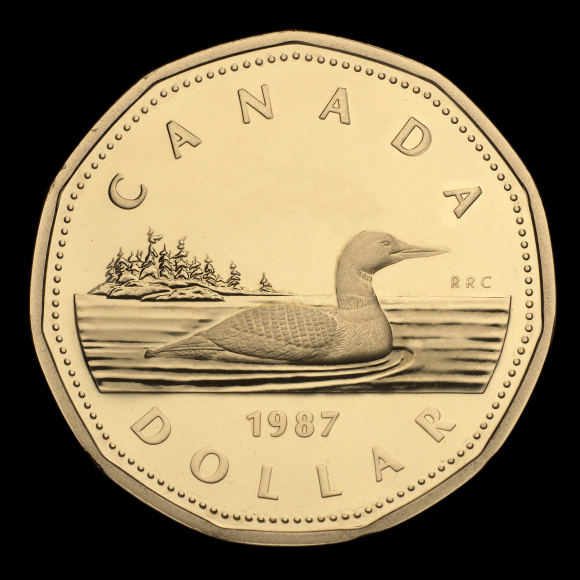
Fearing possible counterfeiting, the government approved a new design for the reverse side of the coin, replacing the voyageur with an engraving of a common loon floating in water. The coin was immediately christened the “loonie” throughout English Canada (“huard” in Quebec) when 40 million coins went into circulation on June 30, 1987.
The final dollar bills were printed two years later on June 30, 1989. And in 1996, Canadians got a two-dollar coin, the “toonie.”
It was one of the dullest speeches I ever heard. The Agee woman told us for three quarters of an hour how she came to write her beastly book, when a simple apology was all that was required. ― P.G. Wodehouse
In 1861, sixty people boarded the St. Nicholas, a steamer that carried passengers between Baltimore and points along the Potomac – among them a Madame LaForte, a stylish young lady who spoke very little English with a strong French accent. She was accompanied by her brother. She had a number of large trunks with her because she wanted to set up a millinery business in Washington. A beguiled purser assigned her a large stateroom, and dutiful deckhands hauled her trunks to her cabin.
When the St. Nicholas departed, Madame LaForte emerged from her stateroom and began to flirt shamelessly with the male passengers and ship’s officers, overwhelming all who attended her, including the captain, with a stream of coquettish French. Another passenger, George Watts, was worried. He had been searching the decks, looking for a Colonel Zarvona, the man who had recruited him and several others for a dangerous mission. Had the colonel missed the boat? Would Watts be arrested as a rebel spy and hanged?
At midnight, the brother of the French lady tapped him on the shoulder and said he was wanted in a nearby cabin. As Watts recounted: “I hurried to the cabin and found all our boys gathered around that frisky French lady. She looked at me when I came in, and Lord, I knew those eyes! It was the Colonel. The French lady then shed her bonnet, wig and dress and stepped forth clad in a brilliant new Zouave uniform. In a jiffy the ‘French lady’s’ three trunks were dragged out and opened. One was filled with cutlasses, another with Colt revolvers and the third with carbines. Each man buckled on a sword and pistol and grabbed a gun, and then the Colonel told us what to do.”
Zarvona and two others confronted the boat’s captain, who, when told that 30 armed men were aboard, quickly surrendered command. The Confederates who had boarded in Baltimore as well as their compatriots who had come aboard later seized the steamer, which in addition to carrying passengers, carried supplies to the Union gunboat, the USS Pawnee. Their plan was to seize that ship as well. In the early morning of June 29, the St. Nicholas docked and took aboard 30 Confederate soldiers. The passengers from Baltimore were permitted to leave with all their possessions.
Then came the bad news: the gunboat had returned to Washington. Determined to make his seizure of the St. Nicholas worthwhile, Zarvona began a raiding expedition that would give them the Monticello, a brig laden with 35,000 bags of coffee, the Mary Pierce, with a load of ice, and the schooner Margaret with a cargo of coal. Zarvona and his crew returned to Fredericksburg where they received an enthusiastic welcome. At a ball given in their honor, Colonel Zarvona delighted those present by appearing in the hoops and skirts of the lady milliner from France in celebration of his new-found fame as the Confederacy’s first cross-dressing soldier of fortune.
Cozying Up to the Second Amendment
In the space of time between my Republican innocence and my liberal decadence, I did my mandated military time. Since I was a Republican and Republicans love guns, I naturally opted for service that dealt with guns. I joined the artillery because they had big guns, guns they didn’t have to carry over their shoulders.
After my six mouths of basic gun toting, I became a typical weekend warrior spending some miserable hungover Sunday mornings doing my thing for my country. And every summer I did my two weeks duty, even as I was fast becoming a liberal. Being an artillery sort of guy, we got into big guns, really big guns during our summer mission. This really big sucker of a gun we toted was called an Honest John, and I guess it was technically a rocket not a gun. One summer we got to fire the thing. Actually we didn’t get to pull a trigger or anything; we just stood around while it was fired. It was a holy shit moment when that thing took off, like a launch at Cape Canaveral only lots faster.
During the rest of the two weeks, we got to tote the sucker around the woods of Washington, pretending we were in pitched battle with an unseen enemy (probably Mexican rapists and murderers). For me, the high point of the exercise was the day we camouflaged Honest John so well we couldn’t find it for several hours.
Our Honest John rocket, hidden
Yes, you can see it happening: I was morphing into nasty liberalism, and liberals like nothing better than to hide guns from conservatives. Sad but true. I don’t really like guns any more, little or big, or rockets. As Johnny Cash sang: “Don’t take your rockets to town son, leave your rockets at home, Bill. Don’t take your rockets to town.”
Or perhaps as Waylon Jennings sang: “Mamas, don’t let your babies grow up to be liberals.”
“Humor keeps the elderly rolling along, singing a song. When you laugh, its an involuntary explosion of the lungs. The lungs need to replenish themselves with oxygen. So you laugh, you breathe, the blood runs, and everything is circulating. If you don’t laugh, you’ll die.”
Mel Brooks, born June 28, 1926, has kept the world rolling along since he broke into the entertainment business in early TV. Director, screenwriter, composer, lyricist, comedian, actor and producer, he is best known for his comic film farces and parodies.
He began his career as a stand-up comic and writer for Sid Caesar’s Your Show of Shows then teamed up with fellow writer Carl Reiner, as The 2000 Year Old Man. In the 70s he became one of the most successful film directors, producing such comedy classics as Blazing Saddles, The Producers, Young Frankenstein (numbers 6, 11 and 13 on the American Film Institute’s list of the top 100 comedy films of all-time), The Twelve Chairs, Silent Movie, High Anxiety, History of the World, Part I, Spaceballs and Robin Hood: Men in Tights. The musical adaptation of his first film, The Producers, became a smash hit on Broadway.Brooks is one of the few entertainers with the distinction of having won an Emmy, a Grammy, an Oscar and a Tony award.
A true funny man, no joke was ever beneath him.
TRUE CONFESSIONS: MY DARK DAYS AS A REPUBLICAN
I used to be a Republican. There, it’s out in the open. It was a long time ago, and I was too young to see the error of my ways. At the time, our family was pretty much all Republican – not avid table thumping Republicans, but Republicans all the same. Truman was a swear word, and we all liked Ike. Ike was like a grandfather, and my grandmother loved him.
As long as I’m confessing, I might as well admit that I probably would have voted for Nixon over Kennedy. Fortunately, I was not old enough to vote. It was a couple of years later in college that I began to change. See, the conservatives are right. Colleges take our respectable fresh-faced Republican youths and teach them unsavory liberal things like literature and philosophy and science.
It happened to me, and I never saw it coming. For a few days, I was just an independent. But it’s a slippery slope indeed, and the leftward lurch was inevitable. And by the time I graduated from the halls of propaganda, my mind had been molded into the liberal quagmire it is today.
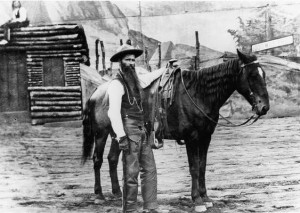
The streets of Chadron, Nebraska, were filled with people on a bright June morning. Spectators climbed atop roofs; they hung out of second-floor windows. Jester’s Freak Band, a cornet group, provided lively music. The prize was $1500 and a fancy saddle; the challenge, a 1,000-mile race from Chadron, Nebraska, to Chicago, Illinois, and Buffalo Bill Cody’s Wild West Show near the site of the 1893 World’s Fair. Ten riders took the challenge.
The rules were fairly simple. Each rider was allowed to begin the race with two horses; he was required to stop at various checkpoints along the way; and he must finish the race riding one of the original horses.
The competitors were a questionable lot – various drifters and ne’er-do-wells, such as “Rattlesnake Jim” Stephens and “Doc” Middleton, a “reformed” horse thief. Rules were broken; animals were injured. A newspaper from along the route reported that “ladies are pulling hairs from the manes and tails of the horses as mementos, and if they have a hair left when they reach Chicago it will be surprising.”
Only six of the original ten riders finished the race. The first-place finisher was a railroader named Berry who, riding a horse named Poison, rode triumphantly into Buffalo Bill’s Wild West arena on the morning of June 27 where he was greeted by a crowd of 10,000 people including Buffalo Bill himself. In a lavish ceremony, Berry was awarded the saddle.
But the winner never received his cash prize. Race promoters discovered that shortly after the beginning of the race, he and his horses had secretly traveled the first 100 miles of the race aboard an eastbound train.
Horse sense is the thing a horse has which keeps it from betting on people. — W C Fields

 although he’s strictly an offstage presence, being held prisoner in a far-off land until the very end and his triumphant return. Robin, you will remember, battled the evil Prince John who was doing his best to usurp Richard’s throne in his absence. Eventually, Richard returns triumphantly to England, but in a bit of a slap in the face to Robin, he forgives John and names him his heir to the throne. Robin is abandoned to Sherwood Forest and his “merry men” (see Robin Hood – Men in Tights).








 Wretched Richard's Almanac