JULY 26, 1921: EXCELSIOR, YOU FATHEADS

To many of those who have even heard of Jean Shepherd, he is the voice of the grown-up Ralphie Parker whose childhood struggle to score an Official Red Ryder 200-Shot Range Model Air Rifle for Christmas is the subject of the holiday classic A Christmas Story. The film is based on Shepherd’s stories about growing up in Indiana.

Born July 26, 1921, Shepherd was an American raconteur, radio and TV personality, writer and actor. After several radio gigs, he settled in at WOR radio New York City in 1956 with an overnight slot on which he delighted fans by telling stories, reading poetry, and organizing listener stunts. The most famous of his stunts was the creation of a book, I, Libertine, by an 18th century author. Shepherd suggested that his listeners visit bookstores and ask for a copy of it, which led to booksellers attempting to purchase the book from their distributors.  Fans of the show also planted references to the book and author so widely that demand for the book led to its being listed on The New York Times Best Seller list even though it hadn’t been written.  Shepherd’s radio stories found their way into magazines and were later collected in the books In God We Trust, All Others Pay Cash; Wanda Hickey’s Night of Golden Memories and Other Disasters; The Ferrari in the Bedroom; and A Fistful of Fig Newtons.


“What the hell time is it?” muttered the old man. He was always an aggressive sleeper. Sleep was one of the things he did best, and he loved it. Some look upon sleep as an unfortunate necessary interruption of life; but there are others who hold that sleep is life, or at least one of the more fulfilling aspects of it, like eating or sex. Any time my old man’s sleep was interrupted, he became truly dangerous.”Wanda Hickey’s Night of Golden Memories: And Other Disasters


From A Christmas Story:

I had woven a tapestry of obscenity that as far as I know is still hanging in space over Lake Michigan.

Only I didn’t say “Fudge.” I said THE word, the big one, the queen-mother of dirty words, the “F-dash-dash-dash” word!

Now, I had heard that word at least ten times a day from my old man. He worked in profanity the way other artists might work in oils or clay. It was his true medium; a master.

And of course:  You’ll shoot your eye out, kid.

JULY 25, 1853: AND MY OTHER BROTHER JOAQUIN

He was an infamous cutthroat bandit. Or he was a 19th century Robin Hood. One thing was certain, Joaquin Murrieta was a notorious figure in California during the California Gold Rush of the 1850s, and he was well outside the law. Maybe he was twins. The good twin who was driven by Anglos from a rich mining claim, his wife raped, his half-brother lynched, and Murrieta himself horse-whipped (they knocked him down, stepped on his face, slandered his name all over the place).  Or the evil twin, an occasional horse thief and a bandit who attacked settlers and wagon trains in California, killing over 40 people in the process.

By 1853, California authorities had had enough of him. In a bill passed in May 1853, the legislature authorized hiring 20 California Rangers, veterans of the Mexican-American War, to hunt down the so-called five Joaquins — Joaquin Botellier, Joaquin Carrillo, Joaquin Ocomorenia, Joaquin Valenzuela and Murrieta.

Early on the morning of July 25, 1853, the rangers attacked Murrieta’s outlaw camp. Caught by surprise and badly outnumbered, eight of the bandits were killed, including Murrieta and his right hand man, Three-Fingered Jack (presumably his three fingers were on his left hand). To prove they had indeed killed Murrieta, the rangers cut off his head along with Jack’s three-fingered hand, preserving them in whiskey until they could exhibit them to the authorities.

The rangers received a $6,000 reward, and made some nice residual profits by taking Murrieta’s head on tour throughout California, charging a buck to see it (it’s uncertain if they charged extra for Jack’s three fingers).

Eventually, the head ended up in San Francisco Museum, where it was destroyed in the great earthquake of 1906. Today all that remains is a plaque near the intersection of State Routes 33 and 198 marking the spot where the outlaw lost his head.

The executioner’s argument was that you couldn’t cut off something’s head unless there was a trunk to sever it from. He’d never done anything like that in his time of life, and wasn’t going to start now.

The King’s argument was that anything that had a head, could be beheaded, and you weren’t to talk nonsense.

The Queen’s argument was that if something wasn’t done about it in less than no time, she’d have everyone beheaded all round.

It was this last argument that had everyone looking so nervous and uncomfortable.

― Lewis Carroll, Alice in Wonderland

JULY 24, 1934: SERIOUSLY, ARE YOU MY MOTHER?

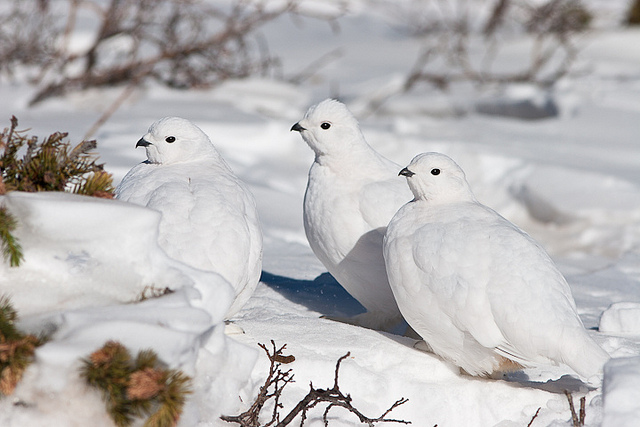
Ornithologists at Cornell University in Ithaca, NY, having precious little to do in 1934, hatched – or rather engineered the hatching of, since they didn’t actually sit on the eggs themselves or do much of anything other than whisper words of encouragement to those actually sitting on the eggs – the very first ptarmigans in captivity. Ornithologists and students of game birds throughout the country – and possibly the world – held glasses on high and stood and cheered this bold step in quasi-motherhood. These folks had been increasingly interested in experiments in hand-rearing and introducing game birds to new areas, for reasons that remain unclear.

     Known to their devotees in the bird world as Lagopus leucurus, the hatchlings also went by the name White-tailed Ptarmigan or Eskimo Chicken. They came from two and a half cartons of ptarmigan eggs “collected” by a Doctor (conspiracy theorists take note) Alien, of Cornell’s Department of Ornithology on Canada’s Hudson Bay. They were then smuggled transported to Ithaca where they were put under unsuspecting and very confused bantams.  These foster mothers broke several of the eggs while trying to figure out what they were. Nevertheless several hatched, leaving the mothers wondering if they had truly given birth to these strange little creatures, even though the Mysterious Doctor Alien had read the “Ugly Duckling” to them several times.  One small step for ptarmigans, one giant leap for aviankind.


It may be hard for an egg to turn into a bird: it would be a jolly sight harder for it to learn to fly while remaining an egg. − C. S. Lewis
  • TERRYCOVERjune13If you know someone who is patiently sitting on eggs, you could keep her contented by reading her passages from Terry and the Pirate.  You never know what might hatch.  Check it out at Amazon, Barnes and Noble, Apple.

JULY 23, 1851: MR. BLACKWELL DOES NOT APPROVE

In 1840s and 50s New England, both the women’s suffrage and temperance movements were heating up. The convention held at Seneca Falls in 1848 to discuss “the social, civil, and religious condition and rights of woman” was a revolutionary beginning in the struggle by women for complete equality with men. One of the participants, Amelia Bloomer, was the editor of a magazine called the Lily, a publication with a curious mix of recipes, hints by Heloise and women’s rights manifestos. Bloomer became identified with what might be considered a sideshow of the movement.

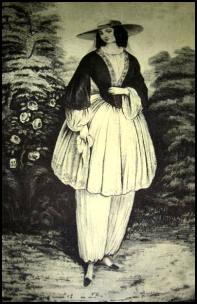
At a ball in Lowell, Massachusetts on July 23, 1851, a certain type of apparel made its debut. It was a more practical substitute for the cumbersome, stifling, long full Victorian dresses worn at the time, and consisted of baggy pants narrowing to a cuff at the ankles (worn below a skirt), intended to preserve decency while being less of a hindrance to women’s activities.

Although Mr. Blackwell would not have approved, many women found it sensible and becoming, including Amelia Bloomer, who adopted it immediately, not only wearing it but promoting it enthusiastically in her magazine. Articles on the clothing trend were picked up in the mainstream press, and more women began to wear what was now dubbed the “Bloomer Costume” or “Bloomers”.

Bloomers remained subject to ridicule in the press and harassment on the street, and Bloomer herself dropped the fashion in 1859, saying that a new invention, the crinoline, was a sufficient reform that she could return to conventional dress. She remained a suffrage pioneer and writer throughout her life, writing for a wide array of periodicals. Although Bloomer was far less famous than some of her peers, she made many significant contributions to the women’s movement — particularly in dress reform and the temperance movement.

And fashion being what it is, bloomers will no doubt make a comeback. Until then, we’ll just refer to them as late bloomers.

JULY 22, 1959: THE MOON IS ALIVE WITH THE SOUND OF MUSIC

Plan 9 From Outer Space is not the worst picture ever made. It’s probably not even the worst film to premier on July 22, 1959. The film has been featured in countless retrospectives, Turner Classic Movies, and documentaries. It’s been adapted for the stage, in comic books and computer games. It’s music has been featured on a CD. It’s been colorized!Plan_9_Alternative_poster

     And, of course, it was obviously the model for NASA’s grand hoax ten years later, the so-called moon landing and moonwalk.  Rumor has it that NASA even gave its charade the code name Plan 10 from Outer Space. Yet  even with all those scientists working on it, they couldn’t get the string holding up the Apollo spacecraft just right.  Nor did they include a single Bela Lugosi walk-on – his emerging dramatically from a crater would have been the perfect touch.

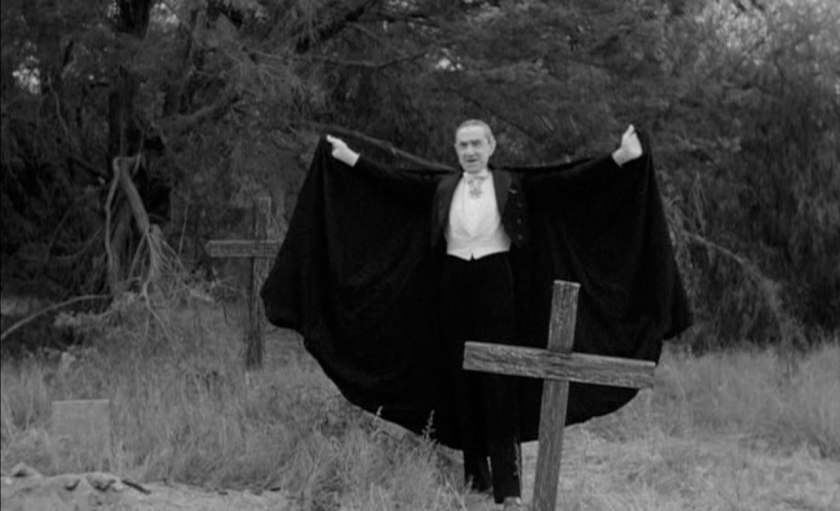
     And there you have the main argument – can any film featuring Bela Lugosi be the worst film ever made.  No way.   Lugosi has several scenes in Plan 9, even though he was dead and buried with a stake through his heart when the film was produced.  And narration by the Amazing Criswell. Had Criswell narrated the moon landing many more people would have believed in it.

     Some naysayers fault the film’s dialogue. “Can your heart stand the shocking facts about grave robbers from outer space?” Is that anywhere near as bad as “Doe, a deer, a female deer?”  Plan 9 from Outer Space is not the worst film ever made. The Sound of Music is.

And the Dish Ran Away with the Spoon

Or the Mound of Susic as the Reverend William Archibald Spooner, born July 22, 1844, might have called it.  The Reverend gave his name to that bit of word play known as a spoonerism. For example:

“Give three cheers for our queer old dean.”

“Is it kisstomary to cuss the bride?”

“The Lord is a shoving leopard.”


JULY 21, 1865: ALL HAT AND NO CATTLE

We all know from movies, pulp fiction and other pop culture that the streets of the Old West were littered with the remnant losers of showdowns that took place practically on the hour. gunslingTwo steel-jawed gunslingers coolly staring at each other, contemplating who would draw first and, more importantly, who would draw fastest. Conspiracy theorists are quick to point out that most gun battles took place between drunks who only managed to hit their adversaries because they were standing a foot away — or if they were at a distance, were most likely hiding behind a handy horse or schoolmarm and aiming at somebody’s back.

True, but there was a sort of Code of the West based on the gentlemanly European tradition of dueling in which opponents behaved with good breeding before attempting to kill one another. The Code of the West required that a person resort to a six-gun on the city streets only in matters of major import such as the defense of one’s honor or life, and only if the opponent was also armed. If the Code were followed, a gunslinger could pretty much kill another gunslinger without fear of punishment.

On July 21, 1865, Springfield, Missouri, saw just such a classic showdown. Wild Bill Hickok had a reputation as a real hotshot with a gun, so it is a bit surprising that a former Union soldier agreed to a showdown after an argument with Wild Bill over a card game or the upcoming Presidential election or something.

Armed with sodas and popcorn, a huge crowd of onlookers watched as the two men approached each other from the far ends of the long street. When the two men were still way beyond field goal territory, the challenger drew and fired wildly in Hickok’s direction. Ever cool, Hickok, drew his own revolver, took careful aim, and put a bullet through his opponent’s chest.

Having been true to the Code, Hickok remained a free man. Unfortunately, several years later, Wild Bill was done in by someone not so fastidious about playing by the rules. A young gunslinger with absolutely no sense of gallantry shot him in the back of the head while he played cards.

When my time comes, just skin me and put me up there on Trigger, just as though nothing had ever changed. — Roy Rogers

JULY 20, 1969: I SEE THE MOON, THE MOON SEES ME

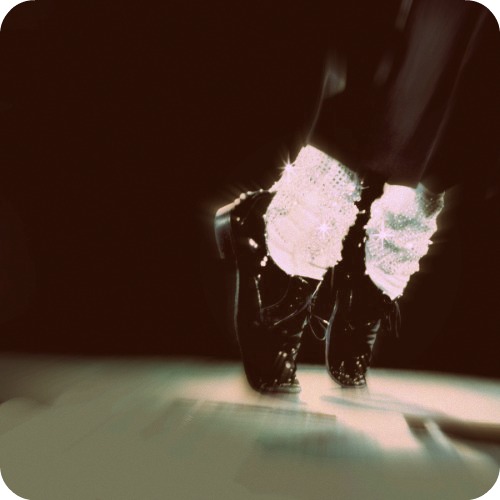
Mention the moonwalk, and Neil Armstrong and Buzz Aldrin naturally spring to mind. You know, “one small step for man, one giant leap for mankind.”   That is unless you’re Google. To Google, that magical searching apparatus, the moonwalk is a dance step popularized by Michael Jackson. That’s it, nothing else. If you’re an astronaut, you might just as well have done the cakewalk or the Lindy back there on July 20, 1969, with the whole world watching.

See the thread holding up the fake New York Times?

     Folks other than Google did watch the moonwalk as performed by the astronauts. It was the real thing not some abstract space adventure you might read about. It was there before our eyes, an “As Seen on TV” moment. Conspiracy theorists, along with Google, have different ideas of course – that the astronauts were actually doing Michael Jackson imitations on a secret sound stage somewhere out in the desert.  And they are joined by such notable sources of knowledge as Fox News and the Flat Earth Society. At any given moment over the past years, up to 20% of Americans have believed that the manned landings and moonwalks were faked. Many of these Americans are, of course, the same ones who believe that evolution is a communist plot, that Barak Obama was born in Kenya, and that Donald Trump is . . . well, the Almanac won’t go there.  They’ve even worked out all the little details. NASA, it seems, faked the landings to win the Space Race. The make-believe landings were staged by Hollywood under the aegis of Walt Disney, based on a script by Arthur C. Clarke and directed by Stanley Kubrick.

     A number of these skeptics even believe that the moon itself is a fake. If you’re not convinced, try Googling it.

JULY 19, 1918: MANANA IS GOOD ENOUGH FOR ME

The nations at war had already soldiered on for more than four years, and the war would end in another few months, but Honduras President Francisco Bertrand awakened from a siesta and jumped into the fray by declaring war on Germany, taking the dubious honor of becoming the last nation in the world to declare war as part of World War I.

     One can imagine the reaction in the German War Room when word arrived that Honduras had gone to the other side. The German command couldn’t have been too surprised since Britain, Serbia, Montenegro, Japan, Italy, Australia, Canada, India, New Zealand, United States, Panama, Greece, Guatemala, Nicaragua and Haiti had all declared war on Germany. And for its part, Germany had declared war against France, Russia, Belgium, and Portugal. (Practically everybody declared war on Bulgaria and the Ottoman Empire.)  But Honduras!

     The Honduran president was all set to commit troops to the worldwide effort before realizing that Germany was halfway around the world and had no rum. And the war declaration was really more a matter of sucking up to the United States by showing sympathy for its position than any actual hostility toward Germany. In fact, there were a large number of Germans living in Honduras, and they were not pleased.  A year later they retaliated by supporting Bertrand’s political enemies in overthrowing him.


JULY 18, 64: ROME WASN’T BURNED IN A DAY

Just whose fault was it anyway? Was it a cow kicking over a lantern, that strange new sect known as Christians, or the Emperor himself whom rumor would have wailing on a fiddle during the conflagration? It started in the central slums, spread rapidly through the market area and neroeventually engulfed most of the city. When the flames finally died out more than a week later, nearly two-thirds of Rome had been destroyed.

History likes to blame Emperor Nero, suggesting that he not only started the fire because he did not find the city architecturally pleasing, but staged his one-man concert as the flames surrounded him. History does not recall the name of the tune or tunes he played. History is funny that way. He did use the fire as an opportunity to rebuild Rome in a more orderly Greek style. And he did blame the curious Christian cult for the fire, responding with what became the popular Roman pastime of feeding them to the lions and other pagan parlor games.

Unfortunately for conspiracy theorists, Nero was 35 miles away when the fire started, couldn’t play a lick on the fiddle (which hadn’t been invented anyway), and let his palace be used as a homeless shelter (no Christians need apply, of course).

Actually, Nero wasn’t musically inept. He could play a mean lyre, an ancient Greek stringed instrument sort of like a zither but sort of not. This is probably why conspiracy theorists determined to blame him for the fire, chanted “Lyre, lyre, pants on fire.”


THIS, ON THE OTHER HAND, IS ALL TRUE


JULY 17, 1717: CHAMBERMAIDS GONE WILD

The King was on the poop deck counting out his money; the Queen was in the fo’c’sle eating bread and honey.

     A bevy of aristocrats, including King George I himself, boarded the royal barge at Whitehall Palace for a nautical jaunt up the Thames toward Chelsea.  Anne V was there, as was the Duchess Sailing to Musicof Bolton, the Duchess of Newcastle, the Countess of Darlington, the Countess of Godolphin, Madam Kilmarnock, and the Earl of Orkney, to drop just a few names. The rising tide propelled the barge upstream without any necessity of rowing. The evening’s dinner consisted of four and twenty naughty boys, baked in a pie.*

     Another barge provided by the City of London contained His Majesty’s secret service, the press corps, and fifty musicians who performed music written for the occasion by composer and conductor George Frideric Handel. The music opened with a melodic French overture and skittered through minuets and bourrées, with enthusiastic hornpipers hornpiping throughout.

     Many freeloaders also took to the river to hear the free concert. According to a London newspaper, the whole River was covered with rubbernecking boats and barges.  On arriving at Chelsea, the king left his barge, then returned to it at about 11 p.m. for the return trip. No one knows exactly what he did during his bit of shore leave, but rumor has it a chambermaid was involved. (The Queen was in the fo’c’sle eating bread and honey; the King was in the Chambermaid and she was in the money, goes the unauthorized verse.) The king was so pleased with the evening’s music that he yelled “more, more” every time the orchestra attempted to take a break, forcing them to play until well after midnight.  The moonlight, the lapping of the water against the barge, and the chambermaid are all lost to history, but Handel’s Water Music lives on.

* Sing a Song of Sixpence,
   A bag full of Rye,
   Four and twenty Naughty Boys,
   Baked in a Pye.