AUGUST 5, 642: SAVING BODY PARTS I, ARM AND THE MAN, I SING

A lock of hair from Elvis’ head, a scrap of material from something worn by a Beatle – we know how these things are sought, treasured, and fought over by modern day groupies. We should not be surprised to learn that it was always thus, although, if anything, this practice was far less civilized in the past. Take the case of Saint Oswald, English King of Northumbria, son of the pagan King Aethelfrith, the Ravager of Bernicia.

     Though both pagan and Ravager Jr., Oswald was a benefactor of the poor. Legend has it (as legend will) that Oswald was sitting at meal one day when a throng of beggars came to his gate for relief. This generous man sent them the meat from his own table, and there not being enough to feed them all, had one of his silver dishes cut into pieces to distribute among the rest. Aidanus, a Scottish bishop visiting Oswald, upon witnessing this gesture, took Oswald by the hand and said: “Nunquam inveterascat haec manus!” (“May this hand live forever”).

     Nice thought, but this being the Dark Ages, forever lasted only until August 5, 642, when Oswald was killed in battle by a neighboring king. Oswald’s comrades, remembering Aidanus’ blessing, sorted through his body parts and took care to preserve his arm. The arm was saved and treasured and eventually sold to a wealthy collector of saints’ arms. Rumor has it that it eventually found its way to a secret private collection where it stands alongside a lock of Elvis’ hair and a scrap of skivvies once worn by a Beatle.


AUGUST 4, 1855: FAMILIARITY BREEDS CONTEMPT (PAGE 76A)

People in Cambridge, Massachusetts, used to pester John Bartlett, who ran the University Book Store, asking for quotations on various subjects. Finally, to make his life easier, he assembled a collection of the more popular quotations. So beginning August 4, 1855, when people asked for a quotepithy quote, he could reply, “Look it up in your Bartlett’s Familiar Quotations and stop bugging me.”  His book contained 258 pages of quotations by 169 authors, primarily from the Bible, Shakespeare, and the important English poets. This was a bit of an undertaking, Bartlett pointed out. How does one decide if a quotation is familiar? A quote may be on a first-name basis with one person while completely unknown to another.

Nevertheless, the book was a big success, and Bartlett authored three more editions before becoming a partner in the publishing firm of Little, Brown, and Company. In all, he supervised nine editions of the work before his death in 1905.

Various other editors stepped in for a series of editions, and in 1955, the 13th Edition was celebrated as the Centennial Edition.  Along about the 15th Edition, the work started annoying critics. One critic said it would be the downfall of the series: “Donning the intellectual bell-bottoms and platform shoes of its era, Bartlett’s began sprouting third-rate Third World, youth-culture, and feminist quotes,” part of “a middle-aged obsession with staying trendy.”  The 16th Edition offended some folks because it included only three minor Ronald Reagan quotations (FDR had 35 quotes, and JFK 28). The editor answered the criticism by saying he didn’t like Reagan.

In the 17th Edition (2003) he took heat for including the likes of J.K. Rowling, Jerry Seinfeld, and Larry David while cutting classic quotes.  He did include six Reagan quotes but admitted “I was carried away by prejudice. Mischievously I did him dirty.”

“Me want cookie!” — Cookie Monster as quoted in Bartlett’s

AUGUST 3, 1946: Beat the Rush, Talk to Santa in August

Louis J. Koch, an Indiana family man and father of nine children, was disappointed when a family trip took him to Santa Claus, Indiana, and he found no Santa Claus, no elves, no reindeer, no workshop –  Indiananothing. Why they named the place Santa Claus was a bit of a mystery.  And he fixated upon the town named Santa Claus that had no Santa Claus, and upon the many children who would suffer the same disappointment. Lying in bed at night perhaps (or working on a third martini), he envisioned a park where children could have fun and visit Santa all year round.

     And he did something about it.  Santa Claus Land opened on August 3, 1946. At no cost, children could visit Santa, a toy shop, toy displays, a restaurant, and themed children’s rides, such as The Freedom Train. Though skeptical, Koch’s son Bill took over as head of Santa Claus Land and continued to add to the park, including the first Jeep-Go-Round ever manufactured, a new restaurant, and a deer farm.

     And it continued to grow, evolving into a huge theme park divided into sections celebrating Christmas, Halloween, Thanksgiving and the Fourth of July with rides, live entertainment, games, and attractions, including three wooden roller coasters: The Raven, The Legend, and The Voyage. Just how many times could a kid throw up in one day? Then came the obligatory water park featuring the world’s two longest water coasters: Wildebeest and Mammoth, slides, pools, a river, and water-play attractions. Whew!

Of course, all of this became too much for a place called Santa Claus Land. Today it goes by the name Holiday World & Splashin’ Safari.  And good luck finding Santa Claus.


AUGUST 2, 1922: YOUR CALL IS IMPORTANT TO US

phone1Alexander Graham Bell was one of those curious inventive sort of kids, the kind that love to experiment and blow up the garage with their chemistry set when they’re eight. Although he was normally quiet (except for the explosions), he loved mimicry and ventriloquism, throwing his voice here and there to baffle guests and leave his family carrying on conversations with the dog and the cat and plants.

     Troubled by his mother’s near deafness, he developed a technique of speaking directly into her forehead instead of her ears which for some reason enabled her to hear him. That evidently awakened a dream within him: If he could speak to his mother’s forehead and she could hear, he must be able to speak to a forehead in China or some other faraway place and be heard.

     This of course led to his study of acoustics, and his greatest invention. By 1876, he had developed a theory of forehead to forehead long distance transmission, and just days after receiving a patent, Bell succeeded in getting his invention to work.  He held the device to his forehead and spoke the now famous sentence: “Mr Watson – Come here – I want to see you.” In an adjoining room, Watson, listening at the receiving end (he held it to his ear but probably never told Bell), heard the words clearly.  He shouted to Bell the equally famous words: “Not now.  I’m on the phone.”

Oddly enough, Bell considered his most famous invention an annoyance and refused to have a telephone in his study.

     Bell died on August 2, 1922 before he could invent many improvements to his telephone, leaving it for others to come up with such refinements as the busy signal, call waiting, “Do you have Prince Albert in a can?”, cell phones and smart phones, obnoxious ringtones during concerts, and robocalls from Wayne LaPierre.   As another famous inventor put it: “What hath God wrought?”


AUGUST 1, 1953: DON’T TAKE YOUR GUNS TO TOWN

In 1953, a new type of western hit the movie screens. Moviegoers were looking for something more complex than the head-em-off-at-the pass, white hat/black hat fare that Hopalong Cassidy and Roy Rogers had been dishing out through the forties. They felt more sophisticated and worldly, and they wanted their cowboys to be more sophisticated and worldly as well (even though most cowboys never strayed beyond Montana).

A gun-toting drifter with only one name rides down out of the rugged Teton Mountains into a fertile valley where a family of homesteaders – a man and wife, and their only son — eke out a living.  Shane as played by Alan Ladd is conflicted, a basically good man who lives by his gun, anxious to give up his wandering and get a normal life. Well, that’s fine, but the local cattle baron and his thug Jack Palance aren’t about to let that happen. At the end of the movie, Shane realizes he can’t escape his past, and in a great cinematic moment, rides off wounded (mortally?) past the gravestones on Cemetery Hill, and out of town, into the sunrise, with the young boy calling after him: “Come back, Shane!”

Gary Cooper gave us another nuanced hero during the early 1950s in the masterful High Noon.

And if you want to talk nuanced, there’s John Wayne:

“Never apologize, mister, it’s a sign of weakness.”

“Life’s hard. It’s even harder when you’re stupid.”

“A man’s got to do what a man’s got to do.”

Or maybe not.


Come back, Huey!

https://richarddaybell.files.wordpress.com/2010/07/vres.jpgThat’s what Paul might have yelled as she waddled (being a duck) off into the crowd of human-sized ducks and dogs and chipmunks at Disney World.  He didn’t, but she came back anyway, and together they set off on a romantic adventure, facing an abundance of perils — neither of them toting a gun.  Feel free to join them.  Voodoo Love Song

JULY 31, 1718: LUST IN THE BARLEY OR MAKING LOVE TO THUNDEROUS APPLAUSE

A tragedy occurred on the last day of July in the English countryside, and eighteenth century poets were all over it like paparazzi on today’s celebrities. Gay wrote about it, and even Pope versified the unfortunate event.  John Hewit was a well-set man of 25, the comely Sara Drew about the same age, when they were both struck dead by a single lightning bolt. An anonymous poet (neither Gay nor Pope) told the sad story:

loversmeadowSara and Johnnie were lovers.

Oh, how those two kids could love.

Vowed to be true to each other,

As true as the stars above

He was her man,  And they were doing no wrong.


They were out in the meadow,

Picking flowers they say.

They lay down in the barley

Just to pass the time of day.

She was his woman, And they were doing no wrong.


The rain began, pitter patter.

It soaked them right through to the skin.

The great storm of 1718,

Yet the lovers didn’t come in.

He was her man, And they were doing no wrong.


Then came loud peals of thunder.

Guess what? They stayed there outside.

Lightning struck all around them.

Alas, our lovers were fried.

She was his woman, And they’ll be doing no wrong.


When the neighbors went searching, they saw the barley smoking. Then they spied the faithful pair – Sara, lifeless, with just a tiny burn mark on her breast;  John lying upon her in a vain attempt to shield her from the lightning, black all over.  Their tombstone, penned by Pope, read:

Near this place lie the bodies

OF JOHN HEWIT AND SARA DREW

an industrious young man

and virtuous maiden of this parish

who, being at harvest-work

were in one instant killed by lightning

the last day of July 1718


Either Pope didn’t know the sordid truth or he wasn’t telling.


JULY 30, 2003: TAKE A SPIN IN MY KRAFT-DURCH-FREUDE-WAGEN?

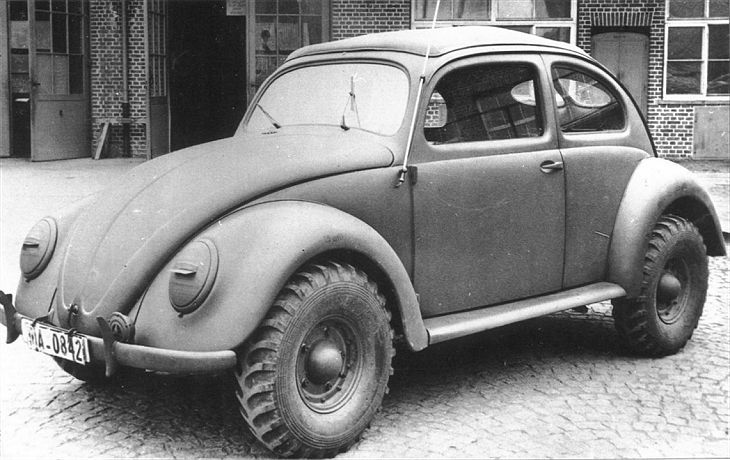
Volkswagen Beetle number 21,529,464 rolled off the production line at the VW plant in Puebla, Mexico, on this day in 2003. It was the last of the Beetles, a car that had been built since World War II. kdf-wagenIt was baby blue and destined for a museum near Volkswagen headquarters in Wolfsburg, Germany, where its oldest ancestors were made.

This was the classic VW Beetle, the real one, not the redesigned retro Beetle that Volkswagen started producing in 1998. It was first visualized back in the 1930s by Austrian automotive engineer Ferdinand Porsche (yes, that Porsche).  Adolf Hitler wanted a small, affordable passenger car to satisfy German transportation needs, something smaller than a Panzer and more family-friendly. Porsche’s auto fit the bill and was introduced in 1939 as the Kraft-durch-Freude-Wagen (or “Strength-Through-Joy” car), not a moniker that would send anyone other than Nazis running to their nearest automobile dealer.  A much-needed name change would later make it the “people’s car” or Volkswagen.

The Kraft-durch-Freude-Wagen was quickly given the nickname “Beetle” for its funny round shape and because — well, would you call it the “Kraft-durch-Freude-Wagen?”  The Wolfsburg factory churned out vehicles until production was halted by Allied bombing in 1944.

Production was resumed after the war, and the Beetle was distributed throughout the world during the following years. After a slow start in the United States, the Beetle became the top import by 1960 as the result of a clever advertising campaign. In 1969, a Beetle named Herbie starred in a hit movie The Love Bug and a couple of sequels.

Hard times hit in 1977, however, as the Beetle was banned in America for failing to meet safety and emission standards. Sales throughout the world declined and, by the late 1980s, the classic Beetle was sold only in Mexico. The Beetle was doomed even in Mexico, thanks to increased competition from other compact cars and burros. And in 2003 it was adios fraulein.


JULY 29, 1887: NAUGHTY NOMADS AND SINGING SOTS

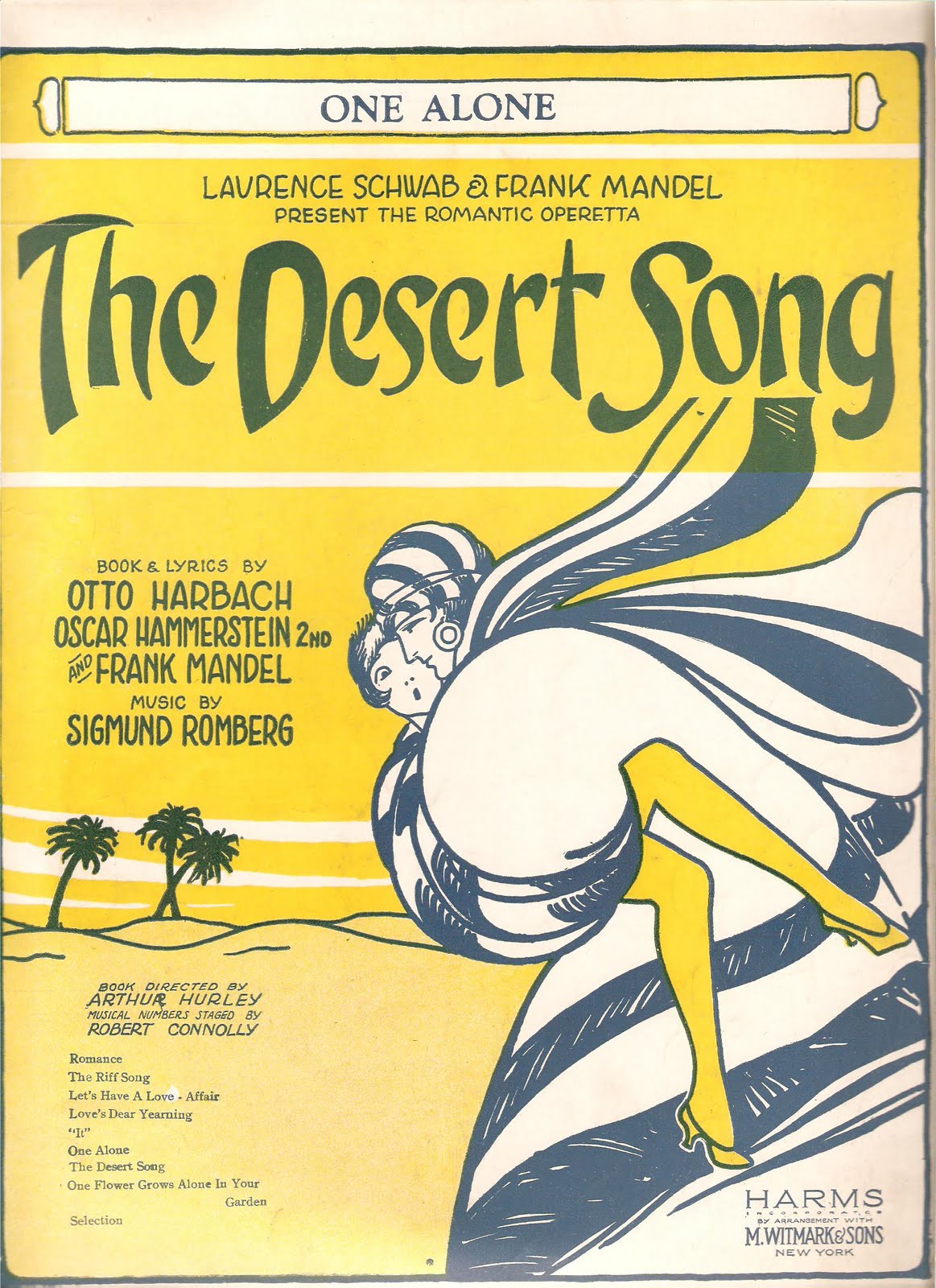
Born in 1887, Sigmund Romberg moved to the United States in 1909 and, after a short resume builder in a pencil factory (as a sharpener?), found work as a pianist.  An instrument here, an instrument there, and pretty soon he had his own orchestra. He published a few songs that caught the attention of the Shubert brothers, who in 1914 hired him to write music for their Broadway shows. Next day on his dressing room, they hung a star.

Career off and running, he wrote his best-known operettas, The Student Prince in 1924, The Desert Song in 1926, and The New Moon in 1928.

The Student Prince was the most successful of Romberg’s works, the longest-running Broadway show of the 1920s at 608 performances, even longer than the classic Show Boat.  The “Drinking Song,” with its rousing chorus, was especially popular in 1924, with Prohibition is full swing:

Drink! Drink!
  Let the toast start!
  May young hearts never part!
  Drink! Drink! Drink!
  Let every true lover salute his sweetheart!
  Let's drink!

The Mario Lanza version from the 1954 movie remains popular with imbibers everywhere.

The Desert Song (with lyrics by Oscar Hammerstein) is your typical superhero-adopts-mild-mannered disguise-to-keep-his true-identity-secret saga much like Zorro and Superman but with better music and no phone booths. The Red Shadow loves a beautiful and spirited girl, who loves his hero persona but not his wimpy side.  Will true love win out over hero worship? After much sophisticated music, lust in the dust and naughty humor, we learn the answer, especially in a lavish 1929 film production of the operetta – but only until the 1940s when it became illegal to view or exhibit the 1929 film in the United States because the folks in charge feared the naughty bits would morally harm us.

A second feature version was made in 1943, which had our hero fighting the Nazis, and a third version with Kathryn Grayson and Gordon MacRae in 1953 was about as squeaky clean as you can get.  Thank god for censors.

I drink to make other people more interesting. ― Ernest Hemingway

JULY 28, 1948: THOSE MAGNIFICENT MEN WITH NO FLYING MACHINES

A fog had settled over London on July 28, 1948.  All was quiet and seemingly normal. But of course it wasn’t. Visualize if you will a large shipment of gold bullion awaiting transport at London Airport. A gang of evildoers determined to make off with it.  And an elite throng of intrepid crimestoppers known as the Metropolitan Police Flying Squad. You have all the ingredients in place for the adventure known as the “Battle of London Airport.”  Talk about fodder for a summer blockbuster action-adventure movie or at least a page turner to take to the beach.


You’d certainly be forgiven for picturing a major confrontation with flying aces swooping in for a pitched battle with the bad guys.  But this is England. 1948. More likely a bevy of bobbies pedaling in on their bicycles or on foot, with nightsticks drawn, like so many Keystone Cops.

In fact, The Metropolitan Police Flying Squad didn’t have a flying machine to its name. Formed back at a time when the Wright Brothers and other dreamers were still tinkering with air travel, the Squad — known at the time as the Mobile Patrol Experiment —  consisted of a dozen members of Scotland Yard. Their original mission was to chase down pickpockets by hiding in a horse-drawn carriage with peep holes cut in the canvas top.


During the 1920s, the squad expanded to forty officers, under the command of a Detective Superintendent and was authorized to carry out duties anywhere in London without observing the normal policing divisions, thus earning the name “Flying Squad.” It was also given the nickname “the Sweeney” (as in Sweeney Todd) for reasons that remain obscure.


The 1948 Battle of London Airport was the Squad’s crowning achievement, thwarting the attempted theft of £15 million in gold and jewelry.  During the 70s and 80s, however, the Squad came under fire for its close ties with the criminal world (always part of its operating strategy). Bribery and corruption scandals surfaced, and the squad’s commander was jailed for eight years. Twelve other officers were also convicted and many more resigned.

The Flying Squad had lost its wings.

A flying squad without wings is as lost as pirates without a ship.  Speaking of pirates, Terry and the Pirate is available all over the place in both paperback and electronic versions. Check it out at Amazon, Barnes and Noble, Apple.

JULY 27, 1793: OFF WITH THEIR HEADS

On July 27, 1793, Maximilien Robespierre was elected to the Committee of Public Safety, whose function was to oversee the government of France and protect it against its enemies, foreign and domestic. Exactly one year later, he was removed from office. One day later, his head was removed.

During his year as committee member and president of the National Convention, he came to exercise virtual dictatorial control over the French government and proved himself a bit of a black hat. Faced with the threat of real or imagined civil war and foreign invasion, he inaugurated what was lovingly referred to as the Reign of Terror. He compiled himself a rather lengthy enemies list – some 300,000 suspected enemies made the list and were arrested. At least 10,000 died in prison. Robespierre proved himself mighty handy with a guillotine, executing 17,000 of them as “enemies of France”.

But just as he was getting the guillotine really smoking, the threat of a foreign invasion just up and disappeared, and those who still had their heads formed a coalition to oppose Robespierre and his followers.

And on July 27, 1794, Robespierre and his allies were placed under arrest by the National Assembly. When he received word that the National Convention had declared him an hors-la-loi, he shot himself in la tete but only succeeded in wounding his jaw. Nevertheless troops of the National Convention helped him finish the job the very next day – as French sages often say, live by the guillotine, die by the guillotine.


Another List Maker

Fast forward a couple of centuries: Richard M. Nixon had himself an enemies list, though not nearly as long as Robespierre’s.  And his Saturday Night massacre pales by comparison. But on July 27, 1974, didn’t they vote to impeach him anyway. At least, there was no guillotine.