October 3, 1874: Pathetic Earthlings, You Know Who You Are

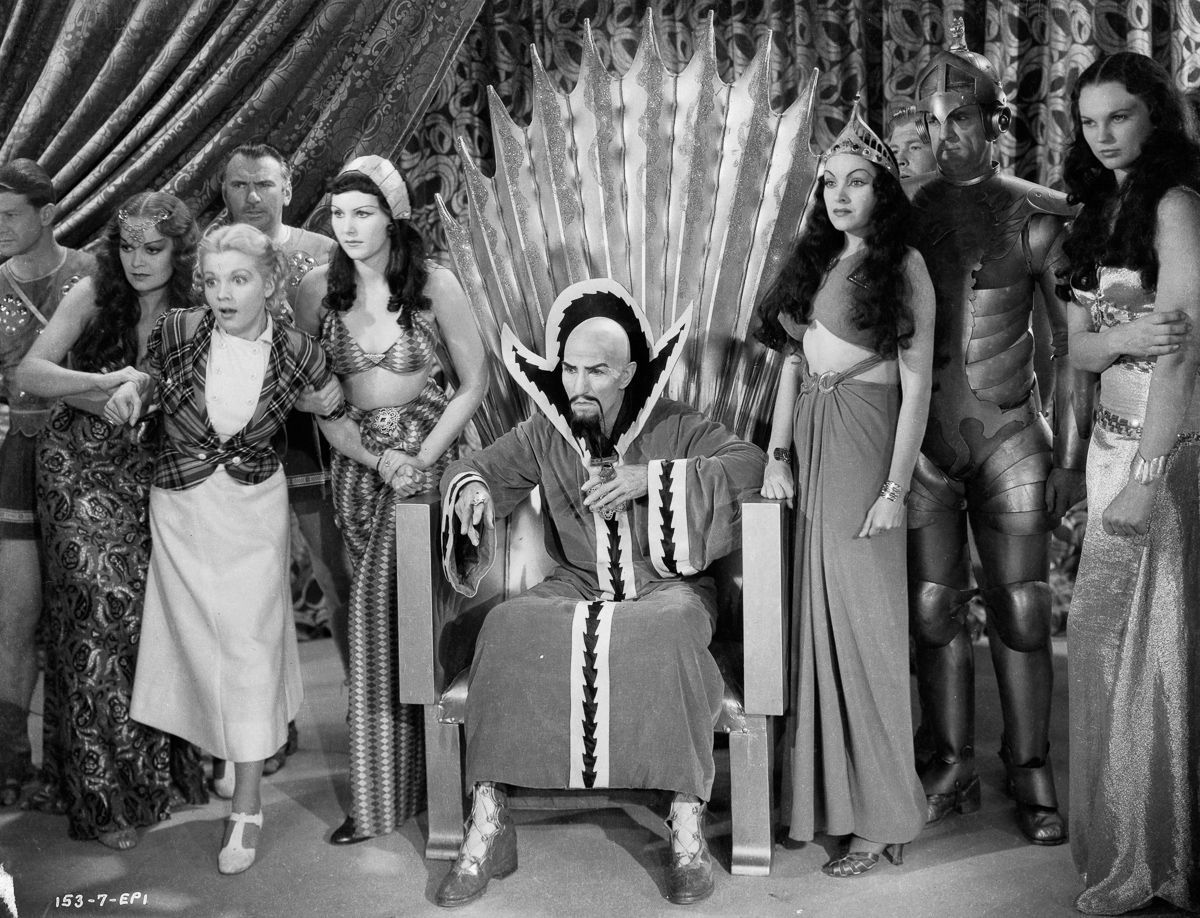
Although the name Charles Middleton (born in Kentucky, October 3, 1874) doesn’t invite instant recognition, his face — or at least one of his faces — certainly does. He worked in vaudeville, on the legitimate stage, and in traveling circuses before striking out as a motion picture actor in 1920. His career took off when sound came to the movies, thanks to a deep, menacing voice that dripped villainy.

To many generations he will always be the villain he played for the first time in 1936, one of film’s most notable nasties — Ming the Merciless. The evil enemy of the entire universe first appeared in the serial Flash Gordon, battling wits with Buster Crabbe’s Flash. He reprised his role in Flash Gordon’s Trip to Mars (1938) and Flash Gordon Conquers the Universe (1940).

Middleton appeared in 200 movies. He died in 1949.

Pathetic earthlings. Hurling your bodies out into the void, without the slightest inkling of who or what is out here. If you had known anything about the true nature of the universe, anything at all, you would’ve hidden from it in terror.

Cheap Halloween Thrills

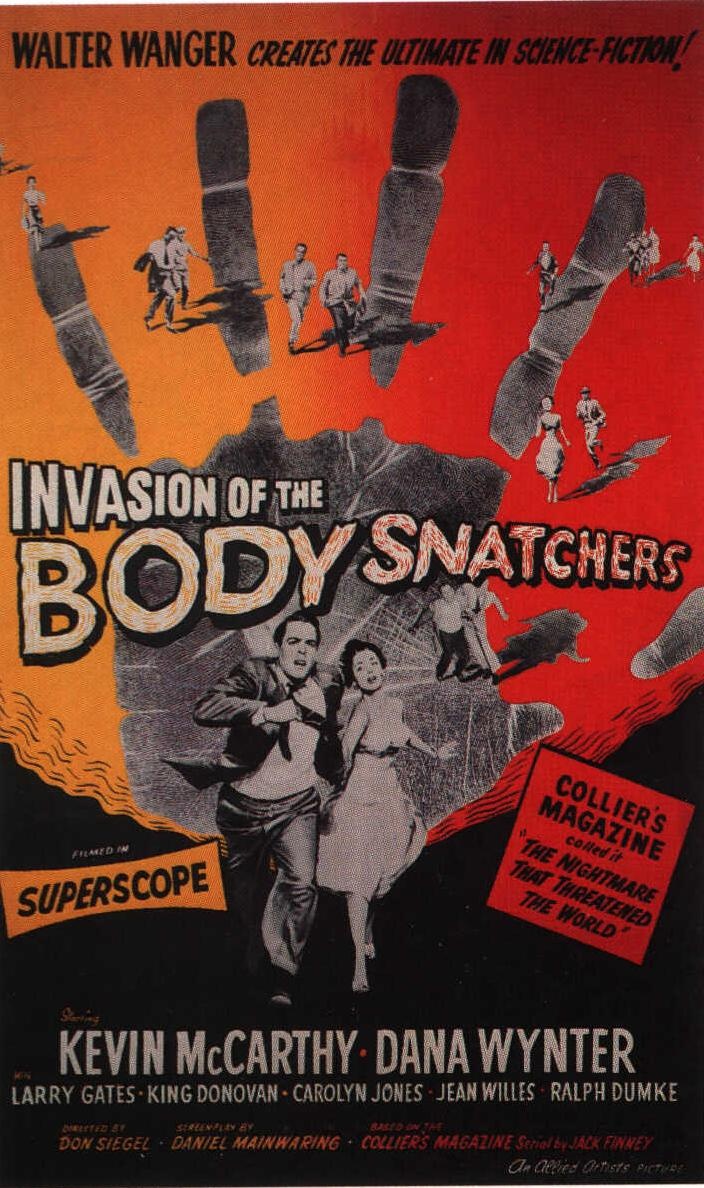
If Ming doesn’t get us pathetic earthlings, these guys might. There’s something terribly strange going on in tiny Santa Mira, California. Friends and loved ones have suddenly become emotionless body doubles, all thanks to those strange pods that have been popping up everywhere. Kevin McCarthy has discovered the truth, an alien invasion of human duplicates. Trouble is, no one believes him. As much a horror film as sci-fi, the 1956 Invasion of the Body Snatchers is also a political allegory with most of the scariness in its theme.


October 2, 1851: That Hit the Snail on the Head

Jacques Toussaint Benoit was a man with a vision, more specifically a Frenchman with a vision, even more specifically a French wizard who had a vision that involved snails. You might call him a snail whisperer. And on October 2, 1851, he set about proving his theory of the telepathic power of these cunning little gastropods.

Benoit believed that when snails mated, they didn’t just fool around, but rather they created an invisible thread that linked them together in a sort of “sympathetic communication,” allowing them to have conversations even at great distances. Instantly. Wirelessly.

Benoit had constructed an apparatus to which he gave the snappy name pasilalinic-sympathetic compass, known more familiarly as a snail telegraph. Long wooden beams supported zinc bowls lined with cloth soaked in copper sulphate — 24 pairs. Snails were glued to the bottom of each bowl. Snails in the first 24 bowls were each assigned a letter of the alphabet; in the second 24 bowls, their significant others had the same letter of the alphabet. To send a message, one would tap it out on the first set of snails and it would be received by the second set of snails. Simplicity itself.

On the day of the great demonstration before Benoit’s one financial backer and a journalist, Benoit ran back and forth between the sender and receiver just to make sure they were touching and reading the snails correctly. A message was sent and received (although it was full of typos). Benoit’s backer suspected a hoax. He demanded a second test.

On the scheduled day of the second test, Benoit was nowhere to be found. He was spotted occasionally wandering the rues of Paris during the next two years before his death. Nobody continued his work.

Maybe If These Guys Had Had Snails

It took a couple of thousand years for us terrestrials to take aviation from a crazy notion to the reality of that flight in Kitty Hawk in 1903. It took less than seven years for these flying contraptions to start bumping into each other. The first mid-air collision took place on October 2, 1910, in Milan, Italy. There you go smirking about those crazy Italians, but one plane had an English pilot, the other French. They didn’t really walk away from the encounter, but both men survived.

How He Got in My Pajamas I’ll Never Know

Groucho (Julius Henry) Marx was born on October 2, 1890. During his seven-decade career, he was known as a master of quick wit and rapid-fire, impromptu patter, frequently filled with innuendo.  He made 26 movies, 13 of them with his brothers Chico and Harpo, and many with Margaret Dumont as a stuffy dowager and the butt of Groucho’s jokes. The films included such comedy classics as The Cocoanuts, Animal Crackers, Monkey Business, Horse Feathers, Duck Soup, A Day at the Races, and A Night at the Opera. He also had a successful solo career, most notably as the host of the radio and television game show You Bet Your Life.

groucho

OCTOBER 1, 1989: YOU SAY BRONTO AND I SAY . . .

In 1989, the United States Post Office issued a series of four stamps depicting dinosaurs, little realizing that it was re-igniting the infamous Bone Wars of more than a hundred years earlier.

The Bone Wars, also known as the Great Dinosaur Rush, was a period of fossil fever during the late 19th century during which a heated rivalry between two paleontologists (yes, it sounds bizarre) led to dirty tricks, bribery, theft, and even the destruction of bones. Each scientist also attacked the other in scientific print, hoping to ruin his credibility and have his funding cut off. During this period, one of the combatants hastily brought to public that big cuddly dinosaur we’ve come to love, the brontosaurus. Turns out he had gone public with that same dinosaur a couple of years earlier under an entirely different name, apatosaurus.

Another paleontologist brought this mistake to light in 1903, pointing out that protocol required the first name used, apatosaurus, to be the official name. Why did the name continue to be used in popular books, articles and even on museum displays? It seems the 1903 discovery was only presented in a very obscure scientific journal. It took another 70 years for the brontosaurus to officially get the boot to synonym status.

And along comes the U.S. Post Office in 1989 identifying the big guy as a brontosaurus. Well, didn’t some dinosaur groupies with not enough to keep themselves busy get all hot and bothered, accusing the Postal Service of promoting scientific illiteracy.   And even after this brouhaha, most of us still insist on having our brontosaurus.

Maybe it’s because brontosaurus means “thunder lizard” and apatosaurus means (ho-hum) “deceptive lizard.”

You Thought These Guys Were Big?

Compared to Bronto or Apato or practically any other dinosaur you’d like to name, we homo sapiens are a rather puny lot these days, even those few who top out at seven feet or so. Back in the day, as they say — way back in the day — folks were somewhat larger. We have a very convenient adamcatalog of how we don’t measure up provided for us back in 1718 by an astute French academician named Henrion. Both his first name and biography have been lost to the ages (he was probably short). What remains, however, is his scholarly demonstration of the height of several important figures.
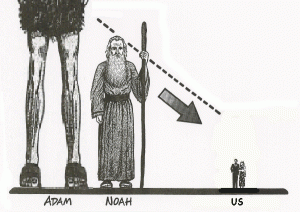
Starting right at the beginning as Henrion did, Adam was a towering drink of water at 123 feet, 9 inches. Interestingly he had been even taller. When first created, he was so tall his head reached into the heavens where it evidently nonplussed the angels enough that God was forced to shrink him to a more comfortable size. God very wisely kept him taller that Eve’s 118 feet, 9 inches. (Adam would have looked pretty silly with a fig leaf and elevator shoes.)

The kids didn’t measure up to their parents, nor did the next generation. In fact, a significant downsizing was underway. Noah was only 27 feet tall, Abraham 20 feet, and Moses a mere 13 feet. (The trend is becoming alarming!) Alexander was hardly the Great at six feet, and Julius Caesar was downright little at five feet. Mankind was on a course that would leave us microscopic little things, not even visible to the naked eye.

But, according to the learned Monsieur Henrion, Christianity saved us. We got religion and began to grow again.


SEPTEMBER 1, 2024

“It’s the first day of autumn! A time of hot chocolatey mornings, and toasty marshmallow evenings, and, best of all, leaping into leaves!” — Winnie the Pooh

I’ll buy that.  And just to follow through, I’ll be off for a few weeks, to faraway places, to see a wizard, into the sunset, whatever.  Please don’t talk about me while I’m gone.


AUGUST 31, 1928: LOOK OUT FOR LOTTE LENYA

With music by Kurt Weill and words by Bertolt Brecht, Die Dreigoschenoper premiered in Berlin in 1928. By 1933, when Brecht and Weill were forced to leave Germany, the musical comedy which offers a socialist view of a capitalist world had been translated into 18 languages and performed more than 10,000 times. We of course are more familiar with the English title, The Threepenny Opera.  And we’re mostly familiar with the opening song which has been sung by practically everyone, most notably, Frank Sinatra, Louis Armstrong, Ella Fitzgerald in a grammy-winning performance, and Bobby Darin who made it the top song of 1959 – “Die Moritat von Mackie Messer” (“The Ballad of Mack the Knife”). The song was added just before the premiere, when the actor playing Macheath threatened to quit if his character did not receive an introduction.


At the beginning of the play, we meet Jonathan Jeremiah Peachum, a London entrepreneur who runs the city’s begging operation, training the beggars and taking a nice chunk of their earnings. He is the perfect capitalist, a man who today would work for Goldman Sachs.

But Peachum has problems: his grown daughter Polly did not return home the previous night, and Peachum fears she has been misbehaving, and worse still, misbehaving with the ne’er-do-well Macheath.  Peachum does what any worried father would do – he determines to thwart this budding relationship by taking away her cell phone and having her paramour hanged.

Fade to Macheath who is preparing to marry Polly once his gang has stolen her trousseau. After the gang has stolen some food and a table, they all enjoy a wedding banquet. Polly entertains with a charming little song about a maid who becomes a pirate queen and executes her former bosses and customers. The Chief of Police, Tiger Brown, joins the party. It seems he had served with Macheath during the wars and had, over the years, exerted his influence to keep Macheath out of jail. He and Macheath sing. Polly returns home and lays the fact that she has married Macheath on her parents who are not amused. She sings a charming little song advising them to go fuck themselves, bringing the first act to a conclusion.

In Act Two, Polly warns Macheath that her father is gunning for British bear and that he must leave London. He agrees and leaves his gang in Polly’s hands. On his way out of town, Macheath stops at his favorite brothel, where he sees his ex-lover, Jenny. They sing a charming little song (“Pimp’s Ballad”) about their days together, but (the plot having thickened) Jenny has been bribed by Mrs Peachum to turn him in. Despite Brown’s apologies, he’s powerless and must drag Macheath away to jail. Macheath sings a charming little song about his life being over.   Another girlfriend, Lucy (Brown’s daughter) and Polly arrive at the same time from stage right and stage left, respectively.  A nasty argument ensues and together they sing a charming little duet about scratching each other’s eyes out. After Polly leaves, Lucy engineers Macheath’s escape, bringing the act to a tidy conclusion.

In Act Three, Jenny selfishly demands her money for the betrayal of Macheath, which Mrs Peachum refuses to pay.  Jenny nevertheless reveals that Macheath is at Suky Tawdry’s house, and he is once again arrested. Back in jail and scheduled to be executed, Macheath desperately tries to raise the bribe money to get out again, even as the gallows are being erected.  But no one comes to his aid, and Macheath prepares to die.  He laments his fate in a charming little song.  But what’s this? A deus ex machina enters stage left. Peachum announces that in this opera mercy will prevail over justice, and in a parody of a happy ending, a messenger from the Queen arrives to pardon Macheath and grant him a title, a castle and a pension. The play then ends with a plea that wrongdoing not be punished too harshly as life is harsh enough.

AUGUST 30, 1794: PENNY WISE, POUND FOOLISH

In the late 1800s, many of the unfortunates who found themselves in English prisons were there as a result of debts they could not pay. Benjamin Pope had a different story; he found his way to prison for a debt he could easily have paid. Pope was a tanner and quite successful in his trade, enough so that he gave up tanning and became a money-lender and mortgagee. He proved successful at this endeavor as well, earning the nickname “Plum Pope.”

     Alas, his good fortune began to desert him, in no small part because of his greed. His grasping ways in the lending of money led him afoul of the usury laws, and he was frequently brought before the court. In one particularly blatant case, he was fined £10,000.

Instead of paying the fine, he stole away to France with all his property. There, he complained bitterly to anyone who would listen about the unfairness of the English laws. The French naturally commiserated. Nevertheless, he eventually returned to England, but still refused to pay the fine. He went to prison instead. At one point, he could have secured his release by paying just £1000 of the £10,000 fine. Not Plum Pope.

     While in prison, he carried on his avocation as a money lender, albeit on a more limited and cautious scale. While always a penny-pincher, he became more so and more eccentric about it. He would drink beer with anyone who would give it to him, but would never buy it. He would not eat meat unless it was given to him. He chewed his gum twice. When he died on August 30, 1794, after 12 years in prison, he still owed the debt that had sent him there, even though he left behind more than enough to pay it.

Any man who would walk five miles through the snow, barefoot, just to return a library book so he could save three cents — that’s my kind of guy. — Jack Benny

AUGUST 29, 1769: WICKED WITCH OF THE WHIST

In 1769 London, a gentleman died at the ripe old age of 97. Although little is known about the gentleman himself, his name has traveled down through the years and is more familiar to us today than to those who might have rubbed elbows with the man back in the eighteenth century. His name was Edmond Hoyle, and although he was a barrister by trade, he is now known for law only as it applies to games of chance. And he is much more recognized by his nickname ‘According to.”

     Hoyle laid down the law for the game of Whist in a widely circulated treatise on the subject. He also had a great deal to say about backgammon, quadrille, piquet, and chess. He was, we might surmise, one of those wet blankets who must rain on card-game parades (to jumble metaphors, about which Hoyle had nothing to say) with their whining “but the rules say” or “according to Hoyle.”

     But Whist was his long suit. This venerable game provides ample material on which to pontificate, and pontificate Hoyle did. A forerunner of Bridge, Whist is all about taking tricks. Who takes them, and when and how and why gives the game a wide variety of flavors from which to choose. There’s Knockout Whist, a game in which a player who wins no trick is eliminated, sent to stand in a corner; Solo Whist, a game where individuals can bid to win 5, 9 or 13 tricks or to lose every trick; Kleurenwiezen, an elaborate Belgian version of the game, filled with Gallic mischief; Minnesota Whist, played to win tricks or to lose tricks (talk about flexibility); Romanian Whist, a game in which players try to predict the exact number of tricks they will take; German Whist for two very aggressive players who take tricks from Poland without prior warning; Bid Whist in which players bid to determine trump and one player is a dummy who sits out the hand; and Danish Whist, in which the dummy brings pastries to the other players.  But England lays claim to most of the true Whist players. It is easy to imagine a group of eighteenth century British aristocrats at their club. “Shall we have a go at a spot of Whist?” “Capital idea.” “Jolly.” “According to Hoyle . . .”


AUGUST 28, 1963: I HAVE A DREAM

In Washington DC, on  August 28, 1963, Martin Luther King, Jr. spoke to a crowd stretching from the Lincoln Memorial to the Washington Monument.

“Go back to Mississippi, go back to Alabama, go back to South Carolina, go back to Georgia, go back King_Jr_Martin_Luther_093.jpgto Louisiana, go back to the slums and ghettos of our northern cities, knowing that somehow this situation can and will be changed. Let us not wallow in the valley of despair.”

I have a dream that one day this nation will rise up and live out the true meaning of its creed: ‘We hold these truths to be self-evident: that all men are created equal.’ I have a dream that one day on the red hills of Georgia the sons of former slaves and the sons of former slave-owners will be able to sit down together at the table of brotherhood. I have a dream that one day even the state of Mississippi, a state sweltering with the heat of injustice, sweltering with the heat of oppression, will be transformed into an oasis of freedom and justice. I have a dream that my four little children will one day live in a nation where they will not be judged by the color of their skin but by the content of their character. I have a dream today.”

“When we allow freedom to ring, when we let it ring from every village and every hamlet, from every state and every city, we will be able to speed up that day when all of God’s children, black men and white men, Jews and Gentiles, Protestants and Catholics, will be able to join hands and sing in the words of the old Negro spiritual, ‘Free at last! Free at last! Thank God Almighty, we are free at last!'”


Part of that is when they try and demean me unfairly, because we had a massive crowd of people. We had a crowd… I looked over that sea of people, and I said to myself, ‘wow’, and I’ve seen crowds before. Big, big crowds. That was some crowd. — Donald Trump

AUGUST 27, 1938: POETS GONE WILD

Some say the world will end in fire, / Some say in ice. / From what I’ve tasted of desire / I hold with those who favor fire.

     It is pretty well agreed that Robert Frost was among the best American poets of the twentieth century. Both popularly and critically acclaimed, he received four Pulitzer Prizes for Poetry. It’s also pretty much agreed that Frost was not a warm and fuzzy individual, that he leaned more toward nasty and tyrannical behavior. It was also said “that he tolerated rivals badly, that he was a prima donna who was never content to share the center of the stage.”

     Perhaps the incident of August 27, 1938, was just an accident or Frost’s mind was wrapped up in his poem, “Fire and Ice.” Nevertheless, his behavior – or misbehavior – looked a bit suspicious.  On this night, writer Archibald MacLeish visited the Breadloaf Writers Conference to read his poems and radio plays at a gathering in the hills above Middlebury, Vermont. Frost was among the attendees, sitting in the back. As MacLeish read from his poetry, Frost began heckling him. “Archie’s poems all have the same tune,” he said in a stage whisper. Then just as MacLeish read the single-sentence poem, “You, Andrew Marvell,” smoke filled the room. Frost had somehow set fire to some papers and was busily beating them out and waving away the smoke.

     Most people accepted Frost’s explanation that it was an accident, and the reading continued. MacLeish, still the center of attention, was asked to read from one of his plays. Frost was not finished. His wisecracks from the back of the room became steadily harsher and more barbed. He interrupted, he commented, he took exception. What may have been innocent literary give and take turned into a clear effort to frustrate and humiliate MacLeish, and the situation became increasingly painful to those in the room.  Finally, Bernard DeVoto, a scholar and friend of Frost, had had enough. He shouted: “For God’s sake, Robert, let him read!” Frost ignored him, but a few minutes later snarled savagely and stomped out of the room and down the road not taken.

Pausing for a moment to wish Linda a happy birthday.


AUGUST 26, 1851: DOO-DA, DOO-DA

Picture a young man sitting on an elaborate veranda on a warm afternoon. Off to his right a beautiful river languidly flows on its journey from the swamps of Georgia to the Gulf Mexico; on the left, fields of cotton stretch into the distance. He is sipping a mint julep perhaps, and listening to the lilting voices of the slaves as they sing a happy song while picking cotton for their beloved “massa.” Life is good, everyone thinks, and hopes it will stay just like this forever.

The young man is inspired to pen a song: “Way down upon de Swanee Ribber, Far, far away. Dere’s wha my heart is turning ebber, Dere’s wha de old folks stay.”

The young man is, of course, Stephen C. Foster, one of America’s best-loved musical storytellers, who wrote “Old Folks at Home” (or Swanee River) in 1851, one of about 200 songs he authored during his prolific career.

While working as a bookkeeper in Cincinnati, Foster wrote his first successful songs — among them “Oh! Susanna,” and “Nelly Was a Lady”, made famous by the blackface Christy Minstrels. During the following years, Foster wrote most of his best-known songs for the Christy Minstrels: “Camptown Races,” “Nelly Bly,” “Old Folks at Home”, “My Old Kentucky Home,” and “Jeanie With the Light Brown Hair.”

Many of Foster’s songs were not original; he was a “Songcatcher,” writing down songs that had been passed down for generations. And about him sitting on that southern veranda – erase that. Foster chose the Suwannee River that flows through Florida because it fit the meter of the song; he never set foot in the state. Nor the south. He visited only once, on a riverboat voyage down the Mississippi – after he had written the songs.

Swanee River became the Florida state song in 1935. In an episode of Jackie Gleason’s “Honeymooners” called The $99,000 Answer, Ed Norton warms up on the piano by playing the opening to “Swanee River.” Later, on the game show of the title, the first question asked is, “Who is the composer of “Swanee River?” Ralph nervously responds with “Ed Norton,” and loses the game.

Chances are, those slaves picking cotton were not all that happy either.

Slaves are generally expected to sing as well as to work. ― Frederick Douglass