JUNE 1, 1869: TOM SWIFT AND HIS ELECTRIC THINGUMAJIG

With over a thousand inventions, many of which have touched the lives of nearly everyone in the world, Thomas Alva Edison is considered by many to be the greatest inventor of the modern era. But it wasn’t always thus. Al, as he was known, was a lousy student whose mother finally decided to home-school him. Edison’s first job was operating a newsstand on a train that ran from Port Huron to Detroit. To make the trips more interesting, he put together a chemistry lab in a boxcar (On the Atchison, Topeka and the Kaboom!). Then working as a telegraph operator, he continued to do scientific experiments in his free time. In 1869, he decided to devote himself full time to inventing.

     His first invention was patented that same year on June 1, a voting machine for use by legislative bodies such as Congress. Having heard that both the Washington, D.C., City Council and the New York State legislature were planning to install electric vote recorders, he stepped up to the plate. Edison’s somewhat Rube-Golbergish system, started with a switch that each legislator could move to either a yes or a no position. The vote would then be transmitted by a signal to a central recorder that listed the names of the legislators in two columns of metal type headed “Yes” and “No.” A recording clerk would then place a sheet of magic paper over the columns of type and move a metallic roller over the paper and type. As an electric current passed through the paper, chemicals in the paper decomposed, leaving the imprint of the name in a manner similar to that of chemical recording automatic telegraphs. Dials on the machine recorded the total number of yeas and nays.

     A fellow telegrapher bought a stake in the invention for $100 and took it to Washington, D.C. to demonstrate it before a Congressional committee. The chairman of the committee less than enthusiastically told him that “if there is any invention on earth that we don’t want down here, that is it.” It seemed legislators liked the slow pace of voting which allowed them to lobby or trade votes or do those other fun legislative things. Edison’s vote recorder was never used.

     Edison persevered, resolving never again to invent something that would not sell. His next invention, an improved stock market tickertape machine, earned him a tidy $40,000. And he went on to invent such other clever devices as the electric light bulb.

And today in 1880, another inventor’s bright idea gone awry, the first pay telephone was made available to the public in the New Haven office of the Connecticut Telephone Company. No “deposit ten cents for another ten minutes” here. A proud attendant stood next to the phone collecting those dimes.
MAY 31, 1895: WHEN LIFE GIVES YOU SOGGY WHEAT

Back in the late 19th century, a team of Seventh-day Adventists worked feverishly to create new foods that adhered to the vegetarian dogma of the church. Members of the group experimented with a number of different grains, including wheat, oats, rice, barley, and corn. Dr. John Harvey Kellogg, the superintendent of The Battle Creek Sanitarium in Michigan and an Adventist, used these recipes for his patients. His diet also eliminated alcohol, tobacco, and caffeine and consisted entirely of bland foods. A follower of Sylvester Graham, the inventor of graham crackers and graham bread, Kellogg believed that spicy or sweet foods would increase passions, and we certainly didn’t want any of those.

An accidental eureka! moment came when Kellogg and his younger brother Will Keith left some cooked wheat to sit while they attended to the sanitarium business. When they returned, they found that the wheat was soggy and stale. Being prudent with their budget, they decided to somehow use it anyway. They forced it through rollers, hoping to obtain long sheets of the dough. To their surprise, what they found instead were flakes, which they toasted and, prudent still, served to their patients. The flakes of grain, which the brothers called granose (as opposed to stale wheat flakes), turned out to be very popular among the patients. The Kelloggs filed for a patent for “Flaked Cereals and Process of Preparing Same” on May 31, 1895, and received it the following year.

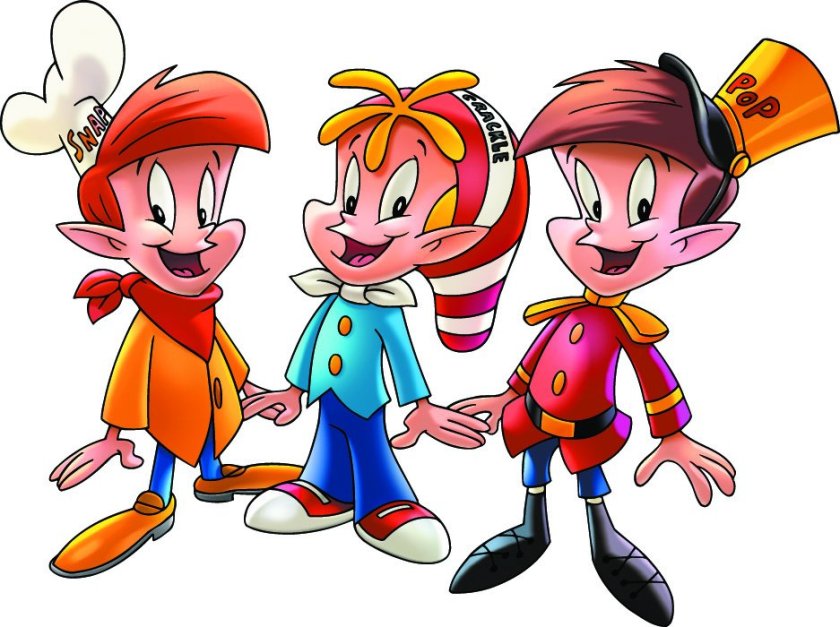
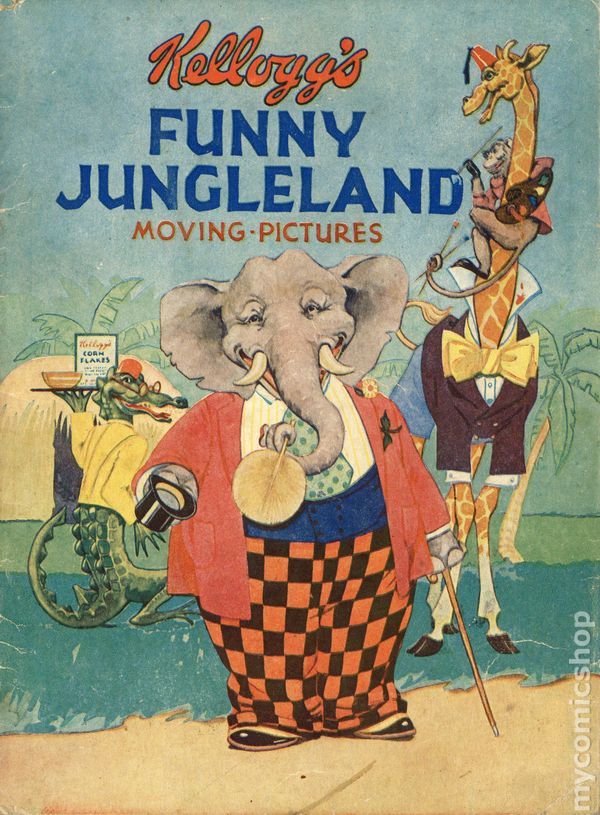
In 1906, Will Keith Kellogg, who served as the business manager of the sanitarium, decided to mass-market the new food. At his new company, Battle Creek Toasted Corn Flake Company, he added sugar to the flakes to make them taste better. This naturally annoyed his brother the Adventist who preferred bland. But Will steamed ahead, undeterred. And he came up with another revolutionary idea – a special prize, the Funny Jungleland Moving Pictures Booklet, free to anyone who bought two boxes of the cereal. He offered this same premium for 22 years. At the same time, Kellogg didn’t rest on his Wheaties. He continued to experiment with new grain cereal possibilities trying to come up with that special cereal that would go snap, crackle and pop. He did, and created his next SRO cereal in 1928. And surely Fruit Loops were already there somewhere in the back of his mind.

MAY 30, 1908: THAT’S ALL FOLKS

Although Mel Blanc, “the Man of a Thousand Voices,” is most often remembered as the voice of Bugs Bunny, Porky Pig, Daffy Duck, Woody Woodpecker, Tweety Bird, Sylvester, Yosemite Sam, Speedy Gonzales, Foghorn Leghorn, Pepé Le Pew, the Tasmanian Devil and many of the other characters from theatrical cartoons and Hanna-Barbera’s television cartoons, he had a long career as a comedian and character actor in radio and television. He was born on May 30, 1908, and died in 1989.

Blanc was a regular on The Jack Benny Program in various roles, and appeared on many other shows (Fibber McGee and Molly, Great Gildersleeve, Abbott and Costello, Burns and Allen), including his own which ran from September 1946 to June 1947. In the Jack Benny radio show he was Carmichael, the irascible polar bear who guarded the comedian’s underground vault; his outspoken parrot; his violin teacher, Monsieur Le Blanc; his Mexican gardener, Sy; and even his Maxwell automobile.

Blanc was easily the most prolific voice actor in the history of the industry and the first to be identified in the ending credits. In his 60-year career, he helped develop nearly 400 characters and provided voices for some 3,000 animated cartoons. During the cartoon heydays of the 1940’s and 50’s, he voiced 90 percent of the Warner Brothers cartoon empire. As movie critic Leonard Maltin said, “It is astounding to realize that Tweety Bird and Yosemite Sam are the same man!”

A gem from The Jack Benny Program:

MAY 29, 1913: ILL-MANNERED FACTIONS? IN PARIS?

On the evening of May 29, 1913, the Theatre des Champs-Elysees, the newest venue in Paris, open for just over a month, was packed.  According to a newspaper report: “Never. . . has the hall been so full, or so resplendent; the stairways and the corridors were crowded with spectators eager to see and to hear.” What they were eager to see and to hear was a ballet program celebrating the works of many of the leading composers of the day. Ticket sales were priced accordingly.

Parisian ballet audiences of the time fell into two distinct groups: the wealthy and fashionable set, who would be expecting to see a traditional performance with beautiful music, and a “Bohemian” group favoring anything new and nontraditional because it would annoy the snobs in the boxes.

The evening began tranquilly with Les Sylphides, in which Vaslav Nijinsky and Tamara Karsavina danced the main roles, followed by the premiere of Stravinsky’s The Rite of Spring (Pictures of Pagan Russia in Two Parts) in which, after various primitive rituals celebrating the advent of spring, a young girl is chosen as a sacrificial victim and dances herself to death.

There is a consensus among eyewitnesses and commentators that the disturbances in the audience began during the Introduction, which was greeted by derisive laughter, and grew into a crescendo when the curtain rose on the “Augurs of Spring” with its pipers piping and dancers stomping. The terrific uproar, along with the on-stage noises, pretty much drowned out the performers.  The two factions in the audience began attacking each other, but their anger was soon diverted toward the orchestra, and anything not tied down was quickly thrown in its direction. The plucky orchestra played on. Forty or so of the most energetic offenders were forcefully ejected by the police who had arrived somewhere toward the end of Part I. Throughout all this the performance continued without interruption.

Things grew somewhat quieter during Part II, and by some accounts the final “Sacrificial Dance” was watched in reasonable silence, albeit with a certain amount of muttering.  At the end there were several curtain calls (as opposed to catcalls) for the dancers, the orchestra, and Stravinsky before the evening’s program continued.

Press reviews called the work “a laborious and puerile barbarity” on one hand and “superb, with the disturbances, being merely a rowdy debate between two ill-mannered factions” on the other.

Paris survived.  The Rite of Spring became a classic.  And puerile barbarity is alive and well.


MAY 28, 1539: I KNOW A DARK SECLUDED PLACE

Spanish explorer and conquistador Hernando de Soto landed in Florida  in 1539 to begin the first European expedition deep into the territory of the modern-day United States. A formidable undertaking, de Soto’s expedition took him throughout the southeastern florida_mapUnited States searching for gold, silver and the ever-elusive passage to China. Although he was not the first explorer to visit Florida, he was the first to reach and cross the Mississippi River (and the only Spanish explorer to have a large-finned automobile named after him).


De Soto got his start in the conquistador business under the tutelage of that explorer and great statesman, Francisco Pizarro, traveling with Pizarro and his Spanish ambassadors as they befriended the native Incas.  Along the way, he became a wealthy man, returning as such to Spain. But an explorer is an explorer, and de Soto was not one to sit around on his Incan gold. He returned to the New World as the Governor of Cuba. From there, de Soto was expected to colonize the North American continent for Spain within four years, for which his family would be given a sizable piece of land (Georgia maybe).


De Soto selected 620 eager Spanish and Portuguese volunteers for the governing of Cuba and conquest of North America. They embarked from Havana on seven ships and two caravels, with tons of heavy armor and equipment, more than 500 livestock, including 237 horses and 200 pigs. Their planned four-year foray took them through Florida to Georgia, Mississippi, Arkansas, Louisiana, and Texas.

Unfortunately, de Soto was unable to complete the trip; he died in 1542 on the banks of the Mississippi River in Arkansas or Louisiana. This was a bit of an embarrassment since de Soto had passed himself off as an immortal sun god to the local natives, although some of the them had become skeptical of his deity claims (“Him no God, kemo sabe, him Spanish.”) His men concealed his death and hid his body somewhere along or in the Mississippi. And to this day the actual location of his burial remains a mystery, known only as Hernando’s Hideaway.  Olé!

MAY 27, 1936: PROUD MARY KEEP ON BURNIN’

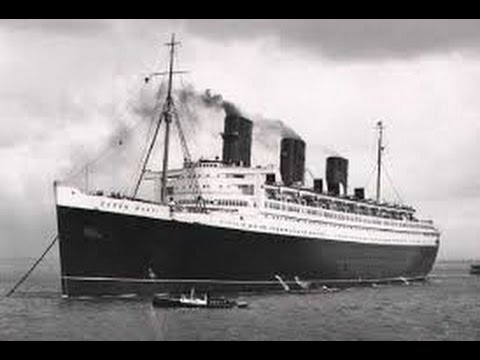
Although, out of superstition, women were banned from the workplace during the construction of the ocean liner Queen Mary, she was christened by a woman in September 1934.  By a queen actually — Queen Mary herself, the wife of George V who had died earlier that year and queen mother to Kings Edward VIII and George VI.

On May 27, 1936, throngs of cheering spectators looked on as the 80,000-ton liner, “the most beautiful ship afloat,” departed Southhampton on her maiden transatlantic crossing.. She carried 2,100 passengers who were pampered by a crew of 1,100. The passengers were as stylish as the ship’s Art Deco interior as they strutted through ballrooms, promenaded on deck, frolicked in the swimming pool, and occasionally visited their children in the nursery or their dogs in the kennel. Along with an amazing amount of food (50,000 pounds of meat), the Queen Mary carried over 14,000 bottles of wine and 25,000 cigarette packs.

The Queen Mary pretty much ruled the Atlantic for the rest of the decade until elegance gave way to utility as she was refitted as a troop ship during World War II. After the war the Queen Mary was returned to passenger service and along with her sister ship the Queen Elizabeth dominated transatlantic travel until 1967 when she left Southhampton on her last voyage arriving in Long Beach, California, where she was permanently moored.

Converted to a hotel, the Queen Mary has the dubious distinction of giving tourists a taste of transatlantic travel without ever leaving dry land. Yippee!

Don’t Stop the Carnival

Pulitzer Prize winner Herman Wouk was born in 1915. His books include The Caine Mutiny, The Winds of War, War and Remembrance, Marjorie Morningstar, and his most recent, which he says will be his last, Sailor and Fiddler: Reflections of a 100-Year-Old Author, released in 2016.    Don’t Stop the Carnival, a must-read for anyone interested in the Caribbean, was written in 1965. In the following excerpt, Norman and Henny Paperman have embarked on a new Caribbean enterprise and, at a party, they tell their friends about it:

During this evening, nearly every person there told Norman or Henny, usually in a private moment, that they were doing a marvelous, enviable thing. The Russians at the time were firing off new awesome bombs in Siberia, and the mood in New York was jittery, but there was more than that behind the wistfulness of their friends. All these people were at an age when their lives were defined, their hopes circumscribed. Nothing was in prospect but plodding the old tracks until heart disease, cancer, or one of the less predictable trap-doors opened under their feet. To them, the Papermans had broken out of Death Row into green April fields, and in one way or another they all said so.

Wouk died ten days ago.  He would have been 104 today.

MAY 26, 1755: READ HIS FRENCH LIPS

Louis Mandrin was to France what Robin Hood was to England and Rob Roy to Scotland. Having served in the war of 1740 in a light brigade noted for undertaking dangerous missions to surprise the enemy, he was left idle and without income by peace, which made a remarkable appearance in 1748. He had no way of supporting his life other than by continually risking it. Thus he came up with the idea of assembling a corps of men like himself with himself as their leader and waging war against the fermiers, collectors of royal revenues from taxes  levied on salt, tobacco, and farming. The fermiers paid an agreed upon amount to the king, but could exact unspecified sums themselves. They naturally became fat and rich in the process – and hated.

Mandrin became the master of a portion of central France, pillaging public treasuries to pay his troops, whom he also put to work forcing the wealthy to buy his stolen merchandise. He successfully warded off the many detachments of government troops sent against him, instilling fear among their numbers and in the government itself. Eventually the people came to consider him their protector against the oppression of government revenue officers.

Finally, a regiment did attack and destroy his corps, but Mandrin himself escaped into the Duchy of Savoy. From there, he continued to make forays across the border and a terrible nuisance of himself. The French government was not not happy. The fermiers entered the Duchy illegally, disguising 500 men as peasants. Mandrin was betrayed by two of his men, seized, and whisked across the border. When the King of Savoy, learned of the French intrusion into his territory, he immediately wrote to the French King, demanding that the prisoner be turned over to him. But before the message arrived, Mandrin was hurriedly tried, condemned to be broken at the wheel, and executed on May 26, 1755.


MAY 25, 2006: GEEK NIRVANA

2006 marked the very first celebration of Día del orgullo friki in Spain, local at first but now celebrated in such far-ranging places as Halifax, Nova Scotia; Timisoara, Romania; and San Diego, California; making it a truly international, sort of, event. The date commemorates the release of the first Star Wars film on May 25, 1977. (This was the second such commemoration for the movie; the first, Star Wars Day,  held on May 4 so celebrants could say “May the fourth be with you.”). The latest fest was the brainchild of a Spanish blogger known as Senor Buebo.


In 2008, the “holiday”was officially celebrated for the first time in the U.S., sporting its English translation, Geek Pride Day, its goal having become the promotion of geek culture. Today it has a manifesto and everything. Imagine if you will 300 proud geeks coming together to form a human pacman or, better still, a prime-number float in a Fifth Avenue parade.


As if this celebration wasn’t heady enough all by itself, Geek Pride Day shares the same date as two other similar fan “holidays”: Towel Day, for fans of The Hitchhiker’s Guide to the Galaxy on which true believers carry about a favorite towel, and the Glorious 25th of May for fans of Terry Pratchett’s Discworld.

Dinner Leaps This Way

An English gentleman who identified himself only as a friend to the Poor wrote a letter to the Public Advertiser on May 25, 1772, describing a novel idea. The idea had occurred to him after reading a passage in a guidebook about a town in France: “There are three small rivers that run through the town, one of which is much frequented by frogs, though one would imagine that in time they would be destroyed, as they commonly compose a dish or two at each meal at the tables of both rich and poor; the latter mostly living on them.”
The letter went on to suggest that the poor of England could avoid the high cost of most kinds of food by procuring frogs as food for themselves, since the ponds and ditches of England were full of them. Although the letter writer had never personally tasted a frog, he had been assured that when fried in butter and parsley one could not distinguish it from fricassee of chicken. To those that worried that the ignorant might mistakenly eat a toad, he pointed out that the frog is light brown whereas the toad is almost black, that frogs leap, toads creep.
The gentlemen closed by saying let those that can afford it have roast beef every day, but to those poor wretches who cannot he offers this hint for their benefit.

MAY 24, 1626: FOR TWO GUILDERS MORE, WE’LL THROW IN QUEENS

In what is often called the greatest real estate deal ever, Peter Minuit bought Manhattan from native Americans on May 24, 1626, for goods valued at 60 guilders. Popular history identifies these goods as baubles, bangles and bright shiny beads (celebrated in song by Alexander Borodin in his String Quartet in D, routinely hummed on special Dutch occasions, since the words were not written until 1953 for the musical Kismet which in Dutch means “we could have bought the Brooklyn Bridge for a wedge of cheese had it been built.”)


The actual figure of 60 guilders was determined in the seventeenth century using a Dutch version of Generally Recognized Accounting Practices (GRAP) – known back then as Chicanery (C). In 1846, a New York historian converted this figure to dollars and came up with an amount of $24. Since then, people have regularly tried to update the $24 amount to today’s dollars. But as Edwin G. Burrows and Mike Wallace pointed out in their history of New York,”[A] variable-rate myth being a contradiction in terms, the purchase price remains forever frozen at twenty-four dollars.” Nevertheless people continue to point out what those baubles were worth in today’s dollars, euros or guilders. All the results are rather boring.


The transaction is often viewed as one-sided and beneficial to the Dutch, although some evidence suggests that Minuit actually purchased the island from a traveling beaver hide salesman who happened to be passing through and who had never heard of, let alone owned, Manhattan. At about the same time, Minuit was involved in another land purchase, that of Staten Island, for much more mundane goods such as kettles and cloth and garden tools (hence the phrase “we’ll buy Manhattan, the Bronx and Staten Island too.”)

Strangely enough, the aforementioned Brooklyn Bridge (remember that?) was opened to traffic on this very day in 1883.  And a Dutch tourist bought it for 100 guilders from a New York cabbie who claimed to be a full-blooded Manhattan Indian.