Long before Google, searching was a bit more physical, involving explorers, globetrotters and other adventurous types, out to find the Holy Grail, Atlantis, the Northwest Passage, the seven cities of gold, Jimmy Hoffa, Elvis.
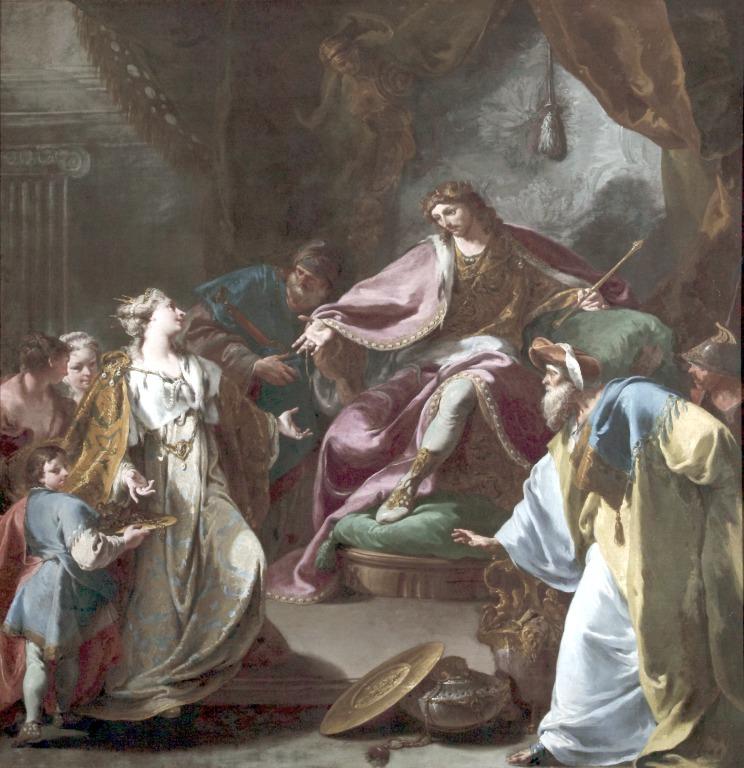
On 22 February 1934, adventurous type, French novelist André Malraux set off on a quest to find the lost capital of the Queen of Sheba mentioned in the Old Testament and other religious texts. His expedition took him to remote deserts of war-torn Saudi Arabia and Yemen, the countries in which scholars deemed it most likely to be located. As the story goes the Queen of Sheba had heard about wise King Solomon of Israel, and she decided to pay him a visit. She hopped on her camel and made for Jerusalem, bearing hostess gifts of frankincense*, myrrh and a few precious baubles, the ancient counterpart of flowers and a bottle of wine. As a guest, she peppered him with questions and riddles testing his wisdom. In return, he impregnated her.
After several weeks of searching Malraux returned to France and announced that some nondescript Yemeni ruins were indeed the lost city, but no one really believed him. And they didn’t believe he had spotted Elvis either.
* Just what is this frankincense that was so popular as a gift? Frankincense is a gummy substance extracted from the trunk of the Boswellia tree. Its oil when rubbed on evidently makes one healthy, wealthy and wise**.
**And smell good too. (A footnote on a footnote. How about that?) ***.
***Just for fun, you could create your own footnote.
Not Your Typical Barbarian
You can pretty much be certain you’ve got a turkey on your hands when you’ve got actors such as Susan Hayward, Agnes Moorehead , and John Wayne playing Mongolians, when the entire film is shot in one location in a desert in southern Utah (haven’t we seen that rock before?) and when you have such dialogue as:
“Joint by joint from the toe and fingertip upward shall you be cut to pieces, and each carrion piece, hour by hour and day by day, shall be cast to the dogs before your very eyes until they too shall be plucked out as morsels for the vultures . . . pilgrim.”
The Conqueror, released on February 22, 1956, was the epic story of a 12th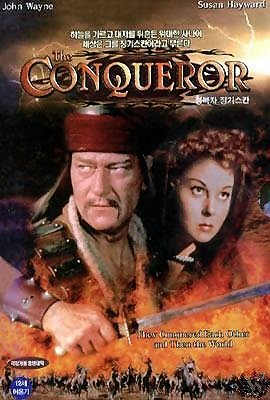 century Mongol warlord who worked his way up the barbarian ladder to become the infamous Genghis Khan. Produced by Howard Hughes, it was meant to be his crowning cinematic masterpiece. The film cost $6 million to film in Cinemascope and Technicolor and is frequently ridiculed in the same breath as Plan 9 from Outer Space, another 50s flop which cost about $2.99 to make. Hughes spent another $12 million to buy back every single print of the film after its disastrous release.
The Conqueror not only destroyed RKO, the studio that made it, but wiped out a good number of the cast and crew. The shooting location turned out to be downwind from Yucca Flats, Nevada, where the government was merrily testing atomic bombs, and the cast and crew received far more than the recommended daily allowance of radioactive fallout. Nearly half of them, including Wayne, were later diagnosed with cancer (although Wayne also smoked six packs a day).

 Wretched Richard's Almanac