
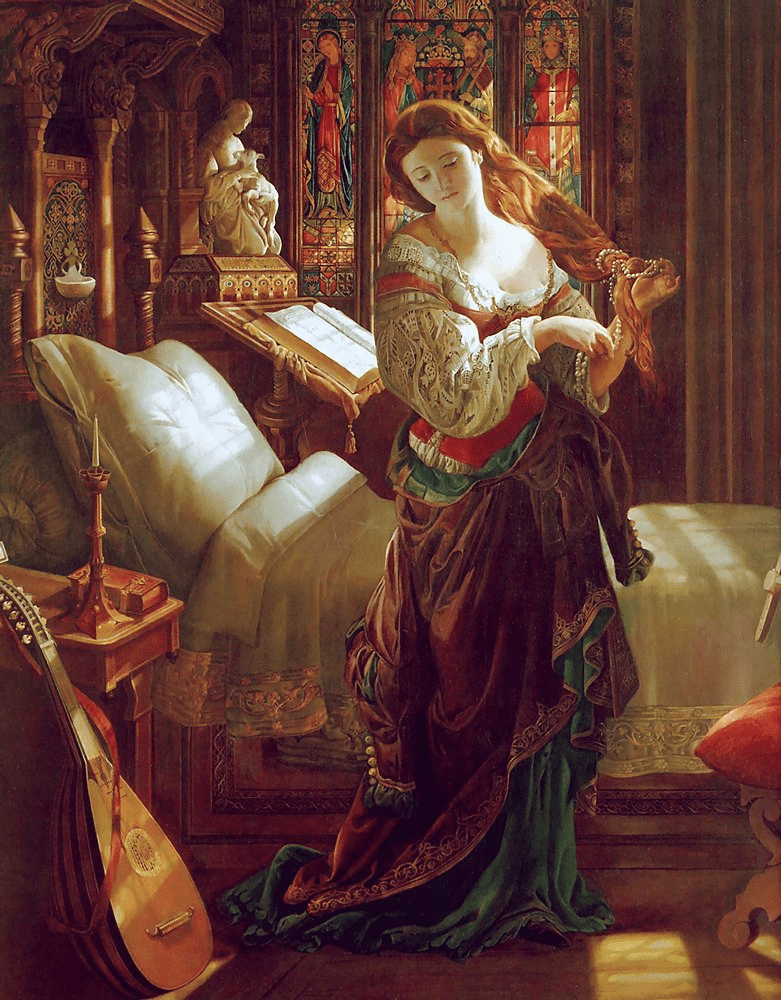
It’s a red letter day for fair young maidens everywhere, for in addition to being January 20, it is the Eve of St. Agnes, a night in which, if they play their cards right, they’ll gaze upon the countenance of their true love. Naturally there’s a ritual that must be performed to make this happen. First the maiden must go to bed without her supper, having got herself buck naked and having placed a sprig of rosemary and one of thyme (no parsley, no sage) in each of her shoes at the side of her bed. She then lies with her hands under her pillow and, staring upward, chants: “St. Agnes, that’s to lovers kind / Come ease the trouble of my mind” whereupon she falls asleep and conjures up the lucky fellow.
St. Agnes was a martyr who was born back in 291 and died in 304. She is celebrated for her virginity and is the patron saint of young women hoping to lose theirs.
The Eve of St. Agnes ritual was celebrated in an 1820 poem by John Keats titled, oddly enough, “The Eve of St. Agnes.” For 42 rather lyrical stanzas (read that steamy, no Grecian urns or nightingales here) Keats recounts the St. Agnes Eve adventures of Madeline and her paramour Porphyro. Keat’s publishers were uncomfortable with his lyricism and forced him to bring it down a few notches (to PG-13 lyricism).
Madeline’s family is all liquored up (another custom) so she scurries off to bed to perform the ritual, hoping to see Porphyro in her sleep. Porphyro hopes to see Madeline as well, but not in his sleep. He sneaks into her room and waits in the closet. From there, he watches her as she readies herself for bed and falls asleep, after which the naughty fellow creeps closer to get a better look. She awakes having been dreaming of him and sees him in the flesh. Naturally she assumes this is still a dream, so she welcomes him into her bed. When she is fully awake, she realizes her mistake and is a bit chagrined until he declares his love for her. They dash off together across the moors and we are left to wonder about their fate. (As anyone who’s ever read Hound of the Baskervilles knows, you don’t go out on the moors at night.)
Step Step Hop Hop
Born January 20, 1922, Ray Anthony became a successful band leader during the 1950s, despite composing “The Bunny Hop.”
 Yes We Can

Naomi Parker Fraley died on January 29, 2018, at the age of 96. She was a California waitress who, though unsung for most of her life, became far better known as Rosie the Riveter. A photo of Fraley operating a lathe during World War II was the inspiration for J. Howard Miller’s poster, “We Can Do It!”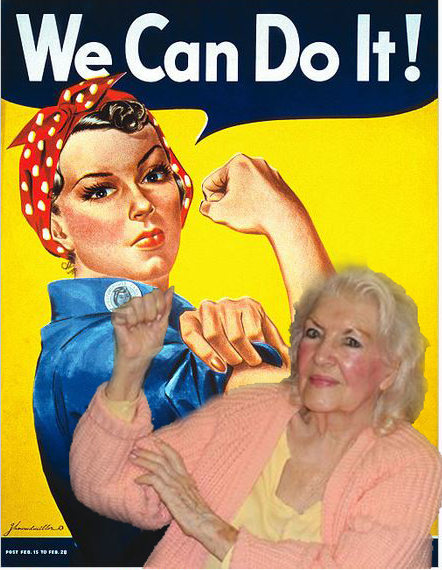

 Wretched Richard's Almanac
Hop hop hop
I’ll bet you were born to bunny hop.