

“Curtain! Fast music! Light! Ready for the last finale! Great! The show looks good, the show looks good!”
American Broadway impresario, Florenz “Flo” Ziegfeld, Jr. was born March 21, 1867 (died July 22,  1932). The theater bug came to Ziegfeld early; while still in his teens, he was already running variety shows. In 1893, his father, who was the founder of the Chicago Music College, sent him to Europe to find classical musicians and orchestras. Flo returned with the Von Bulow Military Band — and Eugene Sandow, “the world’s strongest man.”
Ziegfeld was particularly noted for his series of theatrical revues, the Ziegfeld Follies, inspired by the Folies Bergère of Paris – spectacular extravaganzas, full of beautiful women, talented performers, and the best popular songs of the time – and was known as the “glorifier of the American girl”.
“Let us grant that a girl qualifies for one of my productions. It is interesting to note what follows. First, it is clearly outlined to her what she is expected to do. She may be impressed at the outset that the impossible is required, but honest application and heroic perseverance on her part plus skillful and encouraging direction by experts very seldom fail to achieve the desired results. But it is only through constant, faithful endeavor by the girl herself that the goal eventually is reached.”
He also produced musicals in his own newly built Ziegfeld Theatre – Rio Rita, which ran for nearly 500 performances, Rosalie, The Three Musketeers, Whoopee! and Show Boat. Several of his musicals hit the movie screens, including three different versions of Show Boat. William Powell played Flo in the 1932 biopic, The Great Ziegfeld, and a 1946 film recreated the flamboyant Ziegfeld Follies.
Wretched Richard’s Little Literary Lessons, No. 4
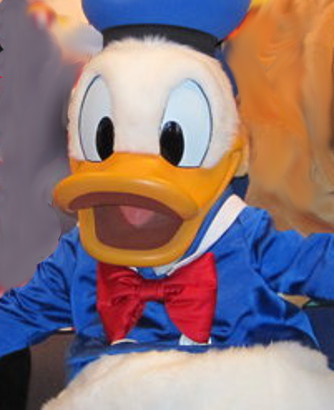 Paul wasn’t sure, but the five-foot duck waddling through the throngs of laughing, crying, shouting, whining children appeared to be waddling toward him – a duck with a destination and, perhaps, a mission. Chances are it had spotted him scowling in a land where grinning is the norm, and it, by God, meant to do something about it.
“Enjoying the Magic Kingdom?” asked the duck upon reaching him. Despite its carefully sculpted plastic smile, this duck wasn’t going to cheer anyone up; its voice dripped sarcasm.
“Of course, I am,” Paul answered, adopting his very own duck attitude. “Isn’t that why you’re here? By the way, didn’t I somewhere get the idea that you’re all supposed to be pleasant and cheerful?”
“I’m not even supposed to talk. Just wave.” The duck waved and, in silence, could have passed for pleasant and cheerful, albeit of a fabricated sort.
“Then why did you talk to me?” Paul asked.
“Because you look bored – like you positively hate the place.”
“Ah, you’re not just an ordinary duck, you’re a member of the happiness squad, here to lift my spirits.”
“No,” answered the duck. “I thought you might have a cigarette.”

 Wretched Richard's Almanac